
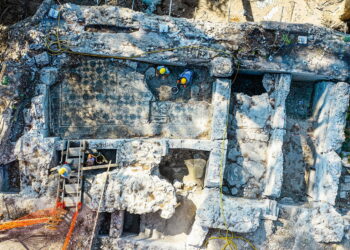
Archaeologists working at Egypt’s Saqqara necropolis have found three rock-cut tombs dating to the New Kingdom. The tombs were uncovered by an Egyptian mission during excavations in the eastern part of the Bubasteion necropolis. The find adds new evidence about the people who held high office in ancient Egypt and expands the history of the ancient Memphite burial ground.

The excavation brought to light hieroglyphic texts, carved scenes, and other remains linked to senior officials. These finds fill gaps in the record of New Kingdom society, showing details about government, military service, temple work, and family life. Egypt’s Ministry of Tourism and Antiquities said the work forms part of an ongoing research project at Saqqara, one of the country’s most important archaeological sites and a UNESCO World Heritage Site.
The first tomb belonged to a man named Mentuhotep. Carvings on the northern walls show people carrying offerings and scenes of hunting. One large image shows Mentuhotep seated beside his mother, Iahhotep, pointing to the family’s high social rank.
The inscriptions list several titles held by Mentuhotep, including Hereditary Prince, Mayor, King’s Follower, Administrator, Overseer of Foreign Lands, and Overseer of the Army of the City of Khebeshet. These titles place him among the senior officials who served during the early New Kingdom, with duties linked to both civil rule and the military.

A burial shaft inside the tomb has not yet been fully excavated. Archaeologists plan to continue work during the next field season. They hope the shaft will provide more information about Mentuhotep’s family and the role they played in Egypt’s government.
The second tomb belonged to Pareemwaya, also known as Samut, who served as Great Merchant of the Temple of Ptah. Inscriptions inside the tomb preserve the names of several family members. His wife, Tui, held the title Lady of the House. His mother, Atbiu, served as a Singer of Amun. The texts also name his four sons. Such detailed family records are rare and help build a clearer picture of elite households during the New Kingdom.

The third tomb belonged to a man named Nehsi. Much of the structure has suffered damage over time, though surviving inscriptions still identify him as Overseer of the House. His wife, Neferuptah, also appears in the texts with the title Lady of the House.
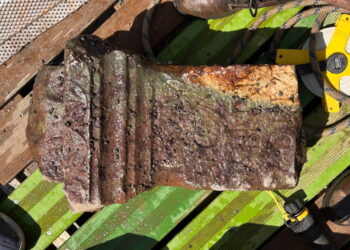
One of the most important finds from Nehesy’s tomb is part of a column bearing a hieroglyphic inscription about the return of a military commander from Naharin in northern Syria. The text helps date the tomb to the New Kingdom and adds new evidence for Egypt’s links with regions of the ancient Near East.
Officials from Egypt’s Supreme Council of Antiquities said the find adds missing pieces to the history of the Bubasteion necropolis. Work at the site is far from finished. Archaeologists will continue excavating burial shafts and nearby areas, where more finds are expected to expand the story of the people buried at Saqqara thousands of years ago.
More information: Ministry of Tourism and Antiquities





Disclaimer: This website is a science-focused magazine that welcomes both academic and non-academic audiences. Comments are written by users and may include personal opinions or unverified claims. They do not necessarily reflect the views of our editorial team or rely on scientific evidence.
Comment Policy: We kindly ask all commenters to engage respectfully. Comments that contain offensive, insulting, degrading, discriminatory, or racist content will be automatically removed.