• About
  • Privacy Policy
  • Terms of Use
  • Donation
  • Contact
No Result
View All Result
Archaeology News
  • Home
  • News
    • Archaeology
    • Anthropology
    • Paleontology
  • Academic
    • Books
    • Conferences
    • Universities
  • Articles
  • VR Tours
  • Quiz & Game
  • Download
  • Encyclopedia
  • Forum
Archaeology News
No Result
View All Result
Home News Anthropology

3,200-year-old Egyptian tomb of Ramesses III’s military commander uncovered

by Dario Radley
March 28, 2025

Egyptian archaeologists have discovered a 3,200-year-old tomb thought to be that of a senior military commander during the time of Pharaoh Ramesses III. The tomb was discovered at the Tell el-Maschuta site, also referred to as Tell el-Maskhuta, in the Ismailia governorate. The discovery illuminates the strategic significance of the area in protecting Egypt’s eastern borders during the New Kingdom period.
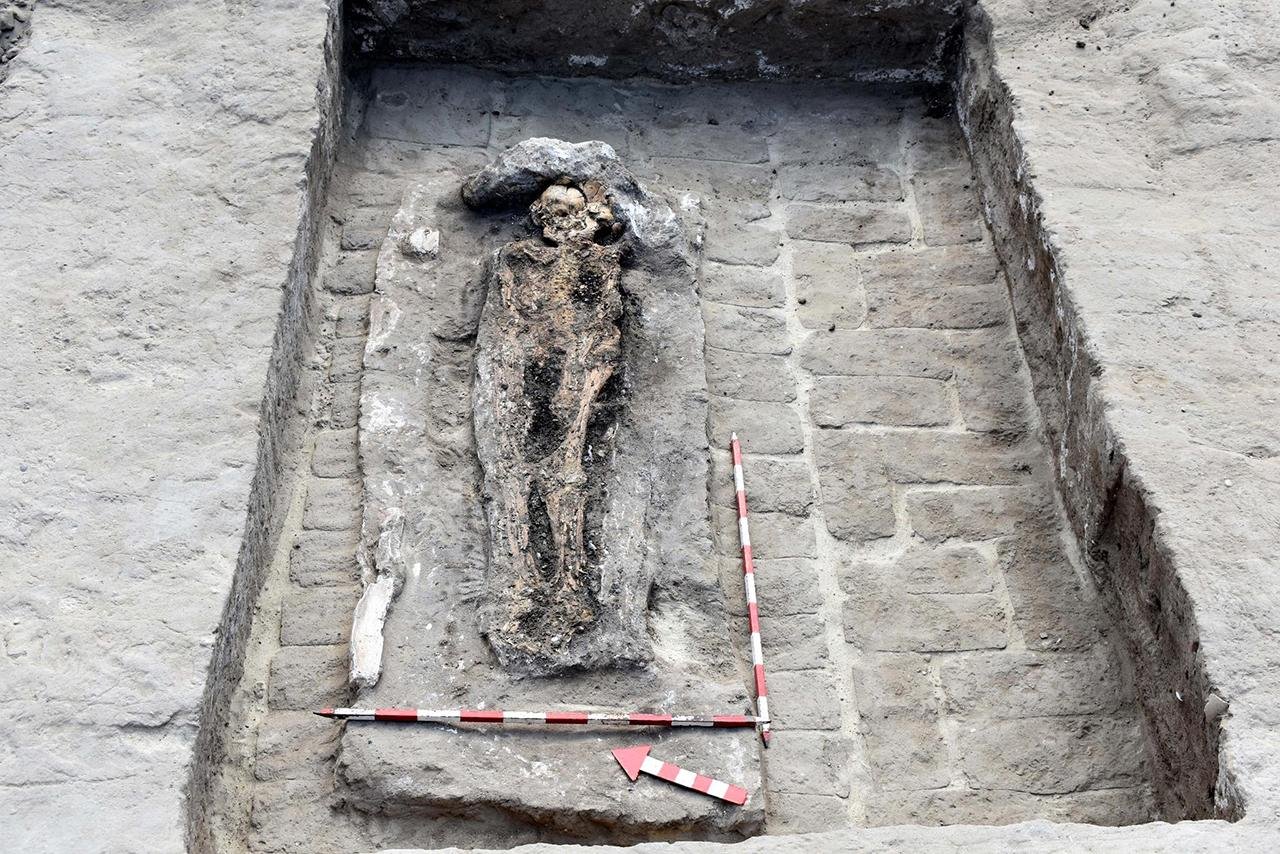
3,200-year-old Egyptian tomb of Ramesses III’s military commander uncovered
3,200-year-old tomb of a man who may have been a military commander in ancient Egypt. Credit: Courtesy of the Egyptian Ministry of Tourism and Antiquities

Dr. Mohamed Ismail Khaled, Supreme Council of Antiquities Secretary General, underlined the significance of the discovery, noting that the Tell el-Maschuta area was a key military outpost. Existing fortifications and garrisons in the region suggest that it played a crucial role in defending Egypt against external threats.

The tomb, constructed using mud bricks, features a main burial chamber and three other surrounding rooms whose walls are covered with white mortar. Inside, archaeologists discovered a collection of artifacts that indicate the deceased was a high-ranking military official. The most significant items discovered were a gold ring with the cartouche of Ramesses III, bronze arrowheads, and a small ivory box. The artifacts suggest the individual was the pharaoh’s military leader.

One of the most fascinating finds was a set of inscribed pottery vessels with the name of Pharaoh Horemheb, who reigned from around 1323 to 1295 BCE. A former military leader before becoming a pharaoh, Horemheb ruled over a hundred years prior to Ramesses III. The fact that his name appears on the pottery indicates that the tomb could have been reused over time.

3,200-year-old Egyptian tomb of Ramesses III’s military commander uncovered
Pottery vessels from the time of Horemheb. Credit: Courtesy of the Egyptian Ministry of Tourism and Antiquities

Further evidence of the reuse of the tomb came to light through the human remains recovered inside. A skeleton covered in cartonnage—material made up of linen and plaster—refers to the fact that the burial had been altered in later periods. In addition to skeletal remains, archaeologists also recovered alabaster vessels, semi-precious stones, and amulets depicting the gods Taweret and Bes, as well as the Eye of Udjat, a protective symbol in Egyptian mythology.

RelatedStories

Ancient Egyptian tombs, painted coffins, and cat mummies unearthed in Luxor necropolis

Ancient Egyptian tombs, painted coffins, and cat mummies unearthed in Luxor necropolis

May 16, 2026
Ancient bathhouse and Roman villa with mosaics unearthed in Alexandria during rescue excavation

Ancient bathhouse and Roman villa with mosaics unearthed in Alexandria during rescue excavation

May 3, 2026

Beyond the military commander’s tomb, archaeologists also uncovered a series of collective and individual burials dating to the Greco-Roman and Late Periods. These burials contained skeletal remains and funerary artifacts that highlight the region’s rich cultural history as a crossroads between civilizations. Professor Qutb Fawzi Qutb, director of the Lower Egypt and Sinai Antiquities Department, noted that the combination of Egyptian and Greco-Roman elements in the tombs provides valuable insights into the region’s diverse historical influences.

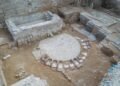
3,200-year-old Egyptian tomb of Ramesses III’s military commander uncovered
Tomb complex unearthed at the site. Credit: Courtesy of the Egyptian Ministry of Tourism and Antiquities

In addition to the tomb of the military commander, archaeologists also unearthed a series of collective and individual burials that dated to both the Greco-Roman and the Late Period. The burials contained skeletal remains and artifacts revealing the region’s rich cultural history as a crossroads between civilizations.

Ramesses III, who ruled from about 1184 to 1153 BCE during Egypt’s 20th Dynasty, is often regarded as the last great pharaoh of ancient Egypt. His reign was marked by military conflicts, most notably his conflicts with the Sea Peoples, a group of seafaring raiders that threatened the stability of Mediterranean civilizations. In the most pivotal battle, the Battle of the Delta in 1175 BCE, the Egyptian navy outmaneuvered the invaders with tactical superiority on the waterways of the Nile.
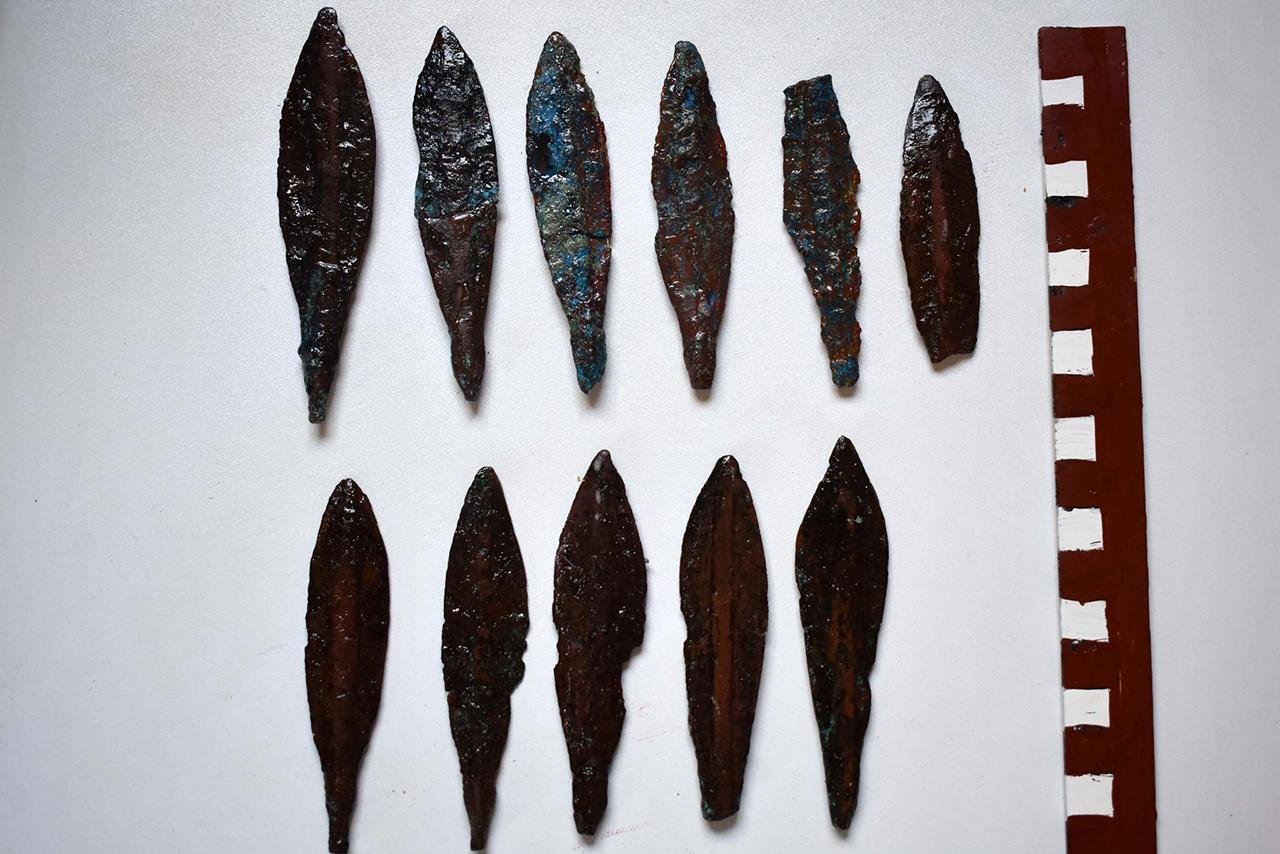
3,200-year-old Egyptian tomb of Ramesses III’s military commander uncovered
Arrowheads found inside the tomb of the military commander. Credit: Courtesy of the Egyptian Ministry of Tourism and Antiquities

The recently discovered tomb brings intriguing speculations about the occupant’s role in these wars of antiquity. If this individual buried within was a military commander under Ramesses III, he may have played a crucial role in defending Egypt.

The Egyptian Tourism and Antiquities Ministry stated it would go ahead with more excavations and studies on the site in the hopes that further studies will reveal additional information on Egypt’s military and cultural history.

More information: Ministry of Tourism and Antiquities of Egypt
Share10Tweet6Share2ShareSend

You May Also Like...

6,000-year-old necropolis in Spain rewrites origins of Europe’s first megalithic tombs
Archaeology

6,000-year-old necropolis in Spain rewrites origins of Europe’s first megalithic tombs

May 18, 2026
Ancient settlement with weaving workshop and longhouses uncovered in Germany gravel pit
Archaeology

Ancient settlement with weaving workshop and longhouses uncovered in Germany gravel pit

May 17, 2026
Pompeii victim identified as Roman physician killed while fleeing Vesuvius eruption
Anthropology

Pompeii victim identified as Roman physician killed while fleeing Vesuvius eruption

May 17, 2026
Archaeologists uncover hidden whisky smuggler bothy in Scottish Highlands with rare copper still piece
Archaeology

Archaeologists uncover hidden whisky smuggler bothy in Scottish Highlands with rare copper still piece

May 16, 2026
Ancient Egyptian tombs, painted coffins, and cat mummies unearthed in Luxor necropolis
Archaeology

Ancient Egyptian tombs, painted coffins, and cat mummies unearthed in Luxor necropolis

May 16, 2026
800-year-old medieval notebook found in German latrine still contains readable Latin writing
Archaeology

800-year-old medieval notebook found in German latrine still contains readable Latin writing

May 16, 2026

Comments 5

  1. Editorial Team says:
    1 second ago

    Disclaimer: This website is a science-focused magazine that welcomes both academic and non-academic audiences. Comments are written by users and may include personal opinions or unverified claims. They do not necessarily reflect the views of our editorial team or rely on scientific evidence.

    Comment Policy: We kindly ask all commenters to engage respectfully. Comments that contain offensive, insulting, degrading, discriminatory, or racist content will be automatically removed.

  2. Joseph Phoenix says:
    1 year ago

    General/Pharoah Horwmheb,s Mummy is missing! Maybe this is truly his Grave? Horwmheb was King Tut,a General & successor(1 of them?) Horemheb Promoted his Vizier to be Pharoah.

    • Ian Walker says:
      1 year ago

      Hi Joseph, Horemheb was a general during Tut’s reign before he became the Pharaoh

  3. Charles Garcia says:
    1 year ago

    Great information, please keep publishing it, I believe there is tremendous interest in this type of knowledge worldwide!

  4. Sylvia Diaz says:
    1 year ago

    This is so wrong! So sacrilegious, leave these tombs alone. These are peoples final resting place. The stuff buried with them is theirs. Leave everything alone. Jeeze, people are so damn greedy and the say they’re doing this for research sakes. No how would you like it if someone came and dug your family out of their final resting place and just took their remains and whatever else was buried with them. So so so wrong..

  5. akhenaten says:
    1 year ago

    but aren’t all pharoahs by tradition buried to the west of the nile to signify their journey to the afterlife

Follow us


Instagram
242K

Facebook
117K

Threads
46K

LinkedIn
14K

Twitter
6K

YouTube
1K
  • Trending
  • Comments
  • Latest
Shipwreck Salvage. Credit: rawpixel.com / Public Domain

2,000-year-old shipwreck discovered off Turkish coast with remarkably preserved stacked ceramics

July 2, 2025
A new study suggests the mysterious Voynich Manuscript may be a medieval cipher

A new study suggests the mysterious Voynich Manuscript may be a medieval cipher

January 3, 2026
Viking age DNA reveals 9,000-year-old HIV-resistant gene originating near the Black Sea

Viking age DNA reveals 9,000-year-old HIV-resistant gene originating near the Black Sea

May 18, 2025
3D analysis reveals Shroud of Turin image likely came from sculpture, not Jesus’ body

3D analysis reveals Shroud of Turin image likely came from sculpture, not Jesus’ body

August 3, 2025
Moses may be named in ancient Egyptian mine inscriptions, sparking debate over earliest biblical references

Moses may be named in ancient Egyptian mine inscriptions, sparking debate over earliest biblical references

July 31, 2025
3D analysis reveals Shroud of Turin image likely came from sculpture, not Jesus’ body

3D analysis reveals Shroud of Turin image likely came from sculpture, not Jesus’ body

Moses may be named in ancient Egyptian mine inscriptions, sparking debate over earliest biblical references

Moses may be named in ancient Egyptian mine inscriptions, sparking debate over earliest biblical references

$1 million prize offered to decipher 5,300-year-old Indus Valley script

$1 million prize offered to decipher 5,300-year-old Indus Valley script

Oldest ever genetic data from a human relative found in 2-million-year-old fossilized teeth

Oldest ever genetic data from a human relative found in 2-million-year-old fossilized teeth

Exceptionally large Roman shoes discovered at Magna fort near Hadrian’s Wall

Exceptionally large Roman shoes discovered at Magna fort near Hadrian’s Wall

6,000-year-old necropolis in Spain rewrites origins of Europe’s first megalithic tombs

6,000-year-old necropolis in Spain rewrites origins of Europe’s first megalithic tombs

May 18, 2026
Ancient settlement with weaving workshop and longhouses uncovered in Germany gravel pit

Ancient settlement with weaving workshop and longhouses uncovered in Germany gravel pit

May 17, 2026
Pompeii victim identified as Roman physician killed while fleeing Vesuvius eruption

Pompeii victim identified as Roman physician killed while fleeing Vesuvius eruption

May 17, 2026
Archaeologists uncover hidden whisky smuggler bothy in Scottish Highlands with rare copper still piece

Archaeologists uncover hidden whisky smuggler bothy in Scottish Highlands with rare copper still piece

May 16, 2026
Ancient Egyptian tombs, painted coffins, and cat mummies unearthed in Luxor necropolis

Ancient Egyptian tombs, painted coffins, and cat mummies unearthed in Luxor necropolis

May 16, 2026

Archaeology News online magazine

Archaeology News is an international online magazine that covers all aspects of archaeology.


Categories

  • Academics
    • Books
    • Conferences
    • Universities
  • Articles
  • Download
  • Game
  • News
    • Anthropology
    • Archaeology
    • Paleontology
  • Quiz
  • Tours

Subscribe to our newsletter

© 2024 - Archaeology News Online Magazine. All Rights Reserved.

  • About
  • Privacy Policy
  • Terms of Use
  • Donation
  • Contact

Manage Consent
To provide the best experiences, we use technologies like cookies to store and/or access device information. Consenting to these technologies will allow us to process data such as browsing behavior or unique IDs on this site. Not consenting or withdrawing consent, may adversely affect certain features and functions.
Functional Always active
The technical storage or access is strictly necessary for the legitimate purpose of enabling the use of a specific service explicitly requested by the subscriber or user, or for the sole purpose of carrying out the transmission of a communication over an electronic communications network.
Preferences
The technical storage or access is necessary for the legitimate purpose of storing preferences that are not requested by the subscriber or user.
Statistics
The technical storage or access that is used exclusively for statistical purposes. The technical storage or access that is used exclusively for anonymous statistical purposes. Without a subpoena, voluntary compliance on the part of your Internet Service Provider, or additional records from a third party, information stored or retrieved for this purpose alone cannot usually be used to identify you.
Marketing
The technical storage or access is required to create user profiles to send advertising, or to track the user on a website or across several websites for similar marketing purposes.
  • Manage options
  • Manage services
  • Manage {vendor_count} vendors
  • Read more about these purposes
View preferences
  • {title}
  • {title}
  • {title}
  • Home
  • News
    • Archaeology
    • Anthropology
    • Paleontology
  • Academic
    • Books
    • Conferences
    • Universities
  • Articles
  • VR Tours
  • Quiz & Game
  • Download
  • Encyclopedia
  • Forum

About  .  Contact  .  Donation

© 2024 - Archaeology News Online Magazine. All Rights Reserved