
Archaeologists working at the site of Valdelasilla in central Spain have identified what researchers describe as the oldest known monumental necropolis in the interior of the Iberian Peninsula. The cemetery, located in Illescas near Toledo, dates back about 6,000 years and changes long-held ideas about how megalithic burial traditions spread across Europe.
The study, published in the European Journal of Archaeology, was led by Rosa Barroso Bermejo of the University of Alcalá and involved researchers from several Spanish institutions. Their findings place the first use of the cemetery at the end of the fifth millennium BCE, during the Late Neolithic period.
For decades, archaeologists believed large funerary monuments spread inland from Atlantic and Mediterranean coastal regions. Valdelasilla tells a different story. The evidence points to an early and local development of monumental funerary architecture in the Iberian interior at roughly the same time as coastal megalithic centers.
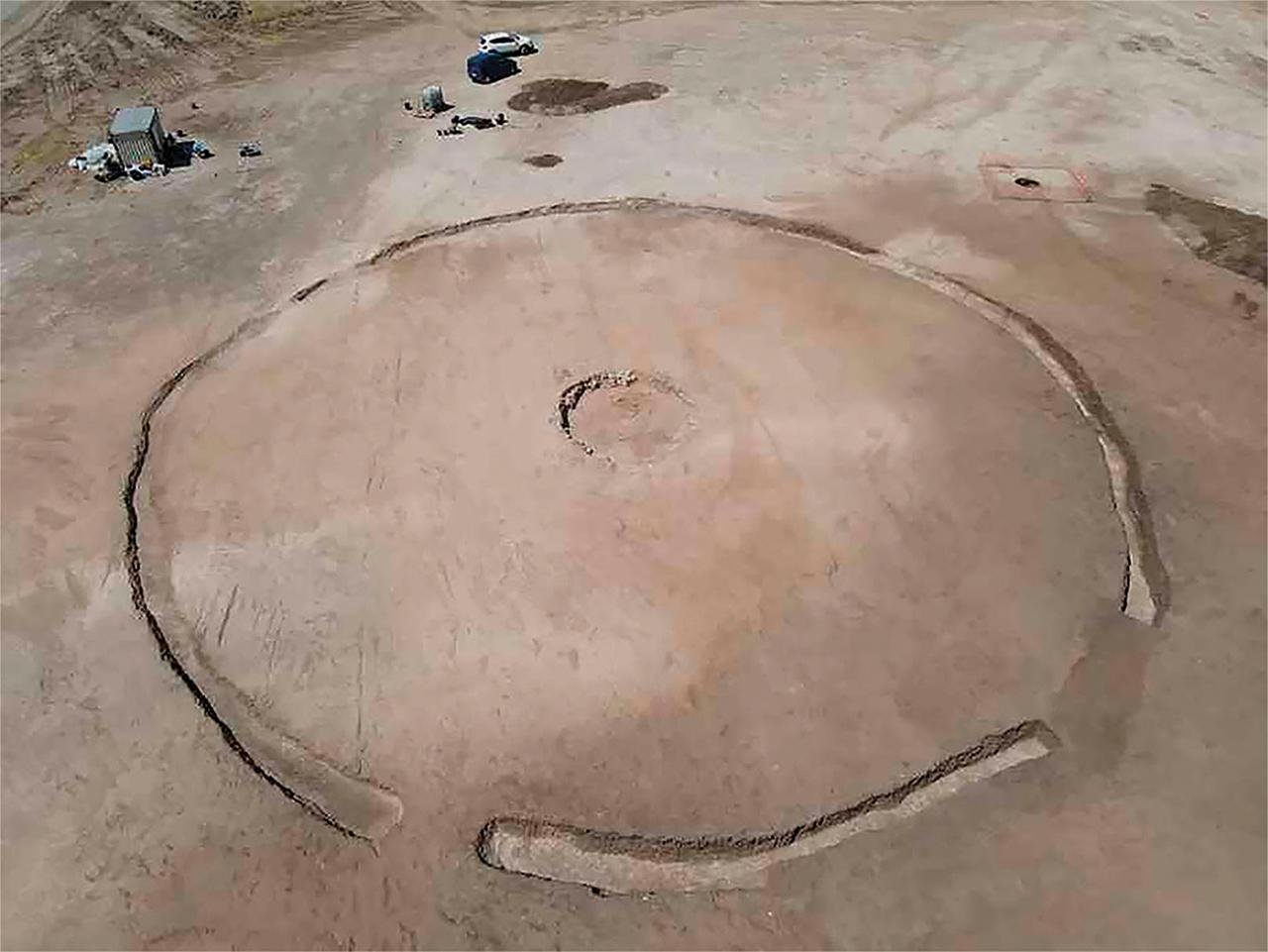
Excavations began in 2020 during construction work in the area. Beneath farmland disturbed by years of agriculture, archaeologists uncovered fifteen funerary structures containing human remains. The cemetery had a clear layout. The main necropolis occupied higher ground, while smaller and less organized burials appeared farther south.
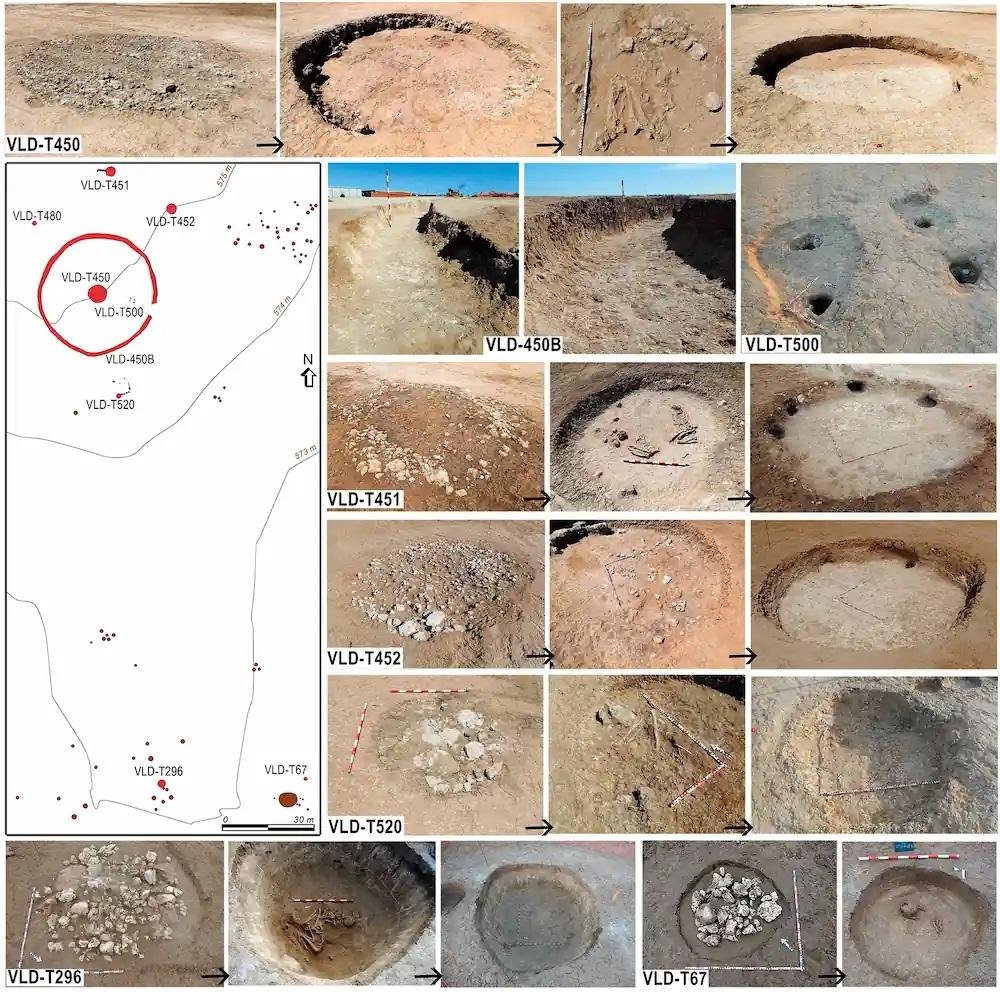
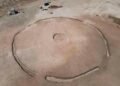
The largest structure, known as VLD-T450, formed the center of the complex. Archaeologists identified a circular funerary chamber originally measuring about six meters across. A ditch with an internal diameter of 36 meters surrounded the tomb. Both the ditch and the chamber shared the same southeast-facing entrance, showing they belonged to a single design.
Inside the ditch, researchers found pottery fragments, stone tools, animal remains, and evidence of burning. No human bones appeared there. The enclosure itself stands out because no similar feature linked to such an early tomb has previously been documented in the Meseta region of Spain.
The burial chamber contained several layers of human remains. In the lower level, archaeologists uncovered the body of an adult woman buried in a flexed position on her right side. Bone pins and an awl rested beneath her head. Nearby lay the disarticulated remains of another woman stained with red pigment and accompanied by beads and pendants.
An upper burial layer contained the partial remains of an adult man. Additional mixed bones in the chamber represented at least six more individuals. Researchers believe the tomb evolved into a collective burial place used over generations.
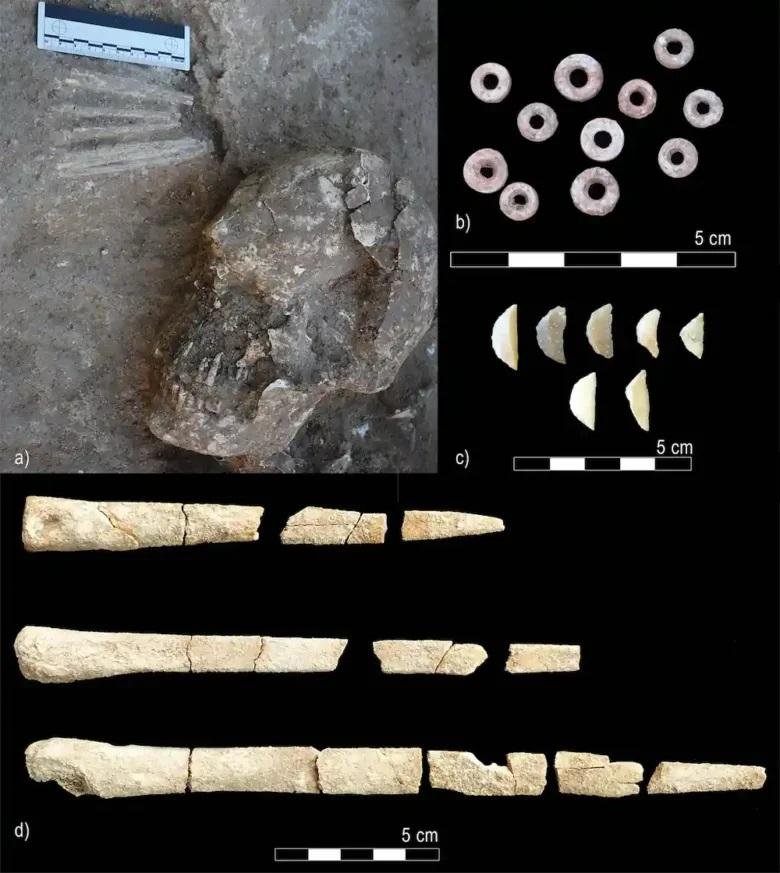
Other tombs across the site revealed double burials, triple burials, and the grave of a child placed in a stone-lined pit without grave goods. Several skeletons carried traces of red iron oxide pigment, a material often linked to prehistoric funerary rituals across Iberia.
Researchers used 21 radiocarbon dates taken mostly from human bone to reconstruct the cemetery’s history. Bayesian statistical modeling divided the site into five phases of use. The earliest monumental tombs appeared between roughly 4336 BCE and 3849 BCE. The first burials seem to have taken place within a short span of time, possibly within one generation, suggesting the cemetery followed a planned design from the beginning.
Funerary activity continued for many centuries. During the final phase in the third millennium BCE, people deposited human remains symbolically inside the enclosure. A later tomb held an ossuary containing at least 17 individuals, including ten skulls intentionally arranged around the perimeter.
The objects buried with the dead provide clues about daily life and long-distance contacts. Archaeologists recovered more than one hundred seashells from the genus Antalis, along with stone beads, pendants, bone tools, awls, and polished stone implements. Most materials came from local sources, although the seashells originated elsewhere.
The study notes the absence of Bell Beaker pottery and certain bone artifacts commonly associated with later megalithic traditions in inland Iberia. This helps place the earliest use of Valdelasilla before those cultural developments became widespread.
Researchers argue the cemetery reflects social distinctions expressed more through architecture than through wealth. The central tomb demanded greater collective labor and contained more ornaments than the surrounding graves, suggesting special status within the community. At the same time, grave goods overall remained limited.
The findings add weight to a growing theory that European megalithism did not emerge from a single coastal origin. Instead, several connected regions across Europe appear to have developed monumental burial traditions independently but simultaneously.
Valdelasilla now joins a small group of sites reshaping archaeologists’ understanding of prehistoric Europe. The cemetery shows that communities living on the Iberian plateau played an active role in the rise of monument building traditions long before scholars once believed.





Disclaimer: This website is a science-focused magazine that welcomes both academic and non-academic audiences. Comments are written by users and may include personal opinions or unverified claims. They do not necessarily reflect the views of our editorial team or rely on scientific evidence.
Comment Policy: We kindly ask all commenters to engage respectfully. Comments that contain offensive, insulting, degrading, discriminatory, or racist content will be automatically removed.