• About
  • Privacy Policy
  • Terms of Use
  • Donation
  • Contact
No Result
View All Result
Archaeology News
  • Home
  • News
    • Archaeology
    • Anthropology
    • Paleontology
  • Academic
    • Books
    • Conferences
    • Universities
  • Articles
  • VR Tours
  • Quiz & Game
  • Download
  • Encyclopedia
  • Forum
Archaeology News
No Result
View All Result
Home News Archaeology

280 ancient stone burial monuments found in Sudan reveal lost cattle-herding culture in the Sahara

by Dario Radley
May 13, 2026

Archaeologists studying the Atbai Desert in Sudan have identified hundreds of large stone burial monuments linked to an ancient cattle-herding society that lived between the Nile Valley and the Red Sea thousands of years ago. The findings, published in the journal African Archaeological Review, offer one of the clearest pictures so far of a pastoral culture that occupied the region during a period of major climate change in northeastern Africa.
280 ancient stone burial monuments found in Sudan reveal lost cattle-herding culture in the Sahara
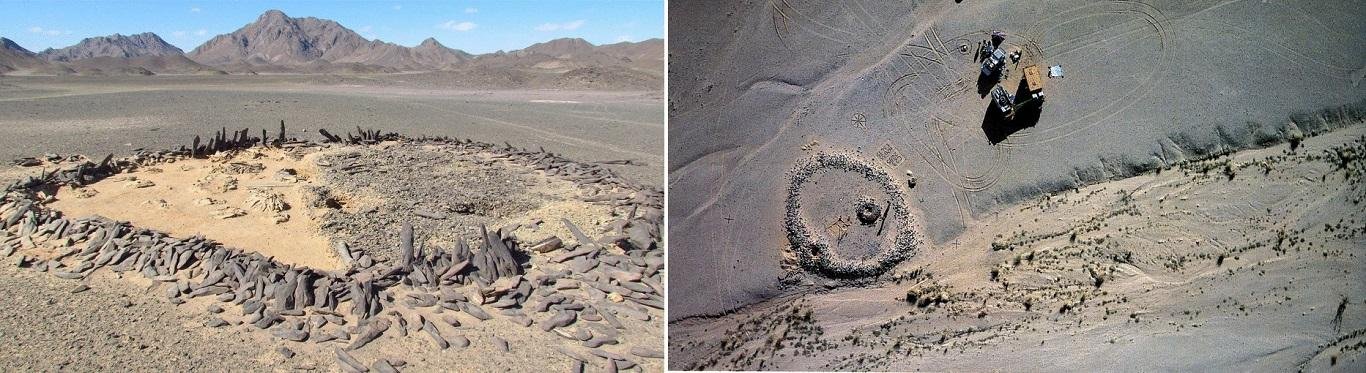
a The AEB at Wadi Khashab, courtesy of Piotr Osypiński. b Kite photograph of an AEB, C23 from the CeRDO surveys in central Atbai. Credit: Courtesy of the Museo Castiglioni / Cooper et al., The African Archaeological Review (2026)

The research team used satellite remote sensing as part of the Atbai Survey Project and recorded 280 stone structures scattered across the desert. Earlier fieldwork had documented about 20 of these monuments, though archaeologists had never examined them as part of a single regional tradition. The new study grouped the structures under the name Atbai Enclosure Burials, or AEBs.

The monuments stretch across a large area from Upper Egypt to the Eritrean borderlands. Most consist of circular stone walls with burials placed inside. Their diameters range from 5 meters to 82 meters. Some were fully enclosed circles, while others included a single entrance. A few contained compound circles or central graves surrounded by animal burials.

Researchers believe the monuments required organized communal labor. Based on estimates from an average burial enclosure measuring roughly 60 meters in circumference, construction would have demanded more than 160 eight-hour workdays for one person. A group of 50 workers could complete the same task in a little over three days.

The placement of the monuments also appears deliberate. Many stand near locations that once offered reliable access to water. Instead of being spread evenly across the desert, the burial sites cluster in areas suitable for grazing and watering livestock. This pattern points to mobile pastoral communities that moved cattle across seasonal landscapes.

RelatedStories

Lost medieval hillfort discovered in Poland’s Włodawa Forest reveals 244 artifacts from the 10th–13th centuries

Medieval hillfort discovered in Poland’s Włodawa Forest reveals 244 artifacts from the 10th–13th centuries

February 27, 2026
Hidden 17th-century bastion fort discovered in Świerże, eastern Poland

Hidden 17th-century bastion fort discovered in Świerże, eastern Poland

February 19, 2026

Excavations inside some AEBs uncovered both human and animal remains. Cattle burials appeared frequently and one of the largest monuments held about 18 cattle graves. Sheep remains were also present in several sites, though cattle dominated the funerary record. Archaeologists describe the society as strongly cattle-centered, part of a wider tradition seen across the Eastern Sahara during the Middle and Late Holocene.

Rock art from the region supports this interpretation. Many engravings and paintings depict cattle, reinforcing the importance of livestock in daily life and ritual activity. Similar links between humans and cattle in burial settings have appeared elsewhere in northeastern Africa dating back to at least the sixth millennium BCE.
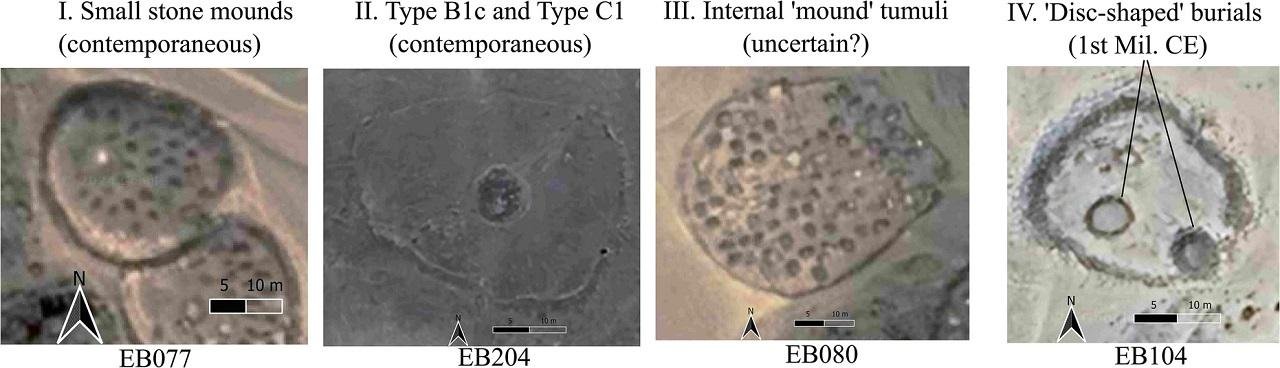
280 ancient stone burial monuments found in Sudan reveal lost cattle-herding culture in the Sahara
Examples of different internal tumuli traditions within AEB monuments. Credit: Cooper et al., The African Archaeological Review (2026)

Radiocarbon dates and earlier excavations suggest the Atbai monuments were built between 4500 BCE and 2500 BCE. The structures emerged during the decline of the African Humid Period, when northeastern Africa shifted from wetter conditions toward increasing aridity. At the time, the Atbai Desert contained more vegetation and seasonal water sources than today.

The study connects the rise of the burial tradition with changing climate patterns, including the southward movement of the Intertropical Convergence Zone, which altered monsoon rainfall across the Sahara. Even as conditions became drier, pastoral groups continued occupying the region for centuries.

Researchers suggest the Atbai may have served as a refuge during the desertification process, allowing cattle herders to survive longer there than in other parts of the Sahara. Eventually, shrinking water supplies and environmental stress forced communities to abandon the area.

The team also notes that some monuments may have disappeared over time. Erosion, flooding, and modern gold-mining operations have damaged parts of the desert landscape, raising the possibility that additional burial sites once existed across the region.

Although the Atbai Desert lies between the well-studied worlds of ancient Egypt and Nubia, archaeologists still know relatively little about the people who lived there. The newly documented burial tradition now provides stronger evidence for a distinct local culture shaped by cattle herding, seasonal movement, and long-term adaptation to a changing climate.

More information: Cooper, J., Bourgeois, M., Crépy, M., & Gatto, M. C. (2026). Atbai Enclosure Burials: Monumentalism, pastoralism and environmental change in the mid-Holocene east Nubian deserts. The African Archaeological Review. doi:10.1007/s10437-026-09654-y
ShareTweetShareShareSend

You May Also Like...

Rare Bronze Age burial in Sweden reveals unusual pair of Wendel neck rings and complex ritual landscape near Norrköping
Archaeology

Rare Bronze Age burial in Sweden reveals unusual pair of Wendel neck rings and complex ritual landscape near Norrköping

May 12, 2026
Kasta Tomb in Amphipolis fully revealed as restoration uncovers largest burial mound in Macedonia
Archaeology

Kasta Tomb in Amphipolis fully revealed as restoration uncovers largest burial mound in Macedonia

May 12, 2026
Rare Roman villa threatened by farming damage reveals rare mosaic and bathhouse remains in Devon
Archaeology

Rare Roman villa threatened by farming damage reveals rare mosaic and bathhouse remains in Devon

May 12, 2026
Ancient burials, Roman well, and Anglo-Saxon house uncovered during A46 Newark bypass excavations
Anthropology

Ancient burials, Roman well, and Anglo-Saxon house uncovered during A46 Newark bypass excavations

May 12, 2026
8-year-old boy finds 1,700-year-old Roman statuette fragment in Ramon Crater
Archaeology

8-year-old boy finds 1,700-year-old Roman statuette fragment in Ramon Crater

May 11, 2026
Slag from Paleopolis on Andros points to iron weapon and tool making during Macedonian rule in the 4th–3rd century BCE
Archaeology

Slag from Paleopolis on Andros points to iron weapon and tool making during Macedonian rule in the 4th–3rd century BCE

May 11, 2026

Comments 0

  1. Editorial Team says:
    1 second ago

    Disclaimer: This website is a science-focused magazine that welcomes both academic and non-academic audiences. Comments are written by users and may include personal opinions or unverified claims. They do not necessarily reflect the views of our editorial team or rely on scientific evidence.

    Comment Policy: We kindly ask all commenters to engage respectfully. Comments that contain offensive, insulting, degrading, discriminatory, or racist content will be automatically removed.

    Reply

Leave a Reply Cancel reply

Your email address will not be published. Required fields are marked *

Follow us


Instagram
242K

Facebook
117K

Threads
46K

LinkedIn
14K

Twitter
6K

YouTube
1K
  • Trending
  • Comments
  • Latest
Shipwreck Salvage. Credit: rawpixel.com / Public Domain

2,000-year-old shipwreck discovered off Turkish coast with remarkably preserved stacked ceramics

July 2, 2025
A new study suggests the mysterious Voynich Manuscript may be a medieval cipher

A new study suggests the mysterious Voynich Manuscript may be a medieval cipher

January 3, 2026
Viking age DNA reveals 9,000-year-old HIV-resistant gene originating near the Black Sea

Viking age DNA reveals 9,000-year-old HIV-resistant gene originating near the Black Sea

May 18, 2025
3D analysis reveals Shroud of Turin image likely came from sculpture, not Jesus’ body

3D analysis reveals Shroud of Turin image likely came from sculpture, not Jesus’ body

August 3, 2025
Moses may be named in ancient Egyptian mine inscriptions, sparking debate over earliest biblical references

Moses may be named in ancient Egyptian mine inscriptions, sparking debate over earliest biblical references

July 31, 2025
3D analysis reveals Shroud of Turin image likely came from sculpture, not Jesus’ body

3D analysis reveals Shroud of Turin image likely came from sculpture, not Jesus’ body

Moses may be named in ancient Egyptian mine inscriptions, sparking debate over earliest biblical references

Moses may be named in ancient Egyptian mine inscriptions, sparking debate over earliest biblical references

$1 million prize offered to decipher 5,300-year-old Indus Valley script

$1 million prize offered to decipher 5,300-year-old Indus Valley script

Oldest ever genetic data from a human relative found in 2-million-year-old fossilized teeth

Oldest ever genetic data from a human relative found in 2-million-year-old fossilized teeth

Exceptionally large Roman shoes discovered at Magna fort near Hadrian’s Wall

Exceptionally large Roman shoes discovered at Magna fort near Hadrian’s Wall

280 ancient stone burial monuments found in Sudan reveal lost cattle-herding culture in the Sahara

280 ancient stone burial monuments found in Sudan reveal lost cattle-herding culture in the Sahara

May 13, 2026
Rare Bronze Age burial in Sweden reveals unusual pair of Wendel neck rings and complex ritual landscape near Norrköping

Rare Bronze Age burial in Sweden reveals unusual pair of Wendel neck rings and complex ritual landscape near Norrköping

May 12, 2026
Kasta Tomb in Amphipolis fully revealed as restoration uncovers largest burial mound in Macedonia

Kasta Tomb in Amphipolis fully revealed as restoration uncovers largest burial mound in Macedonia

May 12, 2026
Rare Roman villa threatened by farming damage reveals rare mosaic and bathhouse remains in Devon

Rare Roman villa threatened by farming damage reveals rare mosaic and bathhouse remains in Devon

May 12, 2026
Ancient burials, Roman well, and Anglo-Saxon house uncovered during A46 Newark bypass excavations

Ancient burials, Roman well, and Anglo-Saxon house uncovered during A46 Newark bypass excavations

May 12, 2026

Archaeology News online magazine

Archaeology News is an international online magazine that covers all aspects of archaeology.


Categories

  • Academics
    • Books
    • Conferences
    • Universities
  • Articles
  • Download
  • Game
  • News
    • Anthropology
    • Archaeology
    • Paleontology
  • Quiz
  • Tours

Subscribe to our newsletter

© 2024 - Archaeology News Online Magazine. All Rights Reserved.

  • About
  • Privacy Policy
  • Terms of Use
  • Donation
  • Contact

Manage Consent
To provide the best experiences, we use technologies like cookies to store and/or access device information. Consenting to these technologies will allow us to process data such as browsing behavior or unique IDs on this site. Not consenting or withdrawing consent, may adversely affect certain features and functions.
Functional Always active
The technical storage or access is strictly necessary for the legitimate purpose of enabling the use of a specific service explicitly requested by the subscriber or user, or for the sole purpose of carrying out the transmission of a communication over an electronic communications network.
Preferences
The technical storage or access is necessary for the legitimate purpose of storing preferences that are not requested by the subscriber or user.
Statistics
The technical storage or access that is used exclusively for statistical purposes. The technical storage or access that is used exclusively for anonymous statistical purposes. Without a subpoena, voluntary compliance on the part of your Internet Service Provider, or additional records from a third party, information stored or retrieved for this purpose alone cannot usually be used to identify you.
Marketing
The technical storage or access is required to create user profiles to send advertising, or to track the user on a website or across several websites for similar marketing purposes.
  • Manage options
  • Manage services
  • Manage {vendor_count} vendors
  • Read more about these purposes
View preferences
  • {title}
  • {title}
  • {title}
  • Home
  • News
    • Archaeology
    • Anthropology
    • Paleontology
  • Academic
    • Books
    • Conferences
    • Universities
  • Articles
  • VR Tours
  • Quiz & Game
  • Download
  • Encyclopedia
  • Forum

About  .  Contact  .  Donation

© 2024 - Archaeology News Online Magazine. All Rights Reserved