
Archaeologists working in Cairo’s Ain Shams district have uncovered the first near-complete funerary assemblage found at the Panhesy, or Banhsi, necropolis site, adding new evidence to the long and layered history of ancient Heliopolis. The discovery emerged during excavations led by an Egyptian mission from the Supreme Council of Antiquities at a cemetery linked to one of ancient Egypt’s most important religious centers.
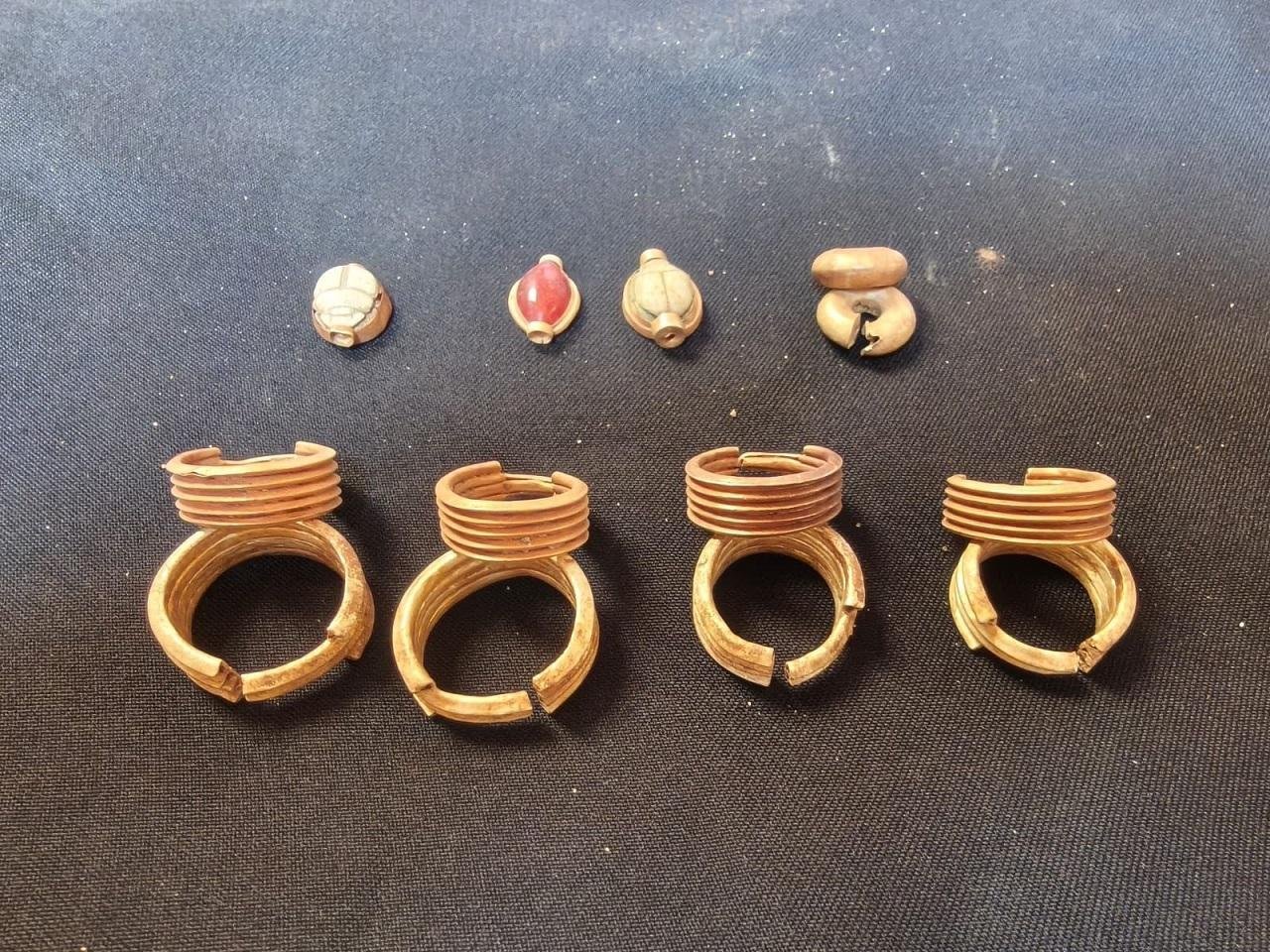
The burial objects came from beneath a mudbrick tomb containing human skeletal remains. As excavation moved deeper below the grave, archaeologists uncovered a carefully placed cache of adornments, ritual items, and personal objects connected with burial customs practiced in the ancient city.
Among the finds was a copper mirror, along with two alabaster cosmetic vessels whose lids remained intact. Traces of kohl still survived inside them after centuries underground. Researchers also recovered a third kohl container carved from black obsidian, a material rarely identified in burials of this type.
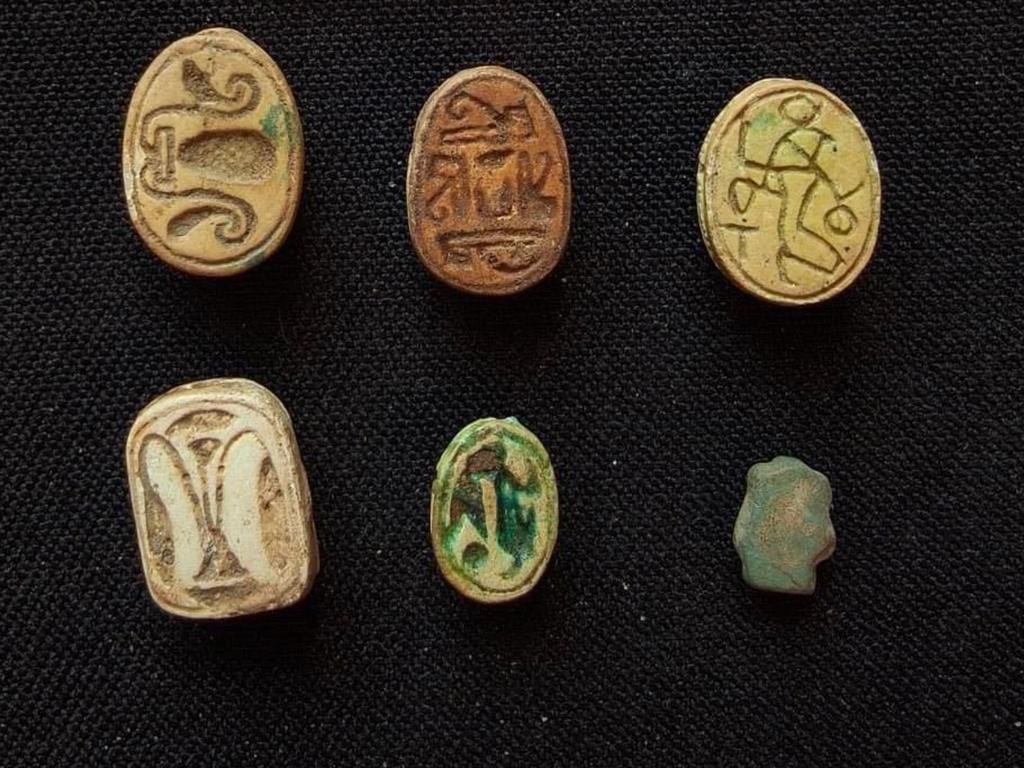
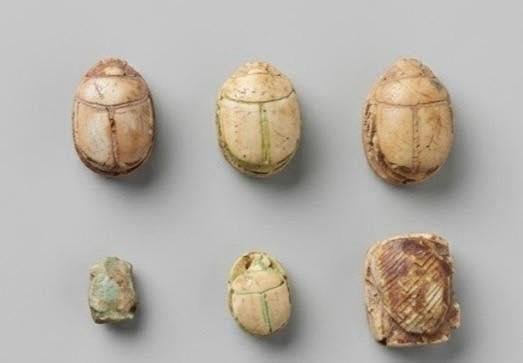
The cache included two light blue faience vessels. One vessel held six symbolic scarabs decorated with incised markings. Two of the scarabs had metal settings with a yellow color consistent with gold. Excavators also identified a group of faience amulets shaped into symbolic forms associated with ancient Egyptian belief systems. These included a duck amulet and another representing the Atef crown, a headdress tied to royal and divine symbolism.
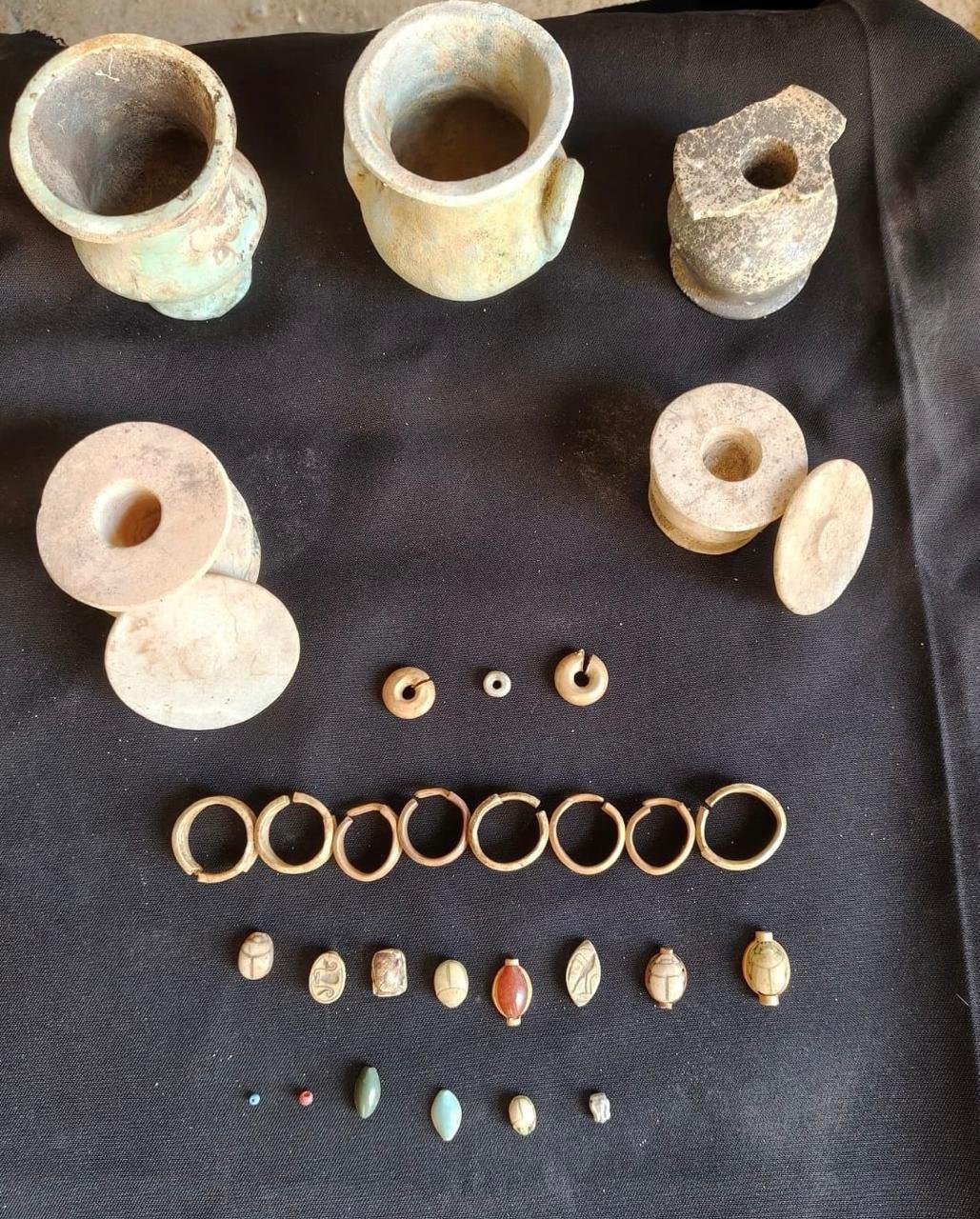
Four decorative stones were recovered nearby. Researchers believe two are varieties of agate. One pinkish red stone had been mounted in a yellow metal frame thought to be gold. Another displayed a greenish, lapis-like appearance.
Jewelry formed another part of the burial deposit. Archaeologists uncovered five pairs of earrings ranging from 1.5 to 2.5 centimeters in diameter. Their composition has not yet been fully confirmed, though specialists believe the pieces were made of gold.
The new material builds on discoveries made earlier in the excavation season. Teams working at the cemetery previously identified burial structures built from mudbrick and limestone, along with fragmented remains of two coffins. One coffin was ceramic. The second consisted of gilded plaster decorated with red painted motifs. Inside, excavators found gilded human remains believed to belong to a military figure, together with a coin dating to the Roman period. Limestone blocks carrying hieroglyphic inscriptions also emerged from the site.
The Panhesy cemetery forms part of the wider necropolis of ancient Heliopolis, known in Egyptian sources as Iunu or On. Heliopolis served as the chief cult center of the sun god Ra and held religious importance for centuries. The cemetery offers archaeologists a rare record of changing burial traditions across different eras.
Evidence from the site indicates continued use of the cemetery through several historical phases, stretching from the Late Period into Roman and early Christian times. This long sequence gives researchers an opportunity to examine how funerary customs changed during periods marked by political shifts, religious transformation, and social change.
Egyptian officials involved in the project view the discovery as an important step in rebuilding the archaeological picture of Heliopolis, a city whose ancient monuments and cemeteries have survived beneath modern Cairo. Continued excavation at the Panhesy necropolis is expected to provide more information about the people buried there, their social identities, and the rituals tied to death and memory in one of Egypt’s oldest sacred landscapes.
More information: Egyptian Ministry of Tourism and Antiquities



Disclaimer: This website is a science-focused magazine that welcomes both academic and non-academic audiences. Comments are written by users and may include personal opinions or unverified claims. They do not necessarily reflect the views of our editorial team or rely on scientific evidence.
Comment Policy: We kindly ask all commenters to engage respectfully. Comments that contain offensive, insulting, degrading, discriminatory, or racist content will be automatically removed.