• About
  • Privacy Policy
  • Terms of Use
  • Donation
  • Contact
No Result
View All Result
Archaeology News
  • Home
  • News
    • Archaeology
    • Anthropology
    • Paleontology
  • Academic
    • Books
    • Conferences
    • Universities
  • Articles
  • VR Tours
  • Quiz & Game
  • Download
  • Encyclopedia
  • Forum
Archaeology News
No Result
View All Result
Home News Anthropology

Copper Age children in Spain suffered widespread respiratory disease, skeletal study suggests

by Dario Radley
June 1, 2026

Children living in southeastern Iberia nearly 5,000 years ago faced frequent respiratory illnesses, according to a new study of skeletal remains from Camino del Molino, one of Europe’s largest Copper Age burial sites.

The site, located in present-day Spain, dates to the 3rd millennium BCE and contains the remains of more than 1,300 people. Communities used the burial cave for over 700 years, creating a large collection of human remains from different generations. Among them, archaeologists recovered 48 intact skeletons belonging to children and adolescents. Such finds are rare because bones in communal graves often become mixed or damaged over time.

Researchers examined the young individuals for signs of disease preserved in their bones. Their findings, published in the International Journal of Paleopathology, suggest respiratory infections affected a large part of the population and played a major role in childhood illness and death.
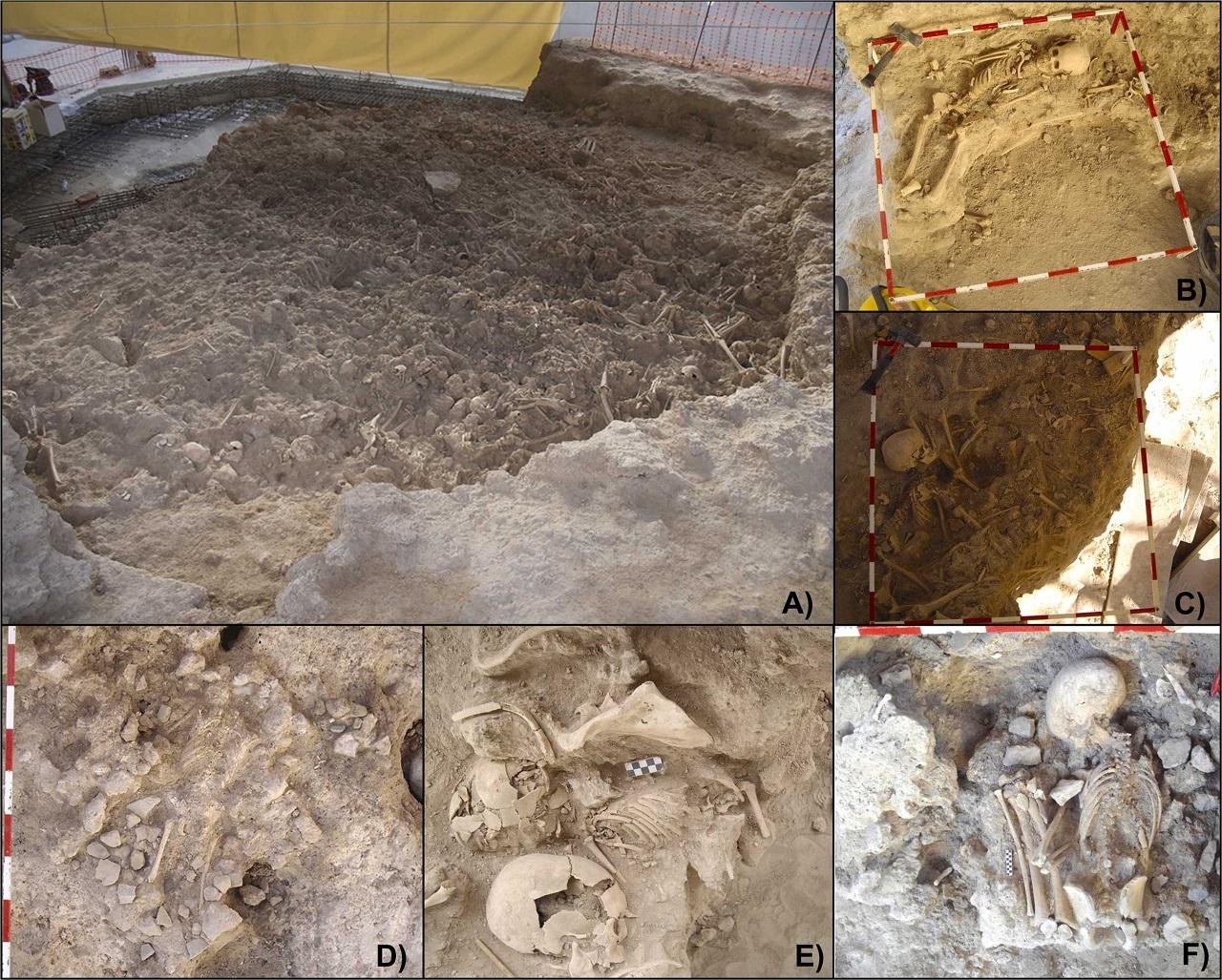
Copper Age children in Spain suffered widespread respiratory disease, skeletal study suggests
Díaz-Navarro et al., International Journal of Paleopathology (2026); (This image is used under the terms of the CC BY-NC-ND license for non-commercial, educational, and informational purposes. If you are the copyright holder and have any concerns regarding its use, please contact us)

The numbers paint a striking picture. Forty-four of the 48 individuals, or 91.7 percent, showed at least one skeletal alteration linked to poor health. Porous skeletal lesions appeared in 43 individuals, representing 89.6 percent of the sample. Signs associated with respiratory infections appeared in 33 individuals, or 68.8 percent.

Many children carried evidence of both conditions. Researchers identified the co-occurrence of porous lesions and infection-related bone changes in 32 individuals, equal to two-thirds of the sample. Statistical analysis showed children with porous skeletal lesions were more than 11 times more likely to display signs linked to respiratory disease.

The team recorded several types of bone changes. Some appeared as porous areas in the skull and thigh bones. Others included small grooves and pitting on the inner surface of the skull, along with abnormal bone growth in the spine, pelvis, sacrum, and hip region. Previous studies have linked some of these lesions to infections spreading through the bloodstream, including the early stages of tuberculosis.

Lead author Sonia Díaz-Navarro and her colleagues argue that the pattern points toward repeated or long-lasting respiratory illness rather than a single disease episode. The lesions appeared too frequently and across too many age groups to be explained only by normal childhood growth.

Age played an important role. The highest rates of skeletal changes appeared among children between one and four years old and among adolescents aged ten to fourteen. Researchers identified these same age groups as periods when young people faced greater vulnerability to respiratory infections.

The study found no meaningful differences between males and females. Among the individuals whose biological sex could be estimated, both groups showed similar rates of disease-related changes. Such a pattern suggests shared environmental conditions affected children throughout the community.

Daily life likely contributed to the spread of illness. Children would have spent time in homes filled with smoke from indoor fires. They also lived around dust, food-processing activities, animal waste, and livestock. Constant exposure to these conditions could have increased the risk of respiratory disease and contact with infectious organisms.

The burial evidence reveals another aspect of life at Camino del Molino. Researchers found no indication that children suffering from illness received different funerary treatment. Individuals with visible health conditions were buried alongside others in the same communal setting. Previous work at the site identified people with healed skull surgeries and other physical differences, yet burial practices remained consistent across the population.

The authors describe Camino del Molino as a rare opportunity to study childhood health on a population scale rather than through isolated cases. The unusually large number of preserved non-adult skeletons allows researchers to examine broader patterns of disease, survival, and mortality within a prehistoric community.

Future studies will focus on ancient DNA and other biomolecular evidence. Researchers hope such analyses will identify tuberculosis bacteria or other respiratory pathogens within the remains. Additional work examining diet and family relationships could help explain why some individuals faced greater health risks than others.

The evidence from Camino del Molino suggests respiratory infections were a common part of life for many children during the Copper Age. Those illnesses left traces in their bones, preserving a record of childhood health that survived for nearly five millennia.
More information: Díaz-Navarro, S., Santos, A. L., Lomba Maurandi, J., Del Nogal, M., Casas-Ferreira, A. M., Pérez Pavón, J. L., & Haber Uriarte, M. (2026). Porous skeletal lesions and respiratory infection-related changes in Chalcolithic non-adults: A biocultural approach from Camino del Molino (southeastern Iberia). International Journal of Paleopathology, 53, 69–81. doi:10.1016/j.ijpp.2026.04.001

Share:

Share on Facebook Share on X (Twitter) Share on LinkedIn Share on Pinterest Share on WhatsApp Share on Email

You May Also Like...

Unknown World War II mass grave with 14 German soldiers uncovered at quarry site in Poland
Anthropology

Unknown World War II mass grave with 14 German soldiers uncovered at quarry site in Poland

May 31, 2026
Volunteers restore England’s mysterious Cerne Abbas Giant as climate and erosion threaten ancient landmark
Archaeology

Volunteers restore England’s mysterious Cerne Abbas Giant as climate and erosion threaten ancient landmark

May 31, 2026
Buried church bell found in Poland after decades hidden beneath roadside
Archaeology

Buried church bell found in Poland after decades hidden beneath roadside

May 31, 2026
Stone Age humans built complex grass beds at Border Cave 200,000 years ago, study finds
Archaeology

Stone Age humans built complex grass beds at Border Cave 200,000 years ago, study finds

May 30, 2026
Radiocarbon dating confirms Teutonic Knights built Feldioara Fortress in 13th-century Transylvania
Archaeology

Radiocarbon dating confirms Teutonic Knights built Feldioara Fortress in 13th-century Transylvania

May 30, 2026
Ancient shipwreck with 300 amphorae found off Italy could reshape views of Mediterranean wine trade
Archaeology

Ancient shipwreck with 300 amphorae found off Italy could reshape views of Mediterranean wine trade

May 29, 2026

Comments 0

  1. Editorial Team says:
    1 second ago

    Disclaimer: This website is a science-focused magazine that welcomes both academic and non-academic audiences. Comments are written by users and may include personal opinions or unverified claims. They do not necessarily reflect the views of our editorial team or rely on scientific evidence.

    Comment Policy: We kindly ask all commenters to engage respectfully. Comments that contain offensive, insulting, degrading, discriminatory, or racist content will be automatically removed.

    Reply

Leave a Reply Cancel reply

Your email address will not be published. Required fields are marked *

Follow us


Instagram
242K

Facebook
117K

Threads
47K

LinkedIn
15K

Twitter
6K

YouTube
1K

Archaeology News online magazine

Archaeology News is an international online magazine that covers all aspects of archaeology.


Categories

  • Academics
    • Books
    • Conferences
    • Universities
  • Articles
  • Download
  • Game
  • News
    • Anthropology
    • Archaeology
    • Paleontology
  • Quiz
  • Tours

Subscribe to our newsletter

© 2024 - Archaeology News Online Magazine. All Rights Reserved.

  • About
  • Privacy Policy
  • Terms of Use
  • Donation
  • Contact

Manage Consent
To provide the best experiences, we use technologies like cookies to store and/or access device information. Consenting to these technologies will allow us to process data such as browsing behavior or unique IDs on this site. Not consenting or withdrawing consent, may adversely affect certain features and functions.
Functional Always active
The technical storage or access is strictly necessary for the legitimate purpose of enabling the use of a specific service explicitly requested by the subscriber or user, or for the sole purpose of carrying out the transmission of a communication over an electronic communications network.
Preferences
The technical storage or access is necessary for the legitimate purpose of storing preferences that are not requested by the subscriber or user.
Statistics
The technical storage or access that is used exclusively for statistical purposes. The technical storage or access that is used exclusively for anonymous statistical purposes. Without a subpoena, voluntary compliance on the part of your Internet Service Provider, or additional records from a third party, information stored or retrieved for this purpose alone cannot usually be used to identify you.
Marketing
The technical storage or access is required to create user profiles to send advertising, or to track the user on a website or across several websites for similar marketing purposes.
  • Manage options
  • Manage services
  • Manage {vendor_count} vendors
  • Read more about these purposes
View preferences
  • {title}
  • {title}
  • {title}
  • Home
  • News
    • Archaeology
    • Anthropology
    • Paleontology
  • Academic
    • Books
    • Conferences
    • Universities
  • Articles
  • VR Tours
  • Quiz & Game
  • Download
  • Encyclopedia
  • Forum

About  .  Contact  .  Donation

© 2024 - Archaeology News Online Magazine. All Rights Reserved