
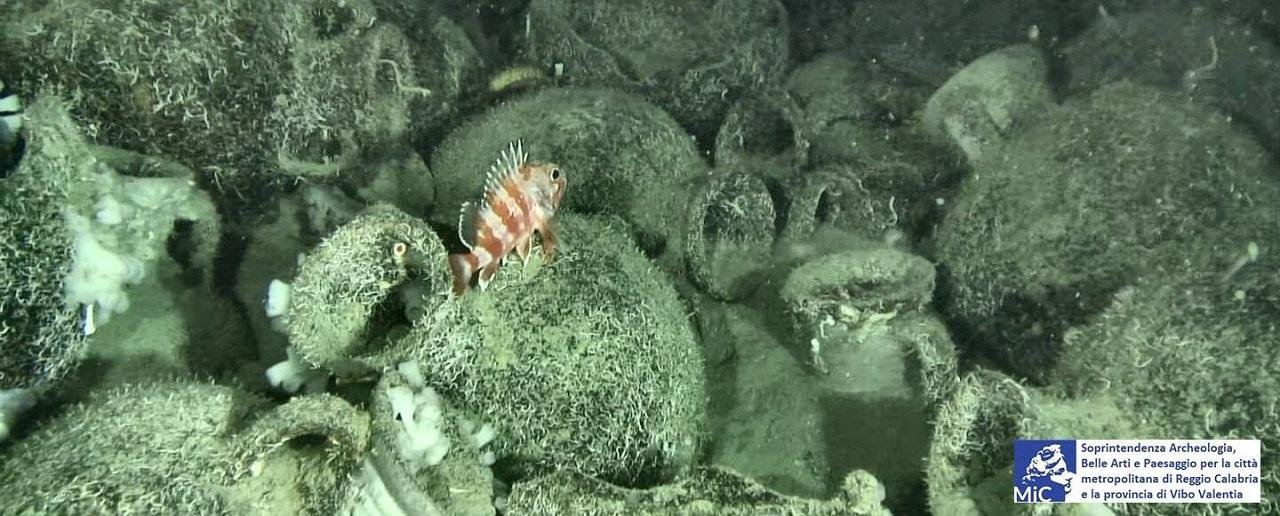
A shipwreck dating to the 5th and 4th centuries BCE has drawn archaeologists’ attention off the coast of Monasterace in southern Italy. Hidden beneath the waters of the Ionian Sea, the wreck holds a cargo of more than 300 amphorae, many of them still grouped on the seabed after over two thousand years underwater.
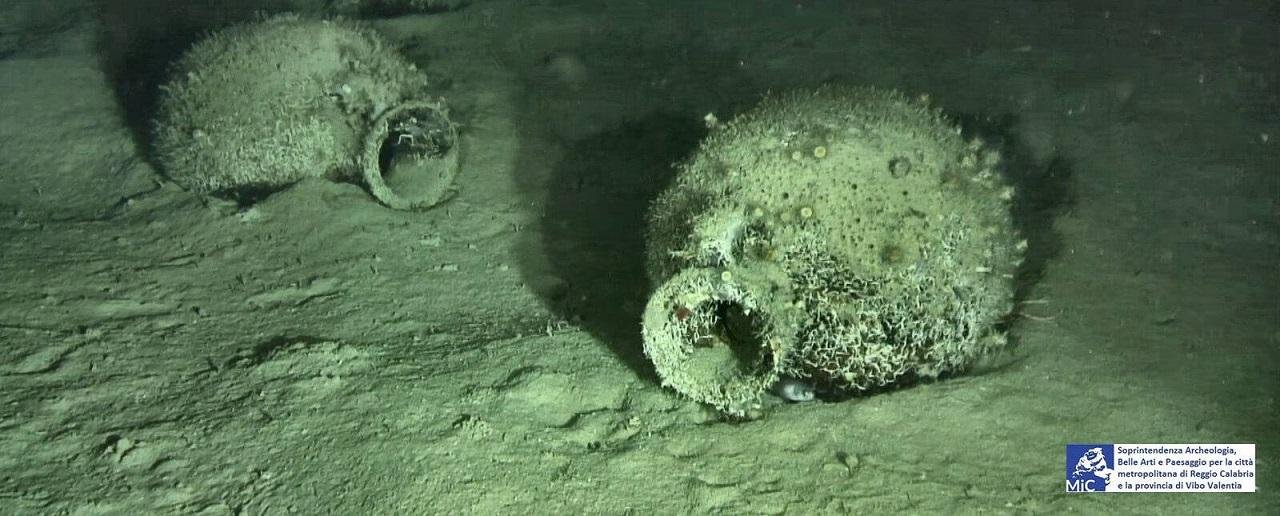
Researchers believe the site could help trace trade and shipping patterns in the ancient Mediterranean. Early analysis points toward links with Magna Graecia, the Greek settlements of southern Italy, especially in the production and movement of wine along the Ionian coast. The amphorae themselves offer another clue. Their shapes resemble ceramic types associated with workshops in Magna Graecia and Sicily.
The find emerged from preventive archaeology work tied to plans for an offshore wind farm. During feasibility studies in 2023, specialists surveyed the seafloor using advanced mapping systems and underwater imaging methods. The work brought together marine archaeologists, geologists, physicists, chemists, and marine biologists.
After the investigation, researchers submitted a technical report to the Superintendency of Archaeology, Fine Arts and Landscape for the Metropolitan City of Reggio Calabria and the Province of Vibo Valentia. Italian cultural authorities then launched a protection program focused on deep-water underwater heritage.
Italy’s Ministry of Culture funds the project. An internal team manages planning, recovery, conservation, and future public presentation of the finds. Architect Roberta Filocamo coordinates the operation. Underwater archaeologist Alessandra Ghelli directs project planning and field activities. Marine archaeologists Laura Sanna and Francesco Tiboni joined the team alongside restorers and conservation specialists. Support from the Carabinieri Diving Unit of Messina and the Cultural Heritage Protection Unit of Cosenza forms part of the operation as well.


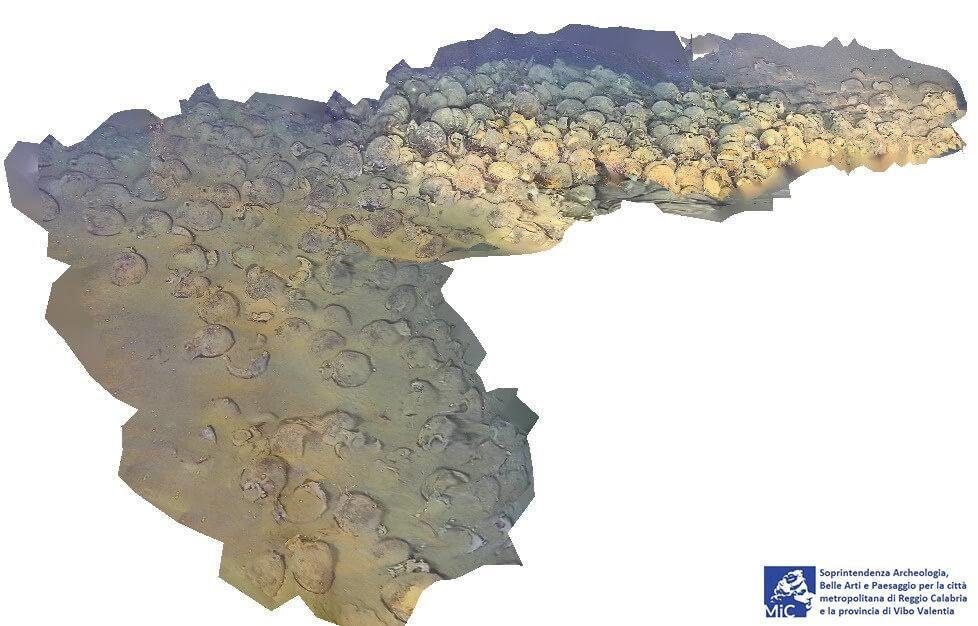
Work at the site expanded in 2025. Archaeologists began detailed photogrammetric recording to build accurate digital models of the wreck and chart the position of the cargo. Those surveys produced an important result. The amphorae sit in two separate clusters around ten meters apart.
Researchers link this separation to bottom trawling. Fishing gear dragged across the seabed appears to have disturbed the original arrangement of the cargo. Damage from such activity raised concerns about the future condition of the site.
International underwater heritage guidelines usually favor leaving submerged remains in place. The 2001 UNESCO Convention on the Protection of Underwater Cultural Heritage supports in situ preservation whenever conditions allow. Archaeologists chose a different course for this wreck because of the threat posed by continued trawling and the layout of the material on the seafloor.
The team plans to recover the full cargo. Their goal centers on long-term protection, scientific study, restoration, and eventual display for the public.
Current work includes close inspection of the wreck, high-resolution photogrammetric documentation, analysis of the amphorae, and recovery of samples for laboratory testing. Researchers are studying the condition of the ceramics after centuries underwater. Those studies will guide future recovery stages and help specialists choose restoration methods suited to different forms of deterioration.
The cargo carries historical value beyond the artifacts themselves. Archaeologists hope the amphorae will help identify their production centers and clarify trade links between southern Italy, Sicily, and wider Mediterranean networks during the classical period.
More information: Soprintendenza ABAP per la città di Reggio Calabria e Vibo Valentia





Disclaimer: This website is a science-focused magazine that welcomes both academic and non-academic audiences. Comments are written by users and may include personal opinions or unverified claims. They do not necessarily reflect the views of our editorial team or rely on scientific evidence.
Comment Policy: We kindly ask all commenters to engage respectfully. Comments that contain offensive, insulting, degrading, discriminatory, or racist content will be automatically removed.