• About
  • Privacy Policy
  • Terms of Use
  • Donation
  • Contact
No Result
View All Result
Archaeology News
  • Home
  • News
    • Archaeology
    • Anthropology
    • Paleontology
  • Academic
    • Books
    • Conferences
    • Universities
  • Articles
  • VR Tours
  • Quiz & Game
  • Download
  • Encyclopedia
  • Forum
Archaeology News
No Result
View All Result
Home News Archaeology

6,000-year-old mega-structure unearthed at prehistoric settlement in Romania

by Dario Radley
May 29, 2026

Archaeologists working in northeastern Romania have uncovered a large prehistoric building linked to the Cucuteni-Trypillia culture, a society known for building some of Europe’s earliest large settlements. The structure stood at the site of Stăuceni-Holm and dates back around 6,000 years.
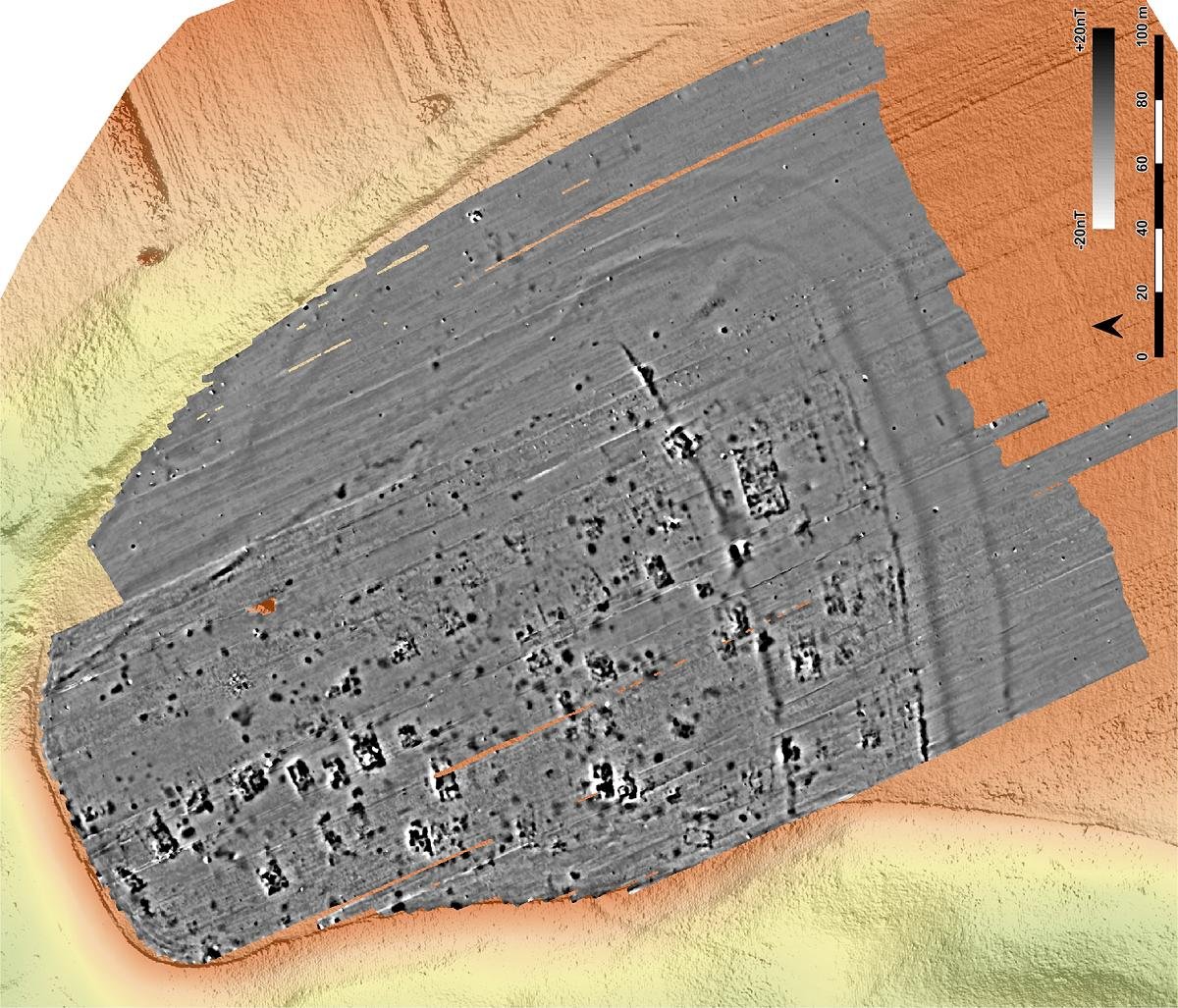
6,000-year-old mega-structure unearthed at prehistoric settlement in Romania
Magnetogram of the site. Made with QGIS. Digital surface model made by SfM and Drone. Credit: C. Mischka; Mischka et al., PloS One (2026)

Researchers believe the building served a public purpose within the settlement. At roughly 350 square meters, the structure far exceeded the size of nearby homes. Its placement near the settlement boundary also drew attention during the first stages of the survey.

The Cucuteni-Trypillia culture spread across parts of modern Romania, Moldova, and Ukraine between about 5000 and 3500 BCE. Archaeologists have long studied these settlements because some reached unusual sizes for prehistoric Europe. Even in communities with large populations, evidence for strong social divisions stays limited.
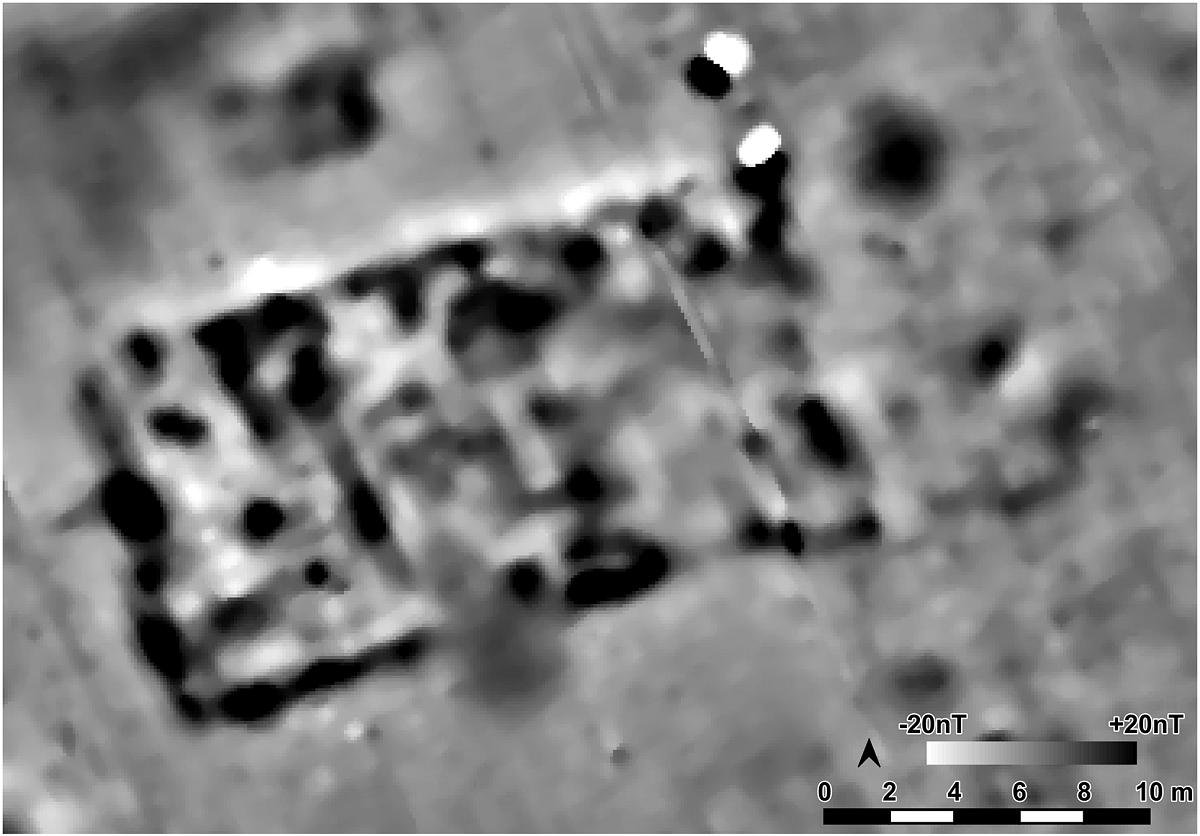
6,000-year-old mega-structure unearthed at prehistoric settlement in Romania
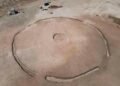
Magnetogram of the house plot 5/6, the so-called mega-structure. Made with QGIS. Credit: C. Mischka; Mischka et al., PloS One (2026)

Excavations at many Cucuteni-Trypillia sites produced few elite graves and little evidence for rulers or wealthy families. Most houses follow similar layouts and dimensions. Archaeologists continue debating how these communities organized political and social life without clear signs of centralized authority.
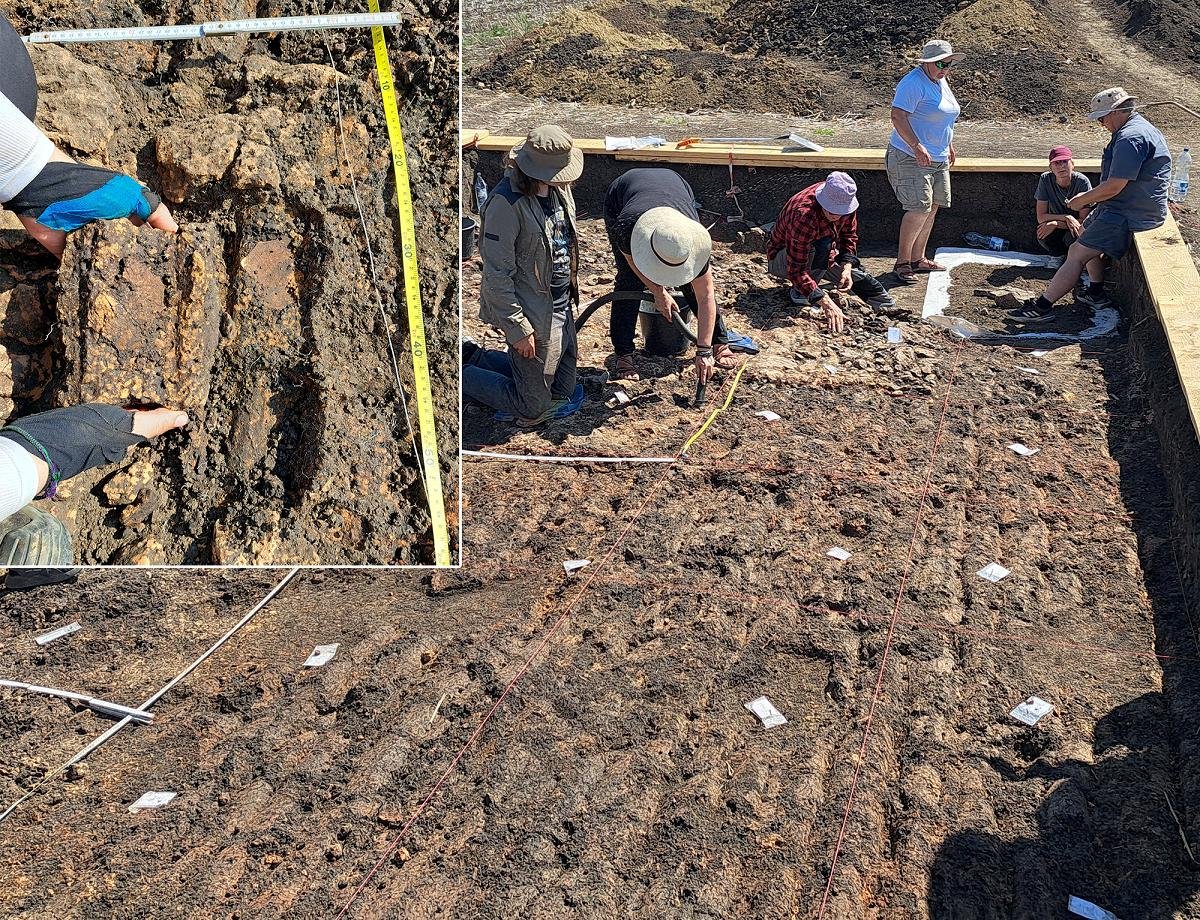
6,000-year-old mega-structure unearthed at prehistoric settlement in Romania
Mega-structure house 5/6. Photo of a detail of the floor’s substruction. Wooden logs were covered by loam which burnt and preserved thereby the shape of the wooden parts as imprints in the earth. Credit: C. Mischka; Mischka et al., PloS One (2026)

A Romanian and German research team carried out fieldwork at Stăuceni-Holm during the 2023 and 2024 excavation seasons. Before excavation began, researchers surveyed the area with geomagnetic equipment. The scans revealed buried structures spread across the settlement. One large feature near the ditch surrounding the site stood out immediately.

RelatedStories

'Patchwork families' lived in Europe over 5,000 years ago, Neolithic DNA study finds

‘Patchwork families’ lived in Europe over 5,000 years ago, Neolithic DNA study finds

May 25, 2026
6,000-year-old necropolis in Spain rewrites origins of Europe’s first megalithic tombs

6,000-year-old necropolis in Spain rewrites origins of Europe’s first megalithic tombs

May 18, 2026

Excavation trenches exposed foundation ditches filled with postholes from large wooden supports. Archaeologists also uncovered sections of a thick clay floor. The building differed from ordinary houses in several ways. Researchers found very little evidence for cooking, storage, or domestic activity inside the structure.

This absence of household features led the team to interpret the building as a communal structure rather than a residence. Researchers suggest local residents gathered there for meetings, ceremonies, planning, or other collective activities tied to settlement life.
6,000-year-old mega-structure unearthed at prehistoric settlement in Romania
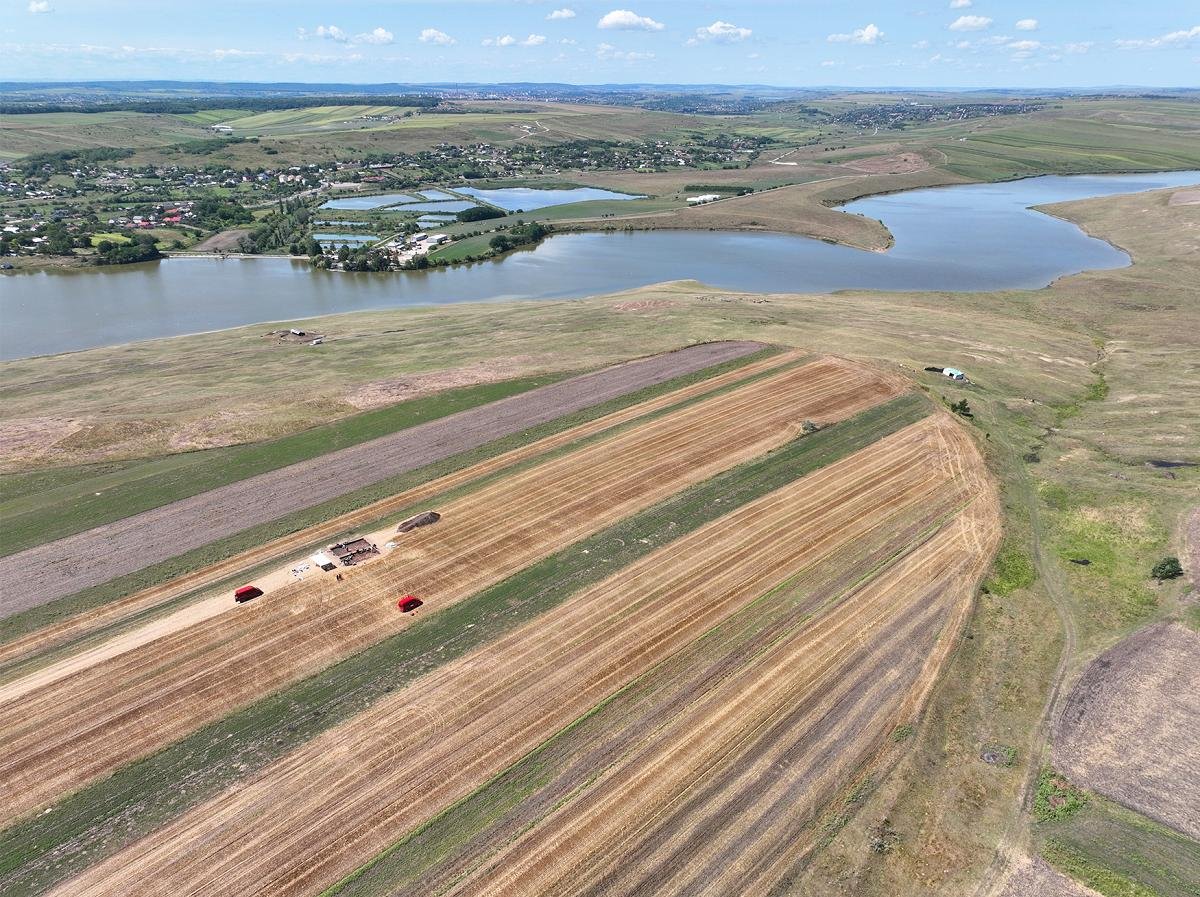
Aerial photograph of the promontory with the reservoir at the bottom of the slopes. Visible: The trenches of the 2023 excavation, cutting the southwestern corner of the “mega-structure” house number 5/6. Credit: Aerial photography from drone, made by C. Mischka; Mischka et al., PloS One (2026)

Large public buildings known as mega-structures have appeared at several Cucuteni-Trypillia settlements across Eastern Europe. Only a small number received detailed excavation. The example from Stăuceni-Holm adds fresh material to discussions about how these prehistoric communities governed themselves.

Some archaeologists argue that Cucuteni-Trypillia settlements relied on shared decision-making instead of rule by elites. Public buildings like the one uncovered in Romania support this interpretation because they point toward organized communal activity within large populations.

The study authors noted that mega-structures appear repeatedly across settlements tied to this culture. Their repeated presence suggests an important social role within these communities. Researchers view them as possible gathering halls or administrative spaces used by local groups.

Large sections of the building remain buried, and excavation work continues at the site. Future seasons may produce more evidence linked to the structure’s original function.

For now, the discovery offers another look at how people living in large prehistoric settlements organized community life thousands of years before written history appeared in the region.
More information: Mischka, D., Mischka, C., Kovács, A., Aparaschivei, C., & Marinova, E. (2026). The mega-structure at Stăuceni-’Holm’, Botoşani county, Romania and the debate about the governing of Cucuteni-Trypillia-settlements. PloS One, 21(3), e0343603. doi:10.1371/journal.pone.0343603

Share:

Share on Facebook Share on X (Twitter) Share on LinkedIn Share on Pinterest Share on WhatsApp Share on Email

You May Also Like...

Ancient DNA reveals 700-kilometer migration along Peru’s coast before the Inca Empire
Anthropology

Ancient DNA reveals 700-kilometer migration along Peru’s coast before the Inca Empire

May 29, 2026
Medieval bone study identifies microbial communities driving archaeological bone degradation and preservation
Anthropology

Medieval bone study identifies microbial communities driving archaeological bone degradation and preservation

May 28, 2026
A large hidden hydraulic system mapped around the Urartian fortress of Argishtikhinili in Armenia
Archaeology

A large hidden hydraulic system mapped around the Urartian fortress of Argishtikhinili in Armenia

May 28, 2026
Sasanian military helmets reveal advanced brass technology across the Persian Empire
Archaeology

Sasanian military helmets reveal advanced brass technology across the Persian Empire

May 28, 2026
Neanderthals and early humans reshaped Europe’s landscapes long before the rise of farming, study finds
Anthropology

Payre fossil teeth reveal regional diversity among Europe’s earliest Neanderthals

May 27, 2026
Ancient DNA links 400-year-old Finland burial to Sámi ancestry and possible Iceland journey
Anthropology

Ancient DNA links 400-year-old Finland burial to Sámi ancestry and possible Iceland journey

May 27, 2026

Comments 0

  1. Editorial Team says:
    1 second ago

    Disclaimer: This website is a science-focused magazine that welcomes both academic and non-academic audiences. Comments are written by users and may include personal opinions or unverified claims. They do not necessarily reflect the views of our editorial team or rely on scientific evidence.

    Comment Policy: We kindly ask all commenters to engage respectfully. Comments that contain offensive, insulting, degrading, discriminatory, or racist content will be automatically removed.

    Reply

Leave a Reply Cancel reply

Your email address will not be published. Required fields are marked *

Follow us


Instagram
242K

Facebook
117K

Threads
47K

LinkedIn
15K

Twitter
6K

YouTube
1K
Ancient DNA reveals 700-kilometer migration along Peru’s coast before the Inca Empire

Ancient DNA reveals 700-kilometer migration along Peru’s coast before the Inca Empire

May 29, 2026
6,000-year-old mega-structure unearthed at prehistoric settlement in Romania

6,000-year-old mega-structure unearthed at prehistoric settlement in Romania

May 29, 2026
Medieval bone study identifies microbial communities driving archaeological bone degradation and preservation

Medieval bone study identifies microbial communities driving archaeological bone degradation and preservation

May 28, 2026
A large hidden hydraulic system mapped around the Urartian fortress of Argishtikhinili in Armenia

A large hidden hydraulic system mapped around the Urartian fortress of Argishtikhinili in Armenia

May 28, 2026

Archaeology News online magazine

Archaeology News is an international online magazine that covers all aspects of archaeology.


Categories

  • Academics
    • Books
    • Conferences
    • Universities
  • Articles
  • Download
  • Game
  • News
    • Anthropology
    • Archaeology
    • Paleontology
  • Quiz
  • Tours

Subscribe to our newsletter

© 2024 - Archaeology News Online Magazine. All Rights Reserved.

  • About
  • Privacy Policy
  • Terms of Use
  • Donation
  • Contact

Manage Consent
To provide the best experiences, we use technologies like cookies to store and/or access device information. Consenting to these technologies will allow us to process data such as browsing behavior or unique IDs on this site. Not consenting or withdrawing consent, may adversely affect certain features and functions.
Functional Always active
The technical storage or access is strictly necessary for the legitimate purpose of enabling the use of a specific service explicitly requested by the subscriber or user, or for the sole purpose of carrying out the transmission of a communication over an electronic communications network.
Preferences
The technical storage or access is necessary for the legitimate purpose of storing preferences that are not requested by the subscriber or user.
Statistics
The technical storage or access that is used exclusively for statistical purposes. The technical storage or access that is used exclusively for anonymous statistical purposes. Without a subpoena, voluntary compliance on the part of your Internet Service Provider, or additional records from a third party, information stored or retrieved for this purpose alone cannot usually be used to identify you.
Marketing
The technical storage or access is required to create user profiles to send advertising, or to track the user on a website or across several websites for similar marketing purposes.
  • Manage options
  • Manage services
  • Manage {vendor_count} vendors
  • Read more about these purposes
View preferences
  • {title}
  • {title}
  • {title}
  • Home
  • News
    • Archaeology
    • Anthropology
    • Paleontology
  • Academic
    • Books
    • Conferences
    • Universities
  • Articles
  • VR Tours
  • Quiz & Game
  • Download
  • Encyclopedia
  • Forum

About  .  Contact  .  Donation

© 2024 - Archaeology News Online Magazine. All Rights Reserved