• About
  • Privacy Policy
  • Terms of Use
  • Donation
  • Contact
No Result
View All Result
Archaeology News
  • Home
  • News
    • Archaeology
    • Anthropology
    • Paleontology
  • Academic
    • Books
    • Conferences
    • Universities
  • Articles
  • VR Tours
  • Quiz & Game
  • Download
  • Encyclopedia
  • Forum
Archaeology News
No Result
View All Result
Home News Anthropology

Payre fossil teeth reveal regional diversity among Europe’s earliest Neanderthals

by Dario Radley
May 27, 2026

A team led by the Centro Nacional de Investigación sobre la Evolución Humana studied fossil teeth from the Payre site in southeastern France. The material comes from nine teeth found in layers linked to the Middle Pleistocene, around 250,000 years ago. The research focuses on how early Neanderthal populations in Europe changed over time and across regions.
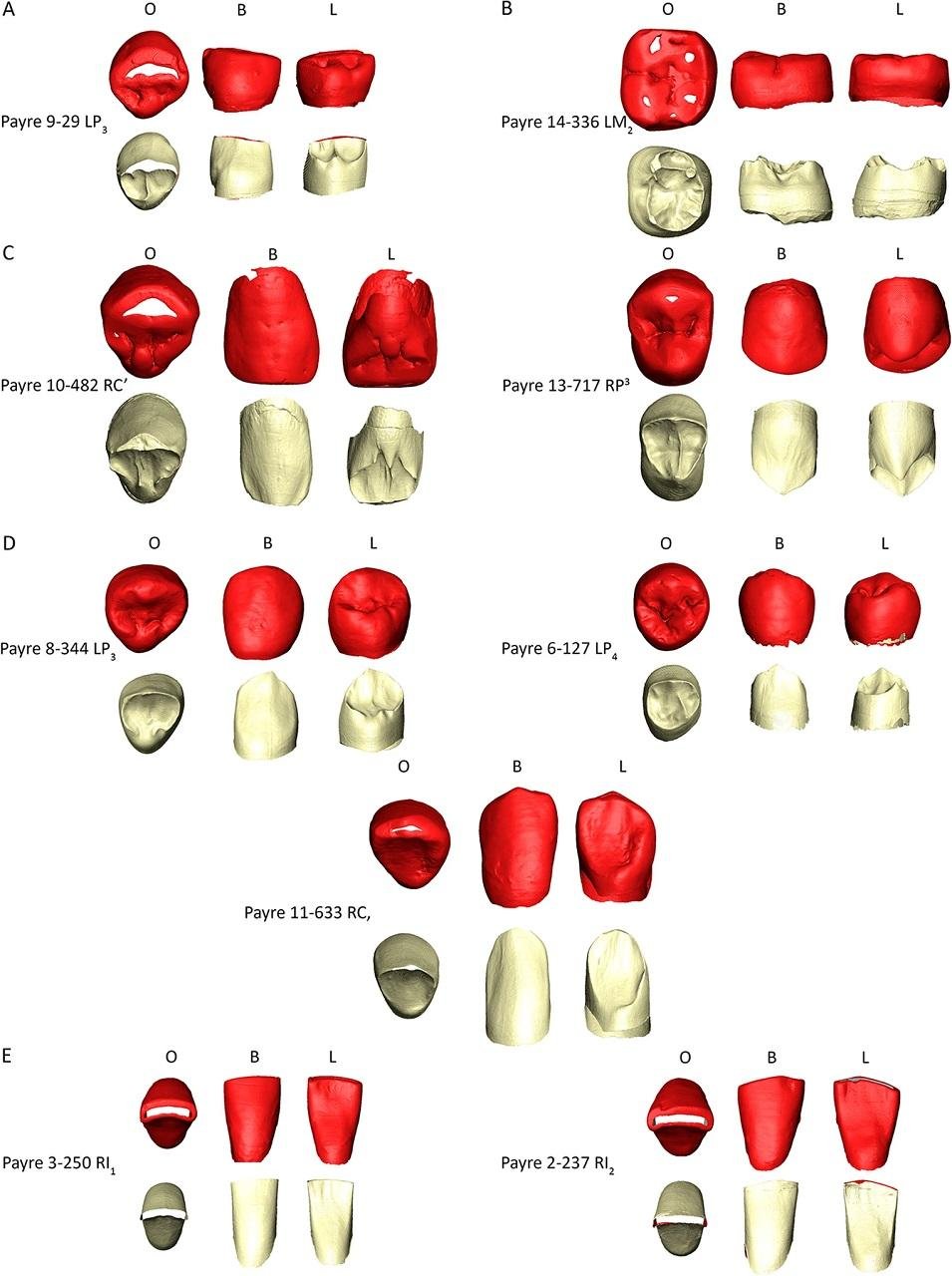
Payre fossil teeth reveal regional diversity among Europe’s earliest Neanderthals
Payre dental remains included in the study. Credit: Martín-Francés et al., Archaeological and Anthropological Sciences (2026)

The scientists examined each tooth using micro-CT scans and geometric morphometric analysis. These tools allowed them to record surface shape and internal structures, including enamel and dentine boundaries. Dental tissue proportions were also measured. The approach gave access to details not visible in older studies of the same fossils.

Payre sits within a period known as Marine Isotope Stage 7. Human fossils from this time are rare, and their place in Neanderthal evolution has been debated for years. Some researchers link them closely to later Neanderthals. Others see stronger ties to earlier Middle Pleistocene groups.

The Payre teeth do not fall into a single pattern. Some features align with fossils from Biache-Saint-Vaast and Montmaurin-La Niche in France. Others show similarities with the Sima de los Huesos sample from Atapuerca in Spain, which belongs to an earlier stage of human evolution in Europe.

Variation appears inside the Payre sample itself. Teeth from lower layers, especially front teeth, show simpler shapes linked with earlier human groups. Upper layers show more derived Neanderthal traits. This pattern appears across the small set of nine teeth, not only between sites but also within the same excavation sequence.

RelatedStories

Neanderthals gathered shellfish like modern humans 115,000 years ago, study finds

Neanderthals gathered shellfish like modern humans 115,000 years ago, study finds

May 21, 2026
Pompeii victim identified as Roman physician killed while fleeing Vesuvius eruption

Pompeii victim identified as Roman physician killed while fleeing Vesuvius eruption

May 17, 2026

The study places this variation within a broader climate context. Europe during the Middle Pleistocene went through repeated shifts in temperature and environment. These shifts changed habitats and movement routes for human groups. Populations split, stayed isolated for long periods, then came into contact again. This pattern fits the mixed dental signals seen at Payre.

Neanderthals and early humans reshaped Europe’s landscapes long before the rise of farming, study finds
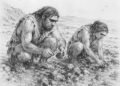
Neanderthal hunters depicted in the Gallo-Romeins Museum, Tongeren (Belgium). Credit: Benoit Brummer; CC BY 4.0

The results link Neanderthal evolution with regional population structure rather than a single linear progression. Different groups in Europe followed separate paths while still sharing a common background. The Payre fossils fit into this picture as one of the few direct records from MIS 7.

Researchers also highlight the value of older fossil collections. The Payre teeth were found years ago and studied before, yet new imaging methods revealed internal details not available earlier. Structures inside the teeth added new data to the discussion about Neanderthal variation.

The study places Payre alongside other key sites in Europe, including Biache-Saint-Vaast, Montmaurin-La Niche, and Sima de los Huesos. Together, these sites show a wide spread of traits across time and geography during the Middle Pleistocene.
Publication: Martín-Francés, L., Martínez de Pinillos, M., Martinón-Torres, M., García-Campos, C., Magne, L., Arsuaga, J. L., … Vialet, A. (2026). Reassessment and new evidence of the dental remains from Payre site (France). Archaeological and Anthropological Sciences, 18(6). doi:10.1007/s12520-026-02453-1
More information: Spanish National Research Center for Human Evolution

Share:

Share on Facebook Share on X (Twitter) Share on LinkedIn Share on Pinterest Share on WhatsApp Share on Email

You May Also Like...

Ancient DNA links 400-year-old Finland burial to Sámi ancestry and possible Iceland journey
Anthropology

Ancient DNA links 400-year-old Finland burial to Sámi ancestry and possible Iceland journey

May 27, 2026
Ming Dynasty surgical tools reveal traces of toxic herbal anesthetic used 600 years ago
Archaeology

Ming Dynasty surgical tools reveal traces of toxic herbal anesthetic used 600 years ago

May 26, 2026
Greek theatrical mask found in Croatian cave points to ancient Illyrian sanctuary rituals
Archaeology

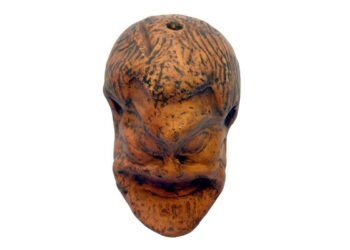
Greek theatrical mask found in Croatian cave points to ancient Illyrian sanctuary rituals

May 26, 2026
Oldest known rock art dated to 67,800 years discovered in Sulawesi cave
Archaeology

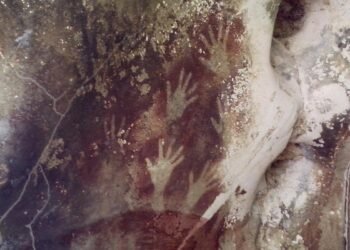
Scientist questions dating of world’s oldest cave art and Neanderthal paintings

May 26, 2026
Svalbard whalers show scurvy and extreme labor stress in “corpse point” cemetery
Anthropology

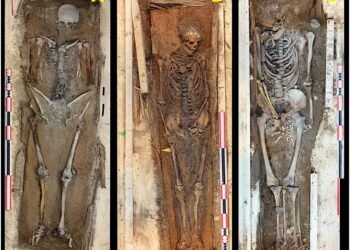
Svalbard whalers show scurvy and extreme labor stress in “corpse point” cemetery

May 25, 2026
'Patchwork families' lived in Europe over 5,000 years ago, Neolithic DNA study finds
Anthropology

‘Patchwork families’ lived in Europe over 5,000 years ago, Neolithic DNA study finds

May 25, 2026

Comments 0

  1. Editorial Team says:
    1 second ago

    Disclaimer: This website is a science-focused magazine that welcomes both academic and non-academic audiences. Comments are written by users and may include personal opinions or unverified claims. They do not necessarily reflect the views of our editorial team or rely on scientific evidence.

    Comment Policy: We kindly ask all commenters to engage respectfully. Comments that contain offensive, insulting, degrading, discriminatory, or racist content will be automatically removed.

    Reply

Leave a Reply Cancel reply

Your email address will not be published. Required fields are marked *

Follow us


Instagram
242K

Facebook
117K

Threads
46K

LinkedIn
14K

Twitter
6K

YouTube
1K
Neanderthals and early humans reshaped Europe’s landscapes long before the rise of farming, study finds

Payre fossil teeth reveal regional diversity among Europe’s earliest Neanderthals

May 27, 2026
Ancient DNA links 400-year-old Finland burial to Sámi ancestry and possible Iceland journey

Ancient DNA links 400-year-old Finland burial to Sámi ancestry and possible Iceland journey

May 27, 2026
Ming Dynasty surgical tools reveal traces of toxic herbal anesthetic used 600 years ago

Ming Dynasty surgical tools reveal traces of toxic herbal anesthetic used 600 years ago

May 26, 2026
Greek theatrical mask found in Croatian cave points to ancient Illyrian sanctuary rituals

Greek theatrical mask found in Croatian cave points to ancient Illyrian sanctuary rituals

May 26, 2026

Archaeology News online magazine

Archaeology News is an international online magazine that covers all aspects of archaeology.


Categories

  • Academics
    • Books
    • Conferences
    • Universities
  • Articles
  • Download
  • Game
  • News
    • Anthropology
    • Archaeology
    • Paleontology
  • Quiz
  • Tours

Subscribe to our newsletter

© 2024 - Archaeology News Online Magazine. All Rights Reserved.

  • About
  • Privacy Policy
  • Terms of Use
  • Donation
  • Contact

Manage Consent
To provide the best experiences, we use technologies like cookies to store and/or access device information. Consenting to these technologies will allow us to process data such as browsing behavior or unique IDs on this site. Not consenting or withdrawing consent, may adversely affect certain features and functions.
Functional Always active
The technical storage or access is strictly necessary for the legitimate purpose of enabling the use of a specific service explicitly requested by the subscriber or user, or for the sole purpose of carrying out the transmission of a communication over an electronic communications network.
Preferences
The technical storage or access is necessary for the legitimate purpose of storing preferences that are not requested by the subscriber or user.
Statistics
The technical storage or access that is used exclusively for statistical purposes. The technical storage or access that is used exclusively for anonymous statistical purposes. Without a subpoena, voluntary compliance on the part of your Internet Service Provider, or additional records from a third party, information stored or retrieved for this purpose alone cannot usually be used to identify you.
Marketing
The technical storage or access is required to create user profiles to send advertising, or to track the user on a website or across several websites for similar marketing purposes.
  • Manage options
  • Manage services
  • Manage {vendor_count} vendors
  • Read more about these purposes
View preferences
  • {title}
  • {title}
  • {title}
  • Home
  • News
    • Archaeology
    • Anthropology
    • Paleontology
  • Academic
    • Books
    • Conferences
    • Universities
  • Articles
  • VR Tours
  • Quiz & Game
  • Download
  • Encyclopedia
  • Forum

About  .  Contact  .  Donation

© 2024 - Archaeology News Online Magazine. All Rights Reserved