• About
  • Privacy Policy
  • Terms of Use
  • Donation
  • Contact
No Result
View All Result
Archaeology News
  • Home
  • News
    • Archaeology
    • Anthropology
    • Paleontology
  • Academic
    • Books
    • Conferences
    • Universities
  • Articles
  • VR Tours
  • Quiz & Game
  • Download
  • Encyclopedia
  • Forum
Archaeology News
No Result
View All Result
Home News Anthropology

Neanderthals gathered shellfish like modern humans 115,000 years ago, study finds

by Dario Radley
May 21, 2026

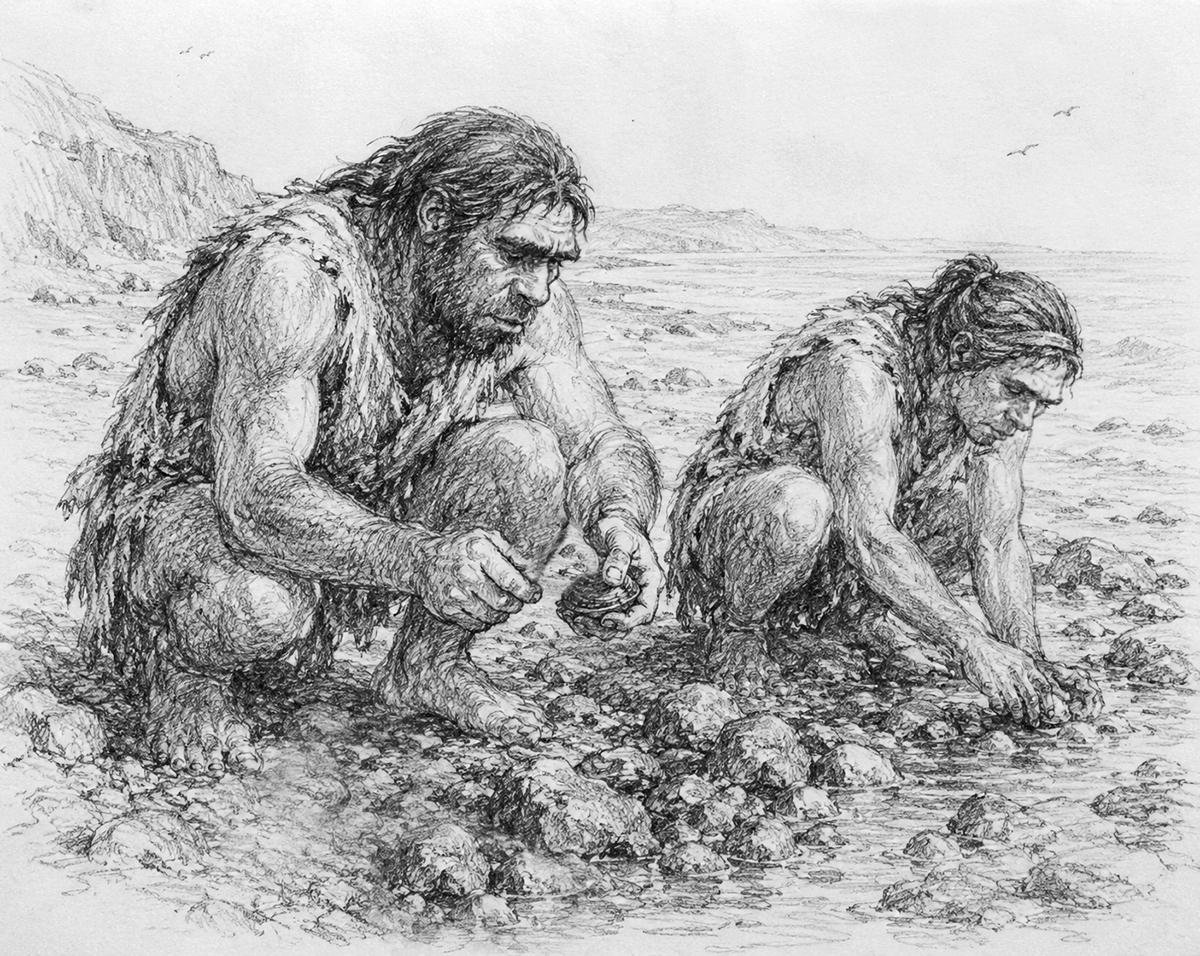
Neanderthal groups living along the southern coast of Europe gathered shellfish through every season around 115,000 years ago, according to a new study from researchers working in Spain. The work focused on remains from Los Aviones Cave and adds fresh evidence about how Neanderthals managed coastal food sources long before modern humans reached many parts of Europe.
Neanderthals gathered shellfish like modern humans 115,000 years ago, study finds
Neanderthals gathered shellfish like modern humans 115,000 years ago, study finds. Credit: Archaeology News Online Magazine

Scientists from Universitat Autònoma de Barcelona, University of Burgos, and University of Cantabria led the research, published in Proceedings of the National Academy of Sciences. Their analysis showed Neanderthals collected shellfish during every part of the year, though colder months saw heavier activity. Most harvesting took place between late autumn and early spring.

Archaeologists have argued for years about whether Neanderthals used marine resources in an organized way or gathered shellfish only when food grew scarce. Earlier views often linked seasonal planning and regular seafood use with Homo sapiens. The findings from Los Aviones Cave point in another direction.

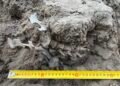
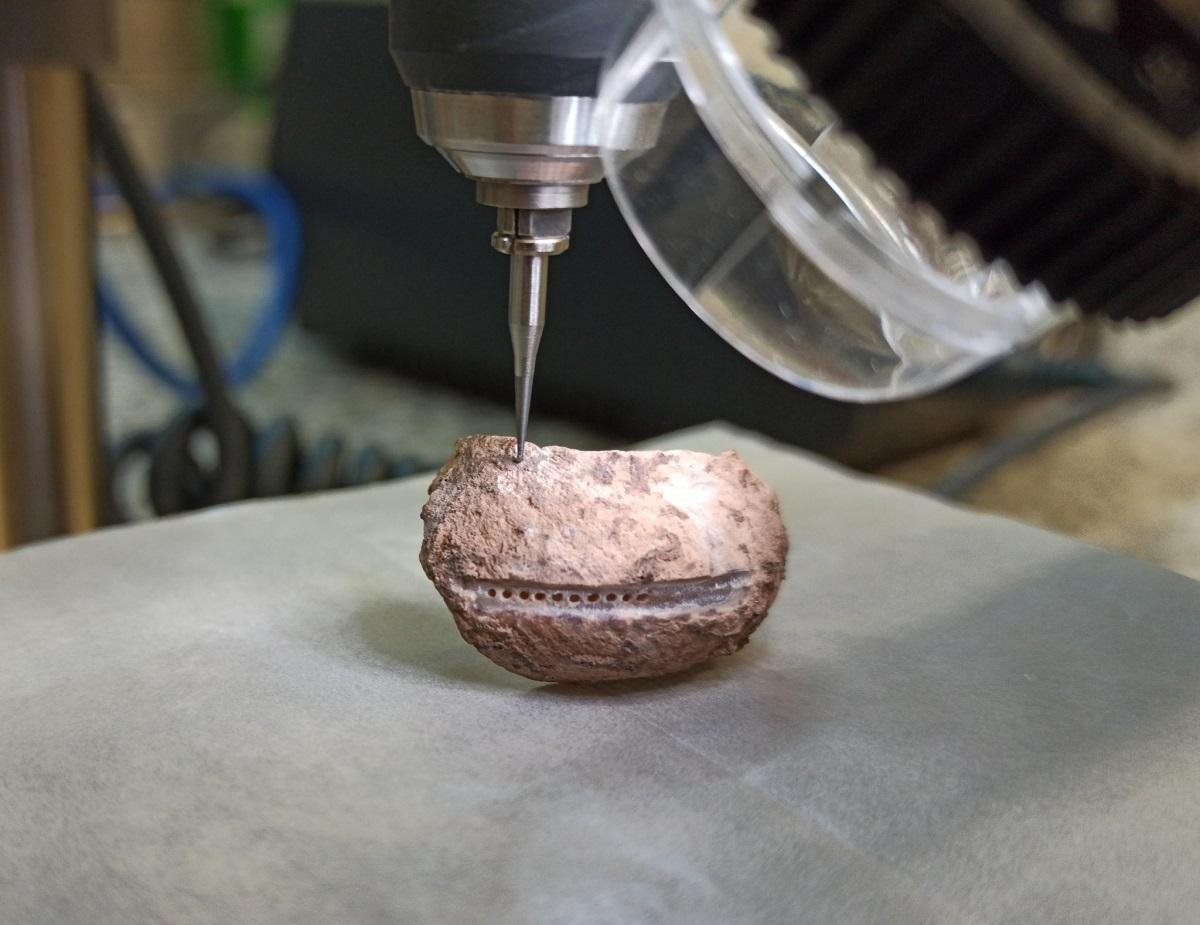
Researchers studied limpets and small sea snails left behind by Neanderthal groups. The shells preserved oxygen isotope signals formed during growth. Those chemical changes reflect seawater temperatures at different times of the year. By tracing the pattern inside each shell, the team identified when people collected and ate the animals.
Neanderthals gathered shellfish like modern humans 115,000 years ago, study finds
Analysis of a specimen of the gastropod Phorcus turbinatus. Credit: ICTA-UAB

The results showed a clear pattern instead of random gathering. Neanderthals returned to coastal areas throughout the year, though winter and cooler months drew stronger attention. Scientists compared this behavior with later Upper Paleolithic and Mesolithic populations from southern Europe and found strong similarities.
RelatedStories

Oldest known dental treatment found in 59,000-year-old Neanderthal tooth from Siberia

Oldest known dental treatment found in 59,000-year-old Neanderthal tooth from Siberia

May 14, 2026
Homo erectus in Java: 140,000-year-old fossils found in submerged river valley

400,000-year-old Homo erectus proteins reveal genetic links to Denisovans and modern humans

May 14, 2026

Cold-season harvesting likely offered practical advantages. Many shellfish species contain more edible meat during reproductive periods in cooler months. Warm weather also increases the risk of spoilage and harmful algae blooms near the coast. Avoiding heavy summer collection reduced health risks tied to contaminated shellfish.

Researchers argue the evidence points to planning and knowledge of seasonal marine cycles. Marine foods probably formed one part of a wider diet, though shellfish still supplied protein, omega-3 fatty acids, and zinc. Those nutrients support brain function and reproductive health.

The study adds to growing evidence showing Neanderthals possessed advanced survival skills and flexible food strategies. Earlier discoveries across Europe already showed they produced tools, used pigments, and occupied different environments over long periods. The seasonal shellfish pattern from Los Aviones Cave adds another layer to that picture.

Southern Spain continues to play a major role in research on Neanderthal life. Coastal caves from the Iberian Peninsula preserve rare traces of daily activity, including food remains, pigments, and ornaments linked with these ancient populations.

The shell remains from Los Aviones Cave now stand among the oldest known examples of structured marine resource gathering in human history.
Publication: García-Escárzaga, A., Gutiérrez-Zugasti, I., Marín, A., Zapata, J., Moreno-Márquez, A., Clarke, L. J., … Colonese, A. C. (2026). Seasonal shellfish exploitation by Neanderthals 115,000 years ago. Proceedings of the National Academy of Sciences of the United States of America, 123(22), e2531880123. doi:10.1073/pnas.2531880123
More information: Autonomous University of Barcelona

Share:

Share on Facebook Share on X (Twitter) Share on LinkedIn Share on Pinterest Share on WhatsApp Share on Email

You May Also Like...

Ancient pigeons were already living alongside humans 3,400 years ago, study finds
Archaeology

Ancient pigeons were already living alongside humans 3,400 years ago, study finds

May 21, 2026
Ancient Venetic sanctuary with rare inscriptions unearthed beneath road project in Italy
Archaeology

Ancient Venetic sanctuary with rare inscriptions unearthed beneath road project in Italy

May 21, 2026
1,000-year-old dingo burial in Australia reveals deep ties between Barkindji people and dingoes
Archaeology

1,000-year-old ritually buried dingo in Australia reveals deep ties between Barkindji people and dingoes

May 20, 2026
Ancient texts reveal how Persian and Greek rule shaped language in Central Asia
Archaeology

Ancient texts reveal how Persian and Greek rule shaped language in Central Asia

May 20, 2026
World War II mass grave in Poland reveals remains of German officer killed during Battle of Lauban
Anthropology

World War II mass grave in Poland reveals remains of German officer killed during Battle of Lauban

May 19, 2026
massive jar in Laos contained remains of 37 people, revealing ancient burial rituals and Asian trade links
Anthropology

Massive jar in Laos contained remains of 37 people, revealing ancient burial rituals and Asian trade links

May 19, 2026

Comments 0

  1. Editorial Team says:
    1 second ago

    Disclaimer: This website is a science-focused magazine that welcomes both academic and non-academic audiences. Comments are written by users and may include personal opinions or unverified claims. They do not necessarily reflect the views of our editorial team or rely on scientific evidence.

    Comment Policy: We kindly ask all commenters to engage respectfully. Comments that contain offensive, insulting, degrading, discriminatory, or racist content will be automatically removed.

    Reply

Leave a Reply Cancel reply

Your email address will not be published. Required fields are marked *

Follow us


Instagram
242K

Facebook
117K

Threads
46K

LinkedIn
14K

Twitter
6K

YouTube
1K
Neanderthals gathered shellfish like modern humans 115,000 years ago, study finds

Neanderthals gathered shellfish like modern humans 115,000 years ago, study finds

May 21, 2026
Ancient pigeons were already living alongside humans 3,400 years ago, study finds

Ancient pigeons were already living alongside humans 3,400 years ago, study finds

May 21, 2026
Ancient Venetic sanctuary with rare inscriptions unearthed beneath road project in Italy

Ancient Venetic sanctuary with rare inscriptions unearthed beneath road project in Italy

May 21, 2026
1,000-year-old dingo burial in Australia reveals deep ties between Barkindji people and dingoes

1,000-year-old ritually buried dingo in Australia reveals deep ties between Barkindji people and dingoes

May 20, 2026

Archaeology News online magazine

Archaeology News is an international online magazine that covers all aspects of archaeology.


Categories

  • Academics
    • Books
    • Conferences
    • Universities
  • Articles
  • Download
  • Game
  • News
    • Anthropology
    • Archaeology
    • Paleontology
  • Quiz
  • Tours

Subscribe to our newsletter

© 2024 - Archaeology News Online Magazine. All Rights Reserved.

  • About
  • Privacy Policy
  • Terms of Use
  • Donation
  • Contact

Manage Consent
To provide the best experiences, we use technologies like cookies to store and/or access device information. Consenting to these technologies will allow us to process data such as browsing behavior or unique IDs on this site. Not consenting or withdrawing consent, may adversely affect certain features and functions.
Functional Always active
The technical storage or access is strictly necessary for the legitimate purpose of enabling the use of a specific service explicitly requested by the subscriber or user, or for the sole purpose of carrying out the transmission of a communication over an electronic communications network.
Preferences
The technical storage or access is necessary for the legitimate purpose of storing preferences that are not requested by the subscriber or user.
Statistics
The technical storage or access that is used exclusively for statistical purposes. The technical storage or access that is used exclusively for anonymous statistical purposes. Without a subpoena, voluntary compliance on the part of your Internet Service Provider, or additional records from a third party, information stored or retrieved for this purpose alone cannot usually be used to identify you.
Marketing
The technical storage or access is required to create user profiles to send advertising, or to track the user on a website or across several websites for similar marketing purposes.
  • Manage options
  • Manage services
  • Manage {vendor_count} vendors
  • Read more about these purposes
View preferences
  • {title}
  • {title}
  • {title}
  • Home
  • News
    • Archaeology
    • Anthropology
    • Paleontology
  • Academic
    • Books
    • Conferences
    • Universities
  • Articles
  • VR Tours
  • Quiz & Game
  • Download
  • Encyclopedia
  • Forum

About  .  Contact  .  Donation

© 2024 - Archaeology News Online Magazine. All Rights Reserved