• About
  • Privacy Policy
  • Terms of Use
  • Donation
  • Contact
No Result
View All Result
Archaeology News
  • Home
  • News
    • Archaeology
    • Anthropology
    • Paleontology
  • Academic
    • Books
    • Conferences
    • Universities
  • Articles
  • VR Tours
  • Quiz & Game
  • Download
  • Encyclopedia
  • Forum
Archaeology News
No Result
View All Result
Home News Anthropology

Oldest known dental treatment found in 59,000-year-old Neanderthal tooth from Siberia

by Dario Radley
May 14, 2026

A Neanderthal living nearly 59,000 years ago in southern Siberia appears to have undergone a form of dental treatment far earlier than scientists once expected. Researchers studying a molar from Chagyrskaya Cave in Russia found signs of deliberate drilling inside a painful cavity, suggesting Neanderthals identified the source of tooth pain and attempted to treat the problem directly.
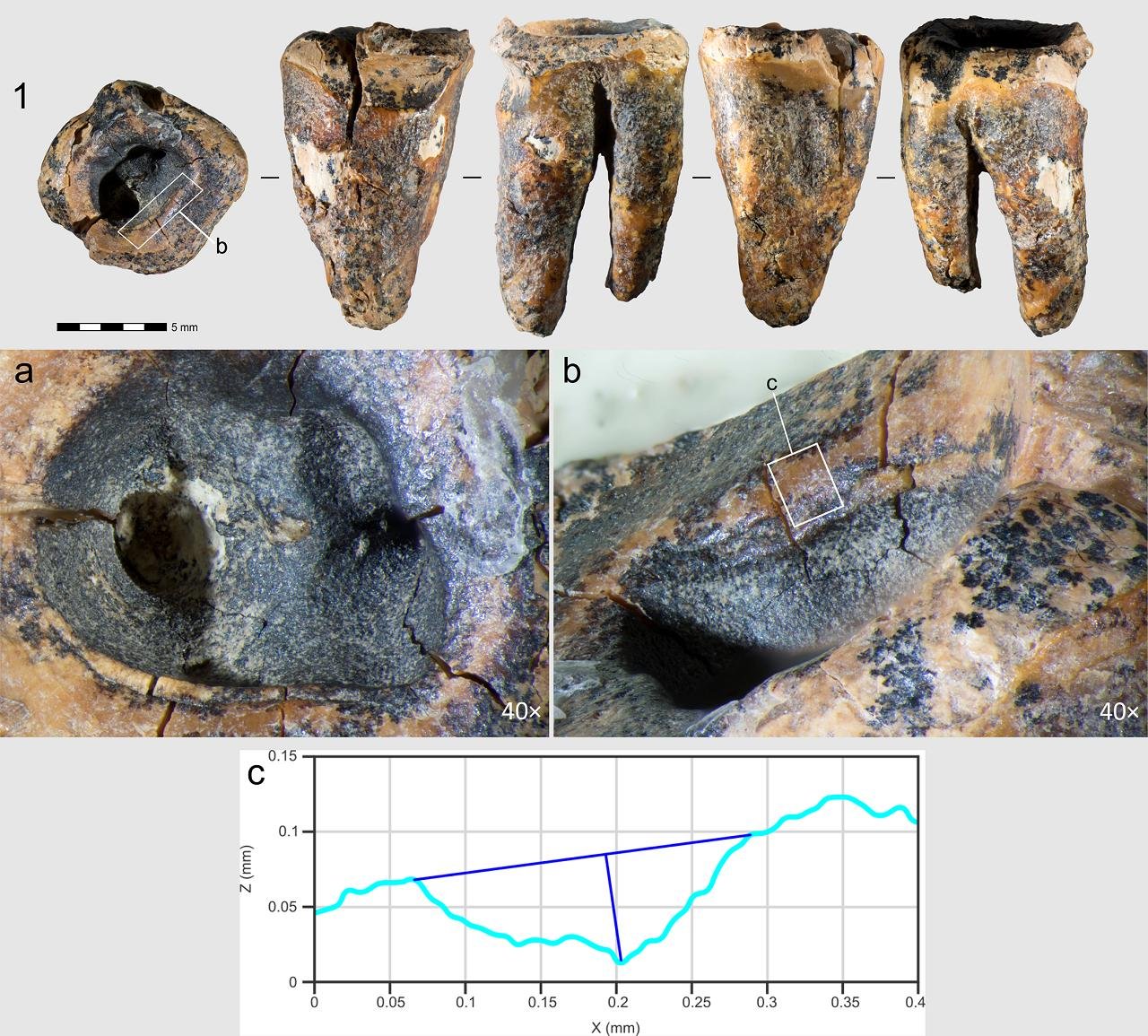
Oldest known dental treatment found in 59,000-year-old Neanderthal tooth from Siberia
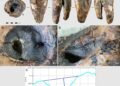
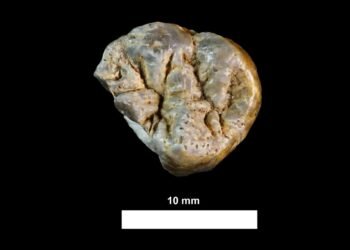
Chagyrskaya 64 molar tooth and its macro-features. Credit: Zubova et al., PloS One (2026)

The study, published in PLOS One, focused on a lower left second molar labeled Chagyrskaya 64. The tooth has a large hollow on the chewing surface extending into the pulp chamber, where nerves and blood vessels sit. Severe decay in this area would have caused strong pain while eating or even at rest.

Researchers first noticed the cavity did not match normal patterns of tooth wear or natural damage. The shape was unusual, and scratches inside the hollow suggested repeated contact with a sharp object. Along one side of the same tooth, the team also found grooves linked to frequent toothpick use, showing the individual had likely tried several ways to deal with oral pain.

To test whether the cavity was artificially made, the team drilled three modern human teeth using stone tools similar to those recovered from the cave. These experiments produced grooves and microscopic traces closely matching those inside the Neanderthal molar.

This comparison supports the idea that someone used a sharp stone point to rotate or drill into the decayed area. The goal was likely to remove damaged tissue and reach the infected pulp. Researchers say the work happened while the individual was still alive.

RelatedStories

Neanderthals used rhinoceros teeth as tools for making stone implements, study finds

Neanderthals used rhinoceros teeth as tools for making stone implements, study finds

May 9, 2026
Neanderthal infants grew twice as fast as modern humans, study finds

Neanderthal infants grew twice as fast as modern humans, study finds

May 2, 2026

Such a procedure would have been painful. No anesthetics existed, and drilling into infected tissue would have caused immediate discomfort. Even so, opening the tooth and clearing decay could reduce pressure and ease pain caused by infection.
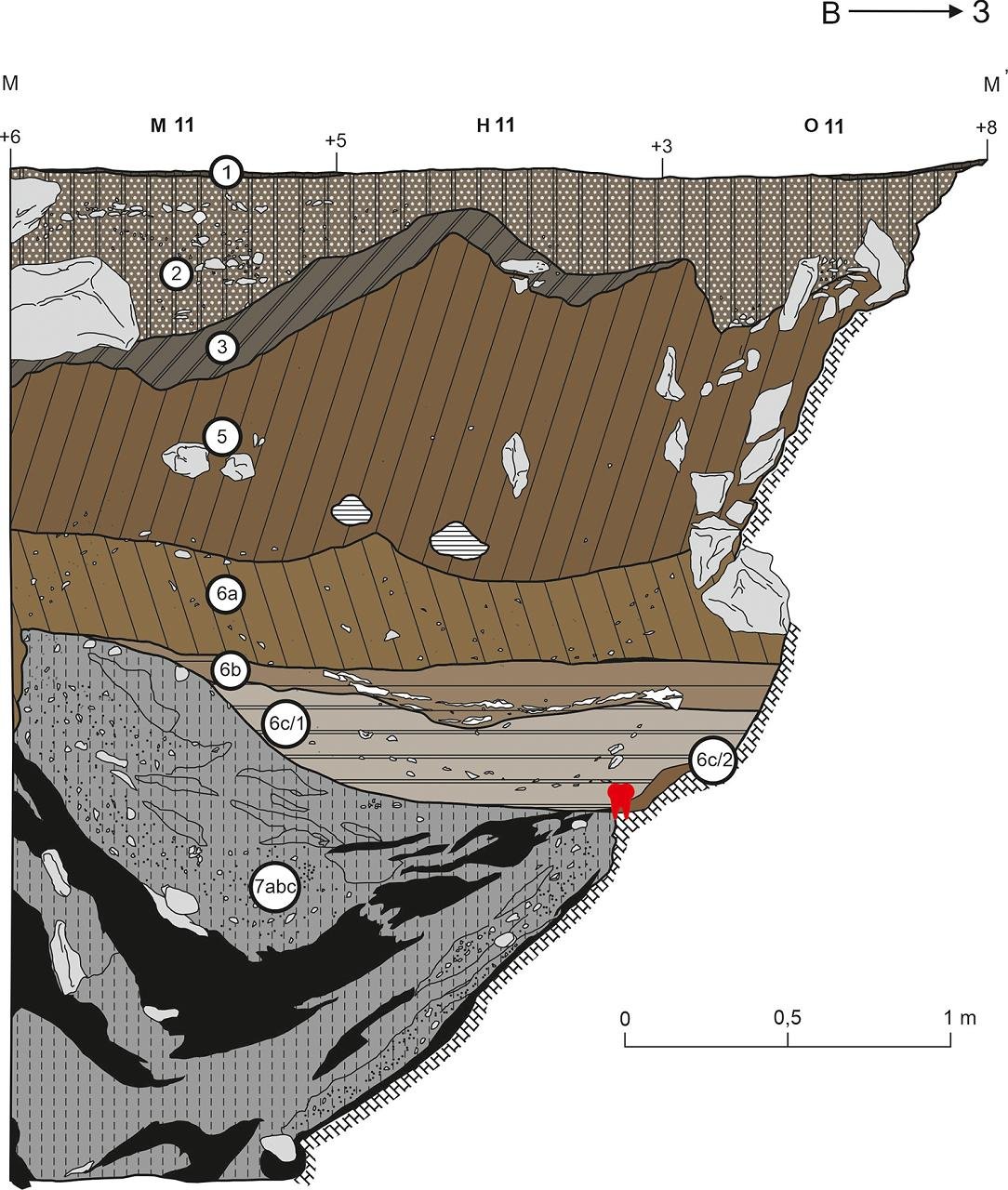
Oldest known dental treatment found in 59,000-year-old Neanderthal tooth from Siberia
Discovery location of the Chagyrskaya 64 molar. Stratigraphic sequence (created in CorelDRAW based on excavation data). Credit: Zubova et al., PloS One (2026)

The strongest evidence for success comes from wear marks inside the drilled cavity. After the intervention, the individual continued chewing with the tooth long enough to leave visible wear on the treated area. This suggests the procedure improved function rather than worsening the injury.

Ancient dental behavior has been documented before, though rarely in such direct form. Previous studies suggested Neanderthals used toothpicks to remove food trapped between teeth. Some evidence has also linked them to medicinal plant use. Direct invasive treatment has remained largely absent from the record.

The Chagyrskaya molar changes that picture. According to the research team, this tooth provides the oldest known evidence of deliberate dental treatment anywhere in the human fossil record. Comparable evidence in Homo sapiens appears more than 40,000 years later.

The work required careful hand control. Drilling into a small cavity with a thin stone tool demands stable finger movement and controlled pressure. Researchers also identified traces of more than one manipulation technique on the same tooth, suggesting different tools or methods were used for separate tasks.

This finding fits broader evidence from Chagyrskaya Cave, where archaeologists have uncovered stone tools, animal remains, and genetic material linked to Neanderthal groups connected with Micoquian populations from Central and Eastern Europe. These groups moved into the Altai region around 70,000 to 60,000 years ago and remained there for thousands of years.

Over the last decade, studies have continued to shift views of Neanderthals. Evidence now links them to complex toolmaking, care for injured group members, and planned use of resources. This drilled molar adds another example of deliberate problem-solving in daily life.

One damaged tooth does not answer every question about Neanderthal health practices. Still, this small find shows a painful dental problem was identified and treated with stone tools tens of thousands of years before similar procedures appear in later human groups.

More information: Zubova, A. V., Zotkina, L. V., Olsen, J. W., Kulkov, A. M., Moiseyev, V. G., Malyutina, A. A., … Kolobova, K. A. (2026). Earliest evidence for invasive mitigation of dental caries by Neanderthals. PloS One, 21(5), e0347662. doi:10.1371/journal.pone.0347662
ShareTweetShareShareSend

You May Also Like...

Homo erectus in Java: 140,000-year-old fossils found in submerged river valley
Anthropology

400,000-year-old Homo erectus proteins reveal genetic links to Denisovans and modern humans

May 14, 2026
Cut marks on 1.6-million-year-old bones reveal early humans moved and processed meat in Kenya
Anthropology

Cut marks on 1.6-million-year-old bones reveal early humans moved and processed meat in Kenya

May 13, 2026
280 ancient stone burial monuments found in Sudan reveal lost cattle-herding culture in the Sahara
Archaeology

280 ancient stone burial monuments found in Sudan reveal lost cattle-herding culture in the Sahara

May 13, 2026
Rare Bronze Age burial in Sweden reveals unusual pair of Wendel neck rings and complex ritual landscape near Norrköping
Archaeology

Rare Bronze Age burial in Sweden reveals unusual pair of Wendel neck rings and complex ritual landscape near Norrköping

May 12, 2026
Kasta Tomb in Amphipolis fully revealed as restoration uncovers largest burial mound in Macedonia
Archaeology

Kasta Tomb in Amphipolis fully revealed as restoration uncovers largest burial mound in Macedonia

May 12, 2026
Rare Roman villa threatened by farming damage reveals rare mosaic and bathhouse remains in Devon
Archaeology

Rare Roman villa threatened by farming damage reveals rare mosaic and bathhouse remains in Devon

May 12, 2026

Comments 0

  1. Editorial Team says:
    1 second ago

    Disclaimer: This website is a science-focused magazine that welcomes both academic and non-academic audiences. Comments are written by users and may include personal opinions or unverified claims. They do not necessarily reflect the views of our editorial team or rely on scientific evidence.

    Comment Policy: We kindly ask all commenters to engage respectfully. Comments that contain offensive, insulting, degrading, discriminatory, or racist content will be automatically removed.

    Reply

Leave a Reply Cancel reply

Your email address will not be published. Required fields are marked *

Follow us


Instagram
242K

Facebook
117K

Threads
46K

LinkedIn
14K

Twitter
6K

YouTube
1K
  • Trending
  • Comments
  • Latest
Shipwreck Salvage. Credit: rawpixel.com / Public Domain

2,000-year-old shipwreck discovered off Turkish coast with remarkably preserved stacked ceramics

July 2, 2025
A new study suggests the mysterious Voynich Manuscript may be a medieval cipher

A new study suggests the mysterious Voynich Manuscript may be a medieval cipher

January 3, 2026
Viking age DNA reveals 9,000-year-old HIV-resistant gene originating near the Black Sea

Viking age DNA reveals 9,000-year-old HIV-resistant gene originating near the Black Sea

May 18, 2025
3D analysis reveals Shroud of Turin image likely came from sculpture, not Jesus’ body

3D analysis reveals Shroud of Turin image likely came from sculpture, not Jesus’ body

August 3, 2025
Moses may be named in ancient Egyptian mine inscriptions, sparking debate over earliest biblical references

Moses may be named in ancient Egyptian mine inscriptions, sparking debate over earliest biblical references

July 31, 2025
3D analysis reveals Shroud of Turin image likely came from sculpture, not Jesus’ body

3D analysis reveals Shroud of Turin image likely came from sculpture, not Jesus’ body

Moses may be named in ancient Egyptian mine inscriptions, sparking debate over earliest biblical references

Moses may be named in ancient Egyptian mine inscriptions, sparking debate over earliest biblical references

$1 million prize offered to decipher 5,300-year-old Indus Valley script

$1 million prize offered to decipher 5,300-year-old Indus Valley script

Oldest ever genetic data from a human relative found in 2-million-year-old fossilized teeth

Oldest ever genetic data from a human relative found in 2-million-year-old fossilized teeth

Exceptionally large Roman shoes discovered at Magna fort near Hadrian’s Wall

Exceptionally large Roman shoes discovered at Magna fort near Hadrian’s Wall

Oldest known dental treatment found in 59,000-year-old Neanderthal tooth from Siberia

Oldest known dental treatment found in 59,000-year-old Neanderthal tooth from Siberia

May 14, 2026
Homo erectus in Java: 140,000-year-old fossils found in submerged river valley

400,000-year-old Homo erectus proteins reveal genetic links to Denisovans and modern humans

May 14, 2026
Cut marks on 1.6-million-year-old bones reveal early humans moved and processed meat in Kenya

Cut marks on 1.6-million-year-old bones reveal early humans moved and processed meat in Kenya

May 13, 2026
280 ancient stone burial monuments found in Sudan reveal lost cattle-herding culture in the Sahara

280 ancient stone burial monuments found in Sudan reveal lost cattle-herding culture in the Sahara

May 13, 2026
Rare Bronze Age burial in Sweden reveals unusual pair of Wendel neck rings and complex ritual landscape near Norrköping

Rare Bronze Age burial in Sweden reveals unusual pair of Wendel neck rings and complex ritual landscape near Norrköping

May 12, 2026

Archaeology News online magazine

Archaeology News is an international online magazine that covers all aspects of archaeology.


Categories

  • Academics
    • Books
    • Conferences
    • Universities
  • Articles
  • Download
  • Game
  • News
    • Anthropology
    • Archaeology
    • Paleontology
  • Quiz
  • Tours

Subscribe to our newsletter

© 2024 - Archaeology News Online Magazine. All Rights Reserved.

  • About
  • Privacy Policy
  • Terms of Use
  • Donation
  • Contact

Manage Consent
To provide the best experiences, we use technologies like cookies to store and/or access device information. Consenting to these technologies will allow us to process data such as browsing behavior or unique IDs on this site. Not consenting or withdrawing consent, may adversely affect certain features and functions.
Functional Always active
The technical storage or access is strictly necessary for the legitimate purpose of enabling the use of a specific service explicitly requested by the subscriber or user, or for the sole purpose of carrying out the transmission of a communication over an electronic communications network.
Preferences
The technical storage or access is necessary for the legitimate purpose of storing preferences that are not requested by the subscriber or user.
Statistics
The technical storage or access that is used exclusively for statistical purposes. The technical storage or access that is used exclusively for anonymous statistical purposes. Without a subpoena, voluntary compliance on the part of your Internet Service Provider, or additional records from a third party, information stored or retrieved for this purpose alone cannot usually be used to identify you.
Marketing
The technical storage or access is required to create user profiles to send advertising, or to track the user on a website or across several websites for similar marketing purposes.
  • Manage options
  • Manage services
  • Manage {vendor_count} vendors
  • Read more about these purposes
View preferences
  • {title}
  • {title}
  • {title}
  • Home
  • News
    • Archaeology
    • Anthropology
    • Paleontology
  • Academic
    • Books
    • Conferences
    • Universities
  • Articles
  • VR Tours
  • Quiz & Game
  • Download
  • Encyclopedia
  • Forum

About  .  Contact  .  Donation

© 2024 - Archaeology News Online Magazine. All Rights Reserved