
Neanderthals did more with hunted animals than eat their meat. A new study suggests they kept and reused rhinoceros teeth as durable tools during daily work.
Researchers from the University of Aberdeen and UNED in Madrid focused on an unusual pattern from several Neanderthal sites in Western Europe. At Payre in France, archaeologists found a strange concentration of rhinoceros teeth. In one layer, around 91% of all rhinoceros remains were isolated teeth, while most other animal remains from the same deposit were broken bones.
This pattern raised a simple question. Why were so many teeth left behind if their only purpose was food?
The research team examined fossil rhinoceros teeth from archaeological and paleontological collections. They also collected teeth from modern rhinoceroses that had died naturally in zoos.
Under microscopic analysis, the fossil teeth showed repeated grooves, pits, scratches, and tiny fractures. These marks did not match natural weathering, sediment pressure, chewing, or accidental breakage. Instead, the damage looked similar to wear caused by repeated contact with hard materials.
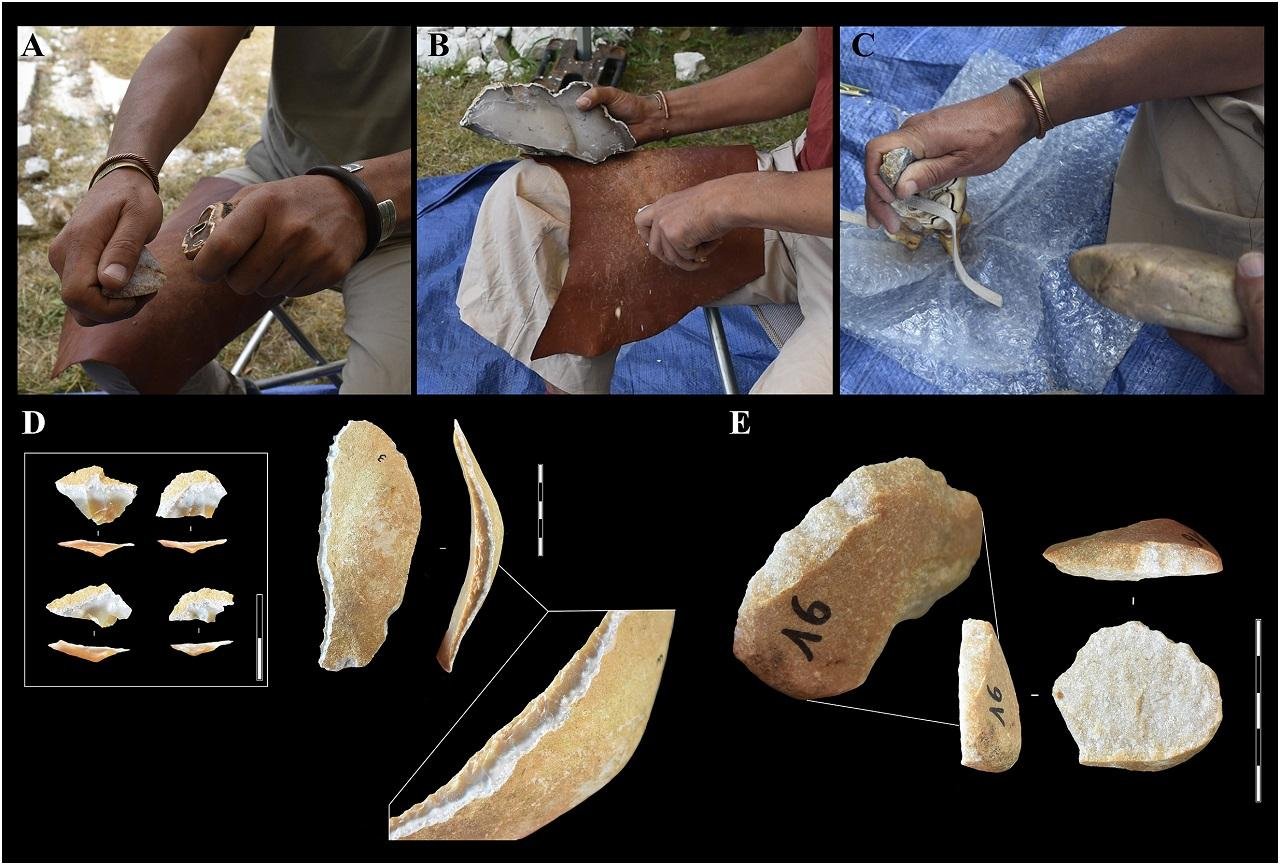
Researchers then tested how rhinoceros teeth performed in tasks linked to Neanderthal life. Using modern teeth, they retouched flint and quartz tools, shaped stone scrapers, and used the teeth as small anvils while cutting organic materials.
After the experiments, the team compared the wear patterns with fossil teeth from El Castillo in Spain and Pech-de-l’Azé II in France. The results were striking. Linear grooves, impact pits, and enamel fractures from the experiments closely matched marks found on the archaeological specimens.
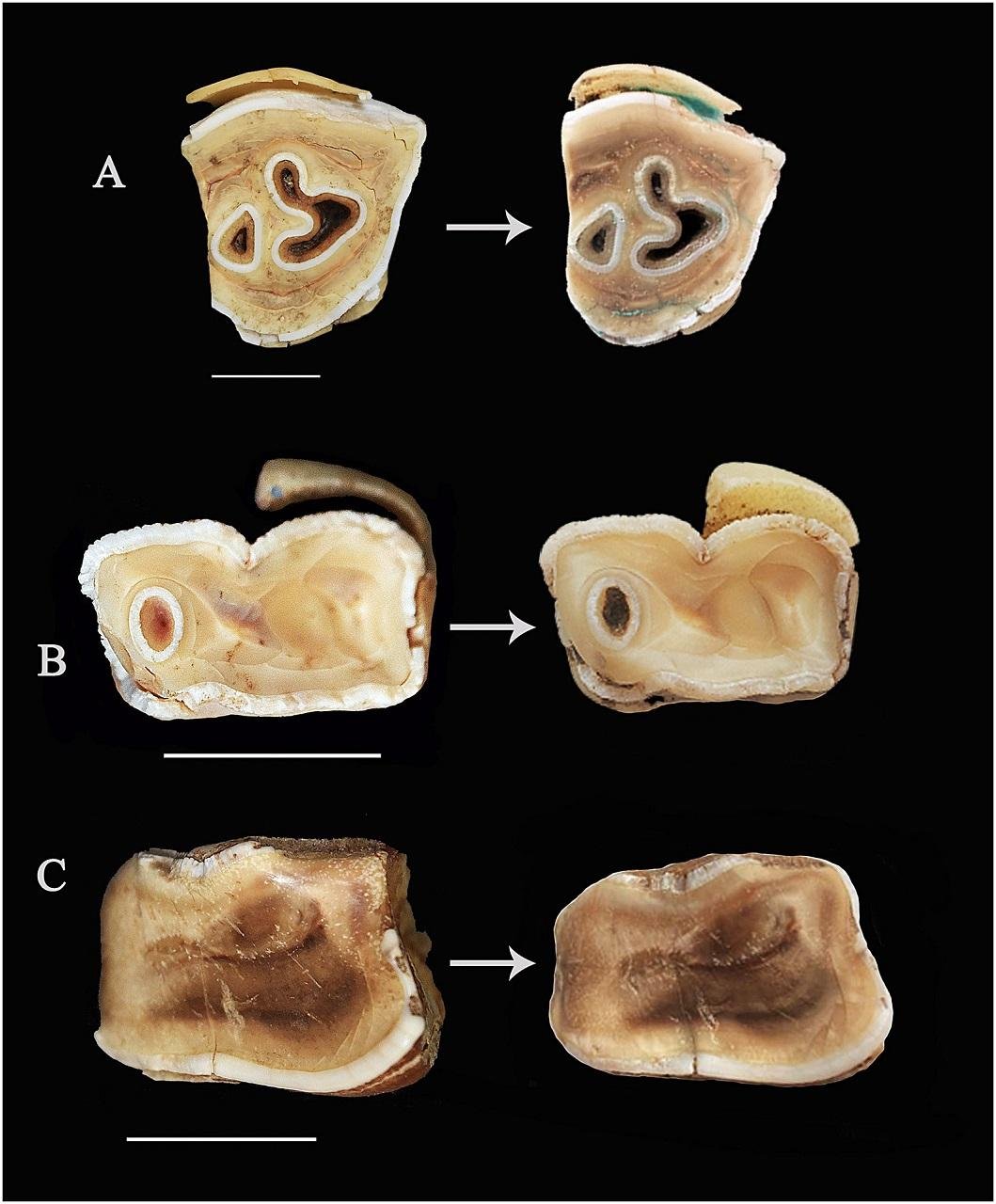
The tests also showed why these teeth were useful. Rhinoceros enamel is one of the hardest biological materials found in mammals. This hardness allowed the teeth to withstand repeated impacts without breaking easily. Researchers suggest Neanderthals used them as soft hammers and compact anvils during stone tool production.
The findings suggest rhinoceros teeth formed part of the Neanderthal toolkit during the Middle Paleolithic. This adds another material to the list of resources used by these human groups, alongside stone, bone, and wood.
The study also suggests Neanderthals may have focused on older rhinoceroses. Older animals often have more worn teeth, which could have made them easier to grip and more comfortable to handle during repeated tasks. Such animals might also have been easier prey.
The team combined several analytical methods, including taphonomic analysis and confocal microscopy, to document surface damage in detail and separate human-made marks from natural wear.
These results add more evidence for Neanderthals as skilled problem-solvers who made practical use of available resources. Instead of discarding all animal remains after butchery, they appear to have selected durable parts for later use in toolmaking and material processing.
The study was published in the Journal of Human Evolution.














Disclaimer: This website is a science-focused magazine that welcomes both academic and non-academic audiences. Comments are written by users and may include personal opinions or unverified claims. They do not necessarily reflect the views of our editorial team or rely on scientific evidence.
Comment Policy: We kindly ask all commenters to engage respectfully. Comments that contain offensive, insulting, degrading, discriminatory, or racist content will be automatically removed.