
Archaeologists working ahead of the planned A46 Newark Bypass have uncovered traces of human activity stretching back thousands of years. The excavations took place near Newark in Nottinghamshire as part of early work before construction begins on the road improvement project.
National Highways plans to widen parts of the A46, build a flyover, and add a bridge over the A1 to reduce traffic pressure around Newark. Before work starts, archaeologists examined land along the route to record and preserve any buried remains.
A team of 30 archaeologists spent 22 weeks excavating five fields covering more than 23 acres, or 9.63 hectares. Their work uncovered material dating from around 6000 BCE through the post-Medieval period, showing repeated use of the same landscape across several eras.
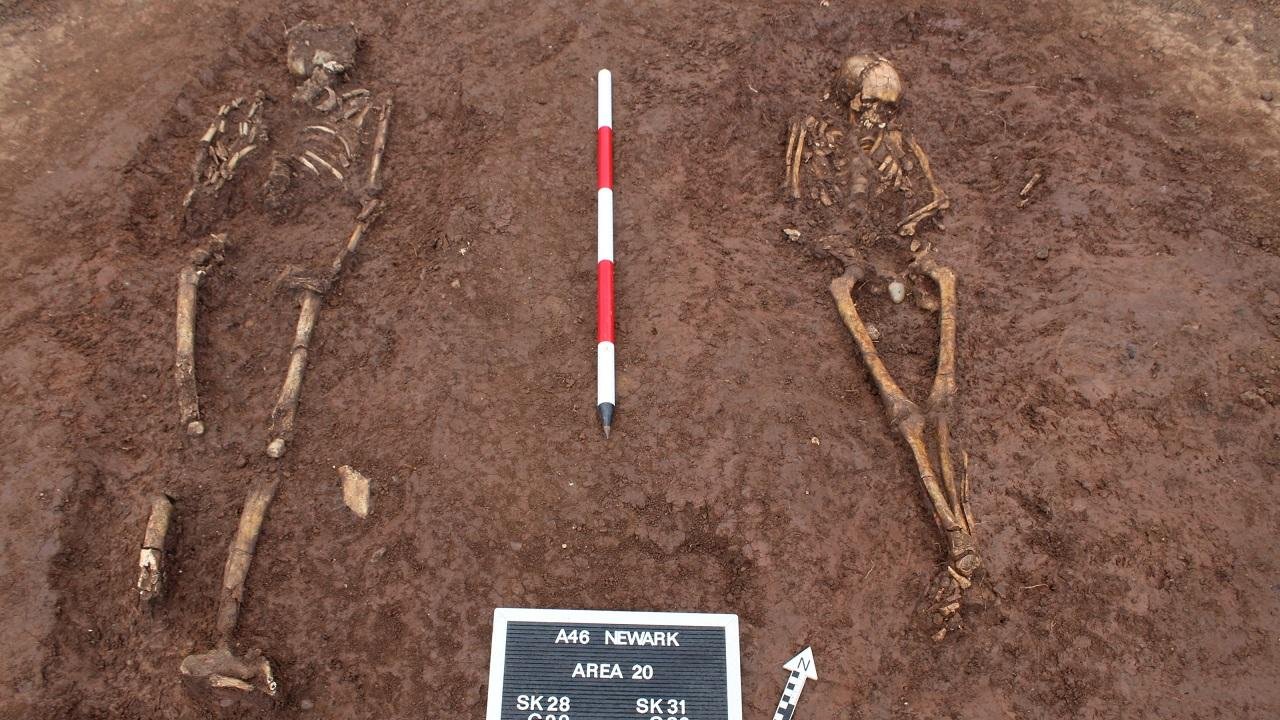
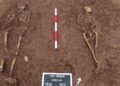
One of the most important finds came from a field near the A46, where archaeologists uncovered a burial area containing the remains of seven individuals. Researchers believe the burials belong to either the Iron Age, Roman, or Anglo-Saxon periods. Specialists are now studying the remains and associated material to establish a more precise date.
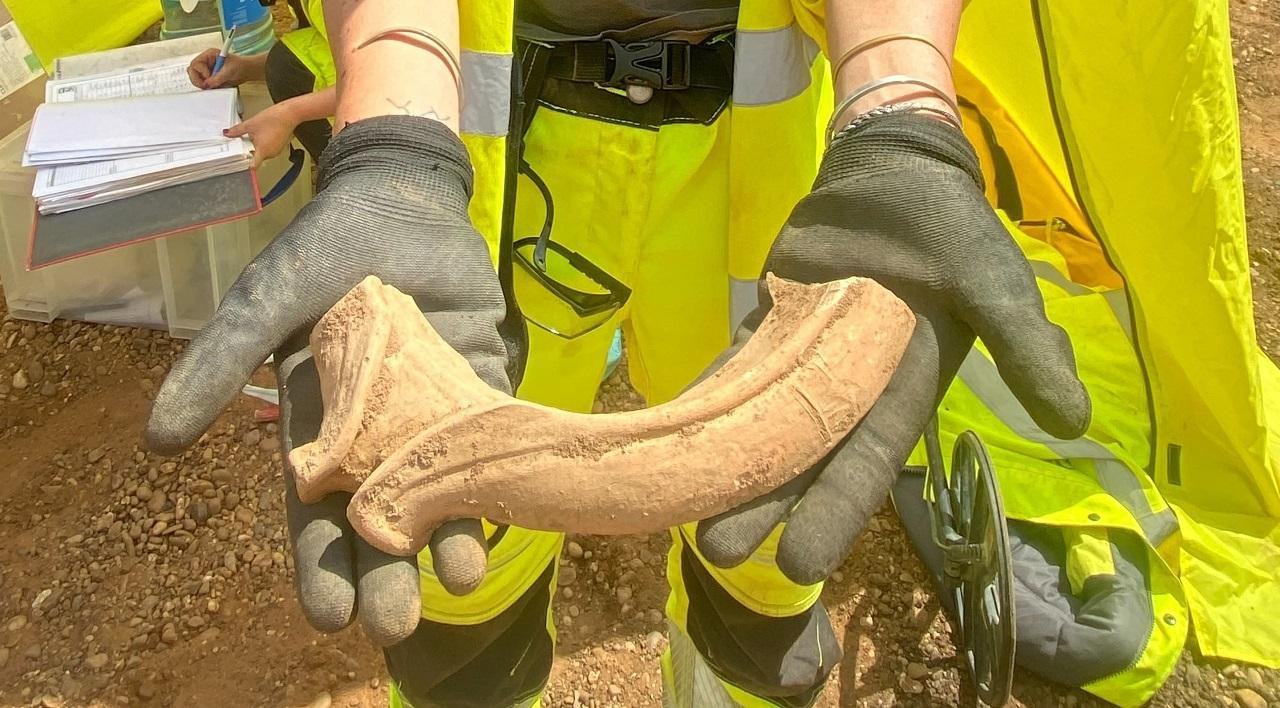
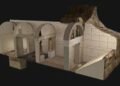
In the same area, the team found the remains of a probable Anglo-Saxon grubenhaus. These sunken-floored buildings were common in early medieval settlements and often served as homes or workspaces. Finds of this type are uncommon in Nottinghamshire, which gives the structure added importance for local archaeology.

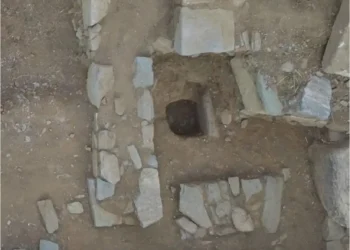
Another excavation area southwest of Kelham village revealed layers from several periods. Archaeologists identified a rectangular Roman enclosure, a Roman well, and the foundations of a later farmhouse. These features suggest long-term settlement and farming activity in the area.
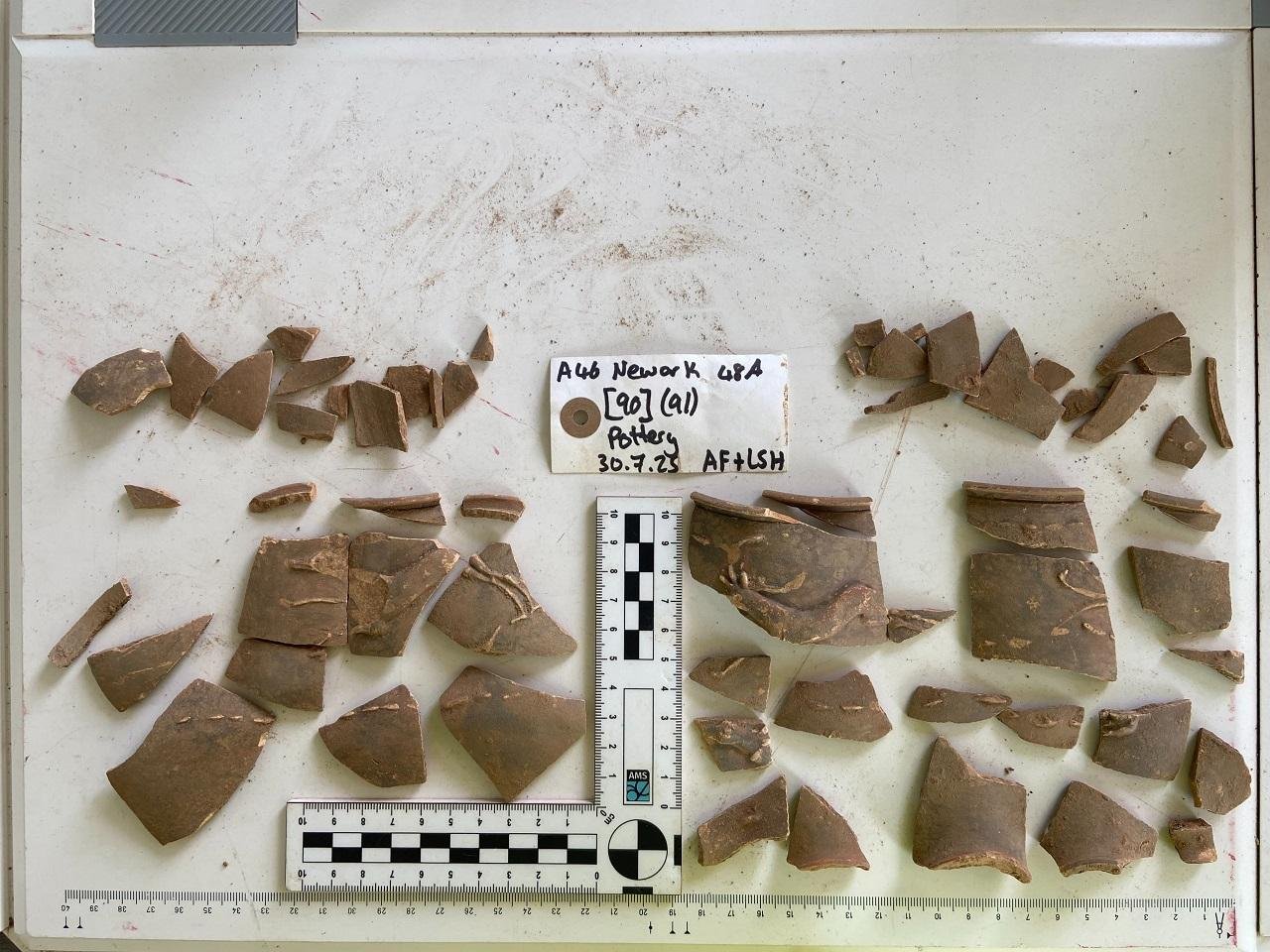
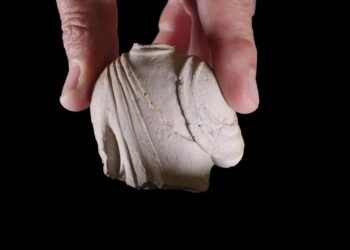
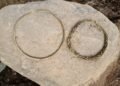
Smaller finds helped fill in daily life across different centuries. The excavation produced 163 pottery fragments, many decorated or glazed, dating mainly to the Roman and Iron Age periods. Archaeologists also recovered prehistoric flint arrowheads and a Neolithic saddle quern, a stone tool used to grind grain into flour.
The site even produced material linked to the English Civil War in 1642, showing the land remained in use well into the early modern period.
Sean Tiffin of Archaeological Management Solutions, the company leading the excavation, said the results improve understanding of settlement history in this part of Nottinghamshire. The finds point to previously unknown activity in the region during prehistoric, Roman, and Anglo-Saxon times.
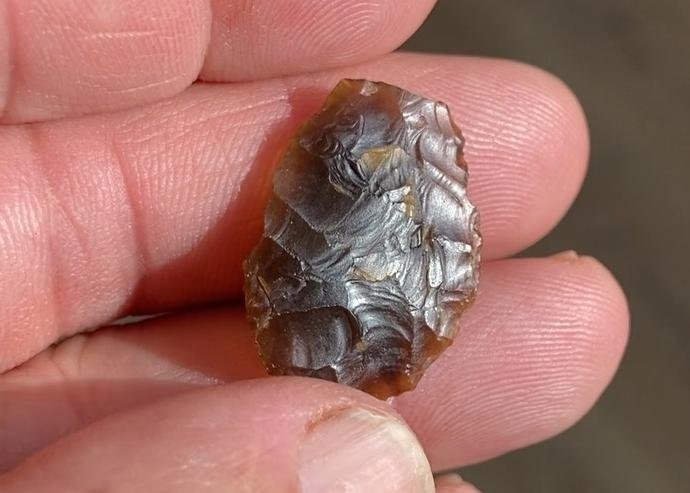
National Highways has published photographs and videos from the excavation online. Some of the artifacts are expected to go on public display in Newark, though officials have not yet announced details.
Large construction projects often require archaeological surveys before work begins. In this case, the investigations revealed a long sequence of human activity buried beneath land now set for major transport upgrades.








Disclaimer: This website is a science-focused magazine that welcomes both academic and non-academic audiences. Comments are written by users and may include personal opinions or unverified claims. They do not necessarily reflect the views of our editorial team or rely on scientific evidence.
Comment Policy: We kindly ask all commenters to engage respectfully. Comments that contain offensive, insulting, degrading, discriminatory, or racist content will be automatically removed.