• About
  • Privacy Policy
  • Terms of Use
  • Donation
  • Contact
No Result
View All Result
Archaeology News
  • Home
  • News
    • Archaeology
    • Anthropology
    • Paleontology
  • Academic
    • Books
    • Conferences
    • Universities
  • Articles
  • VR Tours
  • Quiz & Game
  • Download
  • Encyclopedia
  • Forum
Archaeology News
No Result
View All Result
Home News Archaeology

Slag from Paleopolis on Andros points to iron weapon and tool making during Macedonian rule in the 4th–3rd century BCE

by Dario Radley
May 11, 2026

Ancient metallurgical waste found on the Greek island of Andros is giving researchers a closer look at ironworking during the Hellenistic period. A new study shows that slags excavated in the ancient city of Paleopolis date to the 4th and 3rd centuries BCE and came from the local refining and forging of iron, not from the first stage of ore smelting.
Slag from Paleopolis on Andros points to iron weapon and tool making during Macedonian rule in the 4th–3rd century BCE
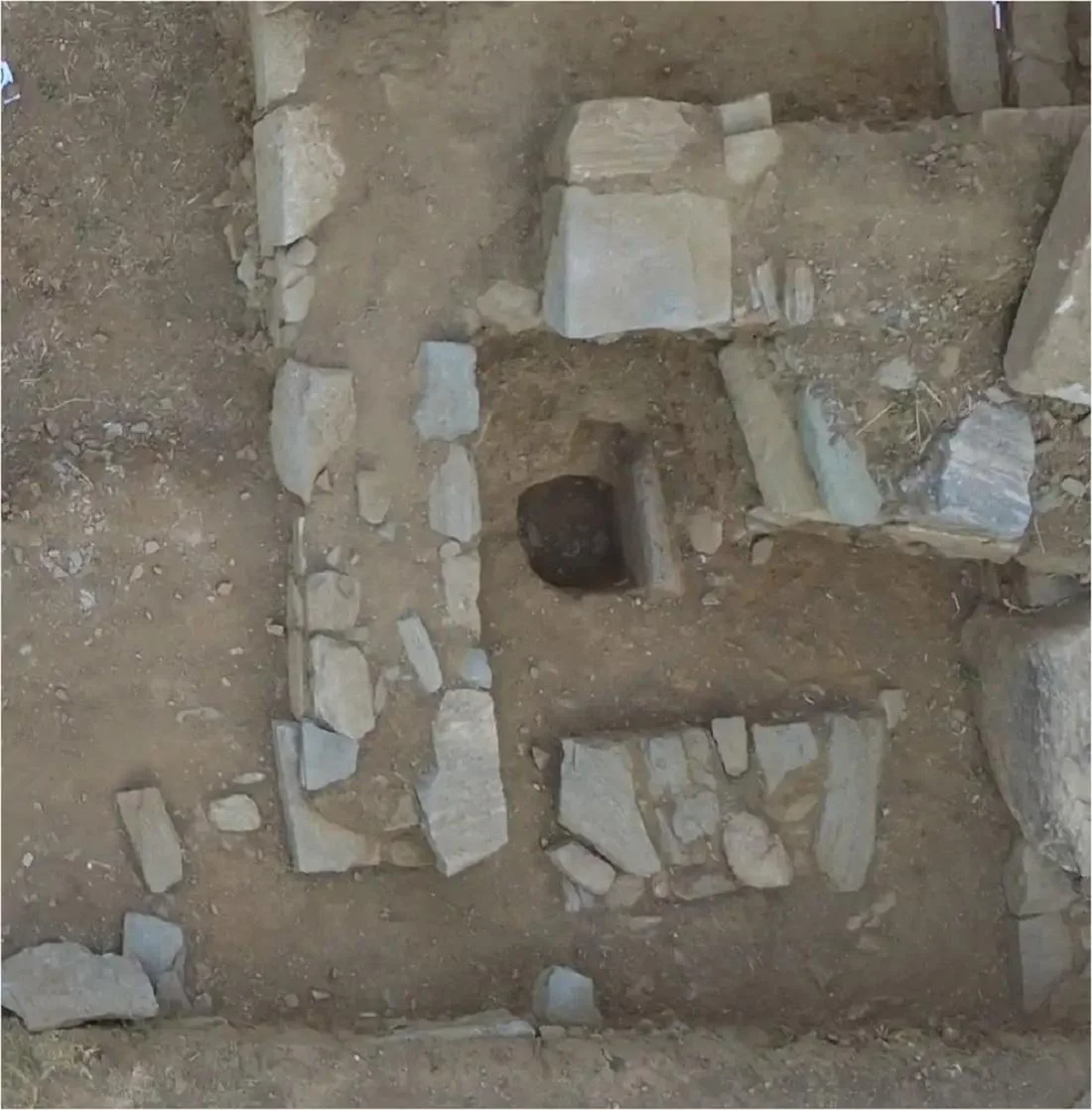
Remnants of a characteristic furnace found inside agora of ancient Andros (Palaeopolis). Credit: from: Palaiokrassa-Kopitsa 2012 / Stamatakis et al., Archaeological and Anthropological Sciences (2026)

Andros, part of the Cyclades in the Aegean Sea, contains rich mineral deposits, including iron ores near Palaeopolis and the villages of Agios Petros and Mpatsi. These ores formed within marbles and schists and include minerals such as limonite, goethite, hematite, and siderite. Archaeologists have known for years that Paleopolis held signs of metalworking, with large accumulations of slag so common in one area that a nearby hill became known as Skouria, the Greek word for slag.

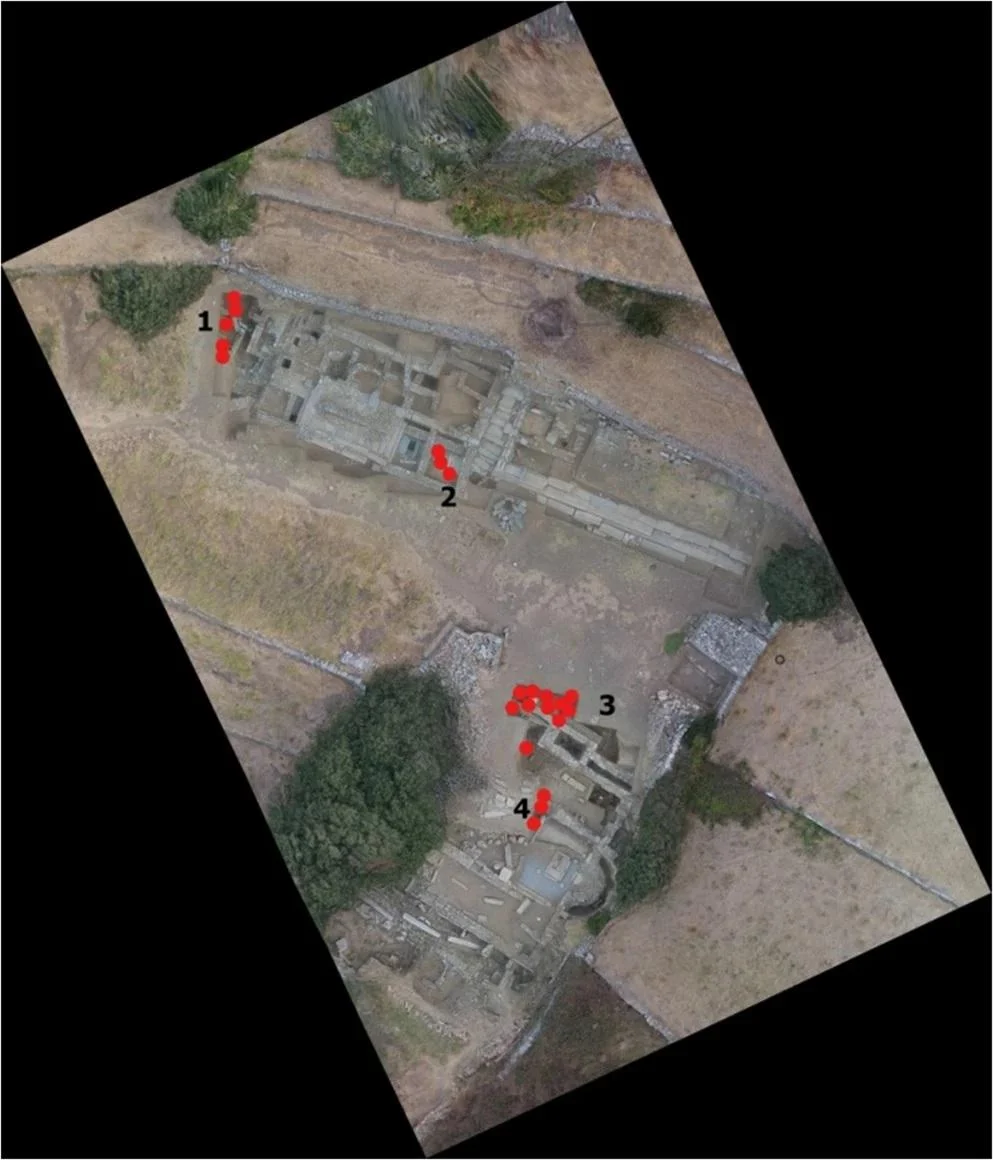
To better understand this activity, researchers analyzed 22 slag samples recovered from excavations in the agora, the ancient city’s central public area, along with five iron ore samples from the nearby Agios Petros mines, located around 10 kilometers northwest of Paleopolis.

Excavations in the agora have uncovered several furnaces from the 4th century BCE, three smelting pits, and small hearths built over layers of fired clay bricks. Archaeologists also found clay mold fragments, charcoal remains, pieces of iron and bronze, lead fragments, and tools made of bone or metal. A plaster model of a small lekythos, a vessel common in the period, was also recovered and appears to have been used in mold production.

Laboratory tests included X-ray diffraction, X-ray fluorescence, and electron microscopy. These methods identified several mineral phases typical of ironworking waste, including wüstite, fayalite, bustamite, tephroite, and related silicates. The chemical composition of the slag matched local iron ores, confirming that the raw materials came from Andros itself.

RelatedStories

Kasta Tomb in Amphipolis fully revealed as restoration uncovers largest burial mound in Macedonia

Kasta Tomb in Amphipolis fully revealed as restoration uncovers largest burial mound in Macedonia

May 12, 2026
Greek-inscribed “learn your lesson” message found on 2,000-year-old sling bullet from ancient Hippos near Sea of Galilee

Greek-inscribed “learn your lesson” message found on 2,000-year-old sling bullet from ancient Hippos near Sea of Galilee

May 8, 2026

The ores stood out because they were naturally rich in manganese and barium. These elements lowered melting temperatures during iron production and improved slag flow, helping blacksmiths process iron more efficiently. Researchers found manganese minerals such as braunite, todorokite, and cryptomelane in some ore samples, along with traces of lead and zinc.
Slag from Paleopolis on Andros points to iron weapon and tool making during Macedonian rule in the 4th–3rd century BCE
The sampling sites of the slags inside the agora of Palaeopolis. Credit: Stamatakis et al., Archaeological and Anthropological Sciences (2026)

The slag chemistry also revealed unusually high phosphorus levels, much higher than those found in the raw ores. This suggests blacksmiths deliberately added calcium- and phosphorus-rich rocks, likely containing apatite, as extra flux material. Such additions would have improved metalworking by lowering melting points and making iron easier to refine.

One unusual result was the presence of very high thallium concentrations in some slag samples, reaching up to 899 parts per million. Researchers link this to the geological origin of the ore deposits. Similar thallium-rich iron oxides are known from hydrothermal systems in the Aegean region, including submarine volcanic environments near Milos and Santorini. This suggests the Andros ores formed in a deep marine volcanic setting.

Researchers used a mineral chemistry diagram comparing iron oxide, alumina, silica, calcium, and manganese to determine which metallurgical process created the waste. The results placed the samples firmly within the range of smithing slags rather than primary smelting slags.

This distinction matters. Primary smelting turns ore into raw iron blooms, while smithing refines that iron, removes impurities, and shapes finished tools or weapons. Because the slags were found in the urban center of Paleopolis rather than near the mines, the evidence points to workshops focused on manufacturing and repair.

The timing of this metalworking activity overlaps with the period after Alexander the Great’s death, when his successors fought for control of his empire. During these centuries, Andros was under Macedonian rule. Researchers suggest the island’s iron industry may have supported local economic or military needs, though the evidence does not yet allow a direct link to warfare.

Near the Agios Petros mines, archaeologists have also documented several Hellenistic stone towers dating to roughly the 3rd century BCE. Similar towers appear near mining districts on other Cycladic islands and likely served as watchtowers or protective structures.

The study paints a picture of Paleopolis as an active center of ironworking in the Hellenistic Aegean, using local mineral resources and practical metallurgical knowledge. Large parts of the ancient city remain unexcavated, leaving open the possibility that more workshops, tools, and industrial features are still buried beneath the site.

More information: Stamatakis, G., Palaiokrassa-Kopitsa, L., & Stamatakis, M. G. (2026). The ancient slags of Palaeopolis, Andros Island, Greece. Geochemical and mineralogical characterization and archaeometallurgical implications. Archaeological and Anthropological Sciences, 18(5). doi:10.1007/s12520-026-02463-z
Share1Tweet1ShareShareSend

You May Also Like...

Rare Bronze Age burial in Sweden reveals unusual pair of Wendel neck rings and complex ritual landscape near Norrköping
Archaeology

Rare Bronze Age burial in Sweden reveals unusual pair of Wendel neck rings and complex ritual landscape near Norrköping

May 12, 2026
Kasta Tomb in Amphipolis fully revealed as restoration uncovers largest burial mound in Macedonia
Archaeology

Kasta Tomb in Amphipolis fully revealed as restoration uncovers largest burial mound in Macedonia

May 12, 2026
Rare Roman villa threatened by farming damage reveals rare mosaic and bathhouse remains in Devon
Archaeology

Rare Roman villa threatened by farming damage reveals rare mosaic and bathhouse remains in Devon

May 12, 2026
Ancient burials, Roman well, and Anglo-Saxon house uncovered during A46 Newark bypass excavations
Anthropology

Ancient burials, Roman well, and Anglo-Saxon house uncovered during A46 Newark bypass excavations

May 12, 2026
8-year-old boy finds 1,700-year-old Roman statuette fragment in Ramon Crater
Archaeology

8-year-old boy finds 1,700-year-old Roman statuette fragment in Ramon Crater

May 11, 2026
New book and exhibition showcase 2,000-year-old Roman shoes from Vindolanda
Archaeology

New book and exhibition showcase 2,000-year-old Roman shoes from Vindolanda

May 10, 2026

Comments 0

  1. Editorial Team says:
    1 second ago

    Disclaimer: This website is a science-focused magazine that welcomes both academic and non-academic audiences. Comments are written by users and may include personal opinions or unverified claims. They do not necessarily reflect the views of our editorial team or rely on scientific evidence.

    Comment Policy: We kindly ask all commenters to engage respectfully. Comments that contain offensive, insulting, degrading, discriminatory, or racist content will be automatically removed.

    Reply

Leave a Reply Cancel reply

Your email address will not be published. Required fields are marked *

Follow us


Instagram
242K

Facebook
117K

Threads
46K

LinkedIn
14K

Twitter
6K

YouTube
1K
  • Trending
  • Comments
  • Latest
Shipwreck Salvage. Credit: rawpixel.com / Public Domain

2,000-year-old shipwreck discovered off Turkish coast with remarkably preserved stacked ceramics

July 2, 2025
A new study suggests the mysterious Voynich Manuscript may be a medieval cipher

A new study suggests the mysterious Voynich Manuscript may be a medieval cipher

January 3, 2026
Viking age DNA reveals 9,000-year-old HIV-resistant gene originating near the Black Sea

Viking age DNA reveals 9,000-year-old HIV-resistant gene originating near the Black Sea

May 18, 2025
3D analysis reveals Shroud of Turin image likely came from sculpture, not Jesus’ body

3D analysis reveals Shroud of Turin image likely came from sculpture, not Jesus’ body

August 3, 2025
Moses may be named in ancient Egyptian mine inscriptions, sparking debate over earliest biblical references

Moses may be named in ancient Egyptian mine inscriptions, sparking debate over earliest biblical references

July 31, 2025
3D analysis reveals Shroud of Turin image likely came from sculpture, not Jesus’ body

3D analysis reveals Shroud of Turin image likely came from sculpture, not Jesus’ body

Moses may be named in ancient Egyptian mine inscriptions, sparking debate over earliest biblical references

Moses may be named in ancient Egyptian mine inscriptions, sparking debate over earliest biblical references

$1 million prize offered to decipher 5,300-year-old Indus Valley script

$1 million prize offered to decipher 5,300-year-old Indus Valley script

Oldest ever genetic data from a human relative found in 2-million-year-old fossilized teeth

Oldest ever genetic data from a human relative found in 2-million-year-old fossilized teeth

Exceptionally large Roman shoes discovered at Magna fort near Hadrian’s Wall

Exceptionally large Roman shoes discovered at Magna fort near Hadrian’s Wall

Rare Bronze Age burial in Sweden reveals unusual pair of Wendel neck rings and complex ritual landscape near Norrköping

Rare Bronze Age burial in Sweden reveals unusual pair of Wendel neck rings and complex ritual landscape near Norrköping

May 12, 2026
Kasta Tomb in Amphipolis fully revealed as restoration uncovers largest burial mound in Macedonia

Kasta Tomb in Amphipolis fully revealed as restoration uncovers largest burial mound in Macedonia

May 12, 2026
Rare Roman villa threatened by farming damage reveals rare mosaic and bathhouse remains in Devon

Rare Roman villa threatened by farming damage reveals rare mosaic and bathhouse remains in Devon

May 12, 2026
Ancient burials, Roman well, and Anglo-Saxon house uncovered during A46 Newark bypass excavations

Ancient burials, Roman well, and Anglo-Saxon house uncovered during A46 Newark bypass excavations

May 12, 2026
8-year-old boy finds 1,700-year-old Roman statuette fragment in Ramon Crater

8-year-old boy finds 1,700-year-old Roman statuette fragment in Ramon Crater

May 11, 2026

Archaeology News online magazine

Archaeology News is an international online magazine that covers all aspects of archaeology.


Categories

  • Academics
    • Books
    • Conferences
    • Universities
  • Articles
  • Download
  • Game
  • News
    • Anthropology
    • Archaeology
    • Paleontology
  • Quiz
  • Tours

Subscribe to our newsletter

© 2024 - Archaeology News Online Magazine. All Rights Reserved.

  • About
  • Privacy Policy
  • Terms of Use
  • Donation
  • Contact

Manage Consent
To provide the best experiences, we use technologies like cookies to store and/or access device information. Consenting to these technologies will allow us to process data such as browsing behavior or unique IDs on this site. Not consenting or withdrawing consent, may adversely affect certain features and functions.
Functional Always active
The technical storage or access is strictly necessary for the legitimate purpose of enabling the use of a specific service explicitly requested by the subscriber or user, or for the sole purpose of carrying out the transmission of a communication over an electronic communications network.
Preferences
The technical storage or access is necessary for the legitimate purpose of storing preferences that are not requested by the subscriber or user.
Statistics
The technical storage or access that is used exclusively for statistical purposes. The technical storage or access that is used exclusively for anonymous statistical purposes. Without a subpoena, voluntary compliance on the part of your Internet Service Provider, or additional records from a third party, information stored or retrieved for this purpose alone cannot usually be used to identify you.
Marketing
The technical storage or access is required to create user profiles to send advertising, or to track the user on a website or across several websites for similar marketing purposes.
  • Manage options
  • Manage services
  • Manage {vendor_count} vendors
  • Read more about these purposes
View preferences
  • {title}
  • {title}
  • {title}
  • Home
  • News
    • Archaeology
    • Anthropology
    • Paleontology
  • Academic
    • Books
    • Conferences
    • Universities
  • Articles
  • VR Tours
  • Quiz & Game
  • Download
  • Encyclopedia
  • Forum

About  .  Contact  .  Donation

© 2024 - Archaeology News Online Magazine. All Rights Reserved