
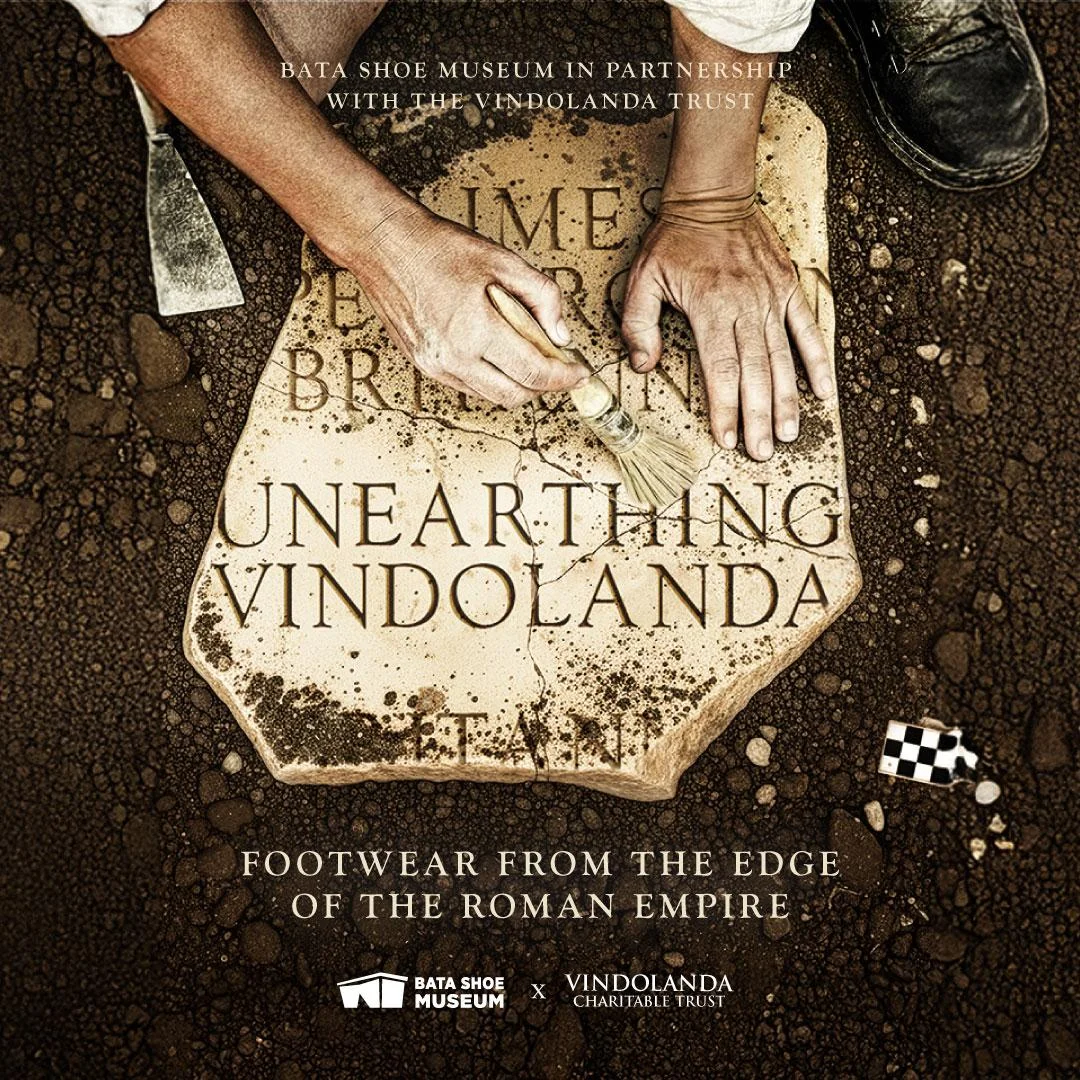
Hundreds of Roman leather shoes buried for centuries in northern England are heading to the Bata Shoe Museum for a new exhibition focused on life at the edge of the Roman Empire. “Unearthing Vindolanda: Footwear from the Edge of the Roman Empire” opened on May 7, 2026, and will continue through September 2027. The exhibition was organized with the Vindolanda Trust and includes more than 100 artifacts from Vindolanda, a Roman fort in Northumberland occupied from around 85 CE.
Archaeologists have recovered close to 5,000 shoes from the site over decades of excavation. The fort stood near Hadrian’s Wall and guarded the Stanegate, a Roman road linking the River Tyne with the Solway Firth. Waterlogged soil preserved the leather, leaving behind one of the largest groups of Roman footwear ever found.
The shoes show daily life inside the fort and surrounding settlement. Some belonged to soldiers stationed along Rome’s northern frontier. Others came from women and children living in the community. Different styles, stitching patterns, and sizes point to local manufacturing and trade networks across Roman Britain.
The exhibition arrives alongside a new book, The Roman Footwear from Vindolanda, written by Elizabeth M. Greene of Western University. Greene served as one of the exhibition’s curators and has spent years studying Roman military sites and material culture.

Greene describes Vindolanda as the best-known collection of Roman shoes anywhere in the former empire. According to her, the footwear helps researchers study clothing, leather production, trade, and the people who once lived at the fort. The surviving shoes date from the late first century through the fourth century CE.






Disclaimer: This website is a science-focused magazine that welcomes both academic and non-academic audiences. Comments are written by users and may include personal opinions or unverified claims. They do not necessarily reflect the views of our editorial team or rely on scientific evidence.
Comment Policy: We kindly ask all commenters to engage respectfully. Comments that contain offensive, insulting, degrading, discriminatory, or racist content will be automatically removed.