• About
  • Privacy Policy
  • Terms of Use
  • Donation
  • Contact
No Result
View All Result
Archaeology News
  • Home
  • News
    • Archaeology
    • Anthropology
    • Paleontology
  • Academic
    • Books
    • Conferences
    • Universities
  • Articles
  • VR Tours
  • Quiz & Game
  • Download
  • Encyclopedia
  • Forum
Archaeology News
No Result
View All Result
Home News Anthropology

Roman soldiers at Vindolanda suffered persistent parasite infections, researchers discover

by Dario Radley
December 20, 2025

A new scientific study has shed light on the everyday health challenges faced by Roman soldiers stationed at Vindolanda, a fort near Hadrian’s Wall in northern England, through ancient sewage deposits. Researchers have uncovered clear evidence that the fort’s occupants suffered from widespread intestinal parasite infections linked to poor sanitation and contaminated water.
Roman soldiers at Vindolanda suffered persistent parasite infections, researchers discover
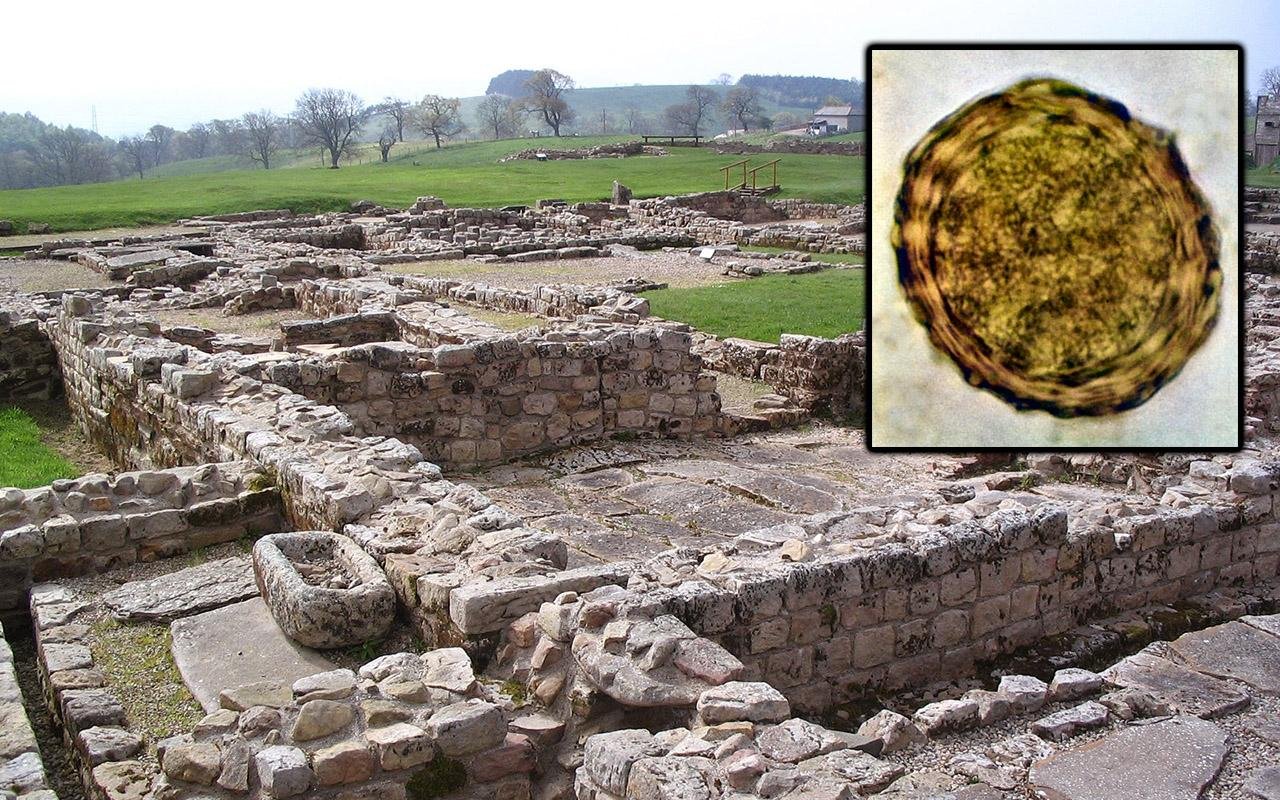
Ruins of Vindolanda with a magnified inset showing an egg of Ascaris lumbricoides found in human feces. Credit: Francis / Graham Colm. CC BY-SA

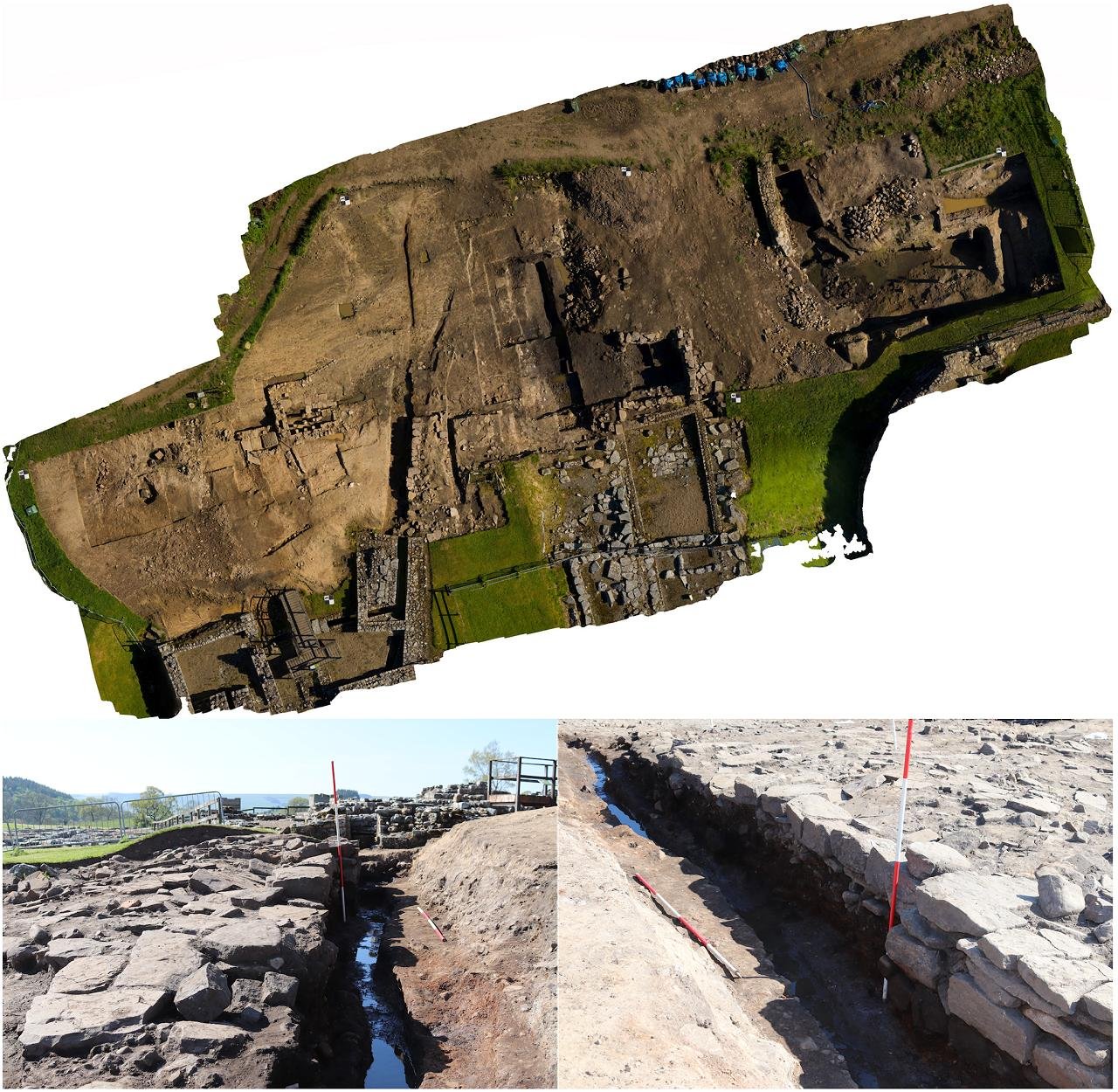
This research examined sediment taken from a stone drain that was linked to a third-century-CE communal latrine attached to the bath complex at Vindolanda. Almost nine meters in length, it would have still carried waste away from the latrine and into a nearby stream. Fifty samples taken along its length were examined using a combination of microscopic analysis and biochemical testing, which enabled scientists to identify parasites preserved in human waste nearly two millennia old.

The findings showed roundworm and whipworm, both parasitic worms that spread through contact with human feces, along with the microscopic protozoan Giardia duodenalis, also known to cause severe diarrhea. Roundworm and whipworm have been found at other Roman-period sites in Britain, but this is the first time Giardia has been confirmed in Roman Britain. The parasite is spread most easily through contaminated drinking water and can quickly result in the infection of large numbers of people.

Over a quarter of these samples contained evidence of parasite eggs, demonstrating that intestinal infections were not an isolated incident, but a persistent issue at the fort. Another sample, from an earlier, first-century-CE defensive ditch at Vindolanda, also contained roundworm and whipworm, indicating that sanitation-related illness existed during the earliest occupation of the site.
Roman soldiers at Vindolanda suffered persistent parasite infections, researchers discover
Aerial view of the latrine drain (top). Photos of the latrine drain during excavation (bottom). Credit: M. L. Ledger et al., Parasitology (2025); CC BY-NC-ND 4.0

Vindolanda, situated just south of Hadrian’s Wall, was manned by auxiliary units recruited from across the Roman Empire. The fort is renowned for the remarkable preservation of organic materials, including wooden writing tablets and leather footwear, which provide a rare glimpse into what life was like on Rome’s northern frontier. These new findings add a biological dimension to this picture by revealing how disease may have affected soldiers’ strength and readiness.

RelatedStories

Rare 2,000-year-old Roman bread found at Vindonissa reveals early military life in Switzerland

Rare 2,000-year-old Roman bread found at Vindonissa reveals early military life in Switzerland

April 25, 2026
Over 1,000 archaeological features uncovered along Czech railway

Over 1,000 archaeological features uncovered along Czech railway

April 25, 2026

The researchers point out that all the parasites identified are transmitted via the fecal–oral route and reflect poor hygiene and waste management. In contrast to other large urban Roman centers in Britain, such as London or York, where evidence of foodborne parasites from meat and fish has been found, Vindolanda’s parasite profile is dominated by infections spread directly between people. This pattern very closely resembles that seen at other Roman military sites across Europe.

Beyond the recording of ancient disease, the study indicates the benefits of sampling several points in archaeological drains. Such methods have the dual benefit of detecting parasites and informing reconstructions of how sanitation systems functioned.
More information: University of Cambridge
Publication: Ledger, M. L., Flammer, P. G., Smith, A. L., Birley, A., & Mitchell, P. D. (2025). Parasite infections at the Roman fort of Vindolanda by Hadrian’s Wall, UK. Parasitology, 1–9. doi:10.1017/S0031182025101327
Share26Tweet16Share4ShareSend

You May Also Like...

CT scans reveal hidden details of 2,300-year-old Egyptian mummies
Anthropology

CT scans reveal hidden details of 2,300-year-old Egyptian mummies

April 26, 2026
Rare 2,000-year-old Roman bread found at Vindonissa reveals early military life in Switzerland
Archaeology

Rare 2,000-year-old Roman bread found at Vindonissa reveals early military life in Switzerland

April 25, 2026
Over 1,000 archaeological features uncovered along Czech railway
Archaeology

Over 1,000 archaeological features uncovered along Czech railway

April 25, 2026
Ancient ship burial in Norway dates to CE 700, rewriting early Viking Age origins
Archaeology

Ancient ship burial in Norway dates to CE 700, rewriting early Viking Age origins

April 25, 2026
Ramses II statue found in Egypt’s eastern Nile Delta shows ancient reuse of royal monuments
Archaeology

Ramses II statue found in Egypt’s eastern Nile Delta shows ancient reuse of royal monuments

April 24, 2026
Late Bronze Age bronze ring hoard near Dresden reveals ritual practices and social life 1300–1100 BCE
Archaeology

Late Bronze Age bronze ring hoard near Dresden reveals ritual practices and social life 1300–1100 BCE

April 21, 2026

Comments 0

  1. Editorial Team says:
    1 second ago

    Disclaimer: This website is a science-focused magazine that welcomes both academic and non-academic audiences. Comments are written by users and may include personal opinions or unverified claims. They do not necessarily reflect the views of our editorial team or rely on scientific evidence.

    Comment Policy: We kindly ask all commenters to engage respectfully. Comments that contain offensive, insulting, degrading, discriminatory, or racist content will be automatically removed.

    Reply

Leave a Reply Cancel reply

Your email address will not be published. Required fields are marked *

Follow us


Instagram
244K

Facebook
118K

Threads
46K

LinkedIn
14K

Twitter
6K

YouTube
1K
  • Trending
  • Comments
  • Latest
Shipwreck Salvage. Credit: rawpixel.com / Public Domain

2,000-year-old shipwreck discovered off Turkish coast with remarkably preserved stacked ceramics

July 2, 2025
Viking age DNA reveals 9,000-year-old HIV-resistant gene originating near the Black Sea

Viking age DNA reveals 9,000-year-old HIV-resistant gene originating near the Black Sea

May 18, 2025
A new study suggests the mysterious Voynich Manuscript may be a medieval cipher

A new study suggests the mysterious Voynich Manuscript may be a medieval cipher

January 3, 2026
3D analysis reveals Shroud of Turin image likely came from sculpture, not Jesus’ body

3D analysis reveals Shroud of Turin image likely came from sculpture, not Jesus’ body

August 3, 2025
Moses may be named in ancient Egyptian mine inscriptions, sparking debate over earliest biblical references

Moses may be named in ancient Egyptian mine inscriptions, sparking debate over earliest biblical references

July 31, 2025
3D analysis reveals Shroud of Turin image likely came from sculpture, not Jesus’ body

3D analysis reveals Shroud of Turin image likely came from sculpture, not Jesus’ body

Moses may be named in ancient Egyptian mine inscriptions, sparking debate over earliest biblical references

Moses may be named in ancient Egyptian mine inscriptions, sparking debate over earliest biblical references

$1 million prize offered to decipher 5,300-year-old Indus Valley script

$1 million prize offered to decipher 5,300-year-old Indus Valley script

Oldest ever genetic data from a human relative found in 2-million-year-old fossilized teeth

Oldest ever genetic data from a human relative found in 2-million-year-old fossilized teeth

Exceptionally large Roman shoes discovered at Magna fort near Hadrian’s Wall

Exceptionally large Roman shoes discovered at Magna fort near Hadrian’s Wall

CT scans reveal hidden details of 2,300-year-old Egyptian mummies

CT scans reveal hidden details of 2,300-year-old Egyptian mummies

April 26, 2026
Rare 2,000-year-old Roman bread found at Vindonissa reveals early military life in Switzerland

Rare 2,000-year-old Roman bread found at Vindonissa reveals early military life in Switzerland

April 25, 2026
Over 1,000 archaeological features uncovered along Czech railway

Over 1,000 archaeological features uncovered along Czech railway

April 25, 2026
Ancient ship burial in Norway dates to CE 700, rewriting early Viking Age origins

Ancient ship burial in Norway dates to CE 700, rewriting early Viking Age origins

April 25, 2026
Ramses II statue found in Egypt’s eastern Nile Delta shows ancient reuse of royal monuments

Ramses II statue found in Egypt’s eastern Nile Delta shows ancient reuse of royal monuments

April 24, 2026

Archaeology News online magazine

Archaeology News is an international online magazine that covers all aspects of archaeology.


Categories

  • Academics
    • Books
    • Conferences
    • Universities
  • Articles
  • Download
  • Game
  • News
    • Anthropology
    • Archaeology
    • Paleontology
  • Quiz
  • Tours

Subscribe to our newsletter

© 2024 - Archaeology News Online Magazine. All Rights Reserved.

  • About
  • Privacy Policy
  • Terms of Use
  • Donation
  • Contact

Manage Consent
To provide the best experiences, we use technologies like cookies to store and/or access device information. Consenting to these technologies will allow us to process data such as browsing behavior or unique IDs on this site. Not consenting or withdrawing consent, may adversely affect certain features and functions.
Functional Always active
The technical storage or access is strictly necessary for the legitimate purpose of enabling the use of a specific service explicitly requested by the subscriber or user, or for the sole purpose of carrying out the transmission of a communication over an electronic communications network.
Preferences
The technical storage or access is necessary for the legitimate purpose of storing preferences that are not requested by the subscriber or user.
Statistics
The technical storage or access that is used exclusively for statistical purposes. The technical storage or access that is used exclusively for anonymous statistical purposes. Without a subpoena, voluntary compliance on the part of your Internet Service Provider, or additional records from a third party, information stored or retrieved for this purpose alone cannot usually be used to identify you.
Marketing
The technical storage or access is required to create user profiles to send advertising, or to track the user on a website or across several websites for similar marketing purposes.
  • Manage options
  • Manage services
  • Manage {vendor_count} vendors
  • Read more about these purposes
View preferences
  • {title}
  • {title}
  • {title}
  • Home
  • News
    • Archaeology
    • Anthropology
    • Paleontology
  • Academic
    • Books
    • Conferences
    • Universities
  • Articles
  • VR Tours
  • Quiz & Game
  • Download
  • Encyclopedia
  • Forum

About  .  Contact  .  Donation

© 2024 - Archaeology News Online Magazine. All Rights Reserved