• About
  • Privacy Policy
  • Terms of Use
  • Donation
  • Contact
No Result
View All Result
Archaeology News
  • Home
  • News
    • Archaeology
    • Anthropology
    • Paleontology
  • Academic
    • Books
    • Conferences
    • Universities
  • Articles
  • VR Tours
  • Quiz & Game
  • Download
  • Encyclopedia
  • Forum
Archaeology News
No Result
View All Result
Home News Archaeology

Ancient settlement with weaving workshop and longhouses uncovered in Germany gravel pit

by Dario Radley
May 17, 2026

Archaeologists in eastern Germany uncovered the remains of a rural settlement dating from the 3rd to 5th centuries CE, offering new information about daily life during the final centuries of the Roman Empire.
Ancient settlement with weaving workshop and longhouses uncovered in Germany gravel pit
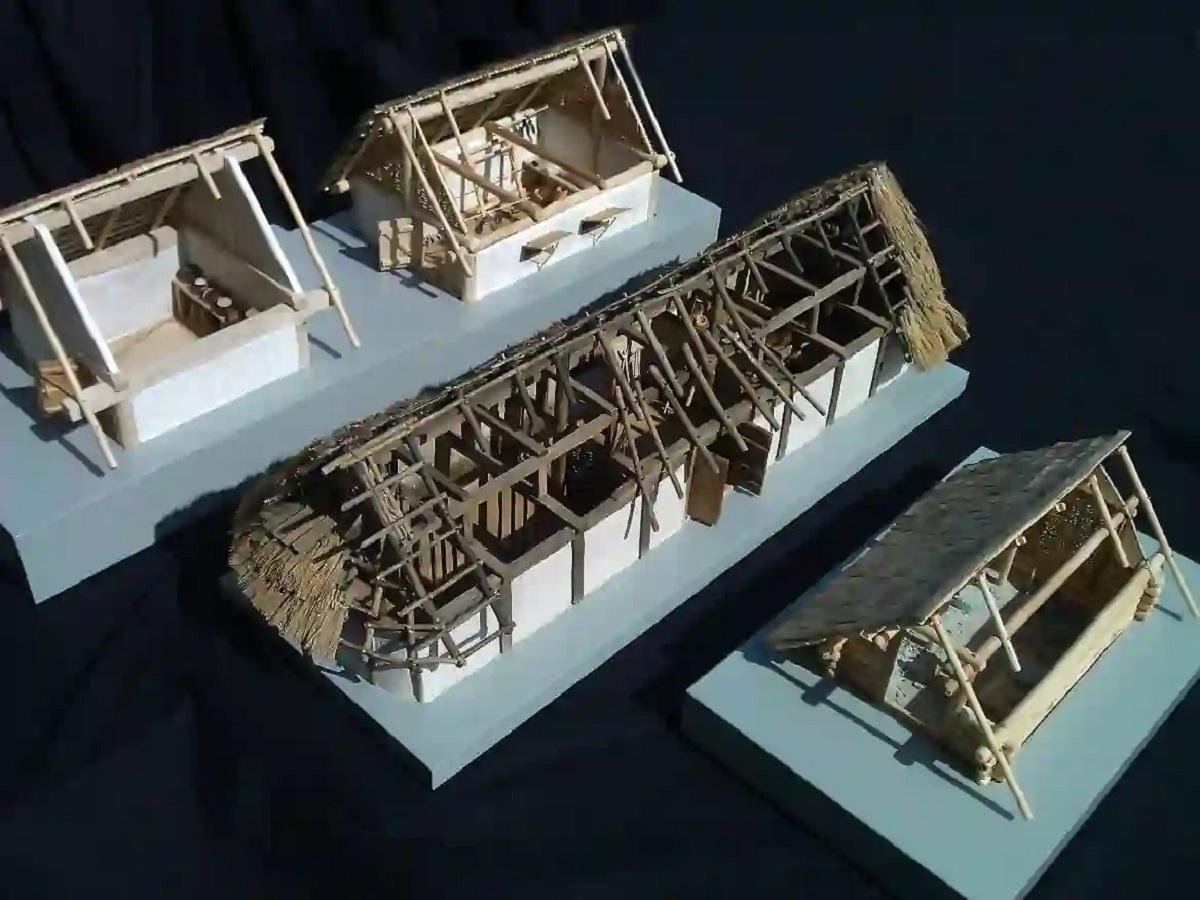
Models of a longhouse (center) and various pit houses from the Roman Imperial period. All models are housed in the State Museum of Archaeology Chemnitz (smac). Credit: State Office for Archaeology (LfA)

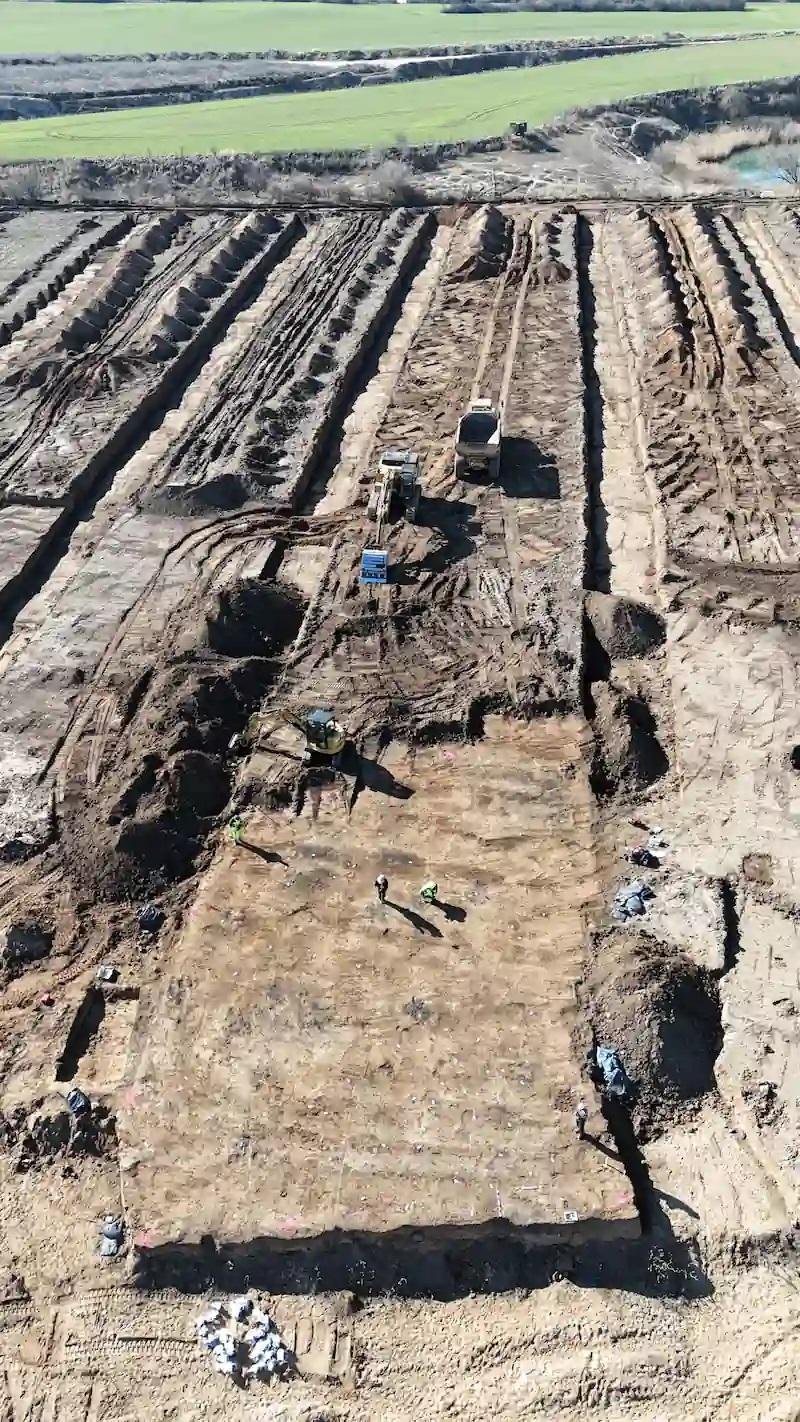
The site lies in Liebersee, part of Belgern-Schildau in Saxony, where gravel extraction is expanding into a new area. Before mining work began, the State Office for Archaeology of Saxony carried out excavations from December 2025 to April 2026 across about 3,200 square meters. The work was necessary because gravel and sand extraction would permanently destroy buried remains.

Liebersee sits along the left side of the Saxon Elbe Valley between Riesa and Torgau. The valley has attracted human settlement for thousands of years due to fertile land and nearby water sources. Archaeologists already knew of several ancient sites close to the gravel pit, which made the excavation a priority.

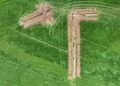
Researchers uncovered traces of a settlement occupied during the late Roman Imperial period and the early Migration Period. The remains included at least four timber longhouses built with rows of wooden posts, along with three smaller pit houses dug partly below ground.
Ancient settlement with weaving workshop and longhouses uncovered in Germany gravel pit
Drone image of the excavation area. Credit: State Office for Archaeology (LfA)

The longhouses reached up to 20 meters long and around 5 meters wide. Their layout suggests people used them as combined homes and animal shelters. The pit houses were much smaller, measuring between 7 and 12 square meters, and likely served as workspaces, storage areas, or utility buildings.

RelatedStories

Pompeii victim identified as Roman physician killed while fleeing Vesuvius eruption

Pompeii victim identified as Roman physician killed while fleeing Vesuvius eruption

May 17, 2026
Rare Roman villa threatened by farming damage reveals rare mosaic and bathhouse remains in Devon

Rare Roman villa threatened by farming damage reveals rare mosaic and bathhouse remains in Devon

May 12, 2026

One pit house contained clear signs of textile production. Archaeologists found 30 clay loom weights, rounded and flattened in shape, which once hung from the warp threads of a vertical loom to keep tension while weaving. A clay spindle whorl was found nearby. This tool added weight to a spindle and helped spin raw sheep’s wool into thread, one of the main materials used for clothing during this period.

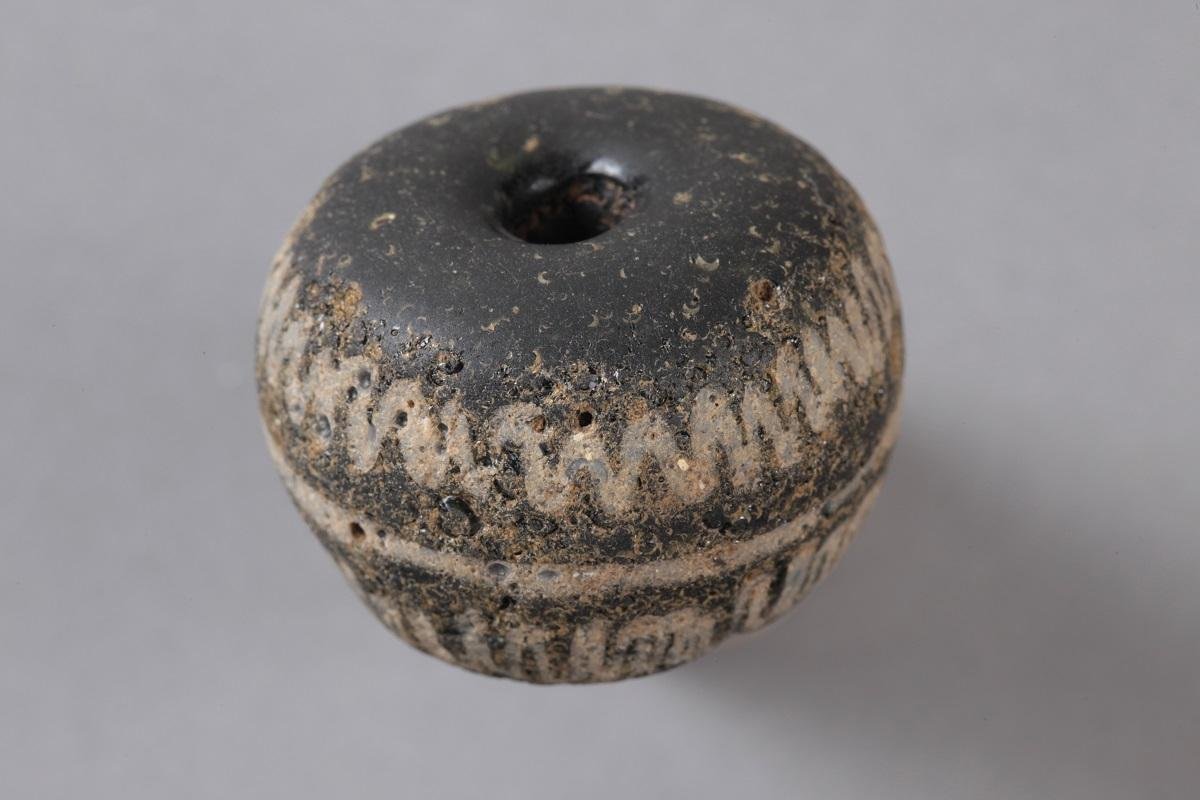
Most objects recovered from the site were fragments of everyday pottery. One item stood out from the rest, a large dark glass bead decorated with pale wavy lines. Similar beads often appear in women’s graves from the 4th and 5th centuries CE as jewelry or burial goods.

This bead came from a settlement pit instead of a burial context. Because of this, archaeologists think residents may have reused the object for another purpose, possibly as a spindle whorl.
Ancient settlement with weaving workshop and longhouses uncovered in Germany gravel pit
Dark opaque glass bead with light-colored wavy bands. Diameter 3.5 cm, height 2.5 cm. Credit: State Office for Archaeology (LfA)

Other remains point to a self-sufficient farming community. Excavators recovered reddish burnt clay, likely fragments of wall plaster once used to coat timber buildings. Charred grain found on the site shows people stored cereals, likely for food and planting.

The burnt grain and hardened clay also suggest the settlement experienced at least one major fire. Archaeologists do not yet know whether this event led to the village’s abandonment or whether residents rebuilt afterward.

Further analysis is still underway. Researchers plan radiocarbon dating of charcoal and plant remains to establish a more precise timeline for the settlement and the fire.

The Liebersee excavation provides a closer look at rural life during a period of major change across Europe. Instead of focusing on large political events, the site preserves evidence of ordinary activities such as farming, weaving, storage, and animal keeping in a small community nearly 1,700 years ago.

More information: Sächsische Staatskanzlei

Share2Tweet1ShareShareSend

You May Also Like...

Pompeii victim identified as Roman physician killed while fleeing Vesuvius eruption
Anthropology

Pompeii victim identified as Roman physician killed while fleeing Vesuvius eruption

May 17, 2026
Archaeologists uncover hidden whisky smuggler bothy in Scottish Highlands with rare copper still piece
Archaeology

Archaeologists uncover hidden whisky smuggler bothy in Scottish Highlands with rare copper still piece

May 16, 2026
Ancient Egyptian tombs, painted coffins, and cat mummies unearthed in Luxor necropolis
Archaeology

Ancient Egyptian tombs, painted coffins, and cat mummies unearthed in Luxor necropolis

May 16, 2026
800-year-old medieval notebook found in German latrine still contains readable Latin writing
Archaeology

800-year-old medieval notebook found in German latrine still contains readable Latin writing

May 16, 2026
Mysterious ancient tunnel discovered in Jerusalem puzzles archaeologists
Archaeology

Mysterious ancient tunnel discovered in Jerusalem puzzles archaeologists

May 15, 2026
Horse domestication began centuries earlier than thought, study reveals early riding and management in 4th millennium BCE
Archaeology

Horse domestication began centuries earlier than thought, study reveals early riding and management in 4th millennium BCE

May 15, 2026

Comments 0

  1. Editorial Team says:
    1 second ago

    Disclaimer: This website is a science-focused magazine that welcomes both academic and non-academic audiences. Comments are written by users and may include personal opinions or unverified claims. They do not necessarily reflect the views of our editorial team or rely on scientific evidence.

    Comment Policy: We kindly ask all commenters to engage respectfully. Comments that contain offensive, insulting, degrading, discriminatory, or racist content will be automatically removed.

    Reply

Leave a Reply Cancel reply

Your email address will not be published. Required fields are marked *

Follow us


Instagram
242K

Facebook
117K

Threads
46K

LinkedIn
14K

Twitter
6K

YouTube
1K
  • Trending
  • Comments
  • Latest
Shipwreck Salvage. Credit: rawpixel.com / Public Domain

2,000-year-old shipwreck discovered off Turkish coast with remarkably preserved stacked ceramics

July 2, 2025
A new study suggests the mysterious Voynich Manuscript may be a medieval cipher

A new study suggests the mysterious Voynich Manuscript may be a medieval cipher

January 3, 2026
Viking age DNA reveals 9,000-year-old HIV-resistant gene originating near the Black Sea

Viking age DNA reveals 9,000-year-old HIV-resistant gene originating near the Black Sea

May 18, 2025
3D analysis reveals Shroud of Turin image likely came from sculpture, not Jesus’ body

3D analysis reveals Shroud of Turin image likely came from sculpture, not Jesus’ body

August 3, 2025
Moses may be named in ancient Egyptian mine inscriptions, sparking debate over earliest biblical references

Moses may be named in ancient Egyptian mine inscriptions, sparking debate over earliest biblical references

July 31, 2025
3D analysis reveals Shroud of Turin image likely came from sculpture, not Jesus’ body

3D analysis reveals Shroud of Turin image likely came from sculpture, not Jesus’ body

Moses may be named in ancient Egyptian mine inscriptions, sparking debate over earliest biblical references

Moses may be named in ancient Egyptian mine inscriptions, sparking debate over earliest biblical references

$1 million prize offered to decipher 5,300-year-old Indus Valley script

$1 million prize offered to decipher 5,300-year-old Indus Valley script

Oldest ever genetic data from a human relative found in 2-million-year-old fossilized teeth

Oldest ever genetic data from a human relative found in 2-million-year-old fossilized teeth

Exceptionally large Roman shoes discovered at Magna fort near Hadrian’s Wall

Exceptionally large Roman shoes discovered at Magna fort near Hadrian’s Wall

Ancient settlement with weaving workshop and longhouses uncovered in Germany gravel pit

Ancient settlement with weaving workshop and longhouses uncovered in Germany gravel pit

May 17, 2026
Pompeii victim identified as Roman physician killed while fleeing Vesuvius eruption

Pompeii victim identified as Roman physician killed while fleeing Vesuvius eruption

May 17, 2026
Archaeologists uncover hidden whisky smuggler bothy in Scottish Highlands with rare copper still piece

Archaeologists uncover hidden whisky smuggler bothy in Scottish Highlands with rare copper still piece

May 16, 2026
Ancient Egyptian tombs, painted coffins, and cat mummies unearthed in Luxor necropolis

Ancient Egyptian tombs, painted coffins, and cat mummies unearthed in Luxor necropolis

May 16, 2026
800-year-old medieval notebook found in German latrine still contains readable Latin writing

800-year-old medieval notebook found in German latrine still contains readable Latin writing

May 16, 2026

Archaeology News online magazine

Archaeology News is an international online magazine that covers all aspects of archaeology.


Categories

  • Academics
    • Books
    • Conferences
    • Universities
  • Articles
  • Download
  • Game
  • News
    • Anthropology
    • Archaeology
    • Paleontology
  • Quiz
  • Tours

Subscribe to our newsletter

© 2024 - Archaeology News Online Magazine. All Rights Reserved.

  • About
  • Privacy Policy
  • Terms of Use
  • Donation
  • Contact

Manage Consent
To provide the best experiences, we use technologies like cookies to store and/or access device information. Consenting to these technologies will allow us to process data such as browsing behavior or unique IDs on this site. Not consenting or withdrawing consent, may adversely affect certain features and functions.
Functional Always active
The technical storage or access is strictly necessary for the legitimate purpose of enabling the use of a specific service explicitly requested by the subscriber or user, or for the sole purpose of carrying out the transmission of a communication over an electronic communications network.
Preferences
The technical storage or access is necessary for the legitimate purpose of storing preferences that are not requested by the subscriber or user.
Statistics
The technical storage or access that is used exclusively for statistical purposes. The technical storage or access that is used exclusively for anonymous statistical purposes. Without a subpoena, voluntary compliance on the part of your Internet Service Provider, or additional records from a third party, information stored or retrieved for this purpose alone cannot usually be used to identify you.
Marketing
The technical storage or access is required to create user profiles to send advertising, or to track the user on a website or across several websites for similar marketing purposes.
  • Manage options
  • Manage services
  • Manage {vendor_count} vendors
  • Read more about these purposes
View preferences
  • {title}
  • {title}
  • {title}
  • Home
  • News
    • Archaeology
    • Anthropology
    • Paleontology
  • Academic
    • Books
    • Conferences
    • Universities
  • Articles
  • VR Tours
  • Quiz & Game
  • Download
  • Encyclopedia
  • Forum

About  .  Contact  .  Donation

© 2024 - Archaeology News Online Magazine. All Rights Reserved