
Archaeologists have launched a five-year excavation project at a Roman villa site near Halberton in Devon, where decades of plowing have damaged buried remains and raised concerns about further loss of archaeological evidence.
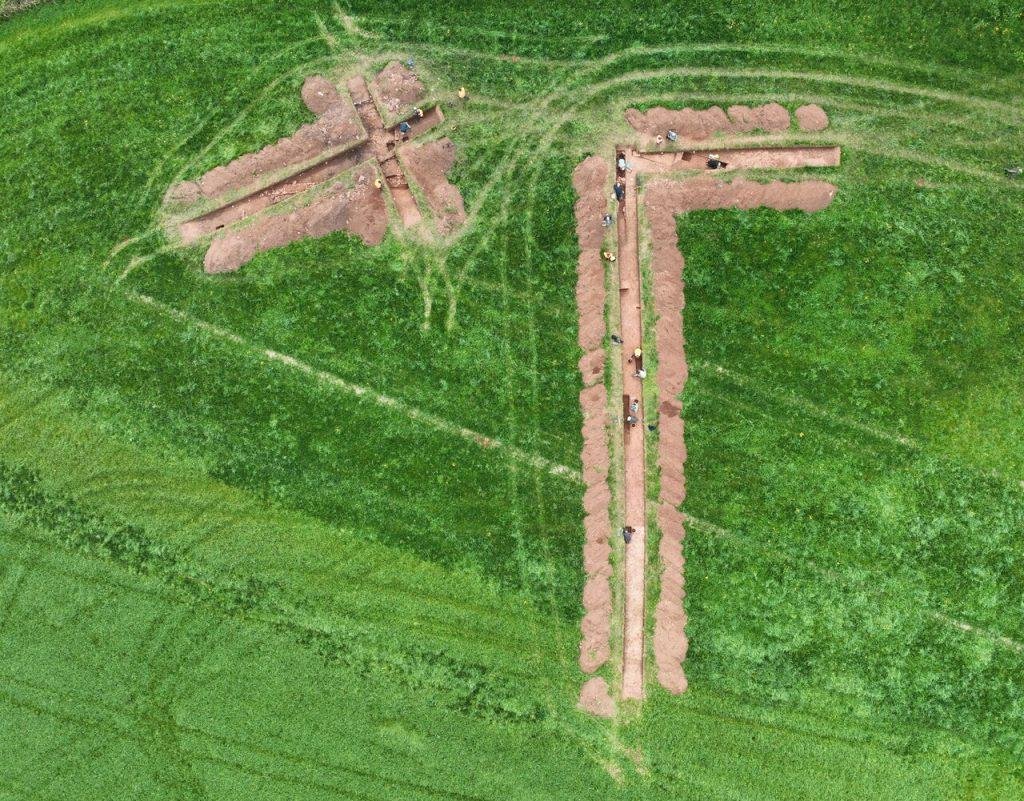
The project, called Saving Halberton’s Ancient Roman Environment, or SHARE, focuses on recording and studying the site before more of the buried structures disappear beneath farmland. The work is funded by the National Lottery Heritage Fund and brings together researchers from the University of Exeter, Tiverton Archaeological Group, Sampford Peverell Society, Devon County Council’s Historic Environment Team, and Cotswold Archaeology.
Roman villas are rare in Devon, with only a small number confirmed through excavation. This makes the Halberton site especially important for understanding Roman settlement in southwest Britain.
The villa first came to attention in 2004 after a local metal detectorist found Roman material in the area. Since then, fieldwalking, metal detecting, and geophysical surveys have revealed several phases of buried archaeology. Investigations have identified at least three Roman buildings, including the villa itself, along with enclosures, land boundaries, walls, and floor surfaces.
Excavations have produced a range of finds, including Roman coins, brooches, pottery fragments, ceramic building materials, worked slate, industrial waste, and tesserae, the small cubes used to create mosaics.

One of the most important discoveries came in 2021, when archaeologists uncovered part of a Roman mosaic floor during trial trenching. Although plowing had badly damaged the surface, parts of the design survived. The mosaic contains red, white, and black tesserae arranged in a polychrome pattern. Archaeologists say this is currently the westernmost example of a polychrome Roman mosaic identified in Britain.
Mosaics were expensive decorative features in Roman Britain and are usually linked to wealthy households. Combined with evidence for a possible hypocaust, the Roman underfloor heating system, the finds suggest the Halberton villa was a high-status residence occupied between the mid-2nd and 4th centuries CE.
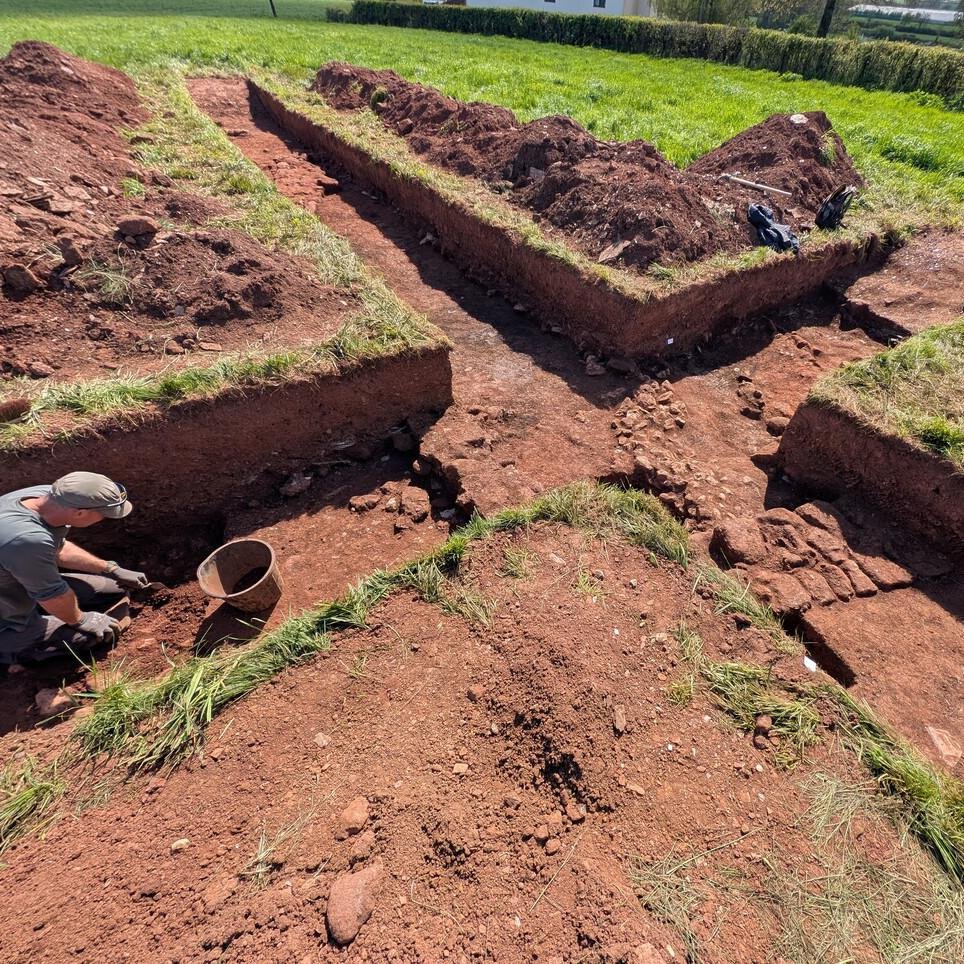
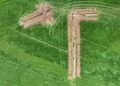
The first year of the SHARE project has already included a two-week evaluation excavation supported by university researchers, professional archaeologists, students, and local volunteers. Two additional trenches uncovered substantial wall remains belonging to previously unknown buildings.
Some stone walls had been stripped in later periods, with building materials removed for reuse elsewhere, a process archaeologists call robbing out. Even so, enough remains survived to show the scale of the Roman complex.
Researchers also uncovered ditches and pits that may help reconstruct how the surrounding landscape was divided and managed during the Roman period.
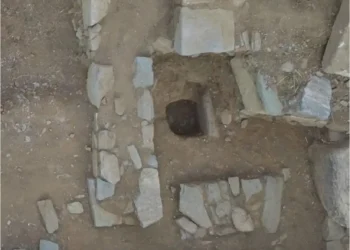
Among the latest discoveries is a tank-like structure lined with opus signinum, a waterproof Roman concrete made from lime mortar mixed with crushed pottery, brick, or tile. Romans widely used this material in baths, aqueducts, cisterns, and other water-related structures.
Because of this waterproof lining, archaeologists believe the newly found feature may have formed part of a bathhouse connected to the villa. If confirmed, this would add another sign of wealth and domestic comfort at the settlement.
Further excavation is planned from May through July. University of Exeter archaeology students will work at the site for four weeks, followed by another month of excavation involving community volunteers.
Researchers hope the extended project will recover more evidence from the threatened site and provide a fuller picture of Roman life in this part of Devon before agricultural activity causes further damage.
More information: Cotswold Archaeology








Disclaimer: This website is a science-focused magazine that welcomes both academic and non-academic audiences. Comments are written by users and may include personal opinions or unverified claims. They do not necessarily reflect the views of our editorial team or rely on scientific evidence.
Comment Policy: We kindly ask all commenters to engage respectfully. Comments that contain offensive, insulting, degrading, discriminatory, or racist content will be automatically removed.