
The Kasta Tomb in Amphipolis is becoming visible in full for the first time since archaeologists uncovered the site, offering a clearer view of one of the largest burial monuments ever found in ancient Macedonia. Restoration teams working at the massive mound in northern Greece have now exposed the entire marble enclosure surrounding the tomb, helping researchers better understand the scale of the monument and its role in the years after Alexander the Great’s death.
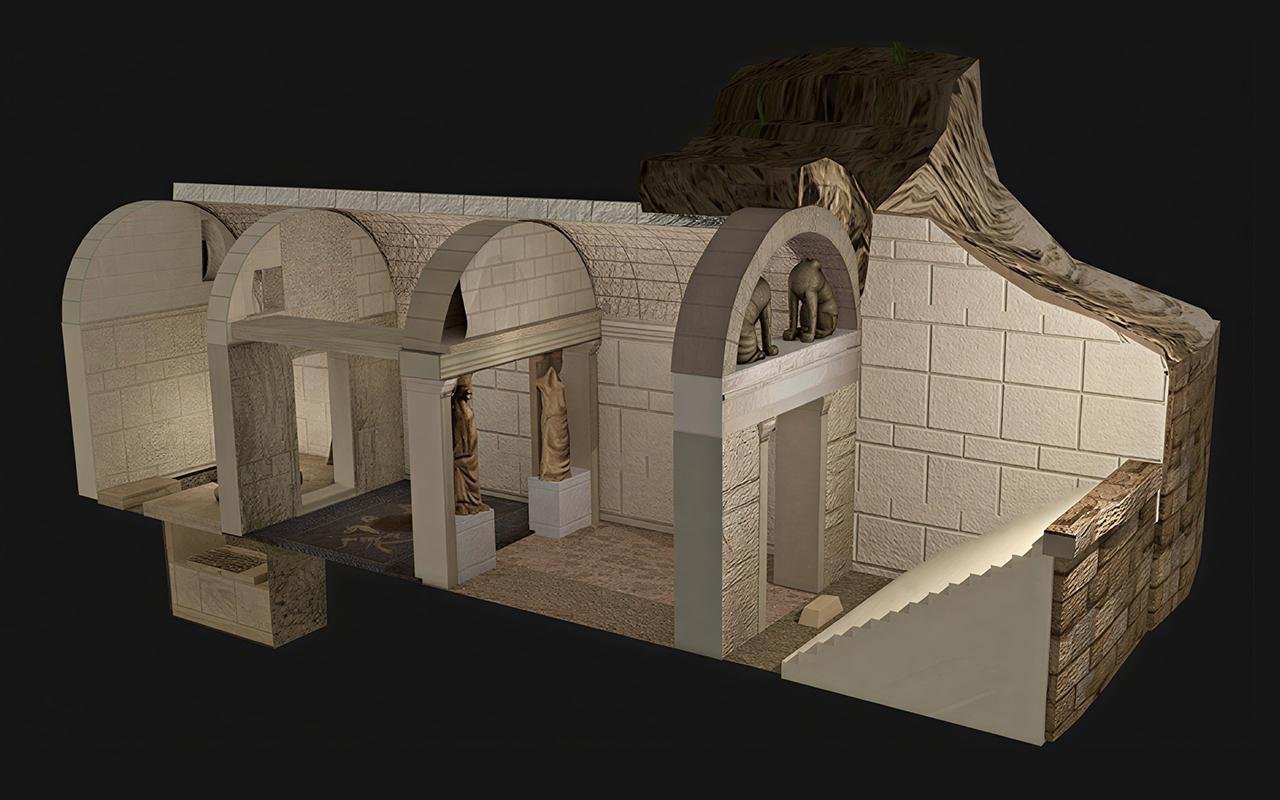
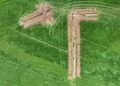
Greek Culture Minister Lina Mendoni recently visited the site to inspect the latest phase of the restoration project. Archaeologists and engineers have now fully uncovered the marble peribolos, or enclosure wall, which stretches 497 meters around the mound. The wall surrounds an area of more than 20 acres, while the broader site managed by the Ministry of Culture covers over 50 acres.
The size of the monument has surprised specialists. The mound exceeds 140 meters in diameter, making the Kasta Tomb larger than the famous Great Tumulus at Aigai, which measures around 110 meters. Officials now describe Kasta as the largest burial mound discovered in Macedonia.
Parts of the southern enclosure wall have already been rebuilt across 105 meters using original marble blocks recovered during excavation. Conservators added only limited artificial stone where extra support was needed. Work is now focused on stabilizing the western side of the enclosure while crews install an extensive drainage network designed to protect the mound from rainwater damage and long-term erosion.
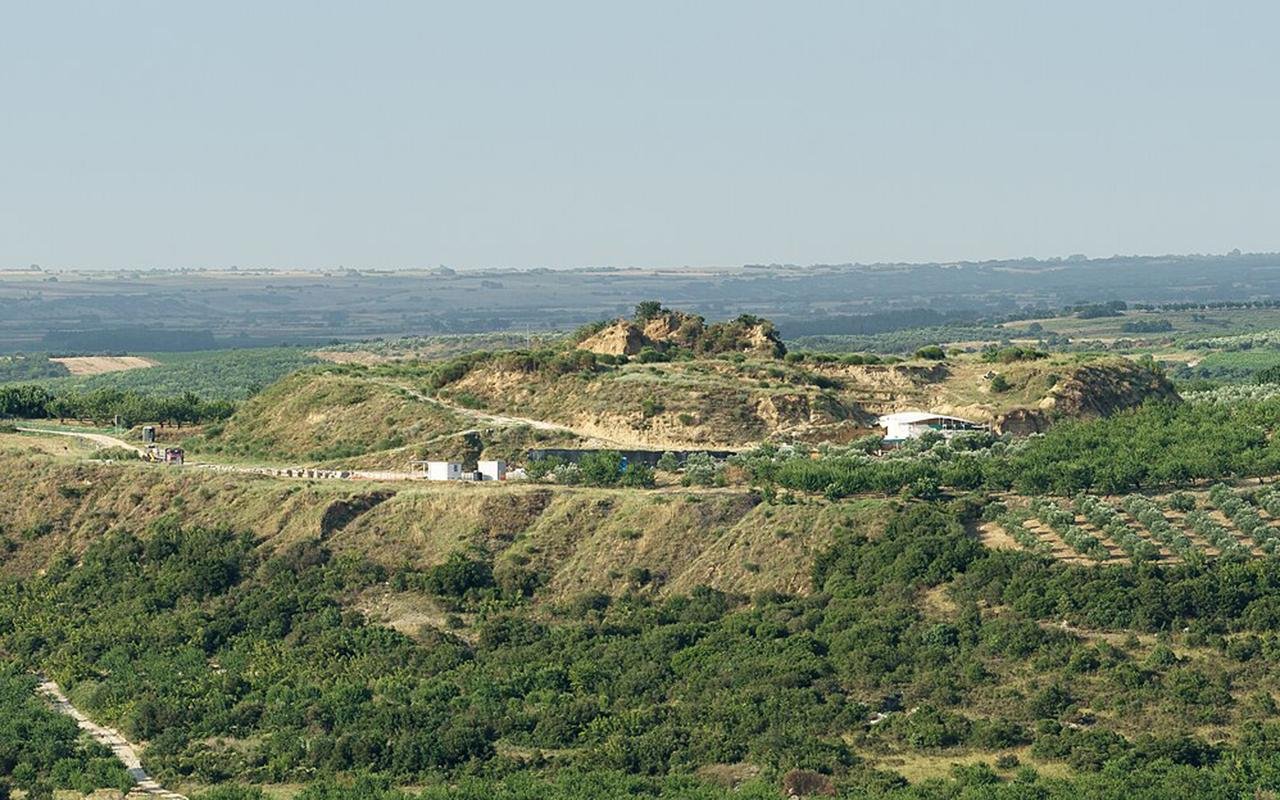
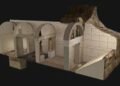
Engineers have also been reshaping parts of the hill to restore the mound’s original form. Inside the monument, earlier temporary steel supports and scaffolding used during emergency stabilization have been removed, allowing the internal chambers to become visible again.
Recent restoration work also repaired the burial chamber’s stone vault. The next stage will focus on reinstalling the monumental double marble door that once sealed the chamber. Conservators are preparing to restore the entrance sphinxes as well, including the return of missing wings and the missing head from one sculpture.
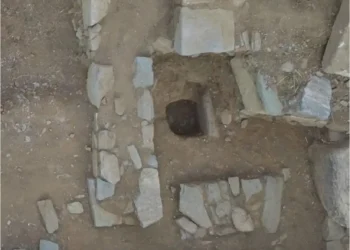
The restoration project is also revealing evidence from later periods of activity around the tomb. Archaeologists identified traces of Roman dismantling operations, including the exact point where a crane once stood to remove marble blocks for reuse elsewhere. Nearby remains of ramps and lifting systems suggest organized efforts to strip parts of the enclosure centuries after the tomb was built.
Researchers also found traces of a later mudbrick retaining structure on one side of the mound, likely built to stabilize the slopes after earlier damage.
Scientific evidence places the construction of the monument in the final quarter of the 4th century BCE, during the turbulent decades following Alexander the Great’s death. The quality of the marble, the scale of the engineering, and the luxurious architectural design all point to a burial connected to the highest levels of the Macedonian elite, though archaeologists still have not identified the person or people buried there.
The restoration project involves archaeologists, architects, conservators, engineers, and scientific specialists from several Greek institutions. The full cost is expected to exceed €15 million, supported through regional and European funding programs.
Greek authorities plan to add visitor facilities and a museum space on the eastern side of the site, with the goal of safely reopening the Kasta Tomb to the public in early 2028.










Disclaimer: This website is a science-focused magazine that welcomes both academic and non-academic audiences. Comments are written by users and may include personal opinions or unverified claims. They do not necessarily reflect the views of our editorial team or rely on scientific evidence.
Comment Policy: We kindly ask all commenters to engage respectfully. Comments that contain offensive, insulting, degrading, discriminatory, or racist content will be automatically removed.