
A previously unknown mass grave containing the remains of 14 German soldiers has been uncovered near the village of Bolemin in western Poland during earthmoving work at a quarry operated by Efekt-Silikaty.
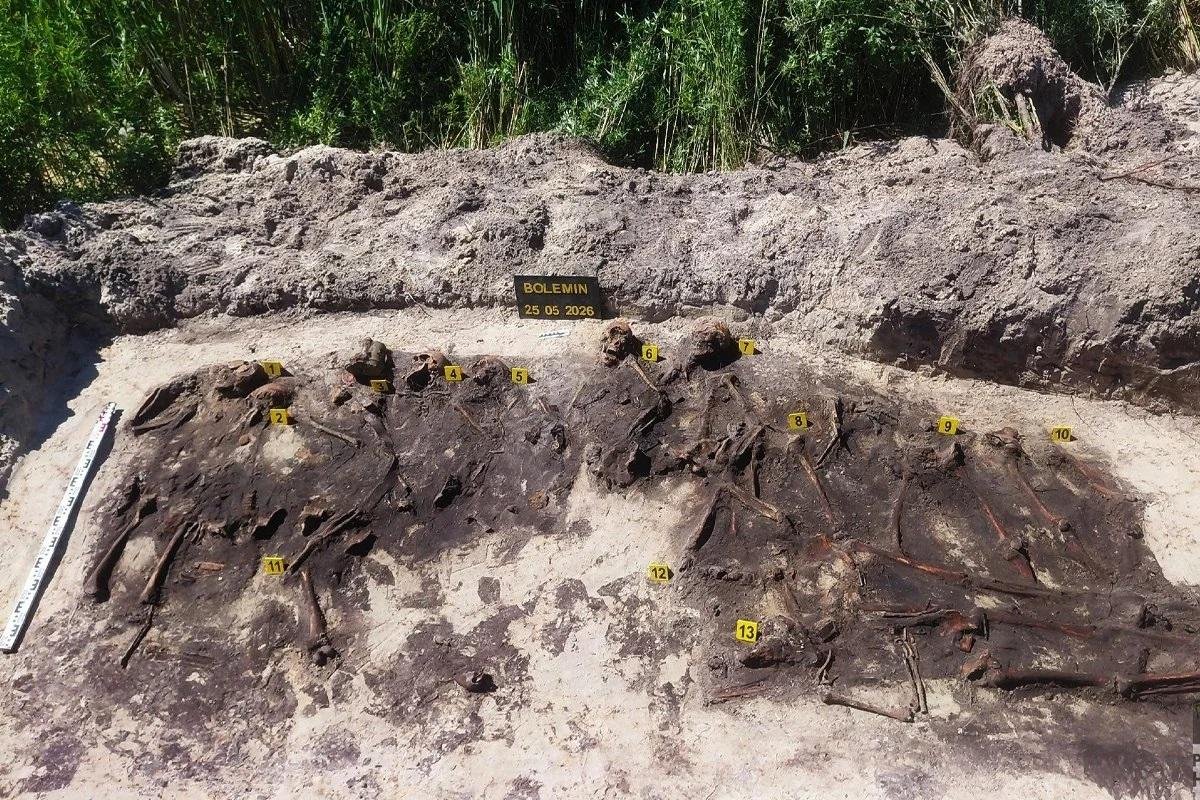
The burial came to light on May 26 when employee Paweł Gontarczyk noticed bones and military footwear lying close to the surface while operating a wheel loader. He reported the find to police, triggering a legal investigation led by the District Prosecutor’s Office in Gorzów Wielkopolski.
Archaeologists and exhumation specialists examined the site and confirmed the presence of a shallow wartime grave. According to researchers, no previous record of the burial exists in archival sources, making the site an unexpected addition to the region’s Second World War history.
Related story: World War II mass grave in Poland reveals remains of German officer killed during Battle of Lauban
Excavation work recovered several artifacts linked to the dead soldiers. Among them was an intact military identification tag, which could allow researchers to establish the identity of at least one individual. Investigators also documented an object bearing the name “Dechriste,” a clue that could support ongoing identification efforts.
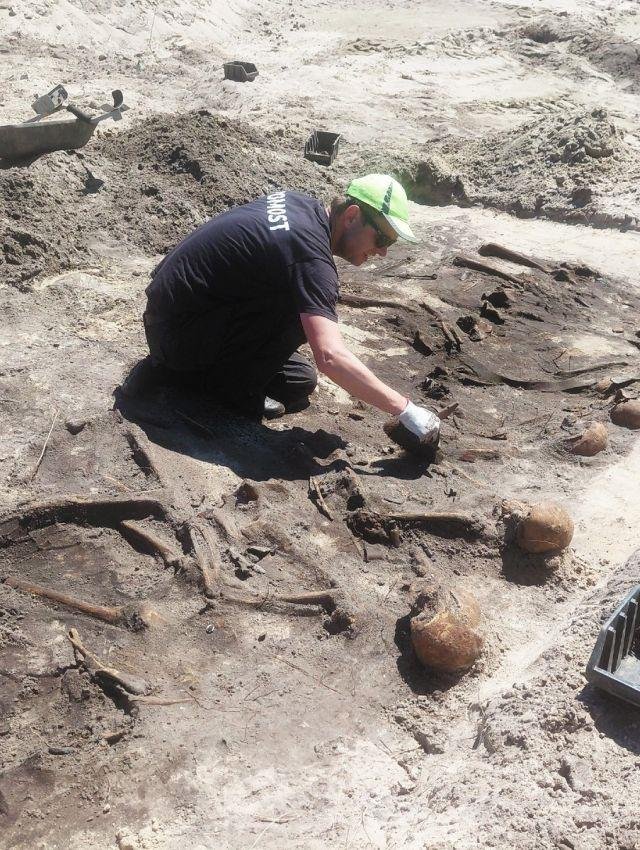
The grave likely dates to the final phase of World War II, when heavy fighting reached the area during the Soviet advance toward Germany. Western Poland saw intense military movement during those closing months of the conflict, leaving behind burial sites that in some cases were never recorded.
Researchers pointed to rapid changes in the local landscape as another important part of the story. Decades of quarrying and raw material extraction for silicate production have reshaped former meadows and open land, in some places turning them into water reservoirs. Such industrial activity can expose forgotten wartime remains, while also threatening archaeological and historical sites before they are documented.
The remains and artifacts recovered from Bolemin are now under examination as specialists work to identify the soldiers and reconstruct the circumstances surrounding their burial.
More information: POMOST

Disclaimer: This website is a science-focused magazine that welcomes both academic and non-academic audiences. Comments are written by users and may include personal opinions or unverified claims. They do not necessarily reflect the views of our editorial team or rely on scientific evidence.
Comment Policy: We kindly ask all commenters to engage respectfully. Comments that contain offensive, insulting, degrading, discriminatory, or racist content will be automatically removed.