
A team of volunteers has returned to the slopes above the village of Cerne Abbas in Dorset to refresh one of Britain’s most unusual ancient landmarks. Armed with bags of chalk, shovels, and hand tools, they are restoring the Cerne Abbas Giant, a huge figure cut into the hillside whose outline has gradually faded over recent years.
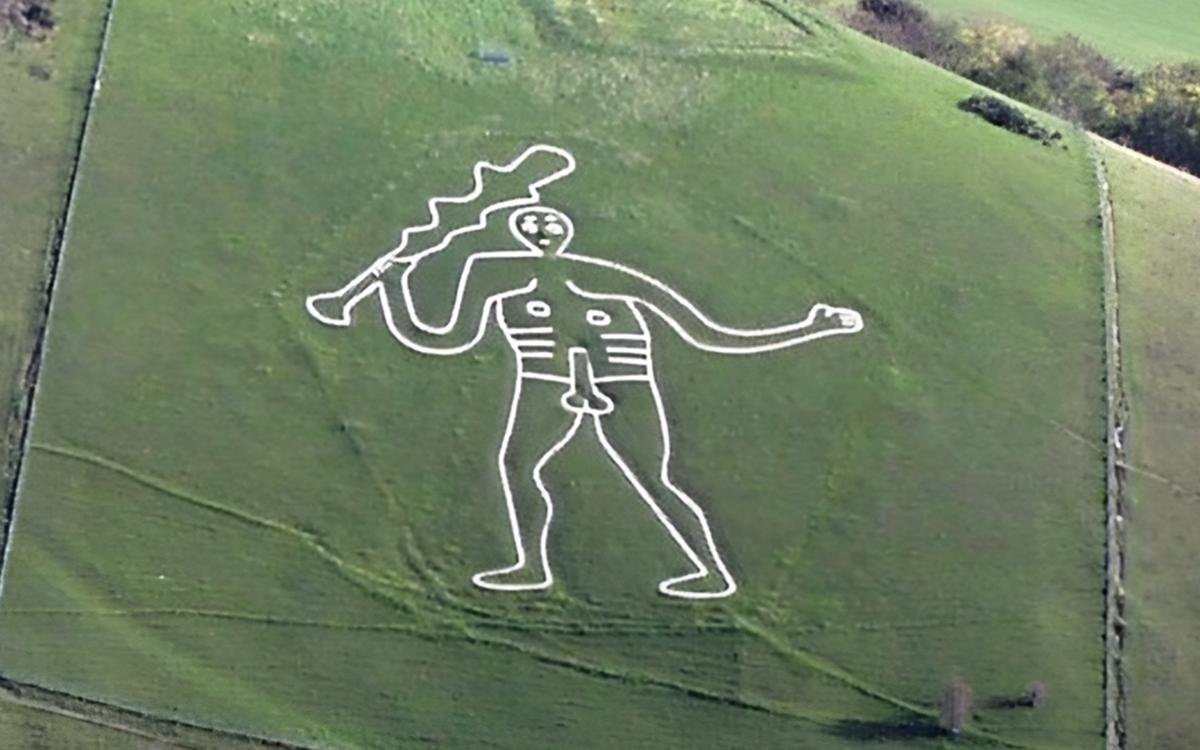
The giant stretches 55 meters, or about 180 feet, across the chalk hill. The figure shows a naked man holding a club in one hand. His body is formed by trenches dug into the hillside and filled with chalk rubble. Over time, rain, plant growth, and natural erosion soften those lines, making regular maintenance necessary.
Workers usually carry out a major restoration every decade. The previous effort took place in 2019, though conservation staff noticed the figure was already losing definition. Wetter winters have washed chalk from the trenches, while hotter conditions have encouraged weeds and algae to spread across the exposed surfaces.
Restoration begins with removing old chalk and clearing vegetation. Fresh chalk then goes back into the trenches. The process is physically demanding. Volunteers spend hours walking up and down the steep hillside carrying heavy bags. Around 300 people joined this year’s project. Some came from nearby communities, while others traveled from different parts of Britain and overseas.
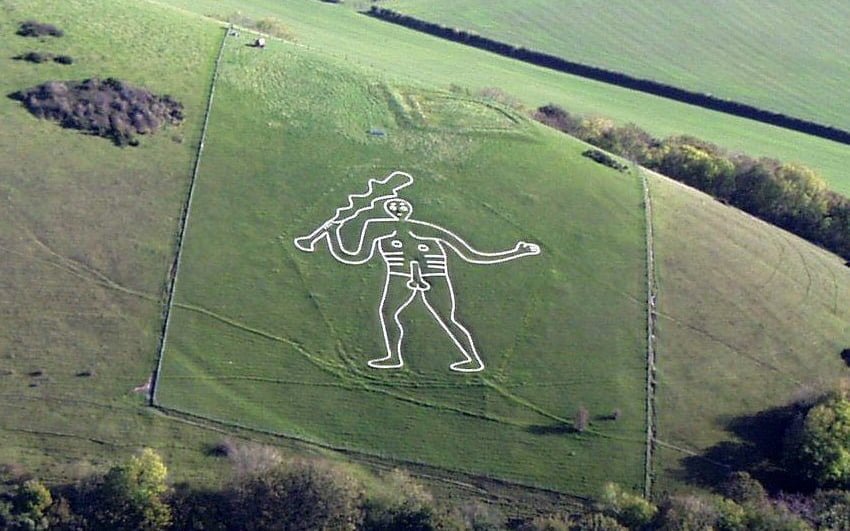
The work arrived during an unusually hot spell. Temperatures across the United Kingdom reached record levels for May, forcing organizers to alter working hours. Forecast rain threatened further interruptions as crews raced to complete sections of the giant before conditions changed again.
Although millions of people have seen photographs of the Cerne Abbas Giant, historians still debate why somebody created the figure in the first place. For many years, estimates of its age varied widely. Some researchers argued for prehistoric origins. Others suggested a Roman date.
Scientific testing carried out by the National Trust in 2021 pointed toward a different answer. Samples taken from the figure indicated a date between CE 700 and 1100, placing construction in the late Anglo-Saxon period. Even with a clearer timeline, questions about the giant’s purpose remain.
One theory links the figure to fertility traditions. Another connects the club-carrying man with Hercules, the hero from Greek mythology. Archaeologists have yet to find evidence strong enough to settle the debate.
This year’s work carries added importance because the landscape around the giant is receiving new attention. A fundraising campaign recently raised £330,000, allowing the National Trust to buy more than 130 hectares, or 320 acres, of surrounding land. Archaeologists view the area as highly significant. Future surveys and excavations could help explain how the giant fit into the wider landscape and what role the monument played in medieval England.
For now, volunteers continue their work on the hillside, replacing lost chalk one trench at a time. Their efforts help keep a centuries-old figure visible against the Dorset countryside, preserving a landmark whose story is still unfinished.


Disclaimer: This website is a science-focused magazine that welcomes both academic and non-academic audiences. Comments are written by users and may include personal opinions or unverified claims. They do not necessarily reflect the views of our editorial team or rely on scientific evidence.
Comment Policy: We kindly ask all commenters to engage respectfully. Comments that contain offensive, insulting, degrading, discriminatory, or racist content will be automatically removed.