
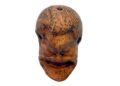
Archaeologists working inside Crno Jezero Cave on Croatia’s Pelješac Peninsula have uncovered an intact terracotta head shaped as a Greek theatrical mask, a rare find linked to ritual activity in the ancient Adriatic world. The object dates to the 4th to 3rd centuries BCE and offers new clues about religious life among local Illyrian communities and their contact with Greek culture.
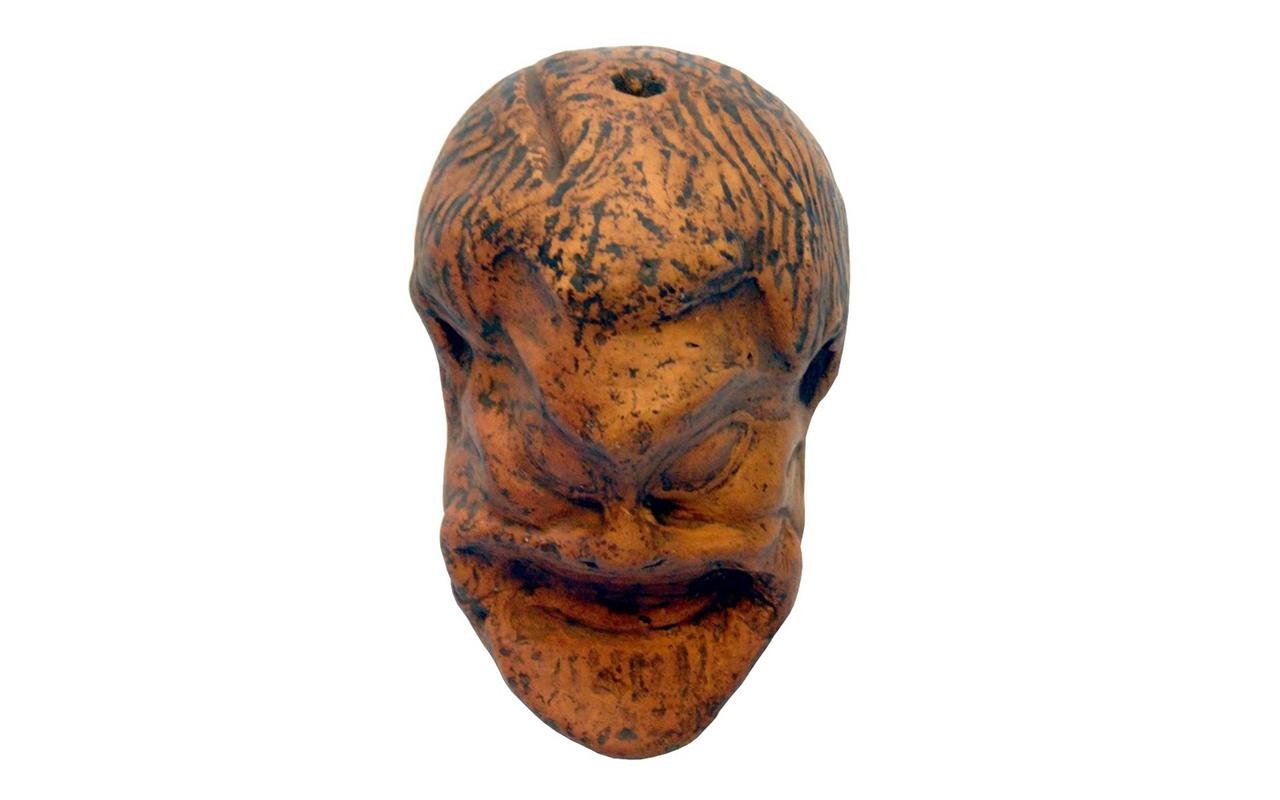
The discovery came during excavations under the direction of the Archaeological Museum of the Dubrovnik Museums. The hollow terracotta head bears a small hole at the top, showing it was likely suspended on a wall. Greek theatrical masks belonged to the sphere of theater and Dionysian worship, since Dionysus held a central role as the Greek god of theater and wine.
Researchers think the artifact formed part of ritual activity inside the cave, though the exact nature of those rites remains unclear. Archaeologist Domagoj Perkić, head of the Archaeological Museum, noted that the finds came from the cave entrance and a side chamber that had been hidden and buried before excavation. Their protected location helped preserve the material in an unusual state for more than two thousand years.
The cave itself has a long and changing history. Research completed in 2025 showed that different parts of Crno Jezero served different functions over time. During the Bronze Age, especially through the 2nd millennium BCE, people used the cave as a refuge during unstable periods, harsh weather, or seasonal occupation.
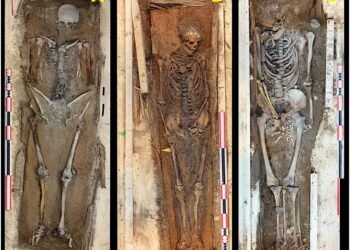
Its role later shifted. From the Late Bronze Age into the early phases of the Iron Age, the cave became a burial site. Radiocarbon analysis of human remains places this funerary use between roughly 1012 and 481 BCE. For more than five centuries, the site functioned as a necropolis containing numerous burials.

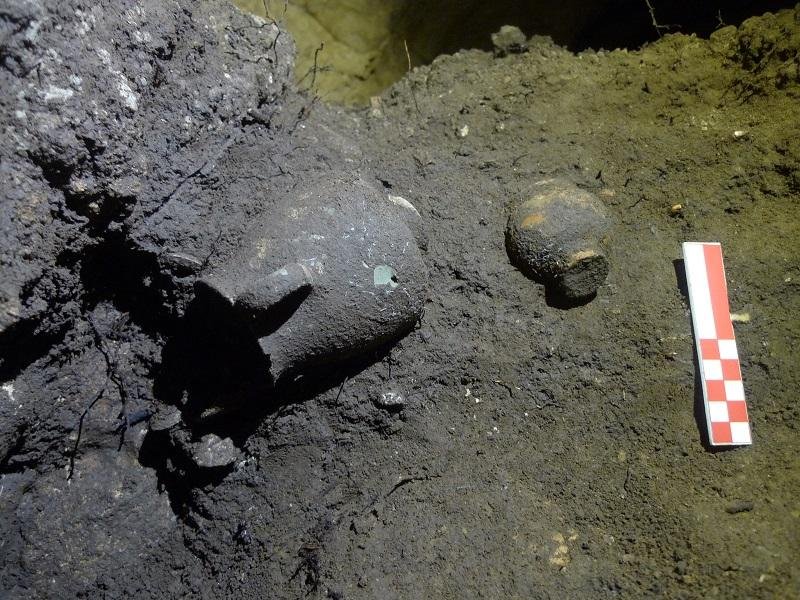
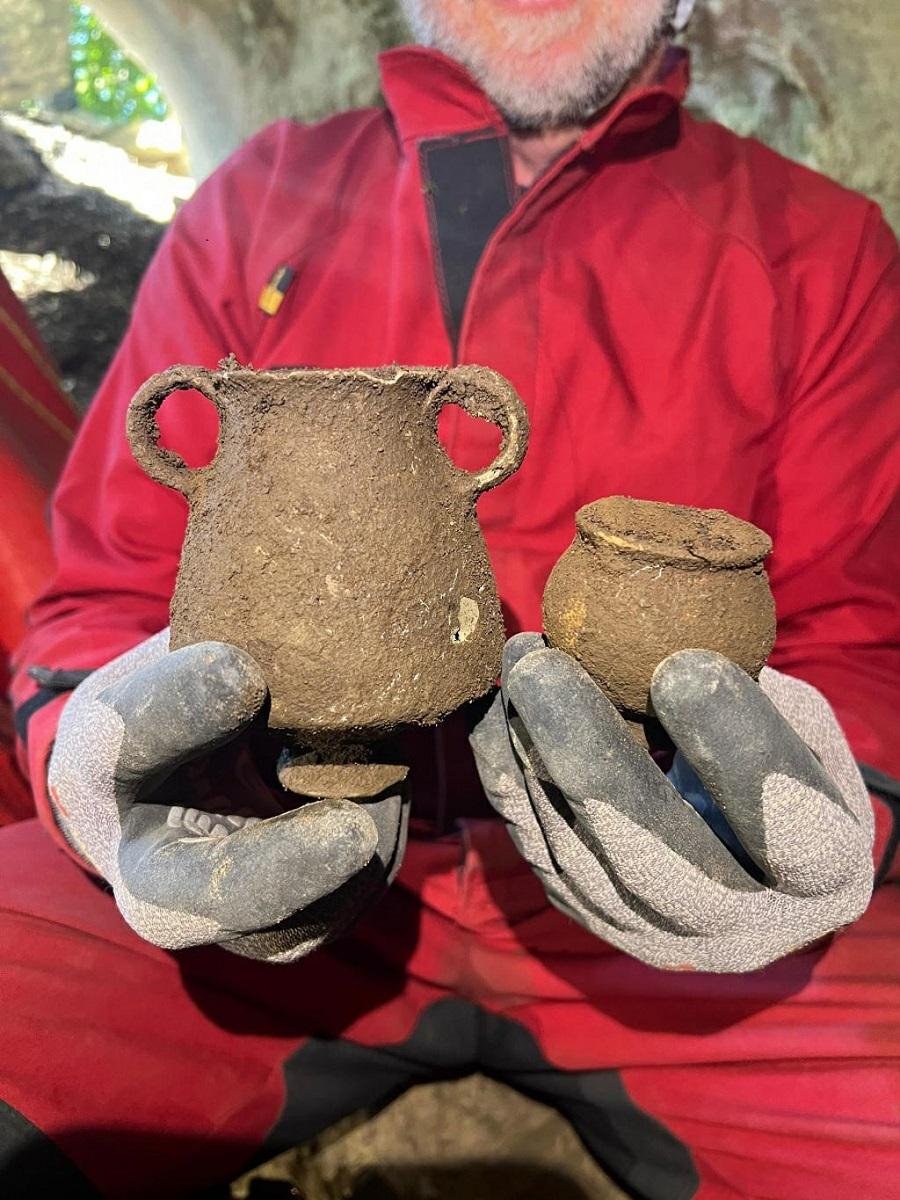
After burial activity ended, the cave took on a new identity as an Illyrian sanctuary. Archaeologists date this religious phase from the late 4th century BCE to the middle of the 1st century BCE. Evidence for sacred use includes large numbers of miniature vessels deposited as offerings. Many came from the Greek world, including small amphorae, bowls, and kantharoi, while others were locally produced.
These ceramics hold special importance because they were not ordinary household goods within Illyrian society. Imported Greek pottery ranked among the finest and most costly ceramics of its time. Amphorae stored wine and cups served for drinking. Within local communities, such objects carried associations with status, wealth, and social power. Their placement inside the cave points toward ritual practices that likely involved offerings and perhaps wine consumption.
The newly uncovered theatrical mask is not the first Greek-related object from the site. Excavations in the previous season recovered fragments from a ceramic head and partial bust of a Greek deity dating to the Classical period in the 4th century BCE. Taken together, the artifacts point toward sustained cultural contact between Illyrian populations and the Greek world. They also raise the possibility that local deities and rituals became linked with Greek religious figures through processes of cultural blending.
Crno Jezero holds added importance because only three Illyrian sanctuaries are currently known in the wider Dubrovnik region. The other two sites are Spila in Nakovana and Vilina Cave above the Ombla spring. Archaeologists view these sanctuaries as rare opportunities to study Illyrian religion and its interaction with Greek beliefs across the eastern Adriatic.
The excavation team included archaeologists Domagoj Perkić and Krešimir Grbavac, conservator-restorer Sanja Pujo of the Dubrovnik Museums, speleologists Hrvoje and Nataša Cvitanović from the Ursus Spelaeus Speleological Club in Karlovac, and archaeologist-speleologist Mirna Šandrić from the Speleological Section of HPD Željezničar in Zagreb. Their work continues to build a clearer picture of a cave whose meaning changed repeatedly across prehistoric centuries, from shelter, to cemetery, to sanctuary.
More information: Dubrovnik Museums









Disclaimer: This website is a science-focused magazine that welcomes both academic and non-academic audiences. Comments are written by users and may include personal opinions or unverified claims. They do not necessarily reflect the views of our editorial team or rely on scientific evidence.
Comment Policy: We kindly ask all commenters to engage respectfully. Comments that contain offensive, insulting, degrading, discriminatory, or racist content will be automatically removed.