• About
  • Privacy Policy
  • Terms of Use
  • Donation
  • Contact
No Result
View All Result
Archaeology News
  • Home
  • News
    • Archaeology
    • Anthropology
    • Paleontology
  • Academic
    • Books
    • Conferences
    • Universities
  • Articles
  • VR Tours
  • Quiz & Game
  • Download
  • Encyclopedia
  • Forum
Archaeology News
No Result
View All Result
Home News Anthropology

‘Patchwork families’ lived in Europe over 5,000 years ago, Neolithic DNA study finds

by Dario Radley
May 25, 2026

More than 5,000 years ago, communities in Central Europe built massive stone tombs that still dominate parts of the landscape. These megalithic monuments from the Late Neolithic period have long been linked with ancestry, family identity, and tightly connected kin groups. A new genetic study suggests a more complicated picture. People buried together in these tombs were often connected through social relationships rather than close biological ties, and some families maintained links across surprisingly long distances.
'Patchwork families' lived in Europe over 5,000 years ago, Neolithic DNA study finds
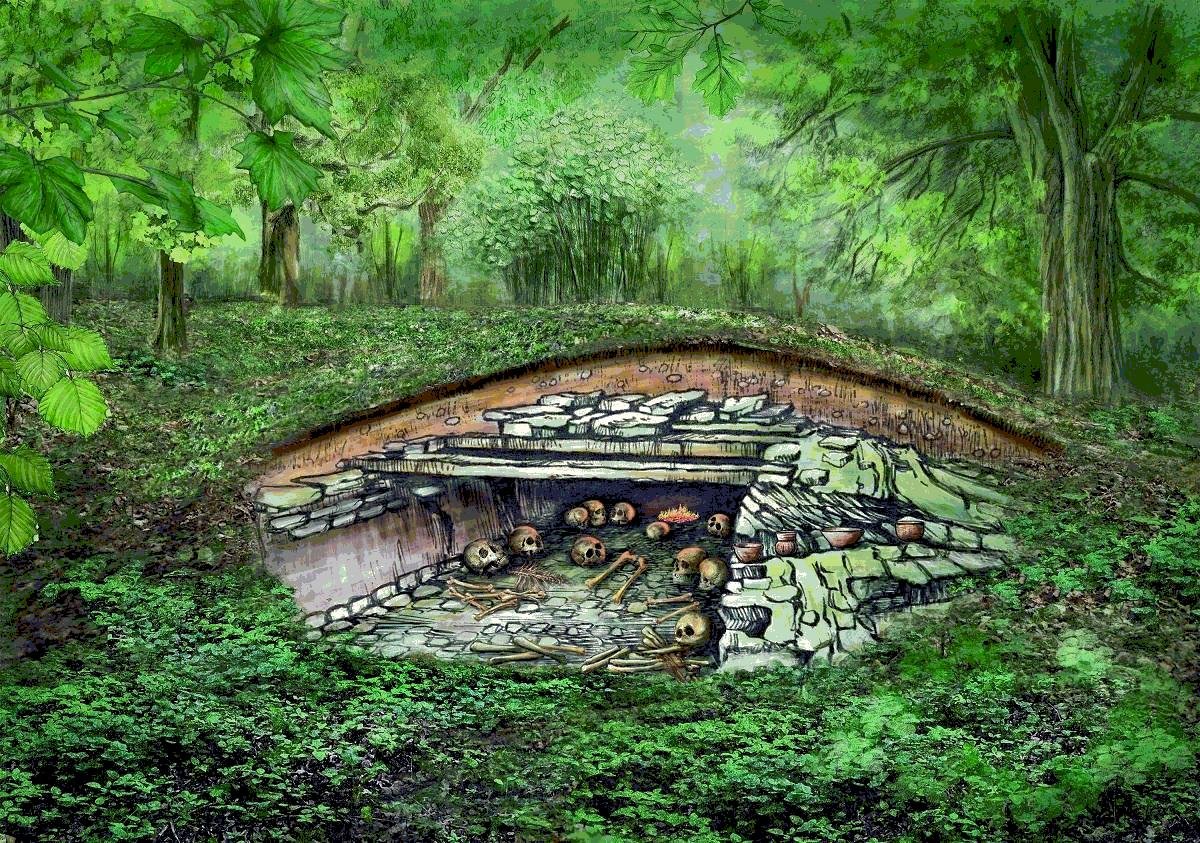
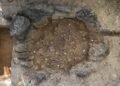
Around 3100 BCE, the Sorsum megalithic tomb served as a communal burial site for local farming communities. Genetic analyses now reveal that among those buried there was, among others, the son of a family from the Wetterau region, located approximately 250 kilometers to the south. Credit: Susanne Beyer, Inst. UFG/Uni Kiel

Published in Science, the study analyzed genome-wide DNA data from 203 individuals buried in six megalithic grave complexes associated with the Western Funnel Beaker and Wartberg cultural groups. The remains came from sites in present-day Germany, mainly in Lower Saxony, Hesse, and North Rhine-Westphalia. Researchers used ancient DNA from bones to examine patterns of ancestry, family structure, and mobility among Late Neolithic farming communities.

The Neolithic period marked a major shift in human history. Farming, animal husbandry, and permanent settlement reshaped daily life across Europe. Between about 3600 and 2800 BCE, some communities began building large stone monuments and communal burial chambers. Archaeologists have debated how this architectural tradition spread. One possibility pointed to migration by a specific population. Another proposed the spread of ideas and practices between different groups.

The new findings support the second explanation.

When researchers compared the genetic data from the German sites with previously published genomes from megalithic populations elsewhere in Europe, they found only limited biological connections. Monument building appears to have spread largely through cultural transmission rather than large-scale movement of people.
RelatedStories

Rare 19th-century bone dental bridge found in Portugal points to early cosmetic tooth replacement

Rare 19th-century bone dental bridge found in Portugal points to early cosmetic tooth replacement

May 23, 2026
massive jar in Laos contained remains of 37 people, revealing ancient burial rituals and Asian trade links

Massive jar in Laos contained remains of 37 people, revealing ancient burial rituals and Asian trade links

May 19, 2026

The study also challenged assumptions about who used these tombs. In several earlier investigations from regions such as Ireland and Sweden, megalithic burials often centered on close biological families. The German evidence looked different.

The six burial complexes functioned as communal grave sites, but they were not reserved for nuclear families or tightly related lineages. Many individuals buried in the same monument showed no close genetic relationship. Social belonging seems to have carried strong weight in determining burial practices.
'Patchwork families' lived in Europe over 5,000 years ago, Neolithic DNA study finds
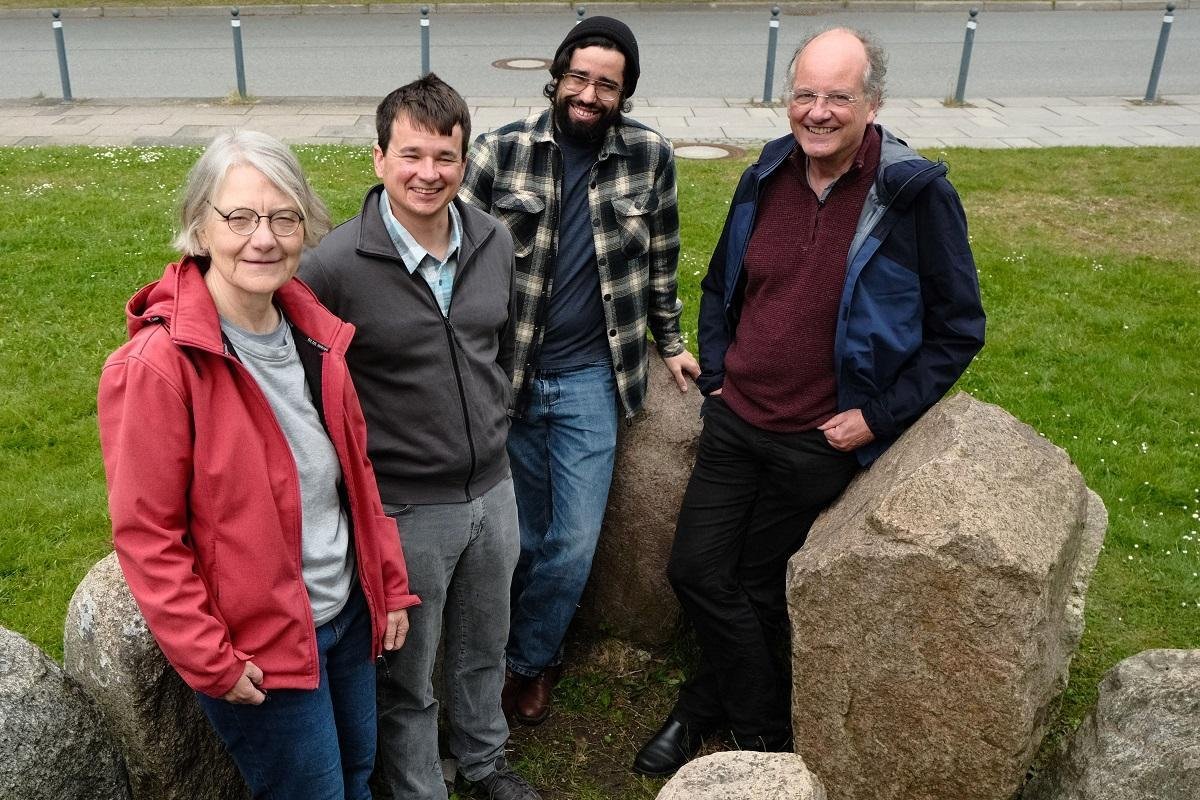
Almut Nebel, Ben Krause-Kyora, Nicolas Antonio da Silva and Johannes Müller are excited about the new insights into the lives of Neolithic people provided by the ancient DNA analyses. In total, 16 researchers were involved in the study. Credit: Jan Steffen, Cluster ROOTS/Uni Kiel

Researchers describe these communities as socially flexible, with family arrangements that do not fit a simple biological model. The findings resemble forms of blended or extended households in which social kinship shaped community life.

Mobility patterns also surprised the research team.

One of the clearest examples came from two megalithic sites separated by roughly 225 kilometers, or about 140 miles. Genetic analysis identified a biological father and son buried in different tombs. The father had been interred at Niedertiefenbach, while the son was buried at Sorsum far to the north.

The finding shows movement across several hundred kilometers within a single generation. Such travel took place long before domesticated horses became established transport animals in Central Europe.

This father-son pair was not an isolated case. The data revealed additional first- and second-degree relatives buried far apart, pointing to sustained movement between sites and communities. Women and girls appeared especially mobile, suggesting patterns of relocation that exceeded earlier estimates for Neolithic populations.

Despite their archaeological differences, the Western Funnel Beaker and Wartberg groups in the study formed a genetically homogeneous population. Cultural identity and burial traditions stayed distinct even while people moved, formed relationships, and maintained ties across regions.

The combination of shared ancestry, long-distance kinship, and separate cultural practices adds depth to current views of Late Neolithic Europe. Communities did not operate as isolated units tied only by bloodlines or local territory. They maintained social networks spanning considerable distances, while cultural traditions circulated independently of major population replacement.

As ancient DNA datasets continue to grow, archaeologists are gaining a more detailed view of early farming societies. The latest evidence from Central Germany suggests that prehistoric family life, mobility, and community membership were more varied than older models allowed. The people who built and used Europe’s megalithic monuments lived in societies where social bonds, movement, and cultural exchange shaped daily life alongside biological ancestry.
Publication: da Silva, N. A., Nebel, A., Kolbe, D., Myburgh, D. A., Klimscha, F., Görner, I., … Krause-Kyora, B. (2026). Long-distance genetic relatedness in megalithic central Europe. Science (New York, N.Y.), 392(6800), 839–844. doi:10.1126/science.aeb2926
More information: Kiel University

Share:

Share on Facebook Share on X (Twitter) Share on LinkedIn Share on Pinterest Share on WhatsApp Share on Email

You May Also Like...

100,000-year-old Homo sapiens bones from Ethiopia may preserve earliest evidence of human cremation
Anthropology

100,000-year-old Homo sapiens bones from Ethiopia may preserve earliest evidence of human cremation

May 24, 2026
Ancient Peruvian hairless dogs buried with Wari elites 1,200 years ago
Archaeology

Ancient Peruvian hairless dogs buried with Wari elites 1,200 years ago

May 24, 2026
4,000-year-old Mohenjo-daro study finds ancient city grew more equal over time
Archaeology

4,000-year-old Mohenjo-daro study finds ancient city grew more equal over time

May 24, 2026
Bronze Age towers in Sardinia remained centers of worship and ritual in the Iron Age
Archaeology

Bronze Age towers in Sardinia remained centers of worship and ritual in the Iron Age

May 23, 2026
Rare 19th-century bone dental bridge found in Portugal points to early cosmetic tooth replacement
Anthropology

Rare 19th-century bone dental bridge found in Portugal points to early cosmetic tooth replacement

May 23, 2026
Medieval well hidden beneath Sheffield Castle surveyed with drone technology
Archaeology

Medieval well hidden beneath Sheffield Castle surveyed with drone technology

May 23, 2026

Comments 0

  1. Editorial Team says:
    1 second ago

    Disclaimer: This website is a science-focused magazine that welcomes both academic and non-academic audiences. Comments are written by users and may include personal opinions or unverified claims. They do not necessarily reflect the views of our editorial team or rely on scientific evidence.

    Comment Policy: We kindly ask all commenters to engage respectfully. Comments that contain offensive, insulting, degrading, discriminatory, or racist content will be automatically removed.

    Reply

Leave a Reply Cancel reply

Your email address will not be published. Required fields are marked *

Follow us


Instagram
242K

Facebook
117K

Threads
46K

LinkedIn
14K

Twitter
6K

YouTube
1K
'Patchwork families' lived in Europe over 5,000 years ago, Neolithic DNA study finds

‘Patchwork families’ lived in Europe over 5,000 years ago, Neolithic DNA study finds

May 25, 2026
100,000-year-old Homo sapiens bones from Ethiopia may preserve earliest evidence of human cremation

100,000-year-old Homo sapiens bones from Ethiopia may preserve earliest evidence of human cremation

May 24, 2026
Ancient Peruvian hairless dogs buried with Wari elites 1,200 years ago

Ancient Peruvian hairless dogs buried with Wari elites 1,200 years ago

May 24, 2026
4,000-year-old Mohenjo-daro study finds ancient city grew more equal over time

4,000-year-old Mohenjo-daro study finds ancient city grew more equal over time

May 24, 2026

Archaeology News online magazine

Archaeology News is an international online magazine that covers all aspects of archaeology.


Categories

  • Academics
    • Books
    • Conferences
    • Universities
  • Articles
  • Download
  • Game
  • News
    • Anthropology
    • Archaeology
    • Paleontology
  • Quiz
  • Tours

Subscribe to our newsletter

© 2024 - Archaeology News Online Magazine. All Rights Reserved.

  • About
  • Privacy Policy
  • Terms of Use
  • Donation
  • Contact

Manage Consent
To provide the best experiences, we use technologies like cookies to store and/or access device information. Consenting to these technologies will allow us to process data such as browsing behavior or unique IDs on this site. Not consenting or withdrawing consent, may adversely affect certain features and functions.
Functional Always active
The technical storage or access is strictly necessary for the legitimate purpose of enabling the use of a specific service explicitly requested by the subscriber or user, or for the sole purpose of carrying out the transmission of a communication over an electronic communications network.
Preferences
The technical storage or access is necessary for the legitimate purpose of storing preferences that are not requested by the subscriber or user.
Statistics
The technical storage or access that is used exclusively for statistical purposes. The technical storage or access that is used exclusively for anonymous statistical purposes. Without a subpoena, voluntary compliance on the part of your Internet Service Provider, or additional records from a third party, information stored or retrieved for this purpose alone cannot usually be used to identify you.
Marketing
The technical storage or access is required to create user profiles to send advertising, or to track the user on a website or across several websites for similar marketing purposes.
  • Manage options
  • Manage services
  • Manage {vendor_count} vendors
  • Read more about these purposes
View preferences
  • {title}
  • {title}
  • {title}
  • Home
  • News
    • Archaeology
    • Anthropology
    • Paleontology
  • Academic
    • Books
    • Conferences
    • Universities
  • Articles
  • VR Tours
  • Quiz & Game
  • Download
  • Encyclopedia
  • Forum

About  .  Contact  .  Donation

© 2024 - Archaeology News Online Magazine. All Rights Reserved