• About
  • Privacy Policy
  • Terms of Use
  • Donation
  • Contact
No Result
View All Result
Archaeology News
  • Home
  • News
    • Archaeology
    • Anthropology
    • Paleontology
  • Academic
    • Books
    • Conferences
    • Universities
  • Articles
  • VR Tours
  • Quiz & Game
  • Download
  • Encyclopedia
  • Forum
Archaeology News
No Result
View All Result
Home News Archaeology

Bronze Age towers in Sardinia remained centers of worship and ritual in the Iron Age

by Dario Radley
May 23, 2026

More than 3,000 years after the first nuraghi rose across Sardinia, some of these massive stone towers still shaped community life in ways archaeologists are only beginning to understand. New research at Nuraghe Barru, a site in south central Sardinia, suggests one of these ancient structures did not fade into irrelevance at the start of the Iron Age. Instead, it became a place where ritual acts, social identity, and regional connections intersected.
Bronze Age towers in Sardinia remained centers of worship and ritual in the Iron Age
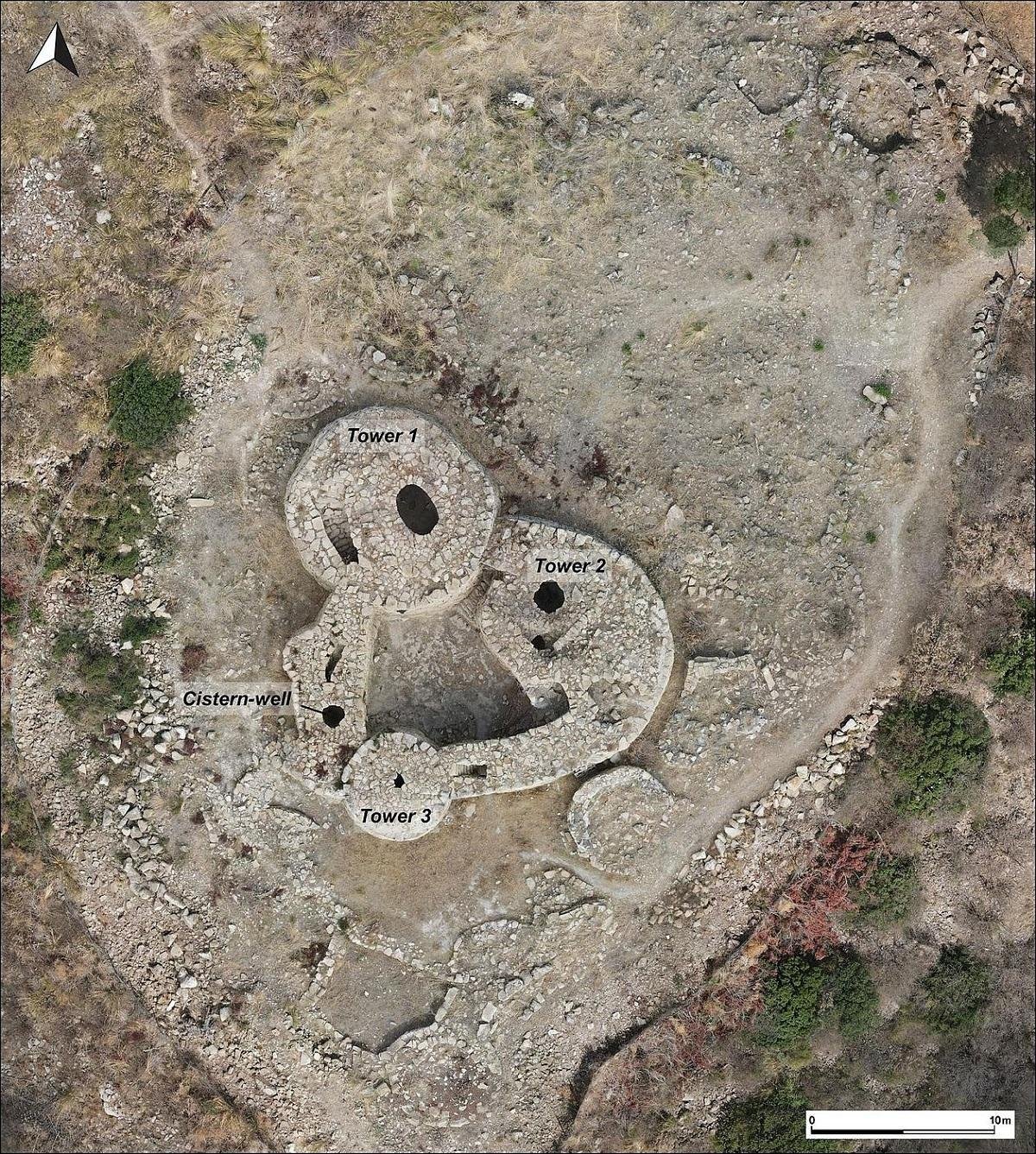
The Nuragic complex of Barru with the location of the cistern-well. The multi-towered nuraghe is surrounded by predominantly circular huts. Credit: Amir Ahmadpour and Lars Heinze

The study, led by researchers from the University of Tübingen and Italian heritage authorities, examined ritual deposits found inside and around the monument. By combining archaeology, geology, and materials science, the team traced the origins of pottery and analyzed the composition of metal objects. Their results point toward organized ritual activity linked to wider exchange networks across Sardinia and beyond.

Sardinia contains nearly 7,000 nuraghi, stone towers built during the Bronze Age between roughly 1700 and 1100 BCE. Their original role still sparks debate. Some scholars view them as defensive structures, others as residences, gathering places, or ritual centers. During the Final Bronze Age and Early Iron Age, between about 1200 and 800 BCE, Sardinian society changed. New sanctuaries, sacred wells, and ceremonial spaces appeared across the island.

Archaeologists wanted to know whether older nuraghi lost their meaning during this shift or adapted to new social and religious conditions.
Bronze Age towers in Sardinia remained centers of worship and ritual in the Iron Age
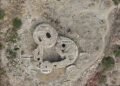
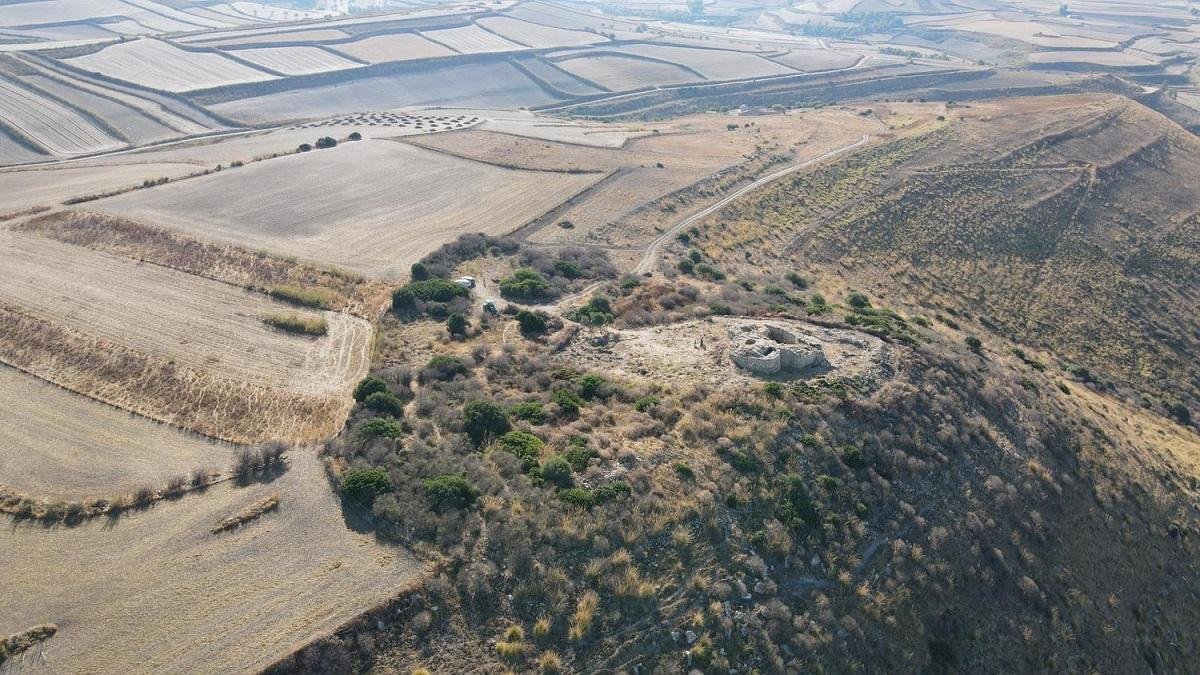
Aerial view of the Nuraghe Barru site in central-southern Sardinia. Credit: Lars Heinze

Excavations at Nuraghe Barru produced evidence favoring the second possibility.
RelatedStories

2,300-year-old Iron Age riverside structure discovered beneath German city astonishes archaeologists

2,300-year-old Iron Age riverside structure discovered beneath German city

May 22, 2026
Ancient pigeons were already living alongside humans 3,400 years ago, study finds

Ancient pigeons were already living alongside humans 3,400 years ago, study finds

May 21, 2026

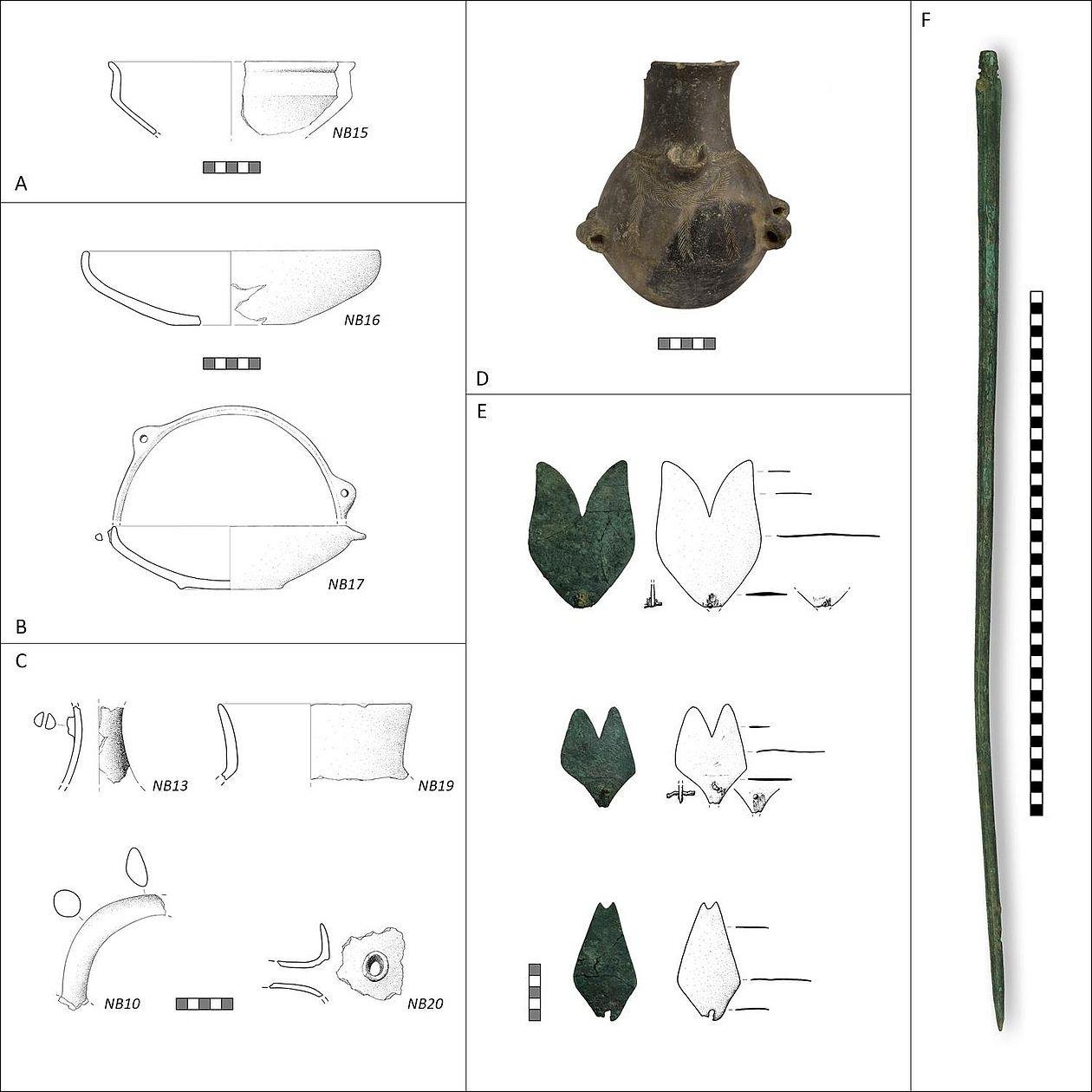
Inside the tower complex, researchers uncovered a sealed cistern well. At its base lay a deliberate deposit of broken pottery, including jugs, a miniature amphora, and a rare four-handled ceremonial vessel. The assemblage also contained human and animal remains placed there intentionally. After the deposit, limestone slabs sealed the well.

Nearby, along a staircase, archaeologists found metal offerings. These included a bronze sword nearly one meter long, three blade-like bronze objects resembling razors, and a lump of copper. The staircase later became blocked, cutting off access to the upper level of the structure.

Taken together, the finds do not resemble ordinary disposal or abandonment. They point toward a planned ritual episode that altered the monument itself.
Bronze Age towers in Sardinia remained centers of worship and ritual in the Iron Age
Selected ceramics and metal objects from Nuraghe Barru. Credit: Pilo and Usai, 2020 / Lionello F. Morandi

The team used ceramic petrography, which identifies minerals inside pottery, to examine where the vessels came from. Many were not locally made. Their mineral composition linked them to different geological zones across Sardinia, some more than 40 kilometers from Barru.

Those results suggest movement of people, materials, and practices between communities. Nuraghe Barru appears connected to broader interregional networks active during late Nuragic society.

The metal objects tell a related story. Portable X-ray fluorescence analysis found copper-rich, low tin bronze alloys in both the sword and the razor-like implements. The sword matches known Nuragic votive swords, objects associated with ceremonial use rather than warfare.

The razor-shaped pieces resemble examples from mainland Italy. Their form hints at contact with cultural traditions from the Italian Peninsula. Yet their chemical composition leans toward local production instead of direct importation.

The researchers stress that their sample size is limited and does not represent all Nuragic ritual practice. Even so, Barru offers a carefully documented case study for examining how older monuments functioned during a period of social transition.

The findings suggest continuity alone does not explain what happened at Nuraghe Barru. The tower’s role changed. Ritual deposits, imported pottery traditions, and symbolic metal offerings point toward an active reshaping of how communities used and understood these older structures.

During the Early Iron Age, formal sanctuaries gathered offerings and accumulated political and economic importance across Sardinia. Yet sites such as Barru show that some pre-existing nuraghi still held authority within their territories. Communities continued to invest meaning in them, adapting ancient architecture to fit changing religious and social needs.

The evidence from Barru adds another layer to the picture of late Nuragic Sardinia. Rather than isolated settlements tied only to local traditions, communities across the island participated in networks of exchange, shared practices, and shifting forms of power. An old stone tower built centuries earlier remained part of that changing landscape.

Publication: Amicone, S., Tiezzi, V., Broisch-Höhner, M., Freund, K. P., Heinze, L., Morandi, L. F., … Pilo, C. (2026). Ritual and connectivity in Nuragic Sardinia: An interdisciplinary study of ceramics and metalwork from nuraghe Barru. Open Archaeology, 12(1). doi:10.1515/opar-2025-0078
More information: Eberhard Karls Universität Tübingen

Share:

Share on Facebook Share on X (Twitter) Share on LinkedIn Share on Pinterest Share on WhatsApp Share on Email

You May Also Like...

Rare 19th-century bone dental bridge found in Portugal points to early cosmetic tooth replacement
Anthropology

Rare 19th-century bone dental bridge found in Portugal points to early cosmetic tooth replacement

May 23, 2026
Medieval well hidden beneath Sheffield Castle surveyed with drone technology
Archaeology

Medieval well hidden beneath Sheffield Castle surveyed with drone technology

May 23, 2026
Nondestructive DNA sampling uncovers 1,300 years of history preserved in ancient parchments
Archaeology

Nondestructive DNA sampling uncovers 1,300 years of history preserved in ancient parchments

May 22, 2026
2,300-year-old Iron Age riverside structure discovered beneath German city astonishes archaeologists
Archaeology

2,300-year-old Iron Age riverside structure discovered beneath German city

May 22, 2026
100 Abbasid-era gold jewelry pieces found at ancient Dariyah site in Saudi Arabia
Archaeology

100 Abbasid-era gold jewelry pieces found at ancient Dariyah site in Saudi Arabia

May 22, 2026
Neanderthals gathered shellfish like modern humans 115,000 years ago, study finds
Anthropology

Neanderthals gathered shellfish like modern humans 115,000 years ago, study finds

May 21, 2026

Comments 0

  1. Editorial Team says:
    1 second ago

    Disclaimer: This website is a science-focused magazine that welcomes both academic and non-academic audiences. Comments are written by users and may include personal opinions or unverified claims. They do not necessarily reflect the views of our editorial team or rely on scientific evidence.

    Comment Policy: We kindly ask all commenters to engage respectfully. Comments that contain offensive, insulting, degrading, discriminatory, or racist content will be automatically removed.

    Reply

Leave a Reply Cancel reply

Your email address will not be published. Required fields are marked *

Follow us


Instagram
242K

Facebook
117K

Threads
46K

LinkedIn
14K

Twitter
6K

YouTube
1K
Bronze Age towers in Sardinia remained centers of worship and ritual in the Iron Age

Bronze Age towers in Sardinia remained centers of worship and ritual in the Iron Age

May 23, 2026
Rare 19th-century bone dental bridge found in Portugal points to early cosmetic tooth replacement

Rare 19th-century bone dental bridge found in Portugal points to early cosmetic tooth replacement

May 23, 2026
Medieval well hidden beneath Sheffield Castle surveyed with drone technology

Medieval well hidden beneath Sheffield Castle surveyed with drone technology

May 23, 2026
Nondestructive DNA sampling uncovers 1,300 years of history preserved in ancient parchments

Nondestructive DNA sampling uncovers 1,300 years of history preserved in ancient parchments

May 22, 2026

Archaeology News online magazine

Archaeology News is an international online magazine that covers all aspects of archaeology.


Categories

  • Academics
    • Books
    • Conferences
    • Universities
  • Articles
  • Download
  • Game
  • News
    • Anthropology
    • Archaeology
    • Paleontology
  • Quiz
  • Tours

Subscribe to our newsletter

© 2024 - Archaeology News Online Magazine. All Rights Reserved.

  • About
  • Privacy Policy
  • Terms of Use
  • Donation
  • Contact

Manage Consent
To provide the best experiences, we use technologies like cookies to store and/or access device information. Consenting to these technologies will allow us to process data such as browsing behavior or unique IDs on this site. Not consenting or withdrawing consent, may adversely affect certain features and functions.
Functional Always active
The technical storage or access is strictly necessary for the legitimate purpose of enabling the use of a specific service explicitly requested by the subscriber or user, or for the sole purpose of carrying out the transmission of a communication over an electronic communications network.
Preferences
The technical storage or access is necessary for the legitimate purpose of storing preferences that are not requested by the subscriber or user.
Statistics
The technical storage or access that is used exclusively for statistical purposes. The technical storage or access that is used exclusively for anonymous statistical purposes. Without a subpoena, voluntary compliance on the part of your Internet Service Provider, or additional records from a third party, information stored or retrieved for this purpose alone cannot usually be used to identify you.
Marketing
The technical storage or access is required to create user profiles to send advertising, or to track the user on a website or across several websites for similar marketing purposes.
  • Manage options
  • Manage services
  • Manage {vendor_count} vendors
  • Read more about these purposes
View preferences
  • {title}
  • {title}
  • {title}
  • Home
  • News
    • Archaeology
    • Anthropology
    • Paleontology
  • Academic
    • Books
    • Conferences
    • Universities
  • Articles
  • VR Tours
  • Quiz & Game
  • Download
  • Encyclopedia
  • Forum

About  .  Contact  .  Donation

© 2024 - Archaeology News Online Magazine. All Rights Reserved