
Archaeologists working in Saudi Arabia’s Al–Qassim Region have uncovered a large group of Abbasid-era gold jewelry at the Dariyah archaeological site. The find dates back more than 1,100 years and points to the wealth and trade activity linked to the settlement during the early Islamic period.
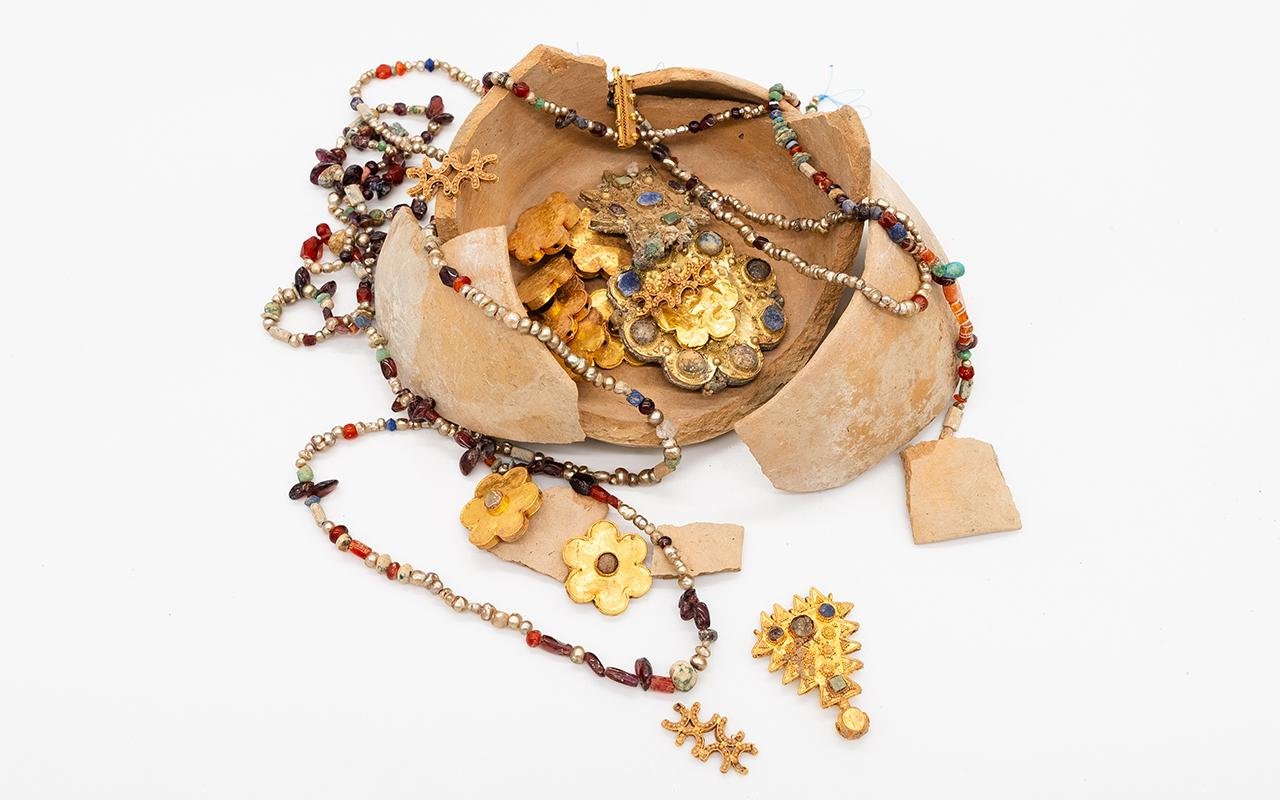
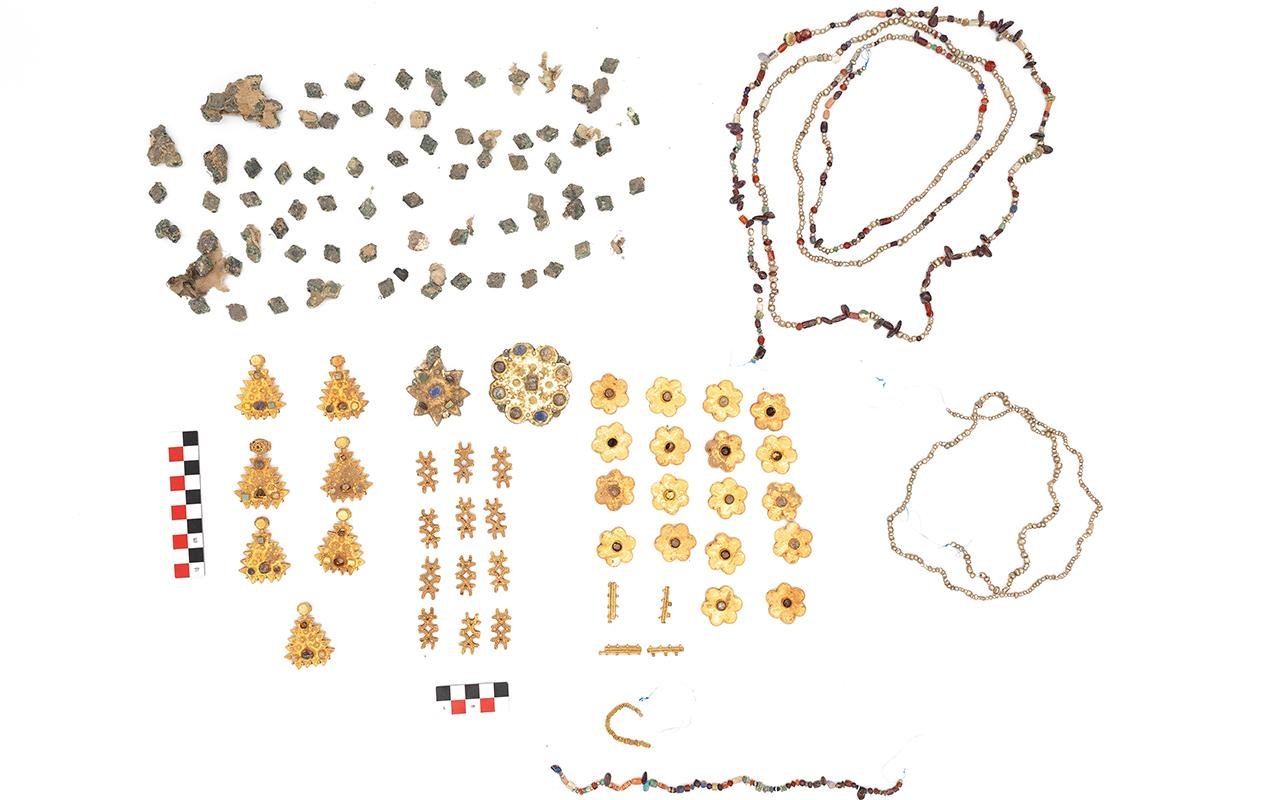
The Saudi Heritage Commission announced the find after the fourth excavation season at the site. Researchers recovered around 100 gold pieces, which appear to belong to a single jewelry collection. The pieces include pendants, decorated discs, beads, and thin gold spacers once used in necklaces or ceremonial adornments.
Many of the objects carry floral patterns arranged inside geometric forms. Several pieces contain colored stones fixed into gold frames. One large circular ornament stands out from the rest. Archaeologists described the item as a disc-shaped piece decorated with symmetrically placed stones around a central design.
The jewelry makers shaped the pieces by hammering thin sheets of gold and pressing decorative patterns into the surface. They placed stones into prepared settings by hand. The work shows the high level of metalworking skill present during the Abbasid period, which ruled much of the Islamic world from the eighth through thirteenth centuries.
Excavations at Dariyah produced more than jewelry. Teams uncovered stone building foundations, mudbrick walls, plastered rooms, fire hearths, pottery fragments, and metal tools. Researchers linked these remains to settlement activity from the late ninth century CE.
RelatedStories

Rare Bronze Age burial in Sweden reveals unusual pair of Wendel neck rings and complex ritual landscape near Norrköping

The site stood along old pilgrimage and trade routes crossing the Arabian Peninsula. Historians connect Dariyah to the Basran Hajj route, which pilgrims from Iraq once used while traveling toward Mecca. Traders and travelers likely stopped there for rest, supplies, and exchange.
Dr. Jasir Suliman Alherbish, head of the Saudi Heritage Commission, said the find reflects the depth of cultural heritage preserved across the Kingdom. He pointed to the area’s long connection with trade and cultural contact between regions.
Dariyah lies southwest of Al-Qassim among mountains and valleys containing traces of human activity from pre-Islamic and early Islamic times. Previous surveys recorded archaeological mounds, stone structures, pottery and glass fragments, soapstone objects, and Islamic inscriptions scattered across the surrounding landscape.
The newly recovered gold collection adds another piece to the history of the settlement.




Disclaimer: This website is a science-focused magazine that welcomes both academic and non-academic audiences. Comments are written by users and may include personal opinions or unverified claims. They do not necessarily reflect the views of our editorial team or rely on scientific evidence.
Comment Policy: We kindly ask all commenters to engage respectfully. Comments that contain offensive, insulting, degrading, discriminatory, or racist content will be automatically removed.