
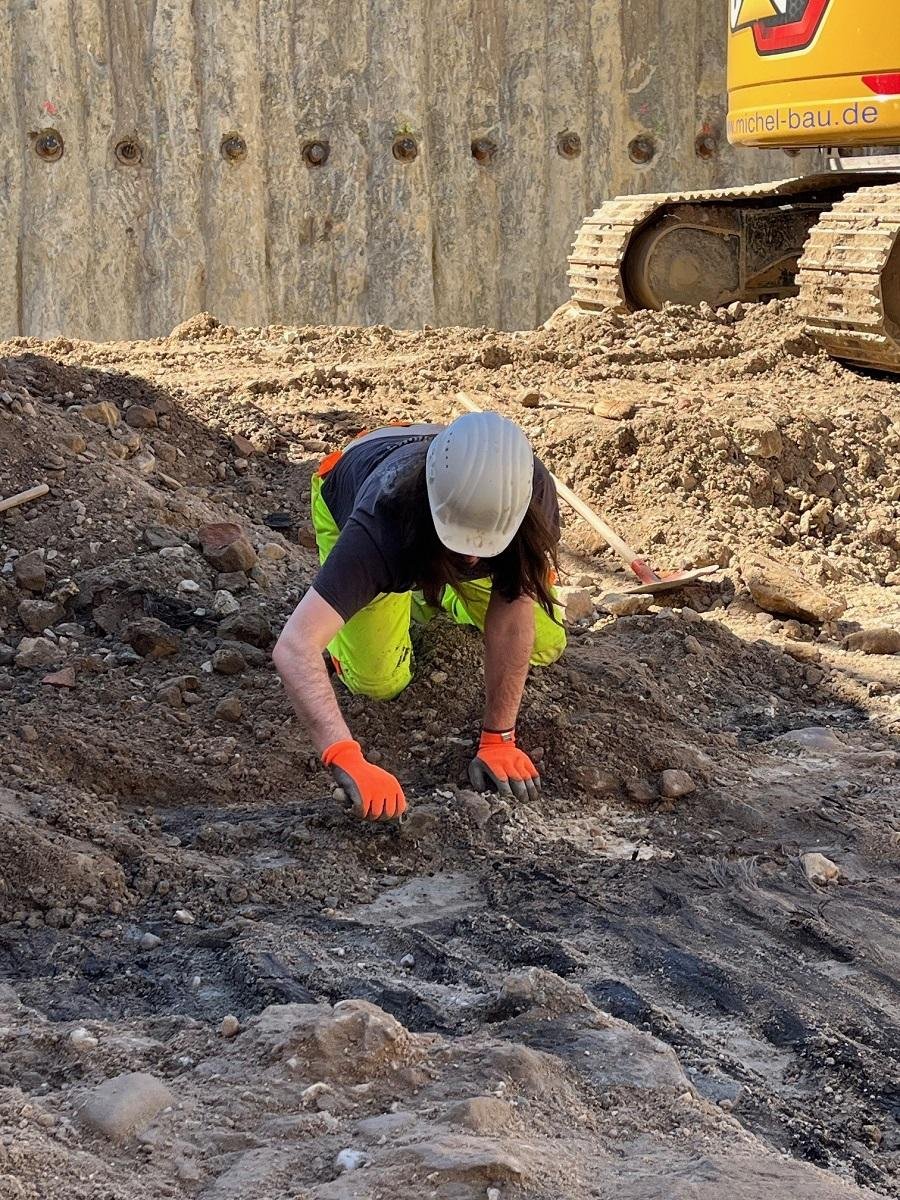
Archaeologists working in the Bavarian city of Aschaffenburg have uncovered a rare Iron Age structure buried deep along the banks of the Main River. The find emerged during construction work for a stormwater overflow basin north of the Willigis Bridge, where crews unexpectedly encountered large wooden remains nearly eight meters below the surface.
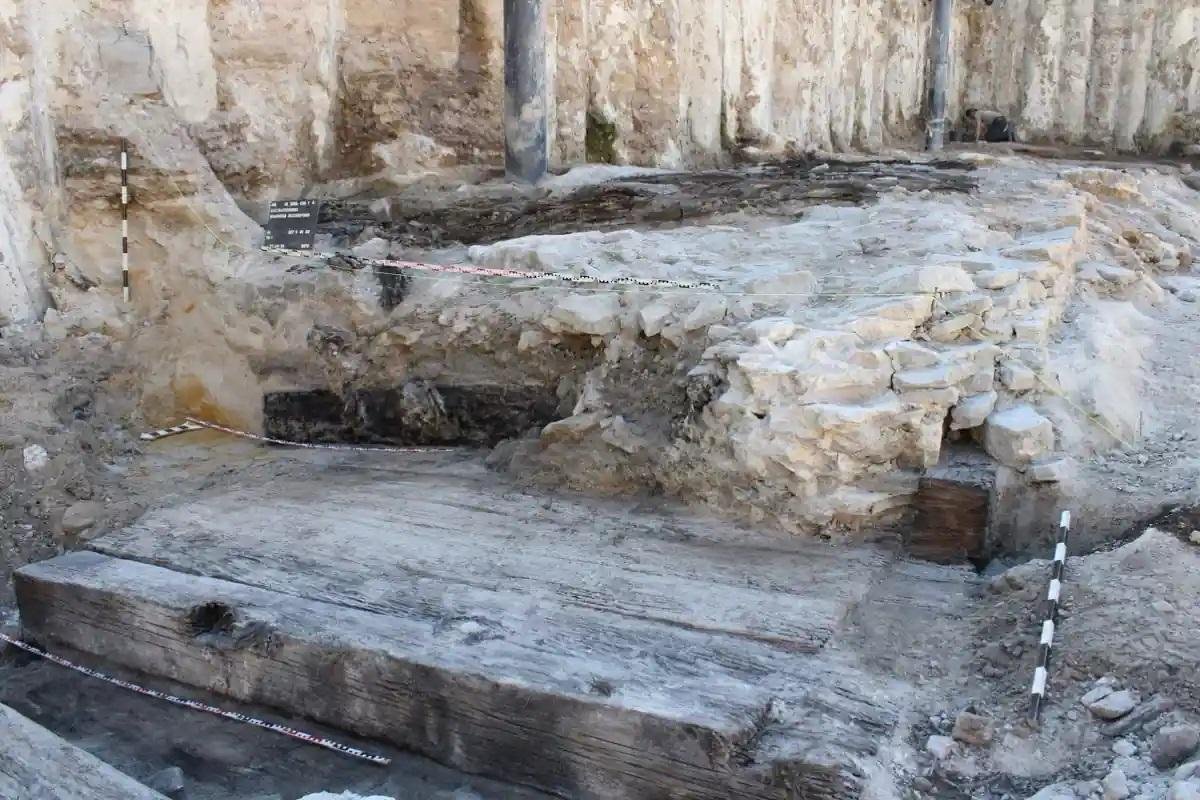
The discovery quickly drew the attention of the Bavarian State Office for Monument Protection, known as the BLfD. Archaeologists began emergency investigations after the city reported the exposed timbers in March 2026. At first, researchers believed the structure belonged to the early modern period because the wood had survived in unusually strong condition. Waterlogged soil near the river protected the oak beams for more than two thousand years.
Laboratory analysis later changed the entire picture. Specialists at the BLfD’s dendrochronology laboratory in Thierhaupten examined growth rings preserved in several oak timbers and compared them with regional tree-ring records. The results showed the trees were cut down during the 4th century BCE, placing the structure firmly within the Early La Tène period of the Iron Age.
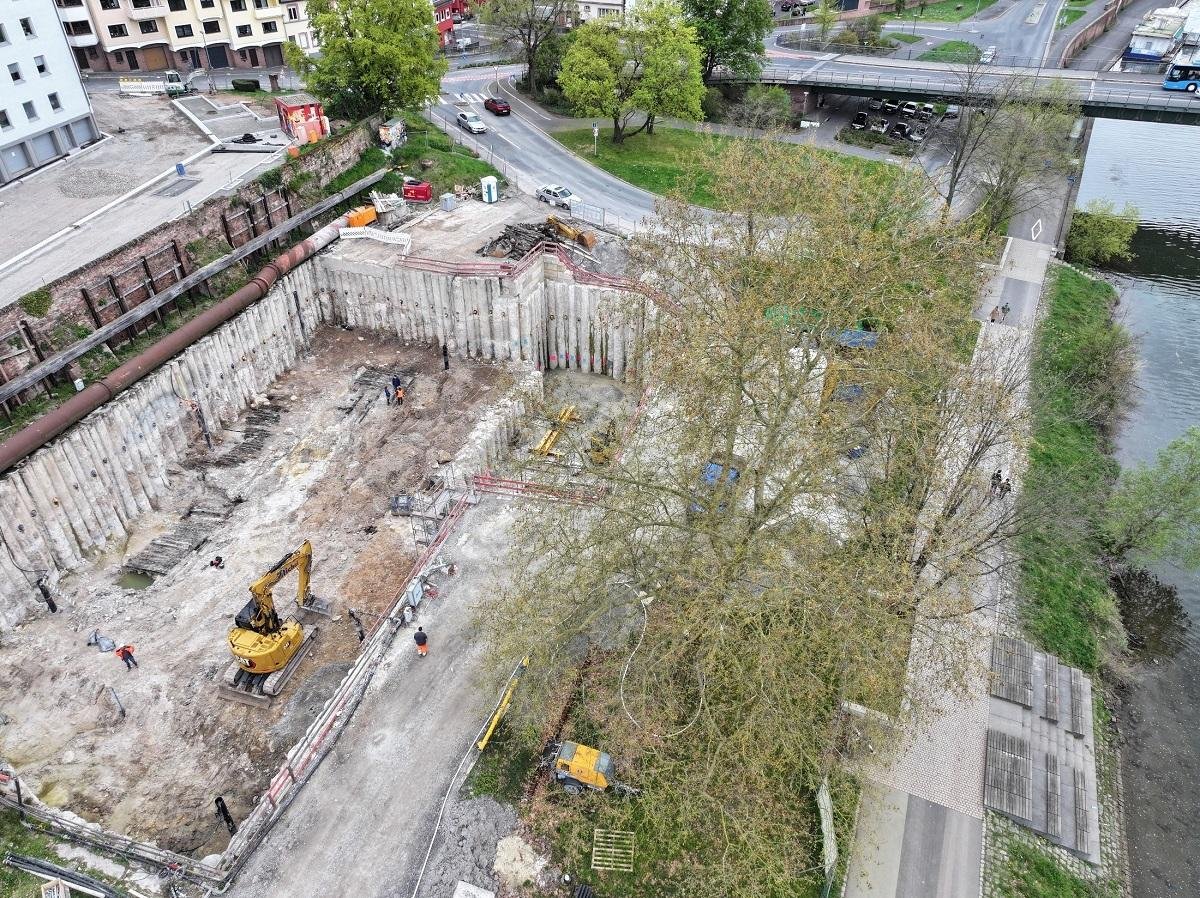
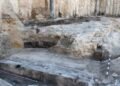
Researchers describe the discovery as highly unusual for Bavaria. The site combines massive oak construction with stone elements, a combination rarely documented in Iron Age contexts. Excavation profiles show thick oak beams arranged in a technically advanced design. The river-facing side of the structure ended in a dry-stone wall built along the Main River.
Dr. Stefanie Berg from the BLfD said the location, preservation, and timber-and-stone construction make the site unique. Stone masonry from the Iron Age appears only rarely in southern Germany. When archaeologists find stone features from this period, they usually belong to defensive systems such as fortified walls. The newly uncovered structure does not clearly fit those patterns, which has raised new questions about its purpose.
The find also strengthens long-standing theories about an important Iron Age settlement beneath the modern old town of Aschaffenburg. Earlier evidence from the area consisted mainly of isolated remains and high-status objects, including a gold finger ring and an animal-head fibula. Those discoveries hinted at a wealthy La Tène community, though archaeologists knew little about the settlement’s size or organization.
The riverside structure now offers the clearest physical evidence yet for a larger settlement center in the region. Researchers suspect the building may have served an important role connected to trade, transport, defense, or elite activity along the river. Its position beside the Main suggests the waterway likely played a major role in the community’s economy and communication routes during the Iron Age.
Excavation work continues under difficult conditions inside a construction pit reaching depths of up to ten meters. Archaeologists are working closely with engineers and city officials to balance the scientific investigation with ongoing construction and strict safety requirements.
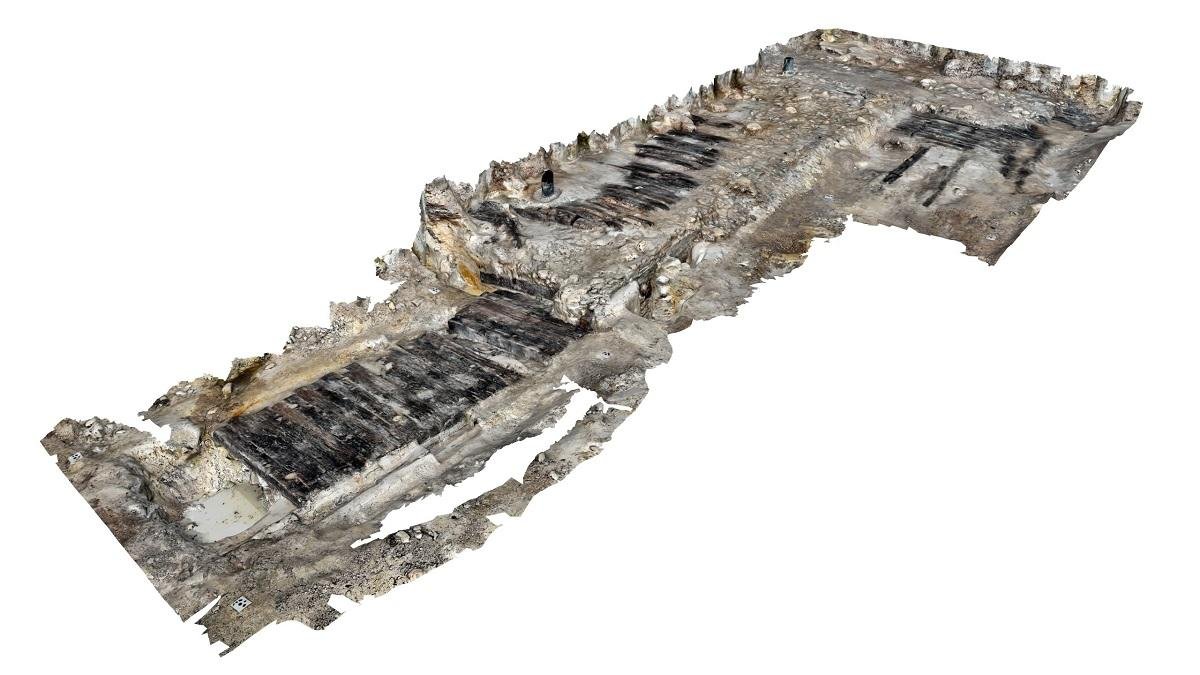
Teams at the site are carefully documenting every stage of the excavation. The BLfD has already created detailed 3D models of the structure, while preserved timbers remain embedded within riverbank sediments awaiting further study. Researchers hope continued analysis will reveal how the structure was used and provide a clearer picture of Iron Age life in the Main River valley more than 2,300 years ago.
More information: BLFD






Disclaimer: This website is a science-focused magazine that welcomes both academic and non-academic audiences. Comments are written by users and may include personal opinions or unverified claims. They do not necessarily reflect the views of our editorial team or rely on scientific evidence.
Comment Policy: We kindly ask all commenters to engage respectfully. Comments that contain offensive, insulting, degrading, discriminatory, or racist content will be automatically removed.