• About
  • Privacy Policy
  • Terms of Use
  • Donation
  • Contact
No Result
View All Result
Archaeology News
  • Home
  • News
    • Archaeology
    • Anthropology
    • Paleontology
  • Academic
    • Books
    • Conferences
    • Universities
  • Articles
  • VR Tours
  • Quiz & Game
  • Download
  • Encyclopedia
  • Forum
Archaeology News
No Result
View All Result
Home News Anthropology

Medieval bone study identifies microbial communities driving archaeological bone degradation and preservation

by Dario Radley
May 28, 2026

Human bones buried for centuries carry more than traces of the people they once belonged to. They also hold microbial communities linked to decay and preservation. A new study from Norway examined those hidden populations and found clear differences between well-preserved bones and heavily degraded ones.
Medieval bone study identifies microbial communities driving archaeological bone degradation and preservation
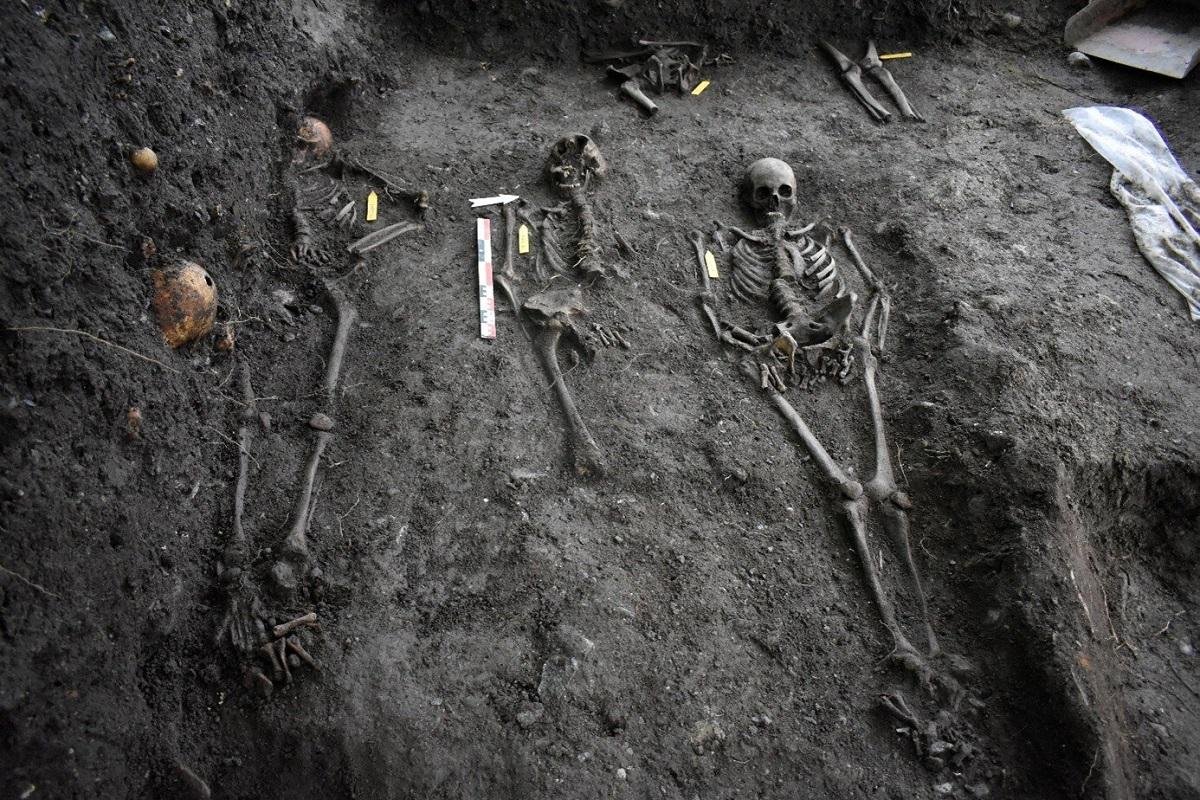
Skeletons exposed during a research excavation in a medieval cemetery in Stavanger, Norway. Credit: The Museum of Archaeology, University of Stavanger, CC-BY 4.0

Researchers studied human bone samples from medieval cemeteries and churches in southwestern Norway. The remains dated from the 11th to the 19th centuries. Some individuals had been buried outdoors in cemeteries. Others rested beneath church floors. Burial setting mattered. Older bones and outdoor burials often showed stronger signs of damage. Indoor burials tended to survive in better condition.

Scientists have linked microorganisms to archaeological bone decay since the 1800s. Even so, the process still raises many questions. Researchers still struggle to identify which microbes damage buried bones and how those organisms shape long-term preservation.

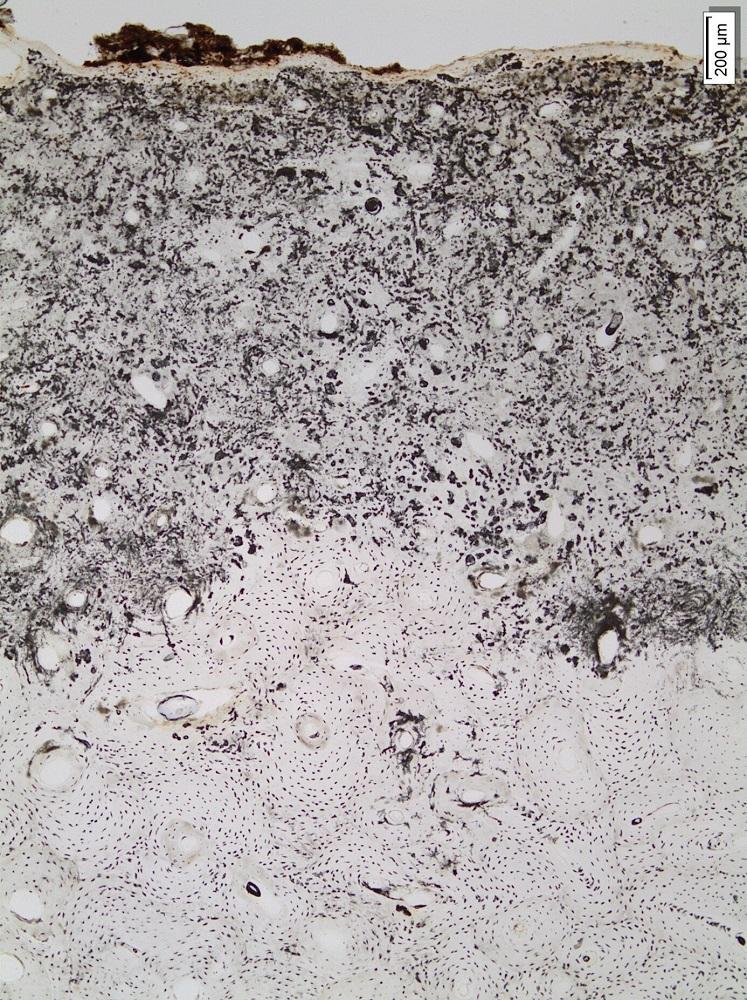
The Norwegian team brought together two lines of evidence. They examined microscopic damage inside the bones and compared those patterns with genetic data from microbial DNA preserved in the same samples. Few studies have combined these approaches on such a large group of archaeological remains.
Medieval bone study identifies microbial communities driving archaeological bone degradation and preservation
A section of a human femur under the microscope. The upper, outer half displays bioerosion, the tunneling by bone-eating microorganisms, while the lower half is well-preserved, showing the microanatomy of the bone. Credit: Hege Ingjerd Hollund, CC-BY 4.0

The findings showed a close relationship between preservation state and microbial makeup. Bones with different levels of degradation carried different microbial communities. One bacterial group appeared again and again across the material. Streptomyces turned up in most samples, supporting earlier work linking this genus to bone bioerosion during burial.


RelatedStories

Svalbard whalers show scurvy and extreme labor stress in “corpse point” cemetery

Svalbard whalers show scurvy and extreme labor stress in “corpse point” cemetery

May 25, 2026
'Patchwork families' lived in Europe over 5,000 years ago, Neolithic DNA study finds

‘Patchwork families’ lived in Europe over 5,000 years ago, Neolithic DNA study finds

May 25, 2026

Other bacterial groups appeared in patterns tied to preservation level. Lysobacter showed links with moderately degraded bones. Streptosporangium appeared in several samples as well. Some members of these bacterial groups produce enzymes that break down collagen, one of bone’s main structural proteins. This connection places them among possible drivers of long-term skeletal decay.

One result stood out. Well-preserved bones often contained higher microbial diversity than badly degraded ones. The pattern appeared strongest in indoor burials beneath church floors. Researchers suggest a simple explanation. Better-preserved bones retain more internal structures and nutrients. Those conditions support a wider range of microbes without destroying the bone itself.
Medieval bone study identifies microbial communities driving archaeological bone degradation and preservation
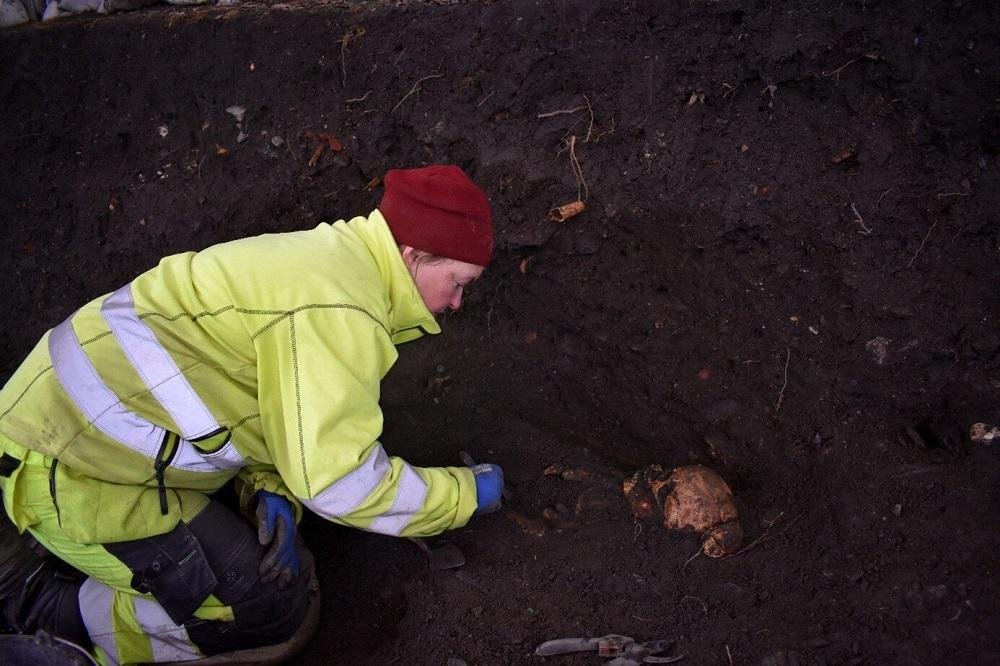
Excavation in a medieval cemetery in Stavanger, Norway. Credit: The Museum of Archaeology, University of Stavanger., CC-BY 4.0

The team also looked for fungal activity. Microscopic analysis showed structures consistent with fungi in some samples. Genetic testing told a different story. Fungal DNA appeared in only one sample. The data do not provide a clear answer about fungi and their role in bone degradation.

Ancient DNA research brings technical limits. Genetic material breaks down over time, which reduced the study’s ability to identify microbes at the species level. The researchers also pointed to another issue. Excavation, handling, and long-term storage introduce contamination risks. Some microbial traces found in archaeological collections may come from later contact rather than burial conditions.

Even with those limits, the study adds new detail to an old archaeological problem. The findings support the idea of a distinct microbial community associated with curated skeletal collections, sometimes called a museum bone microbiome. The repeated presence of Streptomyces strengthens suspicion around its role in bone decay after burial.

Future work from other regions and burial settings will help test whether these patterns hold across different environments. For archaeologists and forensic researchers, microbial signatures inside ancient bones offer another way to study what happens after burial. Human remains do not change in silence. Microbial activity continues for centuries, leaving traces inside the bone itself.
More information: Kaptan, D., Flemming Elvers, A. C., Kjær Knudsen, A., Schroeder, H., & Hollund, H. I. (2026). Histological and metagenomic analysis of microbial communities in archaeological human bones. PloS One, 21(5), e0340244. doi:10.1371/journal.pone.0340244

Share:

Share on Facebook Share on X (Twitter) Share on LinkedIn Share on Pinterest Share on WhatsApp Share on Email

You May Also Like...

A large hidden hydraulic system mapped around the Urartian fortress of Argishtikhinili in Armenia
Archaeology

A large hidden hydraulic system mapped around the Urartian fortress of Argishtikhinili in Armenia

May 28, 2026
Sasanian military helmets reveal advanced brass technology across the Persian Empire
Archaeology

Sasanian military helmets reveal advanced brass technology across the Persian Empire

May 28, 2026
Neanderthals and early humans reshaped Europe’s landscapes long before the rise of farming, study finds
Anthropology

Payre fossil teeth reveal regional diversity among Europe’s earliest Neanderthals

May 27, 2026
Ancient DNA links 400-year-old Finland burial to Sámi ancestry and possible Iceland journey
Anthropology

Ancient DNA links 400-year-old Finland burial to Sámi ancestry and possible Iceland journey

May 27, 2026
Ming Dynasty surgical tools reveal traces of toxic herbal anesthetic used 600 years ago
Archaeology

Ming Dynasty surgical tools reveal traces of toxic herbal anesthetic used 600 years ago

May 26, 2026
Greek theatrical mask found in Croatian cave points to ancient Illyrian sanctuary rituals
Archaeology

Greek theatrical mask found in Croatian cave points to ancient Illyrian sanctuary rituals

May 26, 2026

Comments 0

  1. Editorial Team says:
    1 second ago

    Disclaimer: This website is a science-focused magazine that welcomes both academic and non-academic audiences. Comments are written by users and may include personal opinions or unverified claims. They do not necessarily reflect the views of our editorial team or rely on scientific evidence.

    Comment Policy: We kindly ask all commenters to engage respectfully. Comments that contain offensive, insulting, degrading, discriminatory, or racist content will be automatically removed.

    Reply

Leave a Reply Cancel reply

Your email address will not be published. Required fields are marked *

Follow us


Instagram
242K

Facebook
117K

Threads
47K

LinkedIn
15K

Twitter
6K

YouTube
1K
Medieval bone study identifies microbial communities driving archaeological bone degradation and preservation

Medieval bone study identifies microbial communities driving archaeological bone degradation and preservation

May 28, 2026
A large hidden hydraulic system mapped around the Urartian fortress of Argishtikhinili in Armenia

A large hidden hydraulic system mapped around the Urartian fortress of Argishtikhinili in Armenia

May 28, 2026
Sasanian military helmets reveal advanced brass technology across the Persian Empire

Sasanian military helmets reveal advanced brass technology across the Persian Empire

May 28, 2026
Neanderthals and early humans reshaped Europe’s landscapes long before the rise of farming, study finds

Payre fossil teeth reveal regional diversity among Europe’s earliest Neanderthals

May 27, 2026

Archaeology News online magazine

Archaeology News is an international online magazine that covers all aspects of archaeology.


Categories

  • Academics
    • Books
    • Conferences
    • Universities
  • Articles
  • Download
  • Game
  • News
    • Anthropology
    • Archaeology
    • Paleontology
  • Quiz
  • Tours

Subscribe to our newsletter

© 2024 - Archaeology News Online Magazine. All Rights Reserved.

  • About
  • Privacy Policy
  • Terms of Use
  • Donation
  • Contact

Manage Consent
To provide the best experiences, we use technologies like cookies to store and/or access device information. Consenting to these technologies will allow us to process data such as browsing behavior or unique IDs on this site. Not consenting or withdrawing consent, may adversely affect certain features and functions.
Functional Always active
The technical storage or access is strictly necessary for the legitimate purpose of enabling the use of a specific service explicitly requested by the subscriber or user, or for the sole purpose of carrying out the transmission of a communication over an electronic communications network.
Preferences
The technical storage or access is necessary for the legitimate purpose of storing preferences that are not requested by the subscriber or user.
Statistics
The technical storage or access that is used exclusively for statistical purposes. The technical storage or access that is used exclusively for anonymous statistical purposes. Without a subpoena, voluntary compliance on the part of your Internet Service Provider, or additional records from a third party, information stored or retrieved for this purpose alone cannot usually be used to identify you.
Marketing
The technical storage or access is required to create user profiles to send advertising, or to track the user on a website or across several websites for similar marketing purposes.
  • Manage options
  • Manage services
  • Manage {vendor_count} vendors
  • Read more about these purposes
View preferences
  • {title}
  • {title}
  • {title}
  • Home
  • News
    • Archaeology
    • Anthropology
    • Paleontology
  • Academic
    • Books
    • Conferences
    • Universities
  • Articles
  • VR Tours
  • Quiz & Game
  • Download
  • Encyclopedia
  • Forum

About  .  Contact  .  Donation

© 2024 - Archaeology News Online Magazine. All Rights Reserved