
Archaeologists working at the ancient city of Ihnasya in Egypt’s Beni Suef Governorate have uncovered a collection of finds that span several major periods of the region’s history, offering new evidence of the city’s religious, political, and economic importance over more than a thousand years.
The discoveries were made by an Egyptian mission from the Supreme Council of Antiquities at the site known in antiquity as Heracleopolis Magna, one of Egypt’s most significant historical cities. Ihnasya served as the capital of Egypt during the Ninth and Tenth Dynasties and continued to play an important role through the Middle Kingdom, New Kingdom, and later Greek and Roman periods.
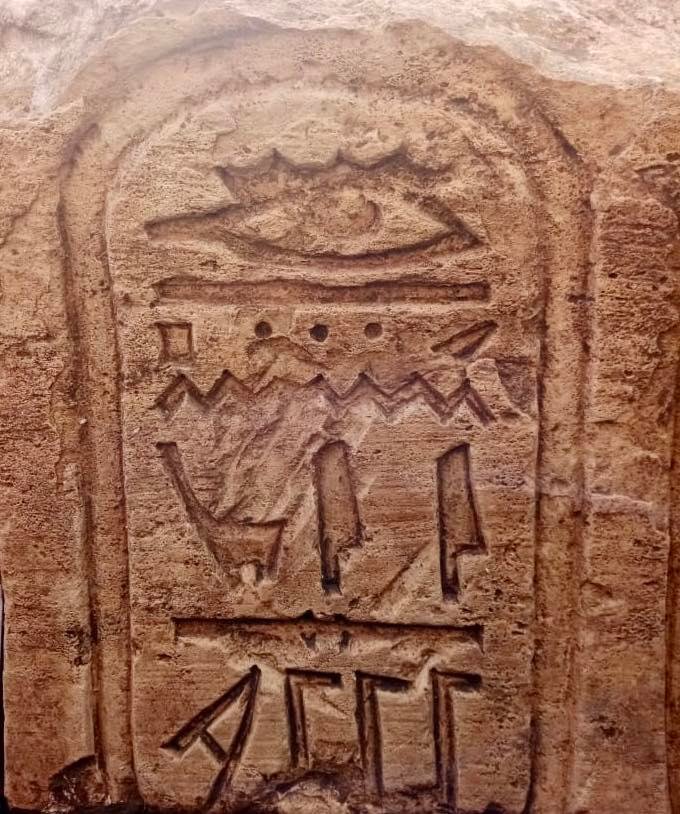
Among the most important finds is a reused stone block bearing the cartouche of King Senusret III, one of the most influential rulers of the Twelfth Dynasty. The inscription preserves both the king’s throne name and birth name. Archaeologists also identified another cartouche linked to Osiris-Nefertem, a deity worshipped in the city during ancient Egyptian and Ptolemaic times.
The discovery adds to growing evidence that Ihnasya held special religious significance for ancient Egyptians. Senusret III is already associated with several monuments in the city, and the newly uncovered inscription strengthens the connection between the ruler and this important regional center.
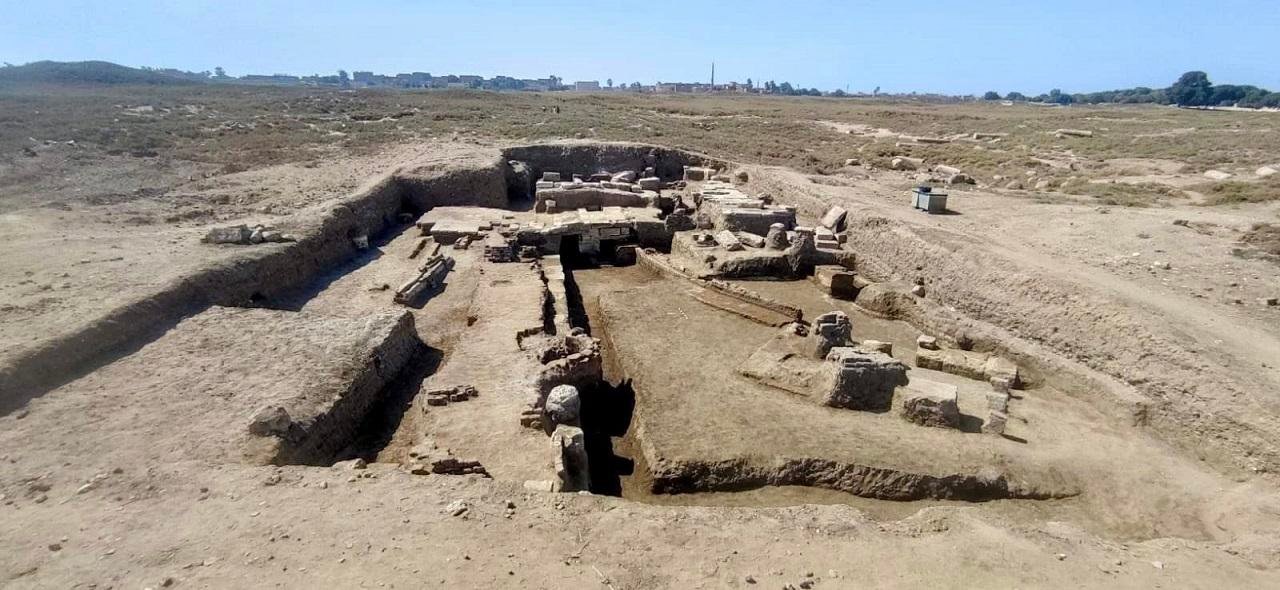
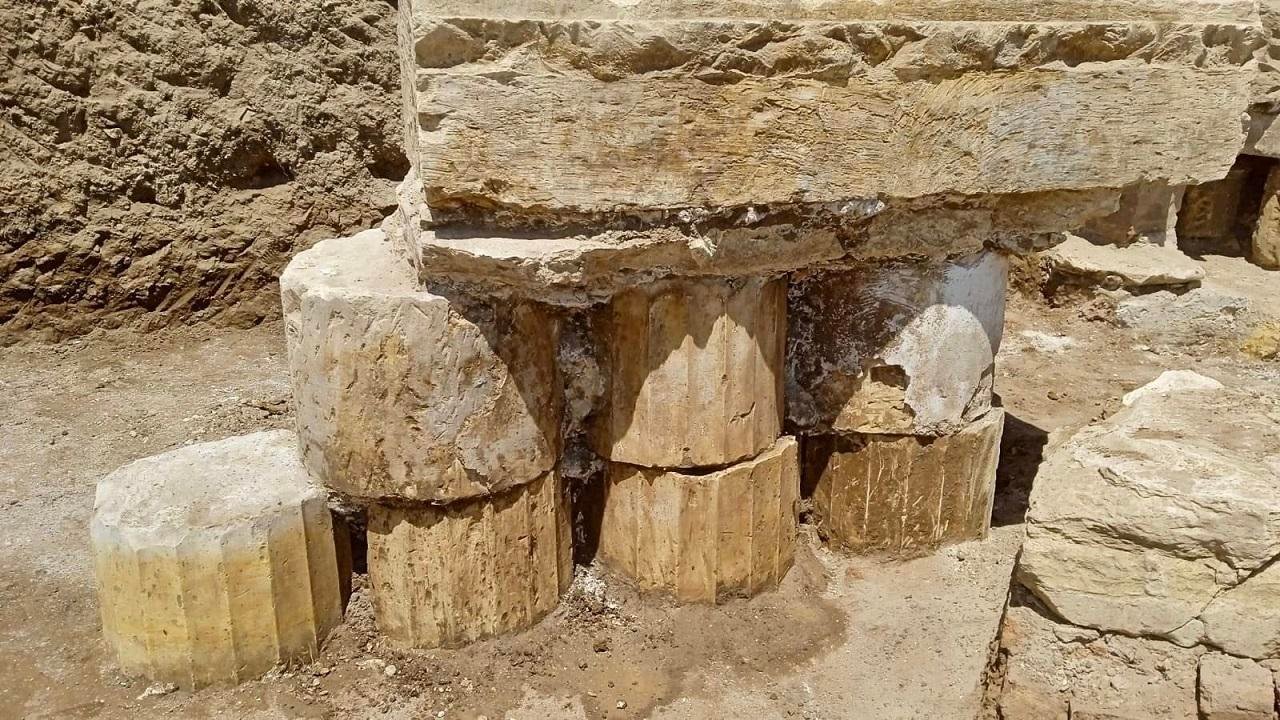
Excavations also revealed previously unknown sections of a Roman basilica. Researchers found that parts of an older Doric temple had been dismantled and reused in the basilica’s construction. Preliminary analysis indicates that builders in the sixth century CE incorporated architectural elements from the earlier structure into the foundations and flooring that supported the basilica’s columns.
The construction methods uncovered at the site demonstrate the scale of the building project. Archaeologists found that large stone blocks were arranged to create a stable base capable of carrying enormous columns, some estimated to weigh about 45 tons. Three of these columns still stand in their original positions.
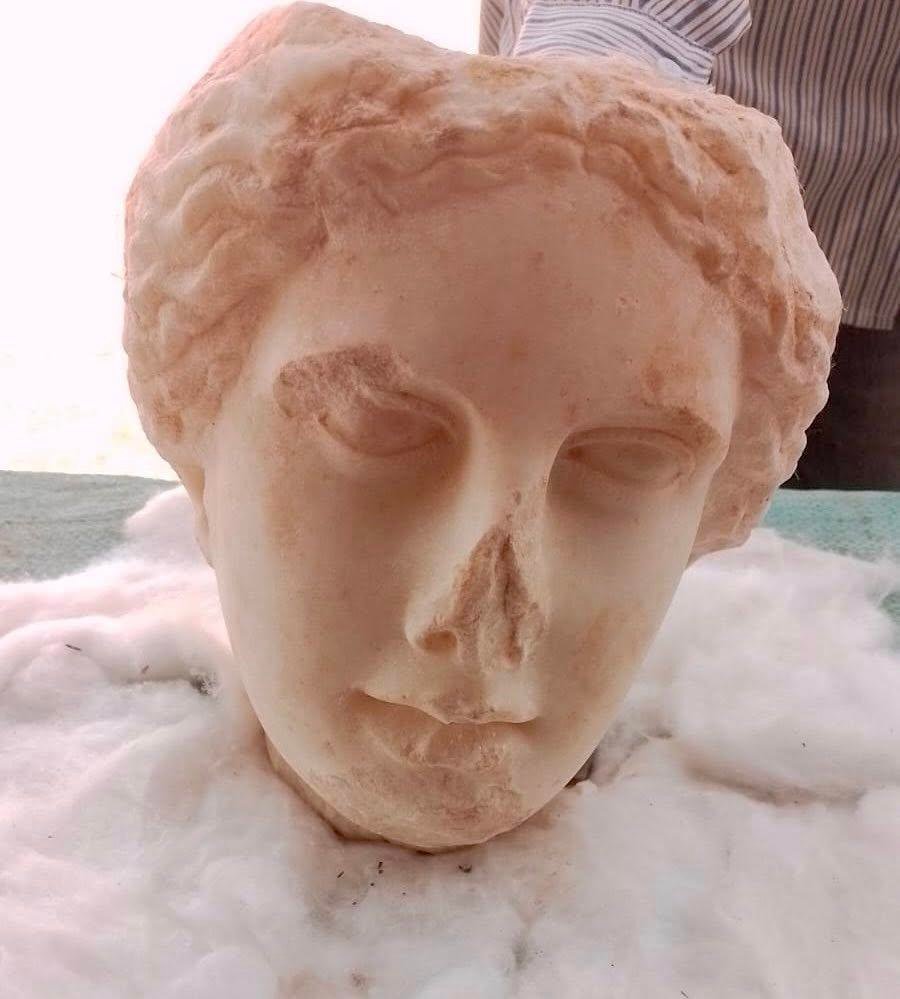
One of the most striking discoveries is a marble head representing Aphrodite, the Greek goddess of love and beauty. Measuring roughly 24 by 25 centimeters, the sculpture preserves finely carved facial features and carefully rendered curls. The workmanship reflects artistic traditions commonly seen in classical representations of deities and prominent figures. Researchers describe the piece as a rare example of its kind from the site.
Additional finds include fragments of relief sculptures, decorated architectural elements, and clay molds used in coin production during the Roman period. These objects provide evidence of continued activity in the city long after the pharaonic era and point to a thriving local economy connected to trade and administration.
The discoveries highlight the changing character of Ihnasya over time. Religious traditions, architectural styles, and civic institutions evolved as different cultures left their mark on the city. Ancient Egyptian worship practices existed alongside later Greek and Roman influences, creating a layered archaeological record that reflects centuries of cultural change.
Known as Heracleopolis Magna under Greek rule, the city remained an important center long after its days as a royal capital. The newly uncovered remains help trace how its religious spaces, public buildings, and urban landscape developed across successive historical periods.
Researchers are continuing to study and date the newly recovered material. Their work is expected to provide a clearer picture of how the city changed through time and how its residents adapted to shifting political, religious, and cultural conditions across Egypt’s long history.
More information: Egyptian Ministry of Tourism and Antiquities


Disclaimer: This website is a science-focused magazine that welcomes both academic and non-academic audiences. Comments are written by users and may include personal opinions or unverified claims. They do not necessarily reflect the views of our editorial team or rely on scientific evidence.
Comment Policy: We kindly ask all commenters to engage respectfully. Comments that contain offensive, insulting, degrading, discriminatory, or racist content will be automatically removed.