• About
  • Privacy Policy
  • Terms of Use
  • Donation
  • Contact
No Result
View All Result
Archaeology News
  • Home
  • News
    • Archaeology
    • Anthropology
    • Paleontology
  • Academic
    • Books
    • Conferences
    • Universities
  • Articles
  • VR Tours
  • Quiz & Game
  • Download
  • Encyclopedia
  • Forum
Archaeology News
No Result
View All Result
Home News Archaeology

New Mexico: Ancient southwestern desert people ate more, larger, fish than previously thought

by Dario Radley
July 25, 2022

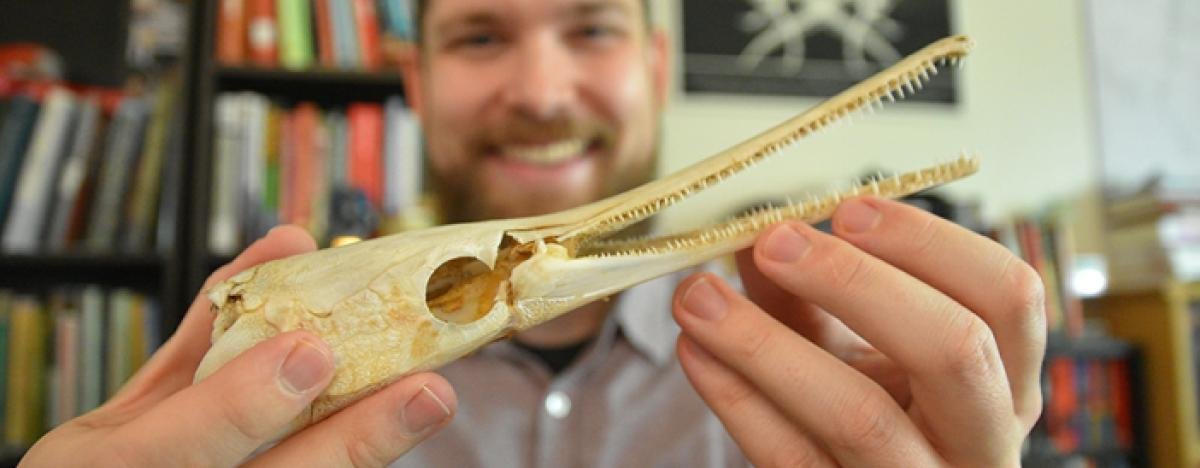
There is a common misconception that Ancestral Pueblo people rarely ate fish. The remains of fish eaten by these people are extremely rare at early archaeological sites in central New Mexico’s Middle Rio Grande basin. However, new research from the University of New Mexico shows that not only did fish become a common part of the diet of Ancestral Pueblo people, but the larger the fish, the better.
 New Mexico: Ancient southwestern desert people ate more, larger, fish than previously thought
Researcher Jonathan Dombrosky studied ancient fish bones to understand the diets of Ancestral Pueblo people. Credit: University of New Mexico

The U.S. National Science Foundation-supported research, published in the Journal of Archaeological Science, used 3D scans of modern fish to estimate the body size of ancient fish.

“We can use 3D scanning technology to estimate the body size of past animals from their fragmented bones,” said anthropologist Jonathan Dombrosky, the lead author of the study. After establishing a reference dataset of 3D measurements of fish bones from modern specimens, the researchers could accurately estimate the size of past fish based on individual bones and bone fragments.

“We can use this new method to reconstruct the body size of fishes recovered from Ancestral Pueblo sites in the Albuquerque area, allowing us to better understand why people made the decisions they did to eat the foods they did,” said Dombrosky.

The 3D scanning technique can also be used on bones and fragments that are not amenable to more traditional methods of estimating the body size of animals based on measurements such as the length or width of specific, relatively intact bones.

RelatedStories

Study shows ancient Puebloans housed macaws and parrots in great houses for ritual purposes

Study shows ancient Puebloans housed macaws and parrots in great houses for ceremonial use

December 29, 2025
Ancient DNA confirms Picuris Pueblo’s ancestral link to Chaco Canyon

Ancient DNA confirms Picuris Pueblo’s ancestral link to Chaco Canyon

May 1, 2025

The new method allowed the scientists to evaluate whether Ancestral Pueblo people caught larger than average fishes during the late pre-Hispanic period (1300–1600) in New Mexico’s Middle Rio Grande region. The researchers then evaluated the connection between a changing environment and Pueblo fishing decisions.

Dombrosky’s previous research showed that fish consumption increased over time in Ancestral Pueblo communities as a change in climate led to the presence of more freshwater habitat in the area. “What we’ve shown is that Ancestral Pueblo people likely ate fish, and they ate large healthy fish,” said Dombrosky. “Fishes were targeted when fish communities were healthy and stable.”.

Provided by National Science Foundation
Share1Tweet1ShareShareSend

You May Also Like...

AI reconstructs face of Pompeii victim killed in Mount Vesuvius eruption
Archaeology

AI reconstructs face of Pompeii victim killed in Mount Vesuvius eruption

April 28, 2026
Ancient Roman toilets in Bulgaria reveal early spread of intestinal parasites
Anthropology

Ancient Roman toilets in Bulgaria reveal early spread of intestinal parasites

April 28, 2026
Ancient Roman shipwreck reveals hidden secrets of waterproofing and Mediterranean repairs
Archaeology

Ancient Roman shipwreck reveals hidden secrets of waterproofing and Mediterranean repairs

April 27, 2026
42 lost pages of Codex H recovered, revealing early New Testament structure and scribal practices
Archaeology

42 lost pages of Codex H recovered, revealing early New Testament structure and scribal practices

April 26, 2026
CT scans reveal hidden details of 2,300-year-old Egyptian mummies
Anthropology

CT scans reveal hidden details of 2,300-year-old Egyptian mummies

April 26, 2026
Rare 2,000-year-old Roman bread found at Vindonissa reveals early military life in Switzerland
Archaeology

Rare 2,000-year-old Roman bread found at Vindonissa reveals early military life in Switzerland

April 25, 2026

Follow us


Instagram
244K

Facebook
118K

Threads
46K

LinkedIn
14K

Twitter
6K

YouTube
1K
  • Trending
  • Comments
  • Latest
Shipwreck Salvage. Credit: rawpixel.com / Public Domain

2,000-year-old shipwreck discovered off Turkish coast with remarkably preserved stacked ceramics

July 2, 2025
Viking age DNA reveals 9,000-year-old HIV-resistant gene originating near the Black Sea

Viking age DNA reveals 9,000-year-old HIV-resistant gene originating near the Black Sea

May 18, 2025
A new study suggests the mysterious Voynich Manuscript may be a medieval cipher

A new study suggests the mysterious Voynich Manuscript may be a medieval cipher

January 3, 2026
3D analysis reveals Shroud of Turin image likely came from sculpture, not Jesus’ body

3D analysis reveals Shroud of Turin image likely came from sculpture, not Jesus’ body

August 3, 2025
Moses may be named in ancient Egyptian mine inscriptions, sparking debate over earliest biblical references

Moses may be named in ancient Egyptian mine inscriptions, sparking debate over earliest biblical references

July 31, 2025
3D analysis reveals Shroud of Turin image likely came from sculpture, not Jesus’ body

3D analysis reveals Shroud of Turin image likely came from sculpture, not Jesus’ body

Moses may be named in ancient Egyptian mine inscriptions, sparking debate over earliest biblical references

Moses may be named in ancient Egyptian mine inscriptions, sparking debate over earliest biblical references

$1 million prize offered to decipher 5,300-year-old Indus Valley script

$1 million prize offered to decipher 5,300-year-old Indus Valley script

Oldest ever genetic data from a human relative found in 2-million-year-old fossilized teeth

Oldest ever genetic data from a human relative found in 2-million-year-old fossilized teeth

Exceptionally large Roman shoes discovered at Magna fort near Hadrian’s Wall

Exceptionally large Roman shoes discovered at Magna fort near Hadrian’s Wall

AI reconstructs face of Pompeii victim killed in Mount Vesuvius eruption

AI reconstructs face of Pompeii victim killed in Mount Vesuvius eruption

April 28, 2026
Ancient Roman toilets in Bulgaria reveal early spread of intestinal parasites

Ancient Roman toilets in Bulgaria reveal early spread of intestinal parasites

April 28, 2026
Ancient Roman shipwreck reveals hidden secrets of waterproofing and Mediterranean repairs

Ancient Roman shipwreck reveals hidden secrets of waterproofing and Mediterranean repairs

April 27, 2026
42 lost pages of Codex H recovered, revealing early New Testament structure and scribal practices

42 lost pages of Codex H recovered, revealing early New Testament structure and scribal practices

April 26, 2026
CT scans reveal hidden details of 2,300-year-old Egyptian mummies

CT scans reveal hidden details of 2,300-year-old Egyptian mummies

April 26, 2026

Archaeology News online magazine

Archaeology News is an international online magazine that covers all aspects of archaeology.


Categories

  • Academics
    • Books
    • Conferences
    • Universities
  • Articles
  • Download
  • Game
  • News
    • Anthropology
    • Archaeology
    • Paleontology
  • Quiz
  • Tours

Subscribe to our newsletter

© 2024 - Archaeology News Online Magazine. All Rights Reserved.

  • About
  • Privacy Policy
  • Terms of Use
  • Donation
  • Contact

Manage Consent
To provide the best experiences, we use technologies like cookies to store and/or access device information. Consenting to these technologies will allow us to process data such as browsing behavior or unique IDs on this site. Not consenting or withdrawing consent, may adversely affect certain features and functions.
Functional Always active
The technical storage or access is strictly necessary for the legitimate purpose of enabling the use of a specific service explicitly requested by the subscriber or user, or for the sole purpose of carrying out the transmission of a communication over an electronic communications network.
Preferences
The technical storage or access is necessary for the legitimate purpose of storing preferences that are not requested by the subscriber or user.
Statistics
The technical storage or access that is used exclusively for statistical purposes. The technical storage or access that is used exclusively for anonymous statistical purposes. Without a subpoena, voluntary compliance on the part of your Internet Service Provider, or additional records from a third party, information stored or retrieved for this purpose alone cannot usually be used to identify you.
Marketing
The technical storage or access is required to create user profiles to send advertising, or to track the user on a website or across several websites for similar marketing purposes.
  • Manage options
  • Manage services
  • Manage {vendor_count} vendors
  • Read more about these purposes
View preferences
  • {title}
  • {title}
  • {title}
  • Home
  • News
    • Archaeology
    • Anthropology
    • Paleontology
  • Academic
    • Books
    • Conferences
    • Universities
  • Articles
  • VR Tours
  • Quiz & Game
  • Download
  • Encyclopedia
  • Forum

About  .  Contact  .  Donation

© 2024 - Archaeology News Online Magazine. All Rights Reserved