• About
  • Privacy Policy
  • Terms of Use
  • Donation
  • Contact
No Result
View All Result
Archaeology News
  • Home
  • News
    • Archaeology
    • Anthropology
    • Paleontology
  • Academic
    • Books
    • Conferences
    • Universities
  • Articles
  • VR Tours
  • Quiz & Game
  • Download
  • Encyclopedia
  • Forum
Archaeology News
No Result
View All Result
Home News Archaeology

Original burial place of St. Nicholas found beneath a church in Turkey

Dario Radley by Dario Radley
October 19, 2022
A A

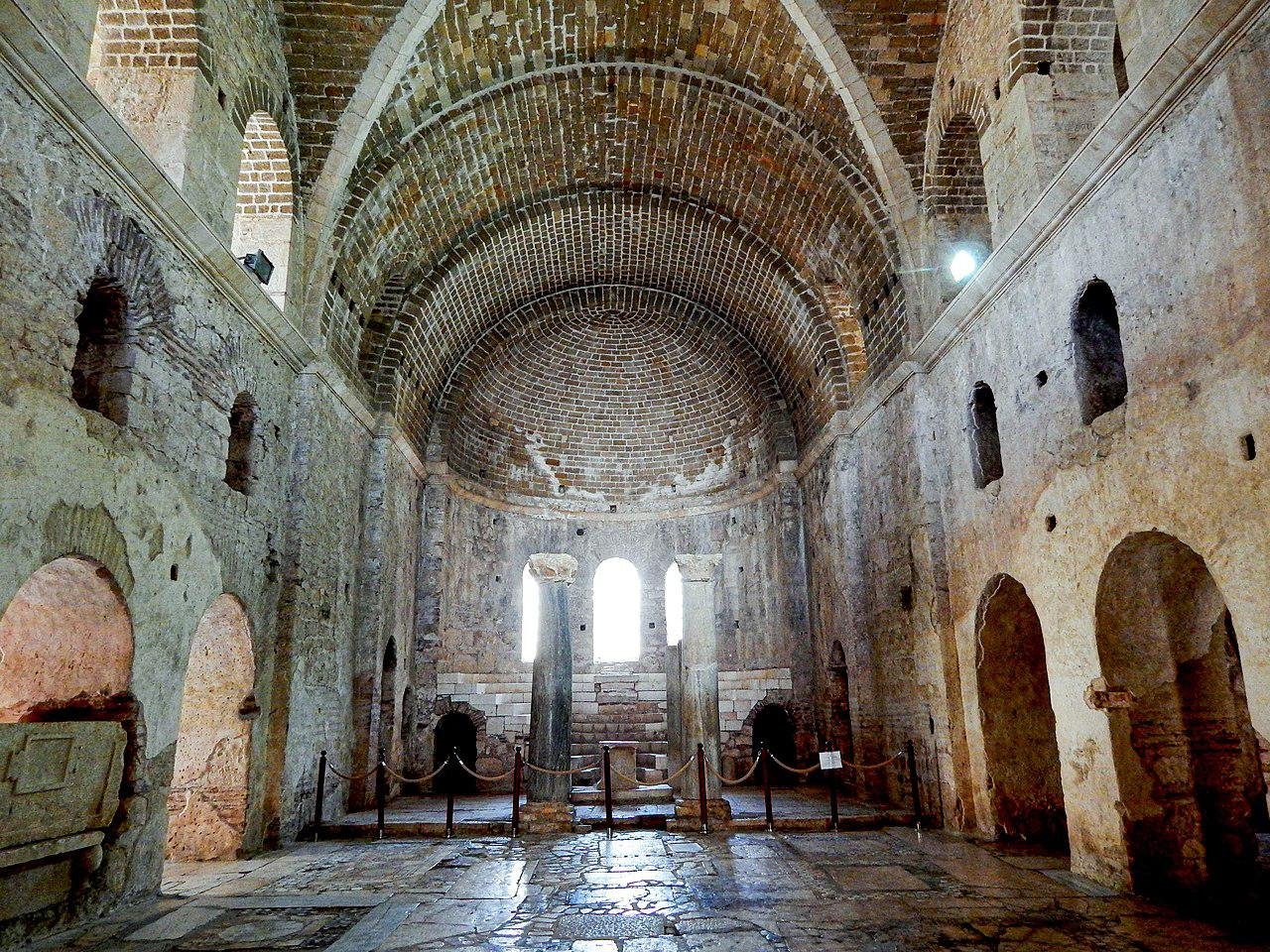
Archaeologists have uncovered the burial site of Saint Nicholas, the historical figure who inspired the legend of Santa Claus, beneath a church in Turkey’s Antalya province.
Original burial place of St. Nicholas found beneath a church in Turkey
St. Nicholas Church. Credit: Sinan Şahin, CC BY 3.0

The St. Nicholas Church, constructed in the 7th or 8th century, was built atop an earlier church where Saint Nicholas is believed to have served as bishop before the site was submerged during the Middle Ages, according to the Demirören News Agency (DHA).

Professor Dr. Osman Eravşar, president of the Antalya Cultural Heritage Preservation Regional Board, described the discovery as “extremely important” and the first of its kind from that era. “

During the Roman Empire, Saint Nicholas was a Greek Christian bishop from the maritime city of Myra in Asia Minor. He became renowned for numerous miracles attributed to his intercession and for his extraordinary generosity, particularly his habit of secret gift-giving, which eventually inspired the modern-day traditions of Santa Claus and Sinterklaas.

Original burial place of St. Nicholas found beneath a church in Turkey
St. Nicholas, by Jaroslav Čermák (1831-1878). Credit: Galerie Art Praha via Wikimedia

Saint Nicholas was interred in a 4th-century church in Antalya province. Centuries later, Byzantine Emperor Theodosius II ordered the construction of the St. Nicholas Church at the location where he had served as bishop. By the 11th century, his remains were relocated and enshrined as sacred relics in the Basilica di San Nicola in Bari, Southern Italy. During the First Crusade, Venetian sailors removed most of his remains and transported them to Venice, where they were housed in the San Nicolò al Lido monastery basilica.
RelatedStories

42 lost pages of Codex H recovered, revealing early New Testament structure and scribal practices

42 lost pages of Codex H recovered, revealing early New Testament structure and scribal practices

April 26, 2026
Medieval monastery remains discovered beneath Borken’s historic center in Germany

Medieval monastery remains discovered beneath Borken’s historic center in Germany

February 26, 2026

In 1953, an examination of bone fragments from Bari and Venice revealed that the remains belonged to the same individual, though it remains uncertain whether they are definitively those of Saint Nicholas.

William Caraher, an archaeologist specializing in early Christian architecture at the University of North Dakota, noted to Live Science that it was “not unusual” for churches of that time to be built atop earlier structures. The discovery of Saint Nicholas’ burial site was made after the removal of a 1970s-era floor slab, revealing a 4th-century floor beneath it. Excavations uncovered the tomb and sarcophagus at the base of a fresco depicting Jesus, as well as the original church foundations and period mosaic flooring.

According to Eravşar, architectural features of the church, such as an unfinished dome, bear similarities to Jerusalem’s Church of the Holy Sepulchre, which strengthens the theory that the site was designed to link Saint Nicholas with the story of Jesus’ crucifixion and ascension. “His sarcophagus must have been placed in a special location—the section with three apses covered by a dome. There, we discovered a fresco showing Jesus holding a Bible in his left hand while making a sign of blessing with his right hand,” Eravşar explained. The team also uncovered a marble floor tile inscribed with the Greek words for “as grace,” which may mark the exact burial spot.

Eravşar stated that the site will now be protected and prepared for public display, offering visitors a chance to witness a significant piece of early Christian history.
Share:

Share on Facebook Share on X (Twitter) Share on LinkedIn Share on Pinterest Share on WhatsApp Share on Email

You May Also Like...

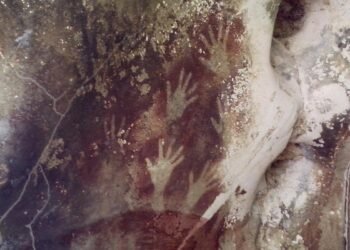
Oldest known rock art dated to 67,800 years discovered in Sulawesi cave
Archaeology

Scientist questions dating of world’s oldest cave art and Neanderthal paintings

May 26, 2026
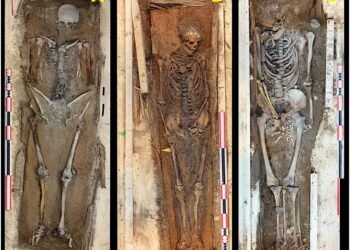
Svalbard whalers show scurvy and extreme labor stress in “corpse point” cemetery
Anthropology

Svalbard whalers show scurvy and extreme labor stress in “corpse point” cemetery

May 25, 2026
'Patchwork families' lived in Europe over 5,000 years ago, Neolithic DNA study finds
Anthropology

‘Patchwork families’ lived in Europe over 5,000 years ago, Neolithic DNA study finds

May 25, 2026
100,000-year-old Homo sapiens bones from Ethiopia may preserve earliest evidence of human cremation
Anthropology

100,000-year-old Homo sapiens bones from Ethiopia may preserve earliest evidence of human cremation

May 24, 2026
Ancient Peruvian hairless dogs buried with Wari elites 1,200 years ago
Archaeology

Ancient Peruvian hairless dogs buried with Wari elites 1,200 years ago

May 24, 2026
4,000-year-old Mohenjo-daro study finds ancient city grew more equal over time
Archaeology

4,000-year-old Mohenjo-daro study finds ancient city grew more equal over time

May 24, 2026

Follow us


Instagram
242K

Facebook
117K

Threads
46K

LinkedIn
14K

Twitter
6K

YouTube
1K
Oldest known rock art dated to 67,800 years discovered in Sulawesi cave

Scientist questions dating of world’s oldest cave art and Neanderthal paintings

May 26, 2026
Svalbard whalers show scurvy and extreme labor stress in “corpse point” cemetery

Svalbard whalers show scurvy and extreme labor stress in “corpse point” cemetery

May 25, 2026
'Patchwork families' lived in Europe over 5,000 years ago, Neolithic DNA study finds

‘Patchwork families’ lived in Europe over 5,000 years ago, Neolithic DNA study finds

May 25, 2026
100,000-year-old Homo sapiens bones from Ethiopia may preserve earliest evidence of human cremation

100,000-year-old Homo sapiens bones from Ethiopia may preserve earliest evidence of human cremation

May 24, 2026

Archaeology News online magazine

Archaeology News is an international online magazine that covers all aspects of archaeology.


Categories

  • Academics
    • Books
    • Conferences
    • Universities
  • Articles
  • Download
  • Game
  • News
    • Anthropology
    • Archaeology
    • Paleontology
  • Quiz
  • Tours

Subscribe to our newsletter

© 2024 - Archaeology News Online Magazine. All Rights Reserved.

  • About
  • Privacy Policy
  • Terms of Use
  • Donation
  • Contact

Manage Consent
To provide the best experiences, we use technologies like cookies to store and/or access device information. Consenting to these technologies will allow us to process data such as browsing behavior or unique IDs on this site. Not consenting or withdrawing consent, may adversely affect certain features and functions.
Functional Always active
The technical storage or access is strictly necessary for the legitimate purpose of enabling the use of a specific service explicitly requested by the subscriber or user, or for the sole purpose of carrying out the transmission of a communication over an electronic communications network.
Preferences
The technical storage or access is necessary for the legitimate purpose of storing preferences that are not requested by the subscriber or user.
Statistics
The technical storage or access that is used exclusively for statistical purposes. The technical storage or access that is used exclusively for anonymous statistical purposes. Without a subpoena, voluntary compliance on the part of your Internet Service Provider, or additional records from a third party, information stored or retrieved for this purpose alone cannot usually be used to identify you.
Marketing
The technical storage or access is required to create user profiles to send advertising, or to track the user on a website or across several websites for similar marketing purposes.
  • Manage options
  • Manage services
  • Manage {vendor_count} vendors
  • Read more about these purposes
View preferences
  • {title}
  • {title}
  • {title}
  • Home
  • News
    • Archaeology
    • Anthropology
    • Paleontology
  • Academic
    • Books
    • Conferences
    • Universities
  • Articles
  • VR Tours
  • Quiz & Game
  • Download
  • Encyclopedia
  • Forum

About  .  Contact  .  Donation

© 2024 - Archaeology News Online Magazine. All Rights Reserved