• About
  • Privacy Policy
  • Terms of Use
  • Donation
  • Contact
No Result
View All Result
Archaeology News
  • Home
  • News
    • Archaeology
    • Anthropology
    • Paleontology
  • Academics
    • Books
    • Conferences
    • Universities
  • Articles
  • VR Tours
  • Quiz & Game
  • Download
  • Encyclopedia
  • Forum
Archaeology News
No Result
View All Result
Home News Anthropology

DNA from archaeological remains reveals exceptional migration into Scandinavia during the Viking age

Dario Radley by Dario Radley
January 5, 2023
Share on FacebookShare on Linkedin.Share on RedditShare on Whatsapp

A new study using 297 ancient Scandinavian genomes and the genomic data of 16,638 modern Scandinavians resolves the complex relations between geography, ancestry, and gene flow in Scandinavia, encompassing the Roman, Viking, and later periods. A surprising increase in variation during the Viking period suggests that gene flow into Scandinavia was especially intense during this time.
DNA from archaeological remains reveals exceptional migration into Scandinavia during the Viking age
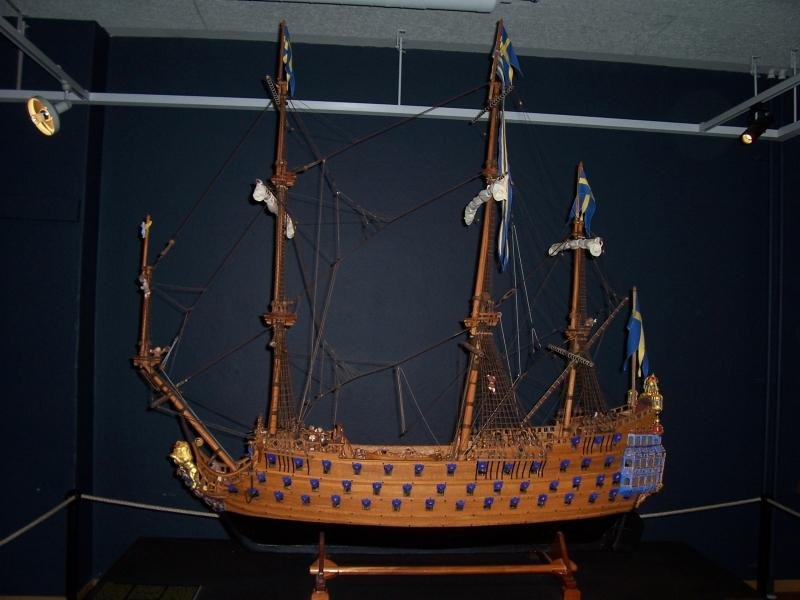
Model of the ship Kronan. Credit: Alexander Vogel

An international study led by Stockholm and Reykjavik looks at the development of the Scandinavian gene pool over the latest 2000 years. The scientists relied on historic and prehistoric genomes, and material excavated in Scandinavia. These ancient genomes were compared with genomic data from 16,638 contemporary Scandinavians. Because the geographical origins and datings of all these individuals were known, it was possible to resolve the development of the gene pool to a level never before realized.

“With this level of resolution we not only confirm the Viking Age migration. We are also able to trace it to the east Baltic region, the British-Irish Isles, and southern Europe. However, not all parts of Scandinavia received the same amounts of gene flow from these areas. For example, while British-Irish ancestry became widespread in Scandinavia the eastern-Baltic ancestry mainly reached Gotland and central Sweden,” Dr Ricardo Rodríguez Varela at the Centre for Palaeogenetics, who analyzed all the data and extracted some of the ancient DNA used in the study, explains.

The gene pool bounced back after the Viking period
This study also revealed what happened to the gene pool after the Viking period. The scientists were surprised when they discovered that it bounced back in the direction of what it looked like before the Viking period migration.

“Interestingly, the non-local ancestry peaks during the Viking period while being lower before and after,” says Professor Anders Götherström of the Centre for Palaeogenetics, who is a senior scientist in the study. The drop in current levels of external ancestry suggests that the Viking-period migrants got fewer children, or somehow contributed proportionally less to the gene pool than the people who were already in Scandinavia.”


RelatedStories

Bedale Viking silver hoard reveals 9th-century trade links from England to the Islamic world

Bedale Viking silver hoard reveals 9th-century trade links from England to Iran

August 12, 2025
900-year-old Viking-era carved head unearthed in Orkney

900-year-old Viking-era carved head unearthed in Orkney

July 30, 2025

Yet a new discovery was the history of the northern Scandinavian gene pool. There is a genetic component in northern Scandinavia that is rare in central and western Europe, and scientists were able to track this component in northern Scandinavia through the latest 1000 years.

“We suspected that there was a chronology to the northern Scandinavian gene pool, and it did indeed prove that a more recent influx of Uralic ancestry into Scandinavia define much of the northern gene pool. But if it is recent, it is comparatively so. For example, we know that this Uralic ancestry was present in northern Scandinavia as early as during the late Viking period,” Dr Ricardo Rodríguez Varela comments.

Based on well-known Swedish archaeological sites

The research is based on a number of well-known Swedish archaeological sites. For example, there are genomes from the 17th-century warship Kronan, from the Viking and Vendel period boat burials in the lake Mälaren Valley, and from the migration period ring fortress Sandby borg on Öland.

“We were working on a number of smaller studies on different archaeological sites. And at some point it just made sense to combine them into a larger study on the development of the Scandinavian gene pool,” Anders Götherström concludes.

Provided by Stockholm University

More information: Rodríguez-Varela, R, et. al. (2023). The genetic history of Scandinavia from the Roman Iron Age to the present. Cell; 186 (1): 32 DOI: 10.1016/j.cell.2022.11.024


Share1Tweet1ShareShareSend

You May Also Like...

Human hair khipus reveal Inca record-keeping was used by both elites and commoners
Archaeology

Human hair khipus reveal Inca record-keeping was used by both elites and commoners

August 19, 2025
Genetic mutation in key enzyme may explain why humans survived while Neanderthals went extinct
Anthropology

Genetic mutation in key enzyme may explain why humans survived while Neanderthals went extinct

August 19, 2025
Ancient human relatives transported stones 2.6 million years ago, rewriting human history
Anthropology

Ancient human relatives transported stones 2.6 million years ago, rewriting human history

August 17, 2025
3,000-year-old hymn reveals musical links across Bronze Age civilizations from India to the Mediterranean
Archaeology

3,000-year-old hymn reveals musical links across Bronze Age civilizations from India to the Mediterranean

August 16, 2025
First confirmed artifacts from Emperor Nintoku’s 5th-century tomb in Japan
Archaeology

First confirmed artifacts from Emperor Nintoku’s 5th-century tomb in Japan

August 16, 2025
40,000 Celtic artifacts and rare bronze warrior figurine unearthed at Manching in Bavaria
Archaeology

40,000 Celtic artifacts and rare bronze warrior figurine unearthed at Manching in Bavaria

August 16, 2025

Follow us


Instagram
246K

Facebook
113K

Threads
44K

LinkedIn
13K

Twitter
6K

YouTube
1K
  • Trending
  • Comments
  • Latest
Shipwreck Salvage. Credit: rawpixel.com / Public Domain

2,000-year-old shipwreck discovered off Turkish coast with remarkably preserved stacked ceramics

July 2, 2025
Viking age DNA reveals 9,000-year-old HIV-resistant gene originating near the Black Sea

Viking age DNA reveals 9,000-year-old HIV-resistant gene originating near the Black Sea

May 18, 2025
Mad emperor Caligula had surprising medical knowledge, new research reveals from ancient Roman texts

Mad emperor Caligula had surprising medical knowledge, new research reveals from ancient Roman texts

July 13, 2025
Moses may be named in ancient Egyptian mine inscriptions, sparking debate over earliest biblical references

Moses may be named in ancient Egyptian mine inscriptions, sparking debate over earliest biblical references

July 31, 2025
600-year-old amethyst jewel found in Polish castle moat reveals secrets of medieval nobility

600-year-old amethyst jewel found in Polish castle moat reveals secrets of medieval nobility

July 21, 2025
$1 million prize offered to decipher 5,300-year-old Indus Valley script

$1 million prize offered to decipher 5,300-year-old Indus Valley script

Moses may be named in ancient Egyptian mine inscriptions, sparking debate over earliest biblical references

Moses may be named in ancient Egyptian mine inscriptions, sparking debate over earliest biblical references

Oldest ever genetic data from a human relative found in 2-million-year-old fossilized teeth

Oldest ever genetic data from a human relative found in 2-million-year-old fossilized teeth

Exceptionally large Roman shoes discovered at Magna fort near Hadrian’s Wall

Exceptionally large Roman shoes discovered at Magna fort near Hadrian’s Wall

3D analysis reveals Shroud of Turin image likely came from sculpture, not Jesus’ body

3D analysis reveals Shroud of Turin image likely came from sculpture, not Jesus’ body

Human hair khipus reveal Inca record-keeping was used by both elites and commoners

Human hair khipus reveal Inca record-keeping was used by both elites and commoners

August 19, 2025
Genetic mutation in key enzyme may explain why humans survived while Neanderthals went extinct

Genetic mutation in key enzyme may explain why humans survived while Neanderthals went extinct

August 19, 2025
Ancient human relatives transported stones 2.6 million years ago, rewriting human history

Ancient human relatives transported stones 2.6 million years ago, rewriting human history

August 17, 2025
3,000-year-old hymn reveals musical links across Bronze Age civilizations from India to the Mediterranean

3,000-year-old hymn reveals musical links across Bronze Age civilizations from India to the Mediterranean

August 16, 2025
First confirmed artifacts from Emperor Nintoku’s 5th-century tomb in Japan

First confirmed artifacts from Emperor Nintoku’s 5th-century tomb in Japan

August 16, 2025

Archaeology News online magazine

Archaeology News is an international online magazine that covers all aspects of archaeology.


Categories

  • Academics
    • Books
    • Conferences
    • Universities
  • Articles
  • Download
  • Game
  • News
    • Anthropology
    • Archaeology
    • Paleontology
  • Quiz
  • Tours

Subscribe to our newsletter

© 2024 - Archaeology News Online Magazine. All Rights Reserved.

  • About
  • Privacy Policy
  • Terms of Use
  • Donation
  • Contact

Welcome Back!

Login to your account below

Forgotten Password? Sign Up

Create New Account!

Fill the forms below to register

All fields are required. Log In

Retrieve your password

Please enter your username or email address to reset your password.

Log In

Add New Playlist

Manage Consent
To provide the best experiences, we use technologies like cookies to store and/or access device information. Consenting to these technologies will allow us to process data such as browsing behavior or unique IDs on this site. Not consenting or withdrawing consent, may adversely affect certain features and functions.
Functional Always active
The technical storage or access is strictly necessary for the legitimate purpose of enabling the use of a specific service explicitly requested by the subscriber or user, or for the sole purpose of carrying out the transmission of a communication over an electronic communications network.
Preferences
The technical storage or access is necessary for the legitimate purpose of storing preferences that are not requested by the subscriber or user.
Statistics
The technical storage or access that is used exclusively for statistical purposes. The technical storage or access that is used exclusively for anonymous statistical purposes. Without a subpoena, voluntary compliance on the part of your Internet Service Provider, or additional records from a third party, information stored or retrieved for this purpose alone cannot usually be used to identify you.
Marketing
The technical storage or access is required to create user profiles to send advertising, or to track the user on a website or across several websites for similar marketing purposes.
Manage options Manage services Manage {vendor_count} vendors Read more about these purposes
View preferences
{title} {title} {title}
  • Home
  • News
    • Archaeology
    • Anthropology
    • Paleontology
  • Academics
    • Books
    • Conferences
    • Universities
  • Articles
  • VR Tours
  • Quiz & Game
  • Download
  • Encyclopedia
  • Forum

About  .  Contact  .  Donation

© 2024 - Archaeology News Online Magazine. All Rights Reserved