• About
  • Privacy Policy
  • Terms of Use
  • Donation
  • Contact
No Result
View All Result
Archaeology News
  • Home
  • News
    • Archaeology
    • Anthropology
    • Paleontology
  • Academic
    • Books
    • Conferences
    • Universities
  • Articles
  • VR Tours
  • Quiz & Game
  • Download
  • Encyclopedia
  • Forum
Archaeology News
No Result
View All Result
Home News Archaeology

Archaeologists unearth site where Otto the Great died

by Dario Radley
October 6, 2023

Archaeologists have made a significant discovery, potentially pinpointing the long-lost site of Emperor Otto I the Great’s death and burial, a significant figure in the history of the Holy Roman Empire.

This remarkable revelation is the result of exhaustive excavations conducted in Memleben, a medieval settlement nestled within the town of Kaiserpfalz, renowned for housing the palaces of German kings.
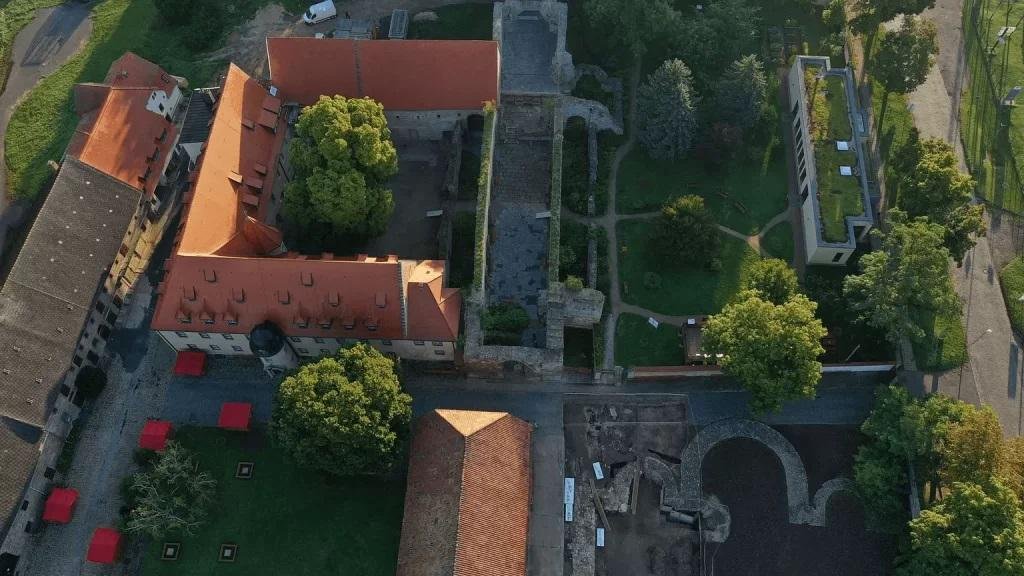
Archaeologists unearth site where Otto the Great died
Memleben monastery. Credit: Thomas Jäger / Landesamt für Denkmalpflege und Archäologie Sachsen-Anhalt

Emperor Otto I, hailed as the Duke of Saxony, German King, and the inaugural Emperor of the Holy Roman Empire, has long been a subject of historical intrigue. Although history records that both Henry I the Fowler and his son Otto I met their end in Memleben, the precise location of the first Holy Roman Emperor’s burial site remained an enigma, until now.

For the past six years, archaeologists from the State Office for Monument Preservation and Archaeology Saxony-Anhalt have meticulously delved into this historical site, and this year, their relentless efforts have yielded findings of unparalleled significance.

The epicenter of these excavations was the former Benedictine monastery, which has stood as a monument to history since its establishment in 973 CE by Otto II, the son and successor of Otto I. This monastery served as a tribute to his father’s legacy, marking a significant chapter in the Holy Roman Empire’s narrative. For a brief but illustrious period, this site held sway as one of Germany’s most important monasteries.

RelatedStories

Elite Anglo-Saxon sand burials and sacrificed horse grave found near Sizewell nuclear site in England

Elite Anglo-Saxon sand burials and sacrificed horse grave found near Sizewell nuclear site in England

January 19, 2026
1130 depiction of Saxons, Jutes, and Angles crossing the sea to Britain. Credit: Wikimedia / CC BY-SA 4.0. Roots of medieval migration into England uncovered by large-scale bioarchaeological study

Roots of medieval migration into England uncovered by large-scale bioarchaeological study

January 6, 2026

The impact of this revelation cannot be overstated, considering the historical weight carried by Otto I. He is renowned as the Duke of Saxony, German King, and, most significantly, the founder of the Holy Roman Empire, marking a pivotal epoch in European history. He earned this esteemed title by defeating pagan Hungarian invaders in 955 CE., successfully defending Christendom.

To assert his divine right and consolidate his reign, Otto I formed alliances with influential bishops, thereby securing his authority and initiating a vigorous expansion into Italy. After his passing in 973 CE., he was succeeded by his son, Otto II, who oversaw the establishment of the Benedictine monastery in Memleben, commemorating his father’s legacy.

The architectural remains that have come to light during these excavations offer tantalizing clues about the history of this significant site. Specifically, the focus has been on three areas in close proximity to the monumental church constructed under the aegis of Otto II. These areas include the region surrounding the northeast side apse, a partially utilized cemetery, the cloister section adjoining the northern aisle, and the connecting point between the side aisle and the cloister in the western transept.

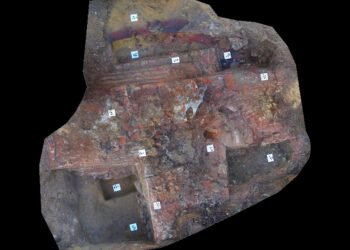
Notably, in 2022, researchers unearthed the foundations of a stone structure that predates the monumental church, shedding light on the era of Henry the Fowler and Otto the Great. This building, oriented east to west and measuring approximately 9.20 meters in width, showcased remarkable craftsmanship for its time. The building’s purpose remains a subject of speculation, with conjecture ranging from an older sacred edifice to a representative structure of the Palatinate of Memleben.
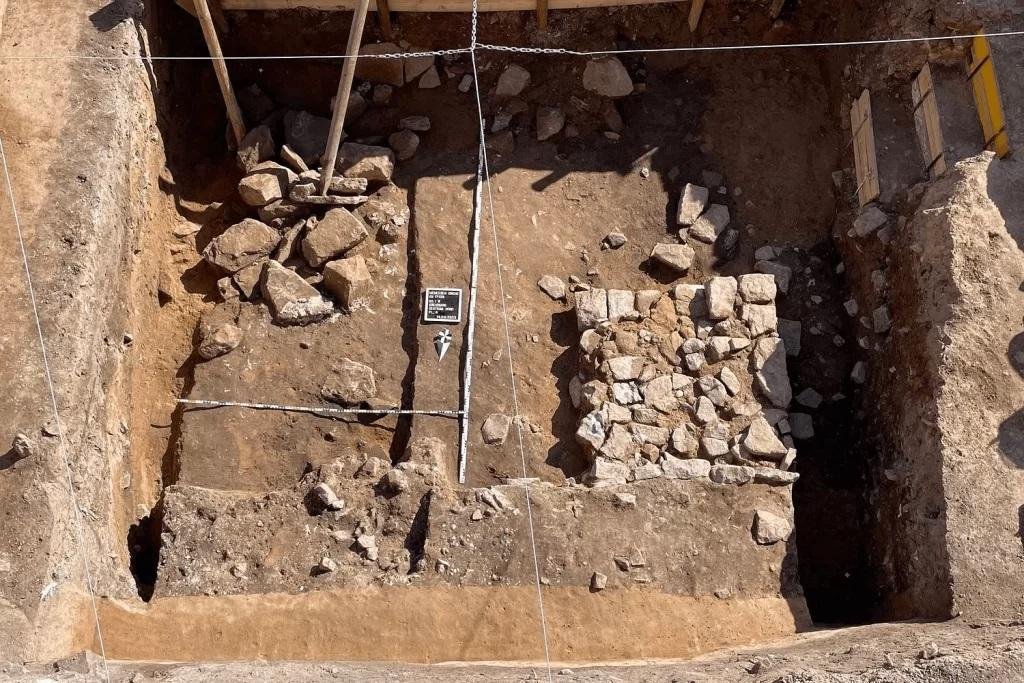
Archaeologists unearth site where Otto the Great died
Excavation section in the area of the cloister on the north side of the monumental church. Credit: Holger Grönwald / State Office for Heritage Management and Archaeology Saxony-Anhalt

Perhaps the most tantalizing revelation is the potential connection between this structure and Otto the Great’s remains. A written source from the 16th century alludes to the possibility that this location was used for the reburial of Otto the Great’s heart. Thietmar von Merseburg’s chronicle, dating from the early 11th century, recounts that Otto the Great’s entrails were interred in Memleben’s St. Mary’s Church, a precursor to Otto II’s monumental church. His embalmed body was then transported to Magdeburg, suggesting that the recently discovered building may have served as a temporary sanctuary for the veneration of this sacred relic.

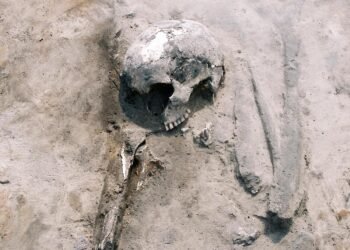
Further exploration of the densely populated cemetery adjacent to Otto II’s church has further enriched our understanding of this historical site. It offers poignant evidence of the site’s deep-rooted significance and its enduring role as a place of remembrance for the ruling family, even after it lost its autonomy in 1015.

To gain a comprehensive understanding of the building history and layout of Otto II’s church, archaeologists extended their investigations to the area outside the northern aisle. The eastern apse and transept emerged as the initial components built, followed by the simultaneous construction of the two eastern side apses and the nave, along with the western transept.
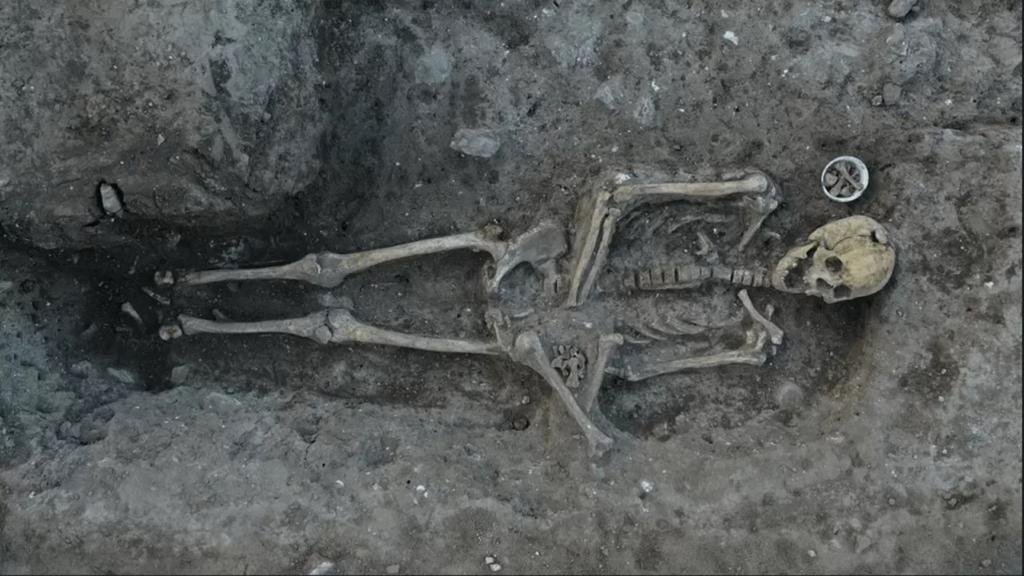
Archaeologists unearth site where Otto the Great died
This year numerous burials were examined in the densely occupied cemetery at the northeast apse of Otto II’s church. Credit: Thomas Jager / Landesamt für Denkmalpflege und Archäologie Sachsen-Anhalt

The discoveries also included compelling evidence of a systematic demolition of this monumental structure. Severe fire damage on the foundation suggested a deliberate strategy of dismantling the building through fire-induced structural collapse, in lieu of the laborious removal of individual stones. These findings can be dated to the 14th century.

The archaeologists’ tireless efforts in Memleben have unveiled an essential chapter in the history of the Holy Roman Empire and the first German Empire. The discovery of the stone predecessor building and its association with Otto the Great, all collectively form an unprecedented breakthrough in our understanding of this pivotal period in European history.

These excavations, conducted by the State Office for Monument Preservation and Archaeology Saxony-Anhalt, have been further enriched by the cooperation of the Martin Luther University of Halle-Wittenberg and the Anhalt University of Applied Sciences.

Share2Tweet1ShareShareSend

You May Also Like...

5,500-year-old human skeleton in Colombia reveals earliest evidence of syphilis in the Americas
Anthropology

5,500-year-old human skeleton in Colombia reveals earliest evidence of syphilis in the Americas

January 23, 2026
Republican-era tombs and a Hercules shrine unearthed in eastern Rome reveal centuries of suburban life
Archaeology

Republican-era tombs and a Hercules shrine unearthed in eastern Rome reveal centuries of suburban life

January 23, 2026
Oldest known rock art dated to 67,800 years discovered in Sulawesi cave
Archaeology

Oldest known rock art dated to 67,800 years discovered in Sulawesi cave

January 20, 2026
Elite Anglo-Saxon sand burials and sacrificed horse grave found near Sizewell nuclear site in England
Anthropology

Elite Anglo-Saxon sand burials and sacrificed horse grave found near Sizewell nuclear site in England

January 19, 2026
Roman marching camps discovered in Saxony-Anhalt reveal early military advances deep into Germania
Archaeology

Roman marching camps discovered in Saxony-Anhalt reveal early military advances deep into Germania

January 15, 2026
Casablanca fossils dated 773,000 years back reveal African origin of last common ancestor of humans and Neanderthals
Anthropology

Casablanca fossils dated 773,000 years back reveal African origin of last common ancestor of humans and Neanderthals

January 10, 2026

Follow us


Instagram
244K

Facebook
118K

Threads
45K

LinkedIn
14K

Twitter
6K

YouTube
1K
  • Trending
  • Comments
  • Latest
Shipwreck Salvage. Credit: rawpixel.com / Public Domain

2,000-year-old shipwreck discovered off Turkish coast with remarkably preserved stacked ceramics

July 2, 2025
Viking age DNA reveals 9,000-year-old HIV-resistant gene originating near the Black Sea

Viking age DNA reveals 9,000-year-old HIV-resistant gene originating near the Black Sea

May 18, 2025
A new study suggests the mysterious Voynich Manuscript may be a medieval cipher

A new study suggests the mysterious Voynich Manuscript may be a medieval cipher

January 3, 2026
Moses may be named in ancient Egyptian mine inscriptions, sparking debate over earliest biblical references

Moses may be named in ancient Egyptian mine inscriptions, sparking debate over earliest biblical references

July 31, 2025
Mystery of Armenia’s 6,000-year-old dragon stones solved

Mystery of Armenia’s 6,000-year-old dragon stones solved

September 23, 2025
3D analysis reveals Shroud of Turin image likely came from sculpture, not Jesus’ body

3D analysis reveals Shroud of Turin image likely came from sculpture, not Jesus’ body

Moses may be named in ancient Egyptian mine inscriptions, sparking debate over earliest biblical references

Moses may be named in ancient Egyptian mine inscriptions, sparking debate over earliest biblical references

$1 million prize offered to decipher 5,300-year-old Indus Valley script

$1 million prize offered to decipher 5,300-year-old Indus Valley script

Oldest ever genetic data from a human relative found in 2-million-year-old fossilized teeth

Oldest ever genetic data from a human relative found in 2-million-year-old fossilized teeth

Exceptionally large Roman shoes discovered at Magna fort near Hadrian’s Wall

Exceptionally large Roman shoes discovered at Magna fort near Hadrian’s Wall

5,500-year-old human skeleton in Colombia reveals earliest evidence of syphilis in the Americas

5,500-year-old human skeleton in Colombia reveals earliest evidence of syphilis in the Americas

January 23, 2026
Republican-era tombs and a Hercules shrine unearthed in eastern Rome reveal centuries of suburban life

Republican-era tombs and a Hercules shrine unearthed in eastern Rome reveal centuries of suburban life

January 23, 2026
Oldest known rock art dated to 67,800 years discovered in Sulawesi cave

Oldest known rock art dated to 67,800 years discovered in Sulawesi cave

January 20, 2026
Elite Anglo-Saxon sand burials and sacrificed horse grave found near Sizewell nuclear site in England

Elite Anglo-Saxon sand burials and sacrificed horse grave found near Sizewell nuclear site in England

January 19, 2026
Roman marching camps discovered in Saxony-Anhalt reveal early military advances deep into Germania

Roman marching camps discovered in Saxony-Anhalt reveal early military advances deep into Germania

January 15, 2026

Archaeology News online magazine

Archaeology News is an international online magazine that covers all aspects of archaeology.


Categories

  • Academics
    • Books
    • Conferences
    • Universities
  • Articles
  • Download
  • Game
  • News
    • Anthropology
    • Archaeology
    • Paleontology
  • Quiz
  • Tours

Subscribe to our newsletter

© 2024 - Archaeology News Online Magazine. All Rights Reserved.

  • About
  • Privacy Policy
  • Terms of Use
  • Donation
  • Contact

Welcome Back!

Login to your account below

Forgotten Password? Sign Up

Create New Account!

Fill the forms below to register

All fields are required. Log In

Retrieve your password

Please enter your username or email address to reset your password.

Log In

Add New Playlist

Manage Consent
To provide the best experiences, we use technologies like cookies to store and/or access device information. Consenting to these technologies will allow us to process data such as browsing behavior or unique IDs on this site. Not consenting or withdrawing consent, may adversely affect certain features and functions.
Functional Always active
The technical storage or access is strictly necessary for the legitimate purpose of enabling the use of a specific service explicitly requested by the subscriber or user, or for the sole purpose of carrying out the transmission of a communication over an electronic communications network.
Preferences
The technical storage or access is necessary for the legitimate purpose of storing preferences that are not requested by the subscriber or user.
Statistics
The technical storage or access that is used exclusively for statistical purposes. The technical storage or access that is used exclusively for anonymous statistical purposes. Without a subpoena, voluntary compliance on the part of your Internet Service Provider, or additional records from a third party, information stored or retrieved for this purpose alone cannot usually be used to identify you.
Marketing
The technical storage or access is required to create user profiles to send advertising, or to track the user on a website or across several websites for similar marketing purposes.
  • Manage options
  • Manage services
  • Manage {vendor_count} vendors
  • Read more about these purposes
View preferences
  • {title}
  • {title}
  • {title}
  • Home
  • News
    • Archaeology
    • Anthropology
    • Paleontology
  • Academic
    • Books
    • Conferences
    • Universities
  • Articles
  • VR Tours
  • Quiz & Game
  • Download
  • Encyclopedia
  • Forum

About  .  Contact  .  Donation

© 2024 - Archaeology News Online Magazine. All Rights Reserved