• About
  • Privacy Policy
  • Terms of Use
  • Donation
  • Contact
No Result
View All Result
Archaeology News
  • Home
  • News
    • Archaeology
    • Anthropology
    • Paleontology
  • Academic
    • Books
    • Conferences
    • Universities
  • Articles
  • VR Tours
  • Quiz & Game
  • Download
  • Encyclopedia
  • Forum
Archaeology News
No Result
View All Result
Home News Anthropology

Study suggests Ötzi’s tattoos were made using a single-pointed tool

by Dario Radley
March 28, 2024

Ötzi the Iceman, a mummified individual discovered in the Ötztal Alps in 1991, has long captivated researchers with his enigmatic tattoos. The latest study, published in the European Journal of Archaeology, challenges previous assumptions about how these tattoos were created, suggesting they were made through a method known as hand-poking.
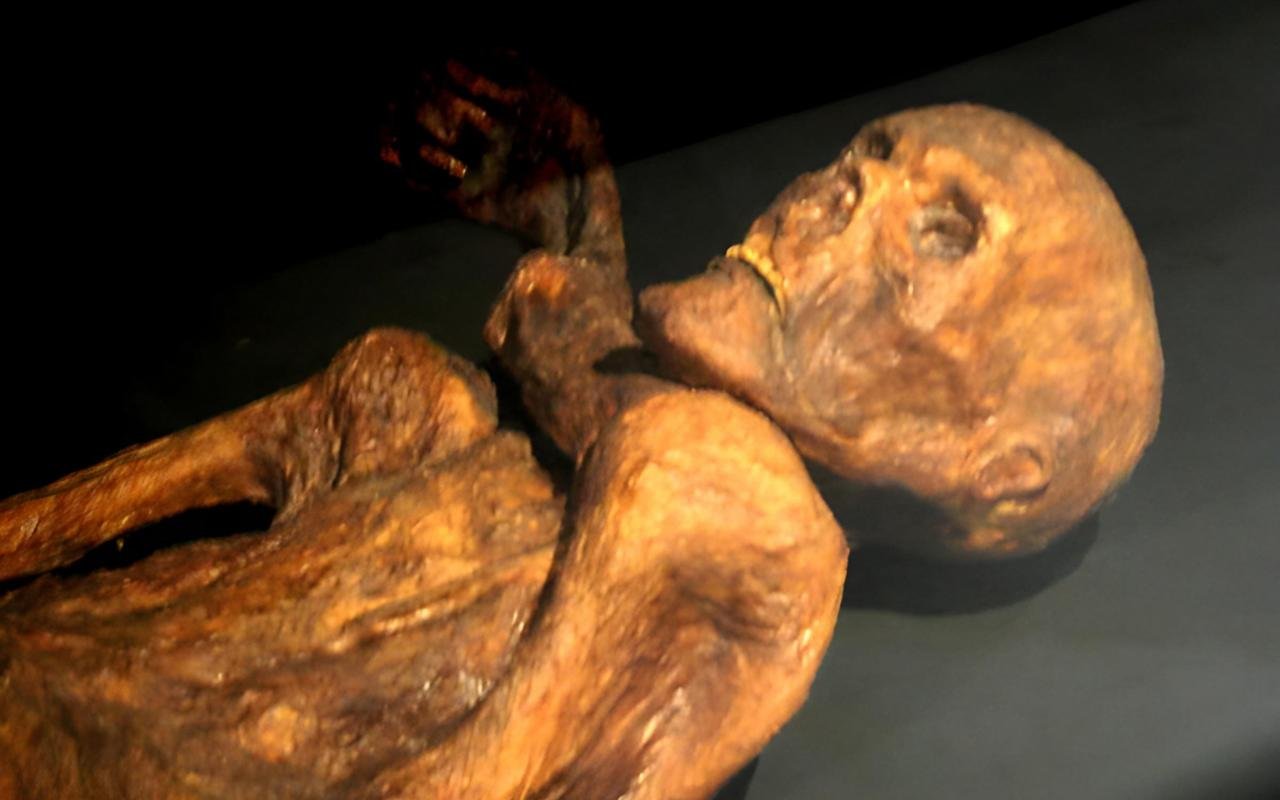
Rewriting the story of Ötzi, the Alps ice man
Ötzi the ice mummy. Credit: Wikimedia Commons, CC BY-SA 3.0

The Iceman, who lived approximately 5,300 years ago, was found to have 61 tattoos adorning various parts of his body, including his lower back, abdomen, left wrist, and lower legs. These tattoos, consisting of black lines and crosses, have long been a subject of speculation among scientists and historians.

Researchers, including archaeologists, historians, and tattoo artists, collaborated to investigate Ötzi’s tattoos. Contrary to prior theories proposing incisions followed by soot application, this study suggests that Ötzi’s tattoos were likely created using hand-poking with a single-pointed tool, possibly made from bone or copper.

The team conducted an experiment involving tattooing on modern skin to replicate Ötzi’s tattoos using different ancient techniques: hand-poking, subdermal tattooing, hand tapping, and incision. Tattoo artist Danny Riday volunteered for the experiment, using various tools such as animal bones, copper, obsidian, and even a boar tusk to create the tattoos.

After allowing the tattoos to heal, the researchers compared them with Ötzi’s tattoos through detailed imagery. They found that the hand-poking method closely matched the characteristics of Ötzi’s tattoos, which consisted of short, straight lines resulting in tiny, overlapping disks forming a line pattern.

Archaeologist Aaron Deter-Wolf, lead author of the study and an expert in ancient tattoos, highlighted the significance of discernible variations in tattoos created using different tools and techniques, which can aid in the study of preserved remains from archaeological collections and shed light on associated cultures.

The study also suggests that tattooing was a widespread skill in Ötzi’s time. Contrary to popular perceptions of ‘primitive’ humans, the research demonstrates that ancient peoples possessed advanced knowledge and techniques in various aspects of daily life, including body modification.

Furthermore, the study raises questions about the purpose of Ötzi’s tattoos. While some researchers have speculated that they were used for medicinal purposes or as a form of early acupuncture, the exact significance of the tattoos remains unclear. Further research is needed to unravel the mysteries surrounding Ötzi’s tattoos and their cultural significance.
More information: Deter-Wolf A, Robitaille B, Riday D, Burlot A, Sialuk Jacobsen M. (2024). Chalcolithic Tattooing: Historical and Experimental Evaluation of the Tyrolean Iceman’s Body Markings. European Journal of Archaeology:1-22. doi:10.1017/eaa.2024.5

Share:

Share on Facebook Share on X (Twitter) Share on LinkedIn Share on Pinterest Share on WhatsApp Share on Email

You May Also Like...

Ancient city of Ihnasya reveals Aphrodite statue, Senusret III inscription, and Roman basilica remains in Egypt
Archaeology

Ancient city of Ihnasya reveals Aphrodite statue, Senusret III inscription, and Roman basilica remains in Egypt

June 2, 2026
Rare funerary cache discovered at ancient Heliopolis site
Archaeology

Rare funerary cache discovered at ancient Heliopolis site

June 2, 2026
Archaeologists find Queen Elisenda’s remains among 25 medieval skeletons, including individuals with unexplained stab wounds
Anthropology

Archaeologists find Queen Elisenda’s remains among 25 medieval skeletons, including individuals with unexplained stab wounds

June 1, 2026
Copper Age children in Spain suffered widespread respiratory disease, skeletal study suggests
Anthropology

Copper Age children in Spain suffered widespread respiratory disease, skeletal study suggests

June 1, 2026
Unknown World War II mass grave with 14 German soldiers uncovered at quarry site in Poland
Anthropology

Unknown World War II mass grave with 14 German soldiers uncovered at quarry site in Poland

May 31, 2026
Volunteers restore England’s mysterious Cerne Abbas Giant as climate and erosion threaten ancient landmark
Archaeology

Volunteers restore England’s mysterious Cerne Abbas Giant as climate and erosion threaten ancient landmark

May 31, 2026

Follow us


Instagram
242K

Facebook
117K

Threads
47K

LinkedIn
15K

Twitter
6K

YouTube
1K

Archaeology News online magazine

Archaeology News is an international online magazine that covers all aspects of archaeology.


Categories

  • Academics
    • Books
    • Conferences
    • Universities
  • Articles
  • Download
  • Game
  • News
    • Anthropology
    • Archaeology
    • Paleontology
  • Quiz
  • Tours

Subscribe to our newsletter

© 2024 - Archaeology News Online Magazine. All Rights Reserved.

  • About
  • Privacy Policy
  • Terms of Use
  • Donation
  • Contact

Manage Consent
To provide the best experiences, we use technologies like cookies to store and/or access device information. Consenting to these technologies will allow us to process data such as browsing behavior or unique IDs on this site. Not consenting or withdrawing consent, may adversely affect certain features and functions.
Functional Always active
The technical storage or access is strictly necessary for the legitimate purpose of enabling the use of a specific service explicitly requested by the subscriber or user, or for the sole purpose of carrying out the transmission of a communication over an electronic communications network.
Preferences
The technical storage or access is necessary for the legitimate purpose of storing preferences that are not requested by the subscriber or user.
Statistics
The technical storage or access that is used exclusively for statistical purposes. The technical storage or access that is used exclusively for anonymous statistical purposes. Without a subpoena, voluntary compliance on the part of your Internet Service Provider, or additional records from a third party, information stored or retrieved for this purpose alone cannot usually be used to identify you.
Marketing
The technical storage or access is required to create user profiles to send advertising, or to track the user on a website or across several websites for similar marketing purposes.
  • Manage options
  • Manage services
  • Manage {vendor_count} vendors
  • Read more about these purposes
View preferences
  • {title}
  • {title}
  • {title}
  • Home
  • News
    • Archaeology
    • Anthropology
    • Paleontology
  • Academic
    • Books
    • Conferences
    • Universities
  • Articles
  • VR Tours
  • Quiz & Game
  • Download
  • Encyclopedia
  • Forum

About  .  Contact  .  Donation

© 2024 - Archaeology News Online Magazine. All Rights Reserved