• About
  • Privacy Policy
  • Terms of Use
  • Donation
  • Contact
No Result
View All Result
Archaeology News
  • Home
  • News
    • Archaeology
    • Anthropology
    • Paleontology
  • Academic
    • Books
    • Conferences
    • Universities
  • Articles
  • VR Tours
  • Quiz & Game
  • Download
  • Encyclopedia
  • Forum
Archaeology News
No Result
View All Result
Home News Anthropology

Study reveals evidence of violence during ancient Peru crisis

by Dario Radley
March 30, 2024

An international team of researchers, led by Peruvian bioarchaeologist Luis Pezo-Lanfranco, has shed new light on a tumultuous period in the Central Andes, specifically in the Supe Valley region of present-day Peru, during the transition from the fifth to the fourth century BCE. This period, marking the shift from the Middle Formative to the Late Formative period, was characterized by significant political upheaval and intergroup violence.

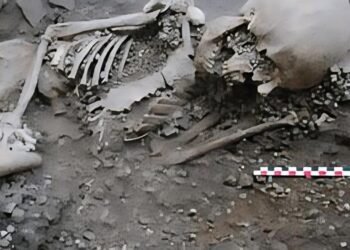
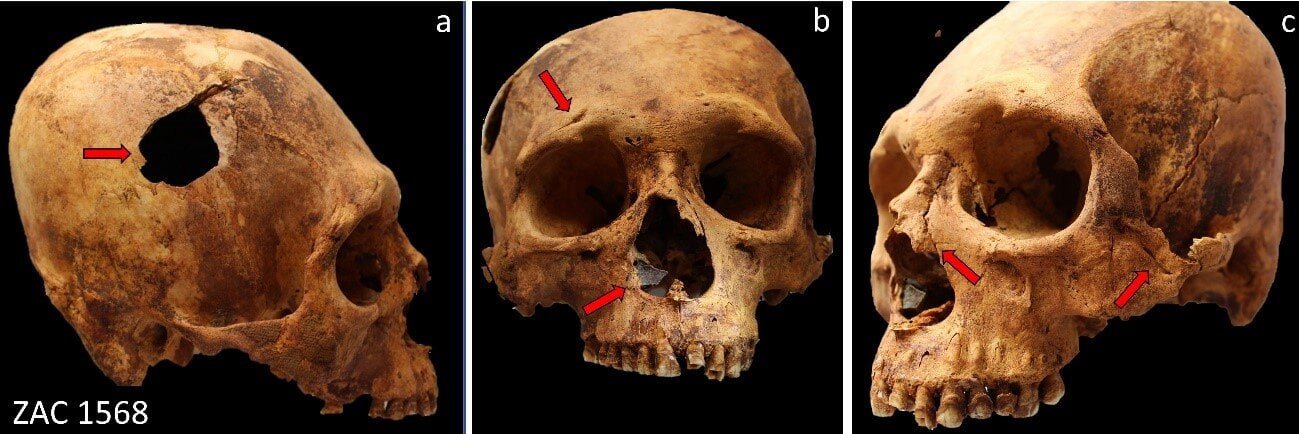
The study focused on skeletal remains unearthed from a burial site near the ancient ceremonial center of Caral. The team meticulously examined the remains of 67 individuals dating back to 500-400 BCE and discovered a staggering 80% of adults and adolescents bore injuries indicative of violent encounters. Perimortem injuries, observed in the skull, face, and thorax, suggested lethal interpersonal violence, with victims including men, women, and children.
Study reveals evidence of violence during ancient Peru crisis
Various traumatic injuries in one of the individuals studied. Credit: Luis Pezo-Lanfranco

Pezo-Lanfranco suggests that these violent acts were likely perpetrated by outside groups, leading to intercommunity conflicts resulting in fatalities. Despite the brutality of these events, the victims were buried with customary funeral rites, indicating a continuation of community and care amidst turmoil.

The findings also unveil high levels of stress, infectious diseases, and material poverty among these ancient communities. The simplicity of grave goods and the prevalence of staple crops as the basis for subsistence further underscored the challenges faced by these societies.

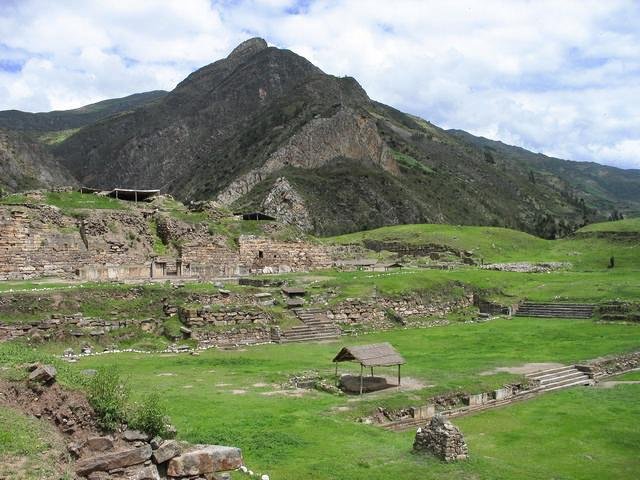
The study also provided insights into the decline of the Chavín culture, a once-dominant civilization known for its monumental ceremonial centers like Chavín de Huantar. As this culture waned, possibly around 500-400 BCE, its religiously centered political structures gave way to more secular forms of governance, contributing to the region’s political disintegration.

RelatedStories

5,500-year-old human skeleton in Colombia reveals earliest evidence of syphilis in the Americas

5,500-year-old human skeleton in Colombia reveals earliest evidence of syphilis in the Americas

January 23, 2026
1130 depiction of Saxons, Jutes, and Angles crossing the sea to Britain. Credit: Wikimedia / CC BY-SA 4.0. Roots of medieval migration into England uncovered by large-scale bioarchaeological study

Roots of medieval migration into England uncovered by large-scale bioarchaeological study

January 6, 2026

The worship of a man-jaguar deity by the Chavín people, symbolizing the fusion of human and animal attributes, reflects rich spiritual traditions, though many aspects remain shrouded in mystery due to the absence of written records from this era.
Study reveals evidence of violence during ancient Peru crisis
Detail of the Chavín de Huantar archeological site in Peru’s northern mountains. Credit: Sharon odb/Wikimedia Commons

Pezo-Lanfranco emphasized the importance of this research in understanding a poorly documented chapter of Andean history, highlighting the complexities of societal changes, conflict, and the human condition during this pivotal period.

The study contributes not only to the understanding of the bioarchaeology of violence but also to broader insights into societal pressures and transitions shaping ancient Central Andean civilizations.

The study was published in the journal Latin American Antiquity.
More information: Pezo-Lanfranco L, Romero MIB, Filippini J, et al. (2024). Bioarchaeological Evidence of Violence between the Middle and Late Formative (500–400 BC) in the Peruvian North-Central Coast. Latin American Antiquity:1-17. doi:10.1017/laq.2023.38
Share1Tweet1ShareShareSend

You May Also Like...

5,500-year-old human skeleton in Colombia reveals earliest evidence of syphilis in the Americas
Anthropology

5,500-year-old human skeleton in Colombia reveals earliest evidence of syphilis in the Americas

January 23, 2026
Republican-era tombs and a Hercules shrine unearthed in eastern Rome reveal centuries of suburban life
Archaeology

Republican-era tombs and a Hercules shrine unearthed in eastern Rome reveal centuries of suburban life

January 23, 2026
New study finds evidence that Aztec King Moctezuma kept a zoo for ritual purposes
Archaeology

New study finds evidence that Aztec King Moctezuma kept a zoo for ritual purposes

January 22, 2026
Roman basilica designed by Vitruvius identified in Fano, ending centuries of debate
Archaeology

Roman basilica designed by Vitruvius identified in Fano, ending centuries of debate

January 21, 2026
Oldest known rock art dated to 67,800 years discovered in Sulawesi cave
Archaeology

Oldest known rock art dated to 67,800 years discovered in Sulawesi cave

January 20, 2026
Elite Anglo-Saxon sand burials and sacrificed horse grave found near Sizewell nuclear site in England
Anthropology

Elite Anglo-Saxon sand burials and sacrificed horse grave found near Sizewell nuclear site in England

January 19, 2026

Follow us


Instagram
244K

Facebook
118K

Threads
45K

LinkedIn
14K

Twitter
6K

YouTube
1K
  • Trending
  • Comments
  • Latest
Shipwreck Salvage. Credit: rawpixel.com / Public Domain

2,000-year-old shipwreck discovered off Turkish coast with remarkably preserved stacked ceramics

July 2, 2025
Viking age DNA reveals 9,000-year-old HIV-resistant gene originating near the Black Sea

Viking age DNA reveals 9,000-year-old HIV-resistant gene originating near the Black Sea

May 18, 2025
A new study suggests the mysterious Voynich Manuscript may be a medieval cipher

A new study suggests the mysterious Voynich Manuscript may be a medieval cipher

January 3, 2026
Moses may be named in ancient Egyptian mine inscriptions, sparking debate over earliest biblical references

Moses may be named in ancient Egyptian mine inscriptions, sparking debate over earliest biblical references

July 31, 2025
Mystery of Armenia’s 6,000-year-old dragon stones solved

Mystery of Armenia’s 6,000-year-old dragon stones solved

September 23, 2025
3D analysis reveals Shroud of Turin image likely came from sculpture, not Jesus’ body

3D analysis reveals Shroud of Turin image likely came from sculpture, not Jesus’ body

Moses may be named in ancient Egyptian mine inscriptions, sparking debate over earliest biblical references

Moses may be named in ancient Egyptian mine inscriptions, sparking debate over earliest biblical references

$1 million prize offered to decipher 5,300-year-old Indus Valley script

$1 million prize offered to decipher 5,300-year-old Indus Valley script

Oldest ever genetic data from a human relative found in 2-million-year-old fossilized teeth

Oldest ever genetic data from a human relative found in 2-million-year-old fossilized teeth

Exceptionally large Roman shoes discovered at Magna fort near Hadrian’s Wall

Exceptionally large Roman shoes discovered at Magna fort near Hadrian’s Wall

5,500-year-old human skeleton in Colombia reveals earliest evidence of syphilis in the Americas

5,500-year-old human skeleton in Colombia reveals earliest evidence of syphilis in the Americas

January 23, 2026
Republican-era tombs and a Hercules shrine unearthed in eastern Rome reveal centuries of suburban life

Republican-era tombs and a Hercules shrine unearthed in eastern Rome reveal centuries of suburban life

January 23, 2026
New study finds evidence that Aztec King Moctezuma kept a zoo for ritual purposes

New study finds evidence that Aztec King Moctezuma kept a zoo for ritual purposes

January 22, 2026
Roman basilica designed by Vitruvius identified in Fano, ending centuries of debate

Roman basilica designed by Vitruvius identified in Fano, ending centuries of debate

January 21, 2026
Oldest known rock art dated to 67,800 years discovered in Sulawesi cave

Oldest known rock art dated to 67,800 years discovered in Sulawesi cave

January 20, 2026

Archaeology News online magazine

Archaeology News is an international online magazine that covers all aspects of archaeology.


Categories

  • Academics
    • Books
    • Conferences
    • Universities
  • Articles
  • Download
  • Game
  • News
    • Anthropology
    • Archaeology
    • Paleontology
  • Quiz
  • Tours

Subscribe to our newsletter

© 2024 - Archaeology News Online Magazine. All Rights Reserved.

  • About
  • Privacy Policy
  • Terms of Use
  • Donation
  • Contact

Welcome Back!

Login to your account below

Forgotten Password? Sign Up

Create New Account!

Fill the forms below to register

All fields are required. Log In

Retrieve your password

Please enter your username or email address to reset your password.

Log In

Add New Playlist

Manage Consent
To provide the best experiences, we use technologies like cookies to store and/or access device information. Consenting to these technologies will allow us to process data such as browsing behavior or unique IDs on this site. Not consenting or withdrawing consent, may adversely affect certain features and functions.
Functional Always active
The technical storage or access is strictly necessary for the legitimate purpose of enabling the use of a specific service explicitly requested by the subscriber or user, or for the sole purpose of carrying out the transmission of a communication over an electronic communications network.
Preferences
The technical storage or access is necessary for the legitimate purpose of storing preferences that are not requested by the subscriber or user.
Statistics
The technical storage or access that is used exclusively for statistical purposes. The technical storage or access that is used exclusively for anonymous statistical purposes. Without a subpoena, voluntary compliance on the part of your Internet Service Provider, or additional records from a third party, information stored or retrieved for this purpose alone cannot usually be used to identify you.
Marketing
The technical storage or access is required to create user profiles to send advertising, or to track the user on a website or across several websites for similar marketing purposes.
  • Manage options
  • Manage services
  • Manage {vendor_count} vendors
  • Read more about these purposes
View preferences
  • {title}
  • {title}
  • {title}
  • Home
  • News
    • Archaeology
    • Anthropology
    • Paleontology
  • Academic
    • Books
    • Conferences
    • Universities
  • Articles
  • VR Tours
  • Quiz & Game
  • Download
  • Encyclopedia
  • Forum

About  .  Contact  .  Donation

© 2024 - Archaeology News Online Magazine. All Rights Reserved