• About
  • Privacy Policy
  • Terms of Use
  • Donation
  • Contact
No Result
View All Result
Archaeology News
  • Home
  • News
    • Archaeology
    • Anthropology
    • Paleontology
  • Academic
    • Books
    • Conferences
    • Universities
  • Articles
  • VR Tours
  • Quiz & Game
  • Download
  • Encyclopedia
  • Forum
Archaeology News
No Result
View All Result
Home News Archaeology

New rock art sites discovered in Sudan support ‘green Sahara’ theory

by Dario Radley
June 6, 2024

Archaeologists from Macquarie University and the Polish Academy of Science’s Institute of Mediterranean and Oriental Culture have unveiled a series of compelling discoveries in the Sudanese Eastern Desert, also known as the Atbai. This region, now one of the driest parts of the world, once thrived with lush greenery and abundant wildlife.

New rock art sites discovered in Sudan support ‘green Sahara’ theory
Ancient rock art features a herder and a cow in the Sudanese Eastern Desert. Credit: Cooper et al., The Journal of Egyptian Archaeology (2024)

Archaeologists have discovered Sixteen new rock art sites in the Atbai Desert, dating back approximately 4,000 years, depicting cattle and other savannah fauna, a stark contrast to today’s arid environment. The rock art sites include detailed illustrations of humans, antelopes, elephants, giraffes, and notably, cattle.

Dr. Julien Cooper, a researcher at Macquarie University, led the team that uncovered these significant artifacts during the Atbai Survey Project conducted in 2018 and 2019. Dr. Cooper expressed astonishment at the presence of cattle carvings, noting, “It was puzzling to find cattle carved on desert rock walls as they require plenty of water and acres of pasture, and would not survive in the dry and arid environment of the Sahara today.”

The rock art provides crucial evidence supporting the theory of a once ‘green Sahara.’ These findings align with prior archaeological and climatic research that has suggested an ‘African humid period’ – a time characterized by increased summer monsoon rainfall that transformed the Sahara into a verdant landscape. This period began approximately 15,000 years ago and ended around 5,000 years ago. During this time, the Sahara was a grassy savannah, dotted with lakes, rivers, swamps, and waterholes, sustaining a variety of wildlife and human activities such as cattle pastoralism.

New rock art sites discovered in Sudan support ‘green Sahara’ theory
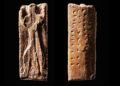
Depictions of bull’s head on a pole from tomb U-J in Abydos. Credit: Cooper et al., The Journal of Egyptian Archaeology (2024)

The artwork, created around 3,000 BCE, marks a pivotal moment when the once fertile Sahara began its transformation into the inhospitable desert we see today. The end of the African humid period brought about a drastic reduction in rainfall, leading to the desiccation of lakes and rivers. This environmental shift forced the ancient inhabitants of the region to abandon their traditional cattle herding practices.

RelatedStories

40,000-year-old European engravings reveal structured sign systems, study finds

40,000-year-old European engravings reveal structured sign systems, study finds

February 25, 2026
10,000 years of rock art discovered at Umm Arak Plateau in Egypt’s southern Sinai

10,000 years of rock art discovered at Umm Arak Plateau in Egypt’s southern Sinai

February 15, 2026

“The Atbai Desert around Wadi Halfa, where the new rock art was discovered, became almost completely depopulated. For those who remained, cattle were abandoned for sheep and goats,” explained Dr. Cooper. This transition had profound impacts on the local human populations, affecting their diet, migratory patterns, and overall way of life.

New rock art sites discovered in Sudan support ‘green Sahara’ theory
Ancient rock art depicting boats, remarkably found miles away from the nearest body of water.Credit: Cooper et al., The Journal of Egyptian Archaeology (2024)

The rock art sites depict not only cattle, which require significant water and pasture, but also boats, indicating the presence of substantial water bodies at the time. Dr. Cooper noted, “When you find these boats way out in the desert, then you have lots of follow-on questions. At this early prehistoric period, we have almost no evidence of Egyptians or Nubians going this far into the desert, and that’s why it was really unexpected to find this large scene of boats.”

New rock art sites discovered in Sudan support ‘green Sahara’ theory
Line drawing and orthophoto of the boat tableau in the Sudanese Eastern Desert. Credit: Cooper et al., The Journal of Egyptian Archaeology (2024)

The rock art’s detailed carvings suggest that the creators spent a considerable amount of time in the area, further indicating that the region was once habitable and supportive of human life. The transition from a ‘Green Sahara’ to an arid desert not only altered the physical landscape but also had a significant impact on the cultural and social structures of the time. As the climate grew drier, many inhabitants were forced to migrate closer to the Nile, contributing to the formation of early urban states in Egypt and Nubia.

More information: Cooper, J., & Vanhulle, D. (2023). Rock Art Surveys in the Sudanese Eastern Desert: Results of the 2018–2019 Atbai Survey Project. The Journal of Egyptian Archaeology, 109(1-2), 189-208. doi:10.1177/03075133231211917
Share9Tweet6Share2ShareSend

You May Also Like...

Horse domestication began centuries earlier than thought, study reveals early riding and management in 4th millennium BCE
Archaeology

Horse domestication began centuries earlier than thought, study reveals early riding and management in 4th millennium BCE

May 15, 2026
Ancient Danes kept fishing for millennia after farming arrived, study finds
Archaeology

Ancient Danes kept fishing for millennia after farming arrived, study finds

May 14, 2026
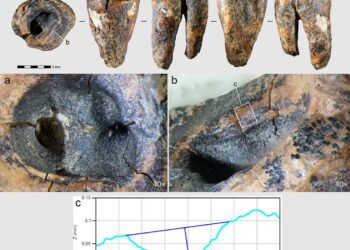
Oldest known dental treatment found in 59,000-year-old Neanderthal tooth from Siberia
Anthropology

Oldest known dental treatment found in 59,000-year-old Neanderthal tooth from Siberia

May 14, 2026
Homo erectus in Java: 140,000-year-old fossils found in submerged river valley
Anthropology

400,000-year-old Homo erectus proteins reveal genetic links to Denisovans and modern humans

May 14, 2026
Cut marks on 1.6-million-year-old bones reveal early humans moved and processed meat in Kenya
Anthropology

Cut marks on 1.6-million-year-old bones reveal early humans moved and processed meat in Kenya

May 13, 2026
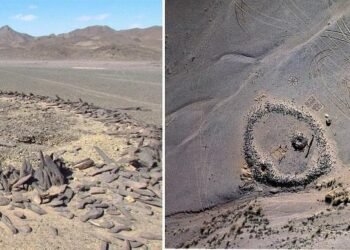
280 ancient stone burial monuments found in Sudan reveal lost cattle-herding culture in the Sahara
Archaeology

280 ancient stone burial monuments found in Sudan reveal lost cattle-herding culture in the Sahara

May 13, 2026

Follow us


Instagram
242K

Facebook
117K

Threads
46K

LinkedIn
14K

Twitter
6K

YouTube
1K
  • Trending
  • Comments
  • Latest
Shipwreck Salvage. Credit: rawpixel.com / Public Domain

2,000-year-old shipwreck discovered off Turkish coast with remarkably preserved stacked ceramics

July 2, 2025
A new study suggests the mysterious Voynich Manuscript may be a medieval cipher

A new study suggests the mysterious Voynich Manuscript may be a medieval cipher

January 3, 2026
Viking age DNA reveals 9,000-year-old HIV-resistant gene originating near the Black Sea

Viking age DNA reveals 9,000-year-old HIV-resistant gene originating near the Black Sea

May 18, 2025
3D analysis reveals Shroud of Turin image likely came from sculpture, not Jesus’ body

3D analysis reveals Shroud of Turin image likely came from sculpture, not Jesus’ body

August 3, 2025
Moses may be named in ancient Egyptian mine inscriptions, sparking debate over earliest biblical references

Moses may be named in ancient Egyptian mine inscriptions, sparking debate over earliest biblical references

July 31, 2025
3D analysis reveals Shroud of Turin image likely came from sculpture, not Jesus’ body

3D analysis reveals Shroud of Turin image likely came from sculpture, not Jesus’ body

Moses may be named in ancient Egyptian mine inscriptions, sparking debate over earliest biblical references

Moses may be named in ancient Egyptian mine inscriptions, sparking debate over earliest biblical references

$1 million prize offered to decipher 5,300-year-old Indus Valley script

$1 million prize offered to decipher 5,300-year-old Indus Valley script

Oldest ever genetic data from a human relative found in 2-million-year-old fossilized teeth

Oldest ever genetic data from a human relative found in 2-million-year-old fossilized teeth

Exceptionally large Roman shoes discovered at Magna fort near Hadrian’s Wall

Exceptionally large Roman shoes discovered at Magna fort near Hadrian’s Wall

Horse domestication began centuries earlier than thought, study reveals early riding and management in 4th millennium BCE

Horse domestication began centuries earlier than thought, study reveals early riding and management in 4th millennium BCE

May 15, 2026
Ancient Danes kept fishing for millennia after farming arrived, study finds

Ancient Danes kept fishing for millennia after farming arrived, study finds

May 14, 2026
Oldest known dental treatment found in 59,000-year-old Neanderthal tooth from Siberia

Oldest known dental treatment found in 59,000-year-old Neanderthal tooth from Siberia

May 14, 2026
Homo erectus in Java: 140,000-year-old fossils found in submerged river valley

400,000-year-old Homo erectus proteins reveal genetic links to Denisovans and modern humans

May 14, 2026
Cut marks on 1.6-million-year-old bones reveal early humans moved and processed meat in Kenya

Cut marks on 1.6-million-year-old bones reveal early humans moved and processed meat in Kenya

May 13, 2026

Archaeology News online magazine

Archaeology News is an international online magazine that covers all aspects of archaeology.


Categories

  • Academics
    • Books
    • Conferences
    • Universities
  • Articles
  • Download
  • Game
  • News
    • Anthropology
    • Archaeology
    • Paleontology
  • Quiz
  • Tours

Subscribe to our newsletter

© 2024 - Archaeology News Online Magazine. All Rights Reserved.

  • About
  • Privacy Policy
  • Terms of Use
  • Donation
  • Contact

Manage Consent
To provide the best experiences, we use technologies like cookies to store and/or access device information. Consenting to these technologies will allow us to process data such as browsing behavior or unique IDs on this site. Not consenting or withdrawing consent, may adversely affect certain features and functions.
Functional Always active
The technical storage or access is strictly necessary for the legitimate purpose of enabling the use of a specific service explicitly requested by the subscriber or user, or for the sole purpose of carrying out the transmission of a communication over an electronic communications network.
Preferences
The technical storage or access is necessary for the legitimate purpose of storing preferences that are not requested by the subscriber or user.
Statistics
The technical storage or access that is used exclusively for statistical purposes. The technical storage or access that is used exclusively for anonymous statistical purposes. Without a subpoena, voluntary compliance on the part of your Internet Service Provider, or additional records from a third party, information stored or retrieved for this purpose alone cannot usually be used to identify you.
Marketing
The technical storage or access is required to create user profiles to send advertising, or to track the user on a website or across several websites for similar marketing purposes.
  • Manage options
  • Manage services
  • Manage {vendor_count} vendors
  • Read more about these purposes
View preferences
  • {title}
  • {title}
  • {title}
  • Home
  • News
    • Archaeology
    • Anthropology
    • Paleontology
  • Academic
    • Books
    • Conferences
    • Universities
  • Articles
  • VR Tours
  • Quiz & Game
  • Download
  • Encyclopedia
  • Forum

About  .  Contact  .  Donation

© 2024 - Archaeology News Online Magazine. All Rights Reserved