• About
  • Privacy Policy
  • Terms of Use
  • Donation
  • Contact
No Result
View All Result
Archaeology News
  • Home
  • News
    • Archaeology
    • Anthropology
    • Paleontology
  • Academic
    • Books
    • Conferences
    • Universities
  • Articles
  • VR Tours
  • Quiz & Game
  • Download
  • Encyclopedia
  • Forum
Archaeology News
No Result
View All Result
Home News Anthropology

Unique gold artifacts found in tomb of Thracian warrior

by Dario Radley
August 25, 2024

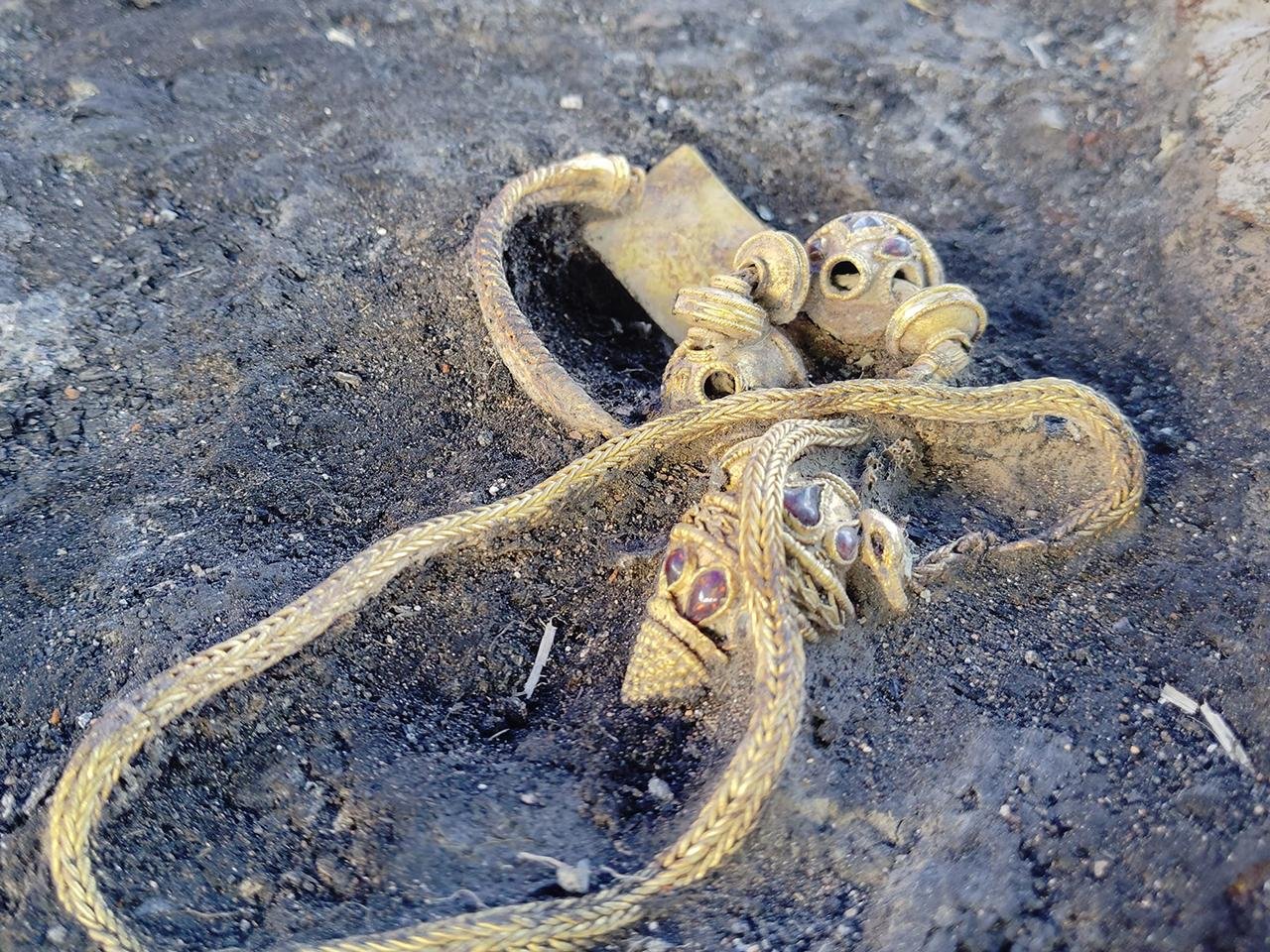
Archaeologists in Bulgaria, led by Daniela Agre from the National Archaeological Institute with Museum at the Bulgarian Academy of Sciences, have unearthed a Thracian warrior‘s tomb filled with unique artifacts dating back to the early 1st century CE in the village of Kapitan Petko Voyvoda.
Unique gold artifacts found in tomb of Thracian warrior
Unique gold artifacts found at the site. Credit: Topolovgrad Municipality

The tomb, believed to belong to a Thracian aristocrat who served in the Roman military, contained an impressive array of grave goods. Among the most notable finds were several gold items, including a necklace, a diadem, a ring, and a knife adorned with gold elements and semi-precious stones. The knife is particularly unique, with a handle encrusted with precious stones and a gold band intricately depicting hunting dogs, a design that archaeologists have not seen in Thrace before.

In addition to the jewelry, the tomb also held numerous weapons such as swords, spears, a decorative knife, and a rare plaited breastplate, which was uncommon during the Roman period. The warrior’s full battle gear was laid to rest with him, signifying his status as a well-equipped soldier. Adjacent to the burial site, the skeletal remains of a horse were discovered, further indicating that the warrior was a mounted horseman, a prominent feature in Thracian culture.

The Thracians were an Indo-European people who inhabited areas that now include Bulgaria, Romania, northern Greece, and parts of Turkey. Emerging during the early Bronze Age, they developed a distinct warrior culture that left a lasting impact on the military history of the Balkans and surrounding regions. Known for their skill in light infantry, particularly as peltasts, Thracian soldiers were recognized for their distinctive crescent-shaped pelta shields made of wicker covered in goat or sheepskin. These warriors played crucial roles in the armies of neighboring civilizations such as the Greeks, Persians, and Romans.

Thracian peltasts were renowned for their agility and versatility in battle, often armed with a variety of weapons including knives, swords, and spears. From the 4th century BCE onwards, they became integral to Greek military formations and participated in significant campaigns, such as Alexander the Great’s conquests into Asia.

RelatedStories

Study finds dog meat was consumed at Iron Age feasts in ancient Bulgaria

Study finds dog meat was consumed at Iron Age feasts in ancient Bulgaria

January 26, 2026
Hellenistic-era Thracian warrior tomb unearthed in southern Bulgaria (The 2nd-century BCE burial of a Thracian warrior and his horse. Credit: Municipality of Topolovgrad)

Hellenistic-era Thracian warrior tomb unearthed in southern Bulgaria

August 7, 2025

The discovery of the horse alongside the warrior ties into the broader cultural significance of the Thracian Horseman, a revered figure in Thracian mythology and iconography. Often depicted in ancient reliefs and monuments as a mounted warrior or hunter accompanied by a dog, the Thracian Horseman is associated with both martial prowess and religious symbolism. These depictions suggest a deep connection to funerary practices and beliefs about the afterlife.

The Thracian Horseman may have been worshipped as a hero-god, embodying both divine and mortal qualities. His association with the Thracian sky and horse god Sabazios, later connected to Zeus by the Greeks, reflects a syncretic blending of Thracian, Greek, and Roman religious practices. Even after the Roman conquest of Thrace, the image of the Thracian Horseman persisted, highlighting the cultural and religious continuity of Thracian traditions.

The artifacts recovered from the tomb are currently being conserved under police protection and will be transferred to a specially prepared room in the History Museum in Topolovgrad.

Daniela Agre, who led the excavation, described the findings as “unparalleled among those ever discovered in Bulgaria.” She emphasized the significance of the ornate hunting knife, stating, “This knife with its precious stone handle and unique motifs is unlike anything we have found in Thrace from this period.”

This finding offers fresh insights into the vibrant cultural landscape of ancient Thrace and highlights the region’s importance within the larger context of European history.
Share4Tweet3Share1ShareSend

You May Also Like...

Chalcolithic cornets at Teleilat Ghassul reveal ritual lamp use in Jordan’s prehistoric communities
Archaeology

Chalcolithic cornets at Teleilat Ghassul reveal ritual lamp use in Jordan’s prehistoric communities

February 16, 2026
DNA study reveals 3,000 years of genetic stability in Europe’s Low Countries before Bell Beaker expansion
Anthropology

DNA study reveals 3,000 years of genetic stability in Europe’s Low Countries before Bell Beaker expansion

February 16, 2026
Second Temple period stone vessel workshop unearthed on Mount Scopus after antiquities theft arrests
Archaeology

Second Temple period stone vessel workshop unearthed on Mount Scopus after antiquities theft arrests

February 16, 2026
10,000 years of rock art discovered at Umm Arak Plateau in Egypt’s southern Sinai
Archaeology

10,000 years of rock art discovered at Umm Arak Plateau in Egypt’s southern Sinai

February 15, 2026
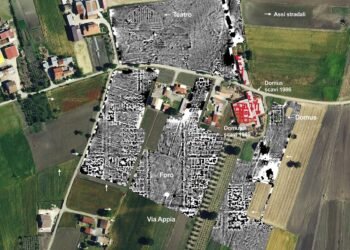
Drone surveys reveal Roman forum and previously unknown monumental theater at Fioccaglia
Archaeology

Drone surveys reveal Roman forum and previously unknown monumental theater at Fioccaglia

February 15, 2026
Earliest known burial in Northern Britain identified as young girl through DNA analysis
Anthropology

Earliest known burial in Northern Britain identified as young girl through DNA analysis

February 14, 2026

Comments 1

  1. Editorial Team says:
    1 second ago

    Disclaimer: This website is a science-focused magazine that welcomes both academic and non-academic audiences. Comments are written by users and may include personal opinions or unverified claims. They do not necessarily reflect the views of our editorial team or rely on scientific evidence.

    Comment Policy: We kindly ask all commenters to engage respectfully. Comments that contain offensive, insulting, degrading, discriminatory, or racist content will be automatically removed.

  2. Crystal Necklace says:
    1 year ago

    Thank you vey much such a valuable article, helped me a lot!

Follow us


Instagram
244K

Facebook
118K

Threads
45K

LinkedIn
14K

Twitter
6K

YouTube
1K
  • Trending
  • Comments
  • Latest
Shipwreck Salvage. Credit: rawpixel.com / Public Domain

2,000-year-old shipwreck discovered off Turkish coast with remarkably preserved stacked ceramics

July 2, 2025
Viking age DNA reveals 9,000-year-old HIV-resistant gene originating near the Black Sea

Viking age DNA reveals 9,000-year-old HIV-resistant gene originating near the Black Sea

May 18, 2025
A new study suggests the mysterious Voynich Manuscript may be a medieval cipher

A new study suggests the mysterious Voynich Manuscript may be a medieval cipher

January 3, 2026
Moses may be named in ancient Egyptian mine inscriptions, sparking debate over earliest biblical references

Moses may be named in ancient Egyptian mine inscriptions, sparking debate over earliest biblical references

July 31, 2025
Mystery of Armenia’s 6,000-year-old dragon stones solved

Mystery of Armenia’s 6,000-year-old dragon stones solved

September 23, 2025
3D analysis reveals Shroud of Turin image likely came from sculpture, not Jesus’ body

3D analysis reveals Shroud of Turin image likely came from sculpture, not Jesus’ body

Moses may be named in ancient Egyptian mine inscriptions, sparking debate over earliest biblical references

Moses may be named in ancient Egyptian mine inscriptions, sparking debate over earliest biblical references

$1 million prize offered to decipher 5,300-year-old Indus Valley script

$1 million prize offered to decipher 5,300-year-old Indus Valley script

Oldest ever genetic data from a human relative found in 2-million-year-old fossilized teeth

Oldest ever genetic data from a human relative found in 2-million-year-old fossilized teeth

Exceptionally large Roman shoes discovered at Magna fort near Hadrian’s Wall

Exceptionally large Roman shoes discovered at Magna fort near Hadrian’s Wall

Chalcolithic cornets at Teleilat Ghassul reveal ritual lamp use in Jordan’s prehistoric communities

Chalcolithic cornets at Teleilat Ghassul reveal ritual lamp use in Jordan’s prehistoric communities

February 16, 2026
DNA study reveals 3,000 years of genetic stability in Europe’s Low Countries before Bell Beaker expansion

DNA study reveals 3,000 years of genetic stability in Europe’s Low Countries before Bell Beaker expansion

February 16, 2026
Second Temple period stone vessel workshop unearthed on Mount Scopus after antiquities theft arrests

Second Temple period stone vessel workshop unearthed on Mount Scopus after antiquities theft arrests

February 16, 2026
10,000 years of rock art discovered at Umm Arak Plateau in Egypt’s southern Sinai

10,000 years of rock art discovered at Umm Arak Plateau in Egypt’s southern Sinai

February 15, 2026
Drone surveys reveal Roman forum and previously unknown monumental theater at Fioccaglia

Drone surveys reveal Roman forum and previously unknown monumental theater at Fioccaglia

February 15, 2026

Archaeology News online magazine

Archaeology News is an international online magazine that covers all aspects of archaeology.


Categories

  • Academics
    • Books
    • Conferences
    • Universities
  • Articles
  • Download
  • Game
  • News
    • Anthropology
    • Archaeology
    • Paleontology
  • Quiz
  • Tours

Subscribe to our newsletter

© 2024 - Archaeology News Online Magazine. All Rights Reserved.

  • About
  • Privacy Policy
  • Terms of Use
  • Donation
  • Contact

Manage Consent
To provide the best experiences, we use technologies like cookies to store and/or access device information. Consenting to these technologies will allow us to process data such as browsing behavior or unique IDs on this site. Not consenting or withdrawing consent, may adversely affect certain features and functions.
Functional Always active
The technical storage or access is strictly necessary for the legitimate purpose of enabling the use of a specific service explicitly requested by the subscriber or user, or for the sole purpose of carrying out the transmission of a communication over an electronic communications network.
Preferences
The technical storage or access is necessary for the legitimate purpose of storing preferences that are not requested by the subscriber or user.
Statistics
The technical storage or access that is used exclusively for statistical purposes. The technical storage or access that is used exclusively for anonymous statistical purposes. Without a subpoena, voluntary compliance on the part of your Internet Service Provider, or additional records from a third party, information stored or retrieved for this purpose alone cannot usually be used to identify you.
Marketing
The technical storage or access is required to create user profiles to send advertising, or to track the user on a website or across several websites for similar marketing purposes.
  • Manage options
  • Manage services
  • Manage {vendor_count} vendors
  • Read more about these purposes
View preferences
  • {title}
  • {title}
  • {title}
  • Home
  • News
    • Archaeology
    • Anthropology
    • Paleontology
  • Academic
    • Books
    • Conferences
    • Universities
  • Articles
  • VR Tours
  • Quiz & Game
  • Download
  • Encyclopedia
  • Forum

About  .  Contact  .  Donation

© 2024 - Archaeology News Online Magazine. All Rights Reserved