• About
  • Privacy Policy
  • Terms of Use
  • Donation
  • Contact
No Result
View All Result
Archaeology News
  • Home
  • News
    • Archaeology
    • Anthropology
    • Paleontology
  • Academic
    • Books
    • Conferences
    • Universities
  • Articles
  • VR Tours
  • Quiz & Game
  • Download
  • Encyclopedia
  • Forum
Archaeology News
No Result
View All Result
Home News Anthropology

Neanderthal remains discovered in Arbreda cave, Spain

by Dario Radley
November 19, 2024

Researchers have unearthed significant Neanderthal dental remains at Arbreda Cave, part of the Reclau Caves complex in the Prehistoric Caves Park of Serinyà, Girona, northeastern Spain. The study, published in the American Journal of Biological Anthropology, was led by Dr. Marina Lozano of IPHES-CERCA and involved collaboration with institutions including the Catalan Institute of Research in Cultural Heritage (ICRPC-CERCA) and the University of Girona.

Neanderthal remains discovered in Arbreda cave, Spain
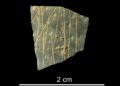
Juvenile Neanderthal tooth recovered from the Arbreda cave site. Credit: M. Lozano et al., American Journal of Biological Anthropology (2024). [This image is used under the CC BY-NC license for non-commercial and educational purposes. If you are the copyright holder and object to its use, please contact us for immediate removal.]
The team identified three teeth belonging to at least three Neanderthal individuals: an infant, a juvenile, and an adult. Two teeth, retrieved from Level N of the cave, are estimated to be over 120,000 years old, while the third, from Level J, dates to between 71,000 and 44,000 years ago. These findings mark two distinct periods of Neanderthal habitation at the site.

Advanced techniques such as microtomography (µCT) were used to generate detailed 3D models of the teeth, revealing features such as enamel thickness, the enamel-dentin junction (EDJ), and pulp cavity volume. Dr. Lozano said:

“The remains allow us to obtain more information about Neanderthals’ presence in Arbreda at different times, including a period close to their extinction when they may have coexisted with modern humans.”

Arbreda Cave has played a pivotal role in the study of the transition from the Middle to the Upper Paleolithic in Western Europe. First excavated in 1972, it contains cultural layers spanning from the Middle Paleolithic to the Neolithic. The site has yielded Mousterian tools, typically associated with Neanderthals, and evidence of long-term and seasonal occupations.


RelatedStories

60,000-year-old poison arrows from South Africa reveal the world’s earliest poisoned weapons and advanced hunting techniques

60,000-year-old poison arrows from South Africa reveal the world’s earliest poisoned weapons and advanced hunting techniques

January 8, 2026
Archaic humans were selective hunters, not mass slaughterers, new study reveals

Archaic humans were selective hunters, not mass slaughterers, new study reveals

December 6, 2025
Neanderthal remains discovered in Arbreda cave, Spain
Reconstruction of a Neanderthal family in the Anthropos Pavilion, Brno, Czech Republic. Credit: Jaroslav A. Polák, via Flickr

The earlier occupations, associated with Level N, reflect extended Neanderthal habitation, while Level J’s findings suggest shorter, seasonal stays. These patterns may indicate shifts in subsistence strategies and adaptation to environmental changes, as noted by Dr. Joaquim Soler of ICRPC-CERCA, a co-director of the excavations:

“Arbreda Cave is fundamental for understanding Neanderthal presence in Catalonia and their eventual replacement by modern humans. These findings show that their occupations here were much more prolonged than previously thought.”

The Iberian Peninsula hosts numerous sites with Mousterian levels, yet many yield only sparse human remains. The Arbreda findings contribute significantly to the paleoanthropological record, particularly regarding the lifestyles of late Neanderthals.

The researchers suggest that the Neanderthals at Arbreda adapted to climatic and environmental shifts, alternating between prolonged and short-term cave occupations. This adaptability might have played a role in their resilience, even as they approached extinction. The Level J premolar is especially noteworthy, representing a time when Neanderthals may have interacted with anatomically modern humans in the Iberian Peninsula.


IPHES-CERCA

More information: Lozano, M., Soler, J., López-Onaindia, D., Solés, A., Julià, R., Ceperuelo, D., … Soler, N. (2024). Middle Pleistocene teeth from Arbreda Cave (Serinyà, northeastern Iberian Peninsula). American Journal of Biological Anthropology, e25037. doi:10.1002/ajpa.25037
Share2Tweet1ShareShareSend

You May Also Like...

60,000-year-old poison arrows from South Africa reveal the world’s earliest poisoned weapons and advanced hunting techniques
Archaeology

60,000-year-old poison arrows from South Africa reveal the world’s earliest poisoned weapons and advanced hunting techniques

January 8, 2026
Inscribed clay cylinders reveal Nebuchadnezzar II’s restoration of the Kish Ziggurat
Archaeology

Inscribed clay cylinders reveal Nebuchadnezzar II’s restoration of the Kish Ziggurat

January 7, 2026
Rare Late Roman mosaic with Solomon’s Knot discovered beneath modern İzmir
Archaeology

Rare Late Roman mosaic with Solomon’s Knot discovered beneath modern İzmir

January 7, 2026
1130 depiction of Saxons, Jutes, and Angles crossing the sea to Britain. Credit: Wikimedia / CC BY-SA 4.0. Roots of medieval migration into England uncovered by large-scale bioarchaeological study
Anthropology

Roots of medieval migration into England uncovered by large-scale bioarchaeological study

January 6, 2026
Rare Celtic gold coins found in Swiss bog may reveal ancient ritual offerings
Archaeology

Rare Celtic gold coins found in Swiss bog may reveal ancient ritual offerings

January 5, 2026
Rare medieval gold ring unearthed in Tønsberg
Archaeology

Rare medieval gold ring unearthed in Tønsberg reveals beliefs and craftsmanship of its time

January 5, 2026

Follow us


Instagram
244K

Facebook
118K

Threads
45K

LinkedIn
14K

Twitter
6K

YouTube
1K
  • Trending
  • Comments
  • Latest
Shipwreck Salvage. Credit: rawpixel.com / Public Domain

2,000-year-old shipwreck discovered off Turkish coast with remarkably preserved stacked ceramics

July 2, 2025
Viking age DNA reveals 9,000-year-old HIV-resistant gene originating near the Black Sea

Viking age DNA reveals 9,000-year-old HIV-resistant gene originating near the Black Sea

May 18, 2025
A new study suggests the mysterious Voynich Manuscript may be a medieval cipher

A new study suggests the mysterious Voynich Manuscript may be a medieval cipher

January 3, 2026
Moses may be named in ancient Egyptian mine inscriptions, sparking debate over earliest biblical references

Moses may be named in ancient Egyptian mine inscriptions, sparking debate over earliest biblical references

July 31, 2025
Mystery of Armenia’s 6,000-year-old dragon stones solved

Mystery of Armenia’s 6,000-year-old dragon stones solved

September 23, 2025
3D analysis reveals Shroud of Turin image likely came from sculpture, not Jesus’ body

3D analysis reveals Shroud of Turin image likely came from sculpture, not Jesus’ body

Moses may be named in ancient Egyptian mine inscriptions, sparking debate over earliest biblical references

Moses may be named in ancient Egyptian mine inscriptions, sparking debate over earliest biblical references

$1 million prize offered to decipher 5,300-year-old Indus Valley script

$1 million prize offered to decipher 5,300-year-old Indus Valley script

Oldest ever genetic data from a human relative found in 2-million-year-old fossilized teeth

Oldest ever genetic data from a human relative found in 2-million-year-old fossilized teeth

Exceptionally large Roman shoes discovered at Magna fort near Hadrian’s Wall

Exceptionally large Roman shoes discovered at Magna fort near Hadrian’s Wall

60,000-year-old poison arrows from South Africa reveal the world’s earliest poisoned weapons and advanced hunting techniques

60,000-year-old poison arrows from South Africa reveal the world’s earliest poisoned weapons and advanced hunting techniques

January 8, 2026
Inscribed clay cylinders reveal Nebuchadnezzar II’s restoration of the Kish Ziggurat

Inscribed clay cylinders reveal Nebuchadnezzar II’s restoration of the Kish Ziggurat

January 7, 2026
Rare Late Roman mosaic with Solomon’s Knot discovered beneath modern İzmir

Rare Late Roman mosaic with Solomon’s Knot discovered beneath modern İzmir

January 7, 2026
1130 depiction of Saxons, Jutes, and Angles crossing the sea to Britain. Credit: Wikimedia / CC BY-SA 4.0. Roots of medieval migration into England uncovered by large-scale bioarchaeological study

Roots of medieval migration into England uncovered by large-scale bioarchaeological study

January 6, 2026
Rare Celtic gold coins found in Swiss bog may reveal ancient ritual offerings

Rare Celtic gold coins found in Swiss bog may reveal ancient ritual offerings

January 5, 2026

Archaeology News online magazine

Archaeology News is an international online magazine that covers all aspects of archaeology.


Categories

  • Academics
    • Books
    • Conferences
    • Universities
  • Articles
  • Download
  • Game
  • News
    • Anthropology
    • Archaeology
    • Paleontology
  • Quiz
  • Tours

Subscribe to our newsletter

© 2024 - Archaeology News Online Magazine. All Rights Reserved.

  • About
  • Privacy Policy
  • Terms of Use
  • Donation
  • Contact

Welcome Back!

Login to your account below

Forgotten Password? Sign Up

Create New Account!

Fill the forms below to register

All fields are required. Log In

Retrieve your password

Please enter your username or email address to reset your password.

Log In

Add New Playlist

Manage Consent
To provide the best experiences, we use technologies like cookies to store and/or access device information. Consenting to these technologies will allow us to process data such as browsing behavior or unique IDs on this site. Not consenting or withdrawing consent, may adversely affect certain features and functions.
Functional Always active
The technical storage or access is strictly necessary for the legitimate purpose of enabling the use of a specific service explicitly requested by the subscriber or user, or for the sole purpose of carrying out the transmission of a communication over an electronic communications network.
Preferences
The technical storage or access is necessary for the legitimate purpose of storing preferences that are not requested by the subscriber or user.
Statistics
The technical storage or access that is used exclusively for statistical purposes. The technical storage or access that is used exclusively for anonymous statistical purposes. Without a subpoena, voluntary compliance on the part of your Internet Service Provider, or additional records from a third party, information stored or retrieved for this purpose alone cannot usually be used to identify you.
Marketing
The technical storage or access is required to create user profiles to send advertising, or to track the user on a website or across several websites for similar marketing purposes.
  • Manage options
  • Manage services
  • Manage {vendor_count} vendors
  • Read more about these purposes
View preferences
  • {title}
  • {title}
  • {title}
  • Home
  • News
    • Archaeology
    • Anthropology
    • Paleontology
  • Academic
    • Books
    • Conferences
    • Universities
  • Articles
  • VR Tours
  • Quiz & Game
  • Download
  • Encyclopedia
  • Forum

About  .  Contact  .  Donation

© 2024 - Archaeology News Online Magazine. All Rights Reserved