• About
  • Privacy Policy
  • Terms of Use
  • Donation
  • Contact
No Result
View All Result
Archaeology News
  • Home
  • News
    • Archaeology
    • Anthropology
    • Paleontology
  • Academic
    • Books
    • Conferences
    • Universities
  • Articles
  • VR Tours
  • Quiz & Game
  • Download
  • Encyclopedia
  • Forum
Archaeology News
No Result
View All Result
Home News Anthropology

Neolithic Irish tombs were centers of community, not royalty, ancient DNA reveals

by Dario Radley
April 21, 2025

Recent research is rattling established theories about Ireland’s Neolithic tombs. What were once thought to be royal burial sites are now reported to be places where communities congregated, not dynasties.

Neolithic Irish tombs were centers of community, not royalty, ancient DNA reveals
Newgrange in County Meath, Ireland. Credit: Ron Cogswell (CC BY 2.0)

The study, published in the Cambridge Archaeological Journal, used ancient DNA from 55 individuals buried in large stone tombs across Ireland. The tombs, known as passage tombs, were built between 3900 and 2500 BCE, with the largest ones dating to after 3600 BCE. Famous sites like Newgrange, Knowth, and Dowth fall under this category.

While earlier theories claimed that the tombs were those of influential families, perhaps with inherited powers, new facts counter this. “We cannot say that these tombs were the final resting places of a dynastic lineage who restricted access to ‘burial’ within these tombs to their relatives,” the researchers wrote in the study.

Carlin and his team found that the majority of the people who were buried together were not close relatives. In many cases, individuals were distantly related — like sixth cousins. Some were not related genetically at all. This contradicts the 2020 hypothesis that a ruling elite had authority over burial rights. Instead, the researchers argue that these tombs reflected a broader idea of community.

Neolithic Irish tombs were centers of community, not royalty, ancient DNA reveals
A section of the passage leading towards the chamber of the Newgrange passage tomb in Ireland. Credit: O’Dea. (CC BY-SA 4.0)

These burials were more than just graves. They were gathering spots where people assembled to work, feast, and practice rituals. A number of the tombs had been used for many centuries. A majority of the bodies showed evidence of cremation, dismemberment, and other funerary practices. Such practices reveal sustained rituals and not simple burials.

RelatedStories

Rare deer skull headdress discovered in Germany highlights exchange between hunter-gatherers and Europe's first farmers

Rare deer skull headdress discovered in Germany highlights exchange between hunter-gatherers and Europe’s first farmers

February 7, 2026
Mysterious Medieval tunnel found inside 6,000 year old Neolithic ditch in Germany

Mysterious Medieval tunnel found inside 6,000 year old Neolithic ditch in Germany

January 31, 2026

The study revealed that “kinship” in Neolithic Ireland was not just about blood. It was about shared life. People formed relationships through work, ceremonies, and beliefs. Scholars call this phenomenon “kinwork” — creating family based on what people did together, not through who they were born to.
Neolithic Irish tombs were centers of community, not royalty, ancient DNA reveals
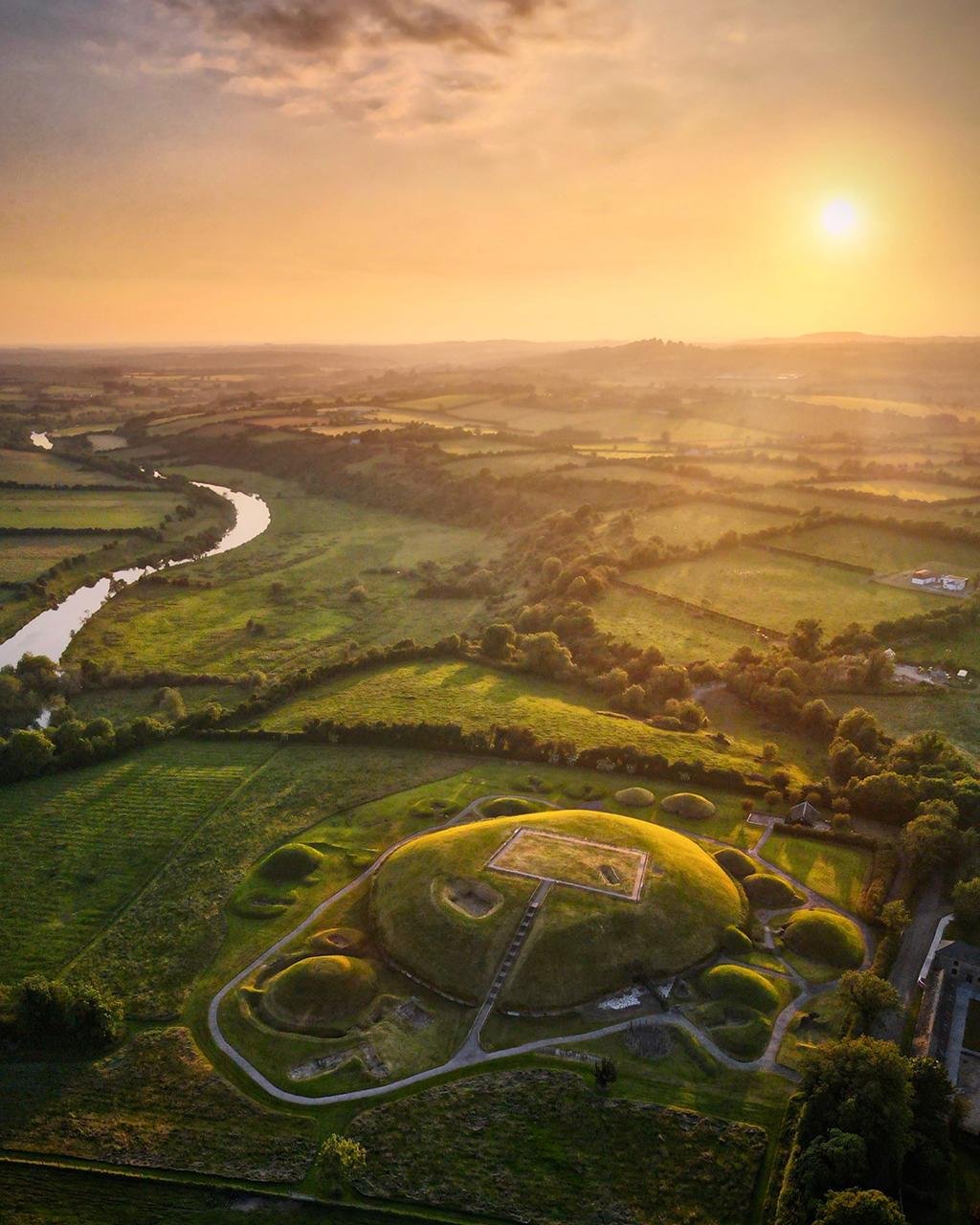
Knowth tomb overlooking the River Boyne in County Meath, Ireland. Credit: Markiemcg1, (CC BY-SA 4.0)

The change seems to have happened around 3600 BCE, following four centuries of simpler burials in small tombs. Some of the earlier sites did include closer relatives. But as the tombs grew larger and more complex, the people placed within them became more diverse. This shift suggests a social change — from small, close-knit groups to larger, connected groups.

The resources for building some tombs were drawn from more than 40 kilometers away. This suggests massive coordination, and maybe even the rise of shared cultural or religious systems over large areas of Ireland.
Neolithic Irish tombs were centers of community, not royalty, ancient DNA reveals
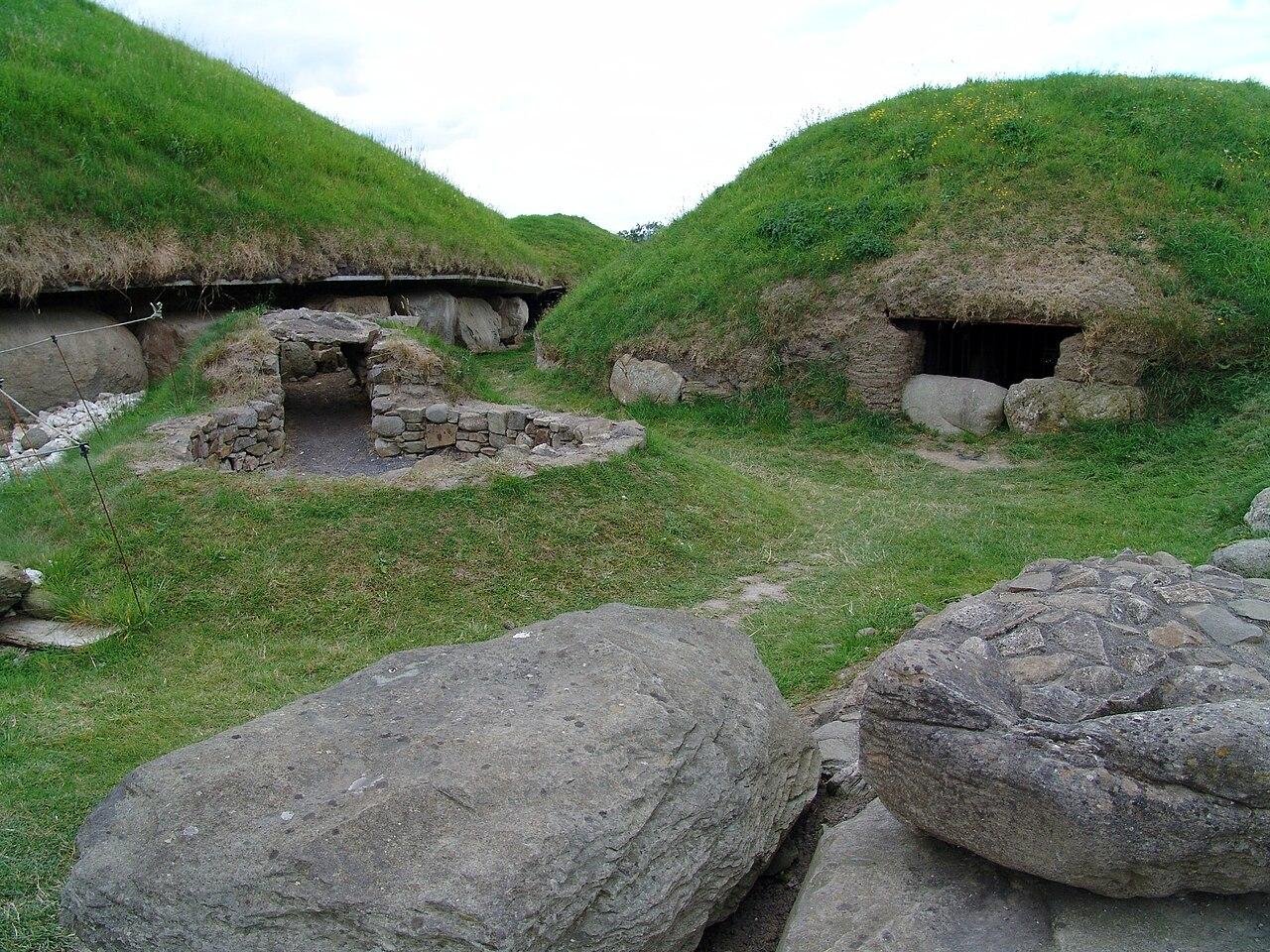
Knowth tombs. Credit: Dylan, (CC BY 2.0)

The research team — Carlin and scholars like Smyth, Frieman, and Hofmann — proclaim that such findings reshape our conception of the past. Rather than a world of dynasties and kings, Neolithic Ireland may have been a place of equality, ritual, and shared identity.

Still, much work remains. “We need more ancient DNA samples and deeper analysis of key sites,” the researchers wrote. This includes looking at bones, artifacts, architecture, and settlement patterns together. Only by combining these sources, they argue, can we truly understand the complex web of social life in prehistoric Ireland.

By excluding ideas solely based on genetics, the study urges archaeologists to see kinship as something more than biology. As Carlin described, “This was a more equal society.”
More information: Carlin N, Smyth J, Frieman CJ, et al. (2025). Social and Genetic Relations in Neolithic Ireland: Re-evaluating Kinship. Cambridge Archaeological Journal:1-21. doi:10.1017/S0959774325000058
Share7Tweet5Share1ShareSend

You May Also Like...

Rare deer skull headdress discovered in Germany highlights exchange between hunter-gatherers and Europe's first farmers
Archaeology

Rare deer skull headdress discovered in Germany highlights exchange between hunter-gatherers and Europe’s first farmers

February 7, 2026
Lost infant burial grounds in Ireland rediscovered through folklore and archaeology study
Anthropology

Lost infant burial grounds in Ireland rediscovered through folklore and archaeology study

February 7, 2026
Elephant bone found in Spain provides rare evidence of war elephants during the Punic Wars
Archaeology

Elephant bone found in Spain provides rare evidence of war elephants during the Punic Wars

February 7, 2026
Scents of ancient Egypt: tracing embalming recipes by analyzing air around mummies
Anthropology

Scents of ancient Egypt: tracing embalming recipes by analyzing air around mummies

February 6, 2026
New study reveals advanced lead pipeline system in Petra’s ancient aqueduct
Archaeology

New study reveals advanced lead pipeline system in Petra’s ancient aqueduct

February 6, 2026
Early human innovation in southern Africa tied to mobility and social networks rather than climate alone, new study shows
Archaeology

Early human innovation in southern Africa tied to mobility and social networks rather than climate alone, new study shows

February 6, 2026

Follow us


Instagram
244K

Facebook
118K

Threads
45K

LinkedIn
14K

Twitter
6K

YouTube
1K
  • Trending
  • Comments
  • Latest
Shipwreck Salvage. Credit: rawpixel.com / Public Domain

2,000-year-old shipwreck discovered off Turkish coast with remarkably preserved stacked ceramics

July 2, 2025
Viking age DNA reveals 9,000-year-old HIV-resistant gene originating near the Black Sea

Viking age DNA reveals 9,000-year-old HIV-resistant gene originating near the Black Sea

May 18, 2025
A new study suggests the mysterious Voynich Manuscript may be a medieval cipher

A new study suggests the mysterious Voynich Manuscript may be a medieval cipher

January 3, 2026
Moses may be named in ancient Egyptian mine inscriptions, sparking debate over earliest biblical references

Moses may be named in ancient Egyptian mine inscriptions, sparking debate over earliest biblical references

July 31, 2025
Mystery of Armenia’s 6,000-year-old dragon stones solved

Mystery of Armenia’s 6,000-year-old dragon stones solved

September 23, 2025
3D analysis reveals Shroud of Turin image likely came from sculpture, not Jesus’ body

3D analysis reveals Shroud of Turin image likely came from sculpture, not Jesus’ body

Moses may be named in ancient Egyptian mine inscriptions, sparking debate over earliest biblical references

Moses may be named in ancient Egyptian mine inscriptions, sparking debate over earliest biblical references

$1 million prize offered to decipher 5,300-year-old Indus Valley script

$1 million prize offered to decipher 5,300-year-old Indus Valley script

Oldest ever genetic data from a human relative found in 2-million-year-old fossilized teeth

Oldest ever genetic data from a human relative found in 2-million-year-old fossilized teeth

Exceptionally large Roman shoes discovered at Magna fort near Hadrian’s Wall

Exceptionally large Roman shoes discovered at Magna fort near Hadrian’s Wall

Rare deer skull headdress discovered in Germany highlights exchange between hunter-gatherers and Europe's first farmers

Rare deer skull headdress discovered in Germany highlights exchange between hunter-gatherers and Europe’s first farmers

February 7, 2026
Lost infant burial grounds in Ireland rediscovered through folklore and archaeology study

Lost infant burial grounds in Ireland rediscovered through folklore and archaeology study

February 7, 2026
Elephant bone found in Spain provides rare evidence of war elephants during the Punic Wars

Elephant bone found in Spain provides rare evidence of war elephants during the Punic Wars

February 7, 2026
Scents of ancient Egypt: tracing embalming recipes by analyzing air around mummies

Scents of ancient Egypt: tracing embalming recipes by analyzing air around mummies

February 6, 2026
New study reveals advanced lead pipeline system in Petra’s ancient aqueduct

New study reveals advanced lead pipeline system in Petra’s ancient aqueduct

February 6, 2026

Archaeology News online magazine

Archaeology News is an international online magazine that covers all aspects of archaeology.


Categories

  • Academics
    • Books
    • Conferences
    • Universities
  • Articles
  • Download
  • Game
  • News
    • Anthropology
    • Archaeology
    • Paleontology
  • Quiz
  • Tours

Subscribe to our newsletter

© 2024 - Archaeology News Online Magazine. All Rights Reserved.

  • About
  • Privacy Policy
  • Terms of Use
  • Donation
  • Contact

Welcome Back!

Login to your account below

Forgotten Password? Sign Up

Create New Account!

Fill the forms below to register

All fields are required. Log In

Retrieve your password

Please enter your username or email address to reset your password.

Log In

Add New Playlist

Manage Consent
To provide the best experiences, we use technologies like cookies to store and/or access device information. Consenting to these technologies will allow us to process data such as browsing behavior or unique IDs on this site. Not consenting or withdrawing consent, may adversely affect certain features and functions.
Functional Always active
The technical storage or access is strictly necessary for the legitimate purpose of enabling the use of a specific service explicitly requested by the subscriber or user, or for the sole purpose of carrying out the transmission of a communication over an electronic communications network.
Preferences
The technical storage or access is necessary for the legitimate purpose of storing preferences that are not requested by the subscriber or user.
Statistics
The technical storage or access that is used exclusively for statistical purposes. The technical storage or access that is used exclusively for anonymous statistical purposes. Without a subpoena, voluntary compliance on the part of your Internet Service Provider, or additional records from a third party, information stored or retrieved for this purpose alone cannot usually be used to identify you.
Marketing
The technical storage or access is required to create user profiles to send advertising, or to track the user on a website or across several websites for similar marketing purposes.
  • Manage options
  • Manage services
  • Manage {vendor_count} vendors
  • Read more about these purposes
View preferences
  • {title}
  • {title}
  • {title}
  • Home
  • News
    • Archaeology
    • Anthropology
    • Paleontology
  • Academic
    • Books
    • Conferences
    • Universities
  • Articles
  • VR Tours
  • Quiz & Game
  • Download
  • Encyclopedia
  • Forum

About  .  Contact  .  Donation

© 2024 - Archaeology News Online Magazine. All Rights Reserved