• About
  • Privacy Policy
  • Terms of Use
  • Donation
  • Contact
No Result
View All Result
Archaeology News
  • Home
  • News
    • Archaeology
    • Anthropology
    • Paleontology
  • Academic
    • Books
    • Conferences
    • Universities
  • Articles
  • VR Tours
  • Quiz & Game
  • Download
  • Encyclopedia
  • Forum
Archaeology News
No Result
View All Result
Home News Archaeology

Ancient secrets of Maya blue revealed: a second method for creating the iconic pigment discovered

by Sara Sader
May 6, 2025

An amazing new find is expanding our understanding of Maya Blue—one of the most enigmatic and enduring pigments of the ancient world. Dean E. Arnold, adjunct curator of anthropology at the Field Museum of Natural History in Chicago and professor emeritus at Wheaton College, has found a second ancient method of producing the pigment, gaining new insights into Maya technology, spirituality, and artistry.
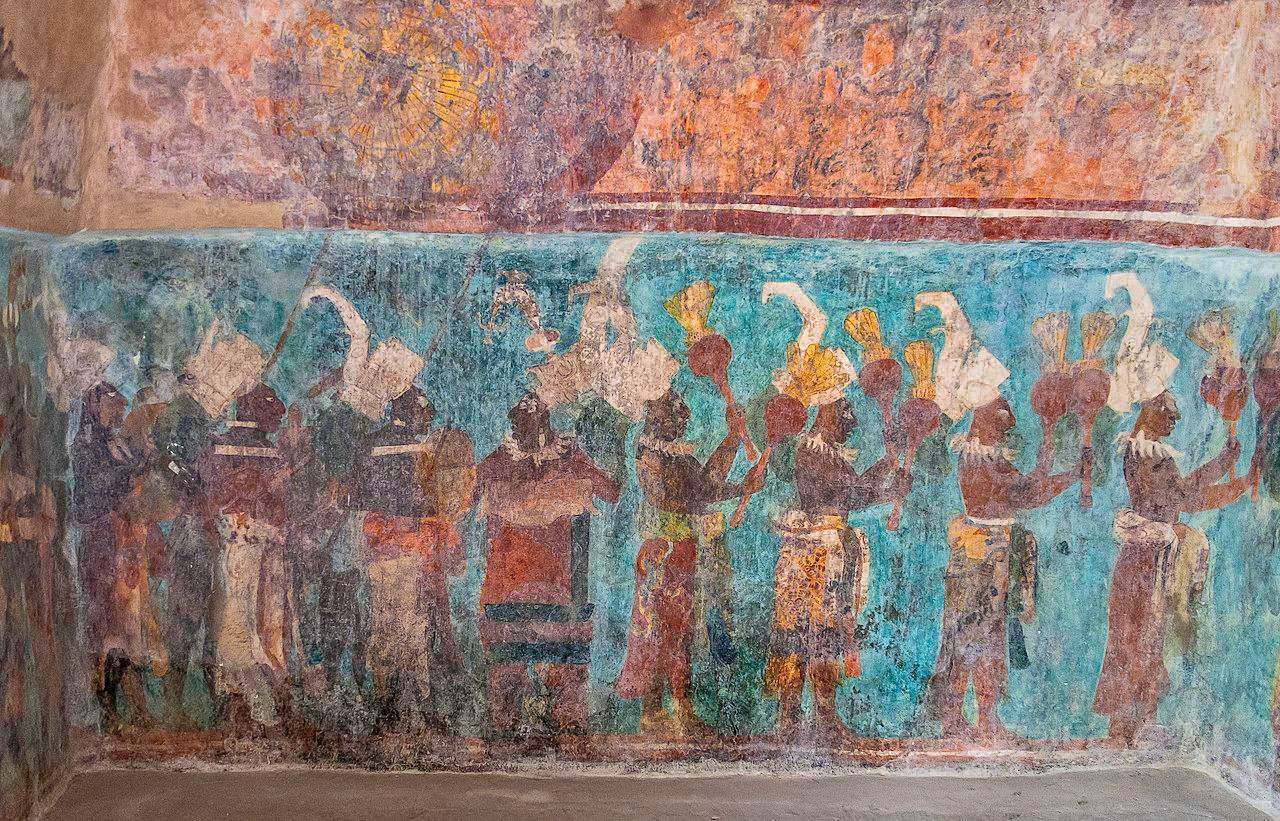
Ancient secrets of Maya blue revealed: a second method for creating the iconic pigment discovered
A mural in Bonampak, Mexico, features a background painted with Maya Blue. Credit: Ricardo David Sánchez, CC BY-SA 3.0

Initially identified by modern researchers in 1931 at Chichén Itzá, Maya Blue is an uncommon hybrid pigment made of organic indigo pigment and the inorganic clay mineral palygorskite. Its vivid color is often described as comparable to the Caribbean Sea or the bright blue sky over the Yucatán Peninsula. Unlike traditional indigo, which faded with age and exposure in old times, Maya Blue resists alkalines, acids, and even tropical humidity. Some of the samples remain stuck to stone carvings at Chichén Itzá today—unfaded after more than a thousand years of enduring hurricanes and jungle heat.

Scientists were stumped for decades on how to make Maya Blue exactly. In 2008, Arnold and his team proposed a breakthrough. Analyzing pigment remains on ceramics from one of Chichén Itzá’s wells, they discovered that the Maya artisans heated a mixture of indigo, palygorskite, and the ceremonial tree resin copal over fire. This process fused the elements together into a long-lasting blue pigment. The discovery, widely reported at the time, appeared to crack an enduring enigma that had taken decades.

Ancient secrets of Maya blue revealed: a second method for creating the iconic pigment discovered
A warrior with Azul Maya on the background. Credit: Constantino Reyes, Public domain

But now, Arnold has found yet another method the ancient Maya used to produce the pigment—without copal. At the annual meeting of the Society for American Archaeology in Denver on April 25, he presented findings from a detailed analysis of twelve bowls excavated at Chichén Itzá. Microscopically examined, the bowls were found to have been heated and to contain burnt plant stems and palygorskite residues. These residues, Arnold reports, show that Maya potters ground the clay mineral while it was wet and blended it with indigo, firing the combination from below—a technique entirely different from the previously known method.

“Consequently, the observations of these bowls provide evidence that the ancient Maya used this method as a second way to create Maya Blue,” Arnold said in his presentation.


RelatedStories

New study searches for hidden chambers inside El Castillo pyramid in Chichén Itzá

New study searches for hidden chambers inside El Castillo pyramid in Chichén Itzá

December 19, 2025
New study shows ear piercing was a key childhood rite in ancient Maya society

New study shows ear piercing was a key childhood rite in ancient Maya society

December 11, 2025

The new find provides an added layer to the rich cultural history of the pigment. Used at least as early as 300 BCE up until the colonial period, Maya Blue did more than decorate. It coated pots, murals, sculptures, and even humans in the case of human sacrifice, often in rituals dedicated to Chaak, the rain god of the Maya. Arnold suggested that, in sacrificial rituals, the bowls in which the pigment was kept could symbolize vessels of the god Chaak himself.
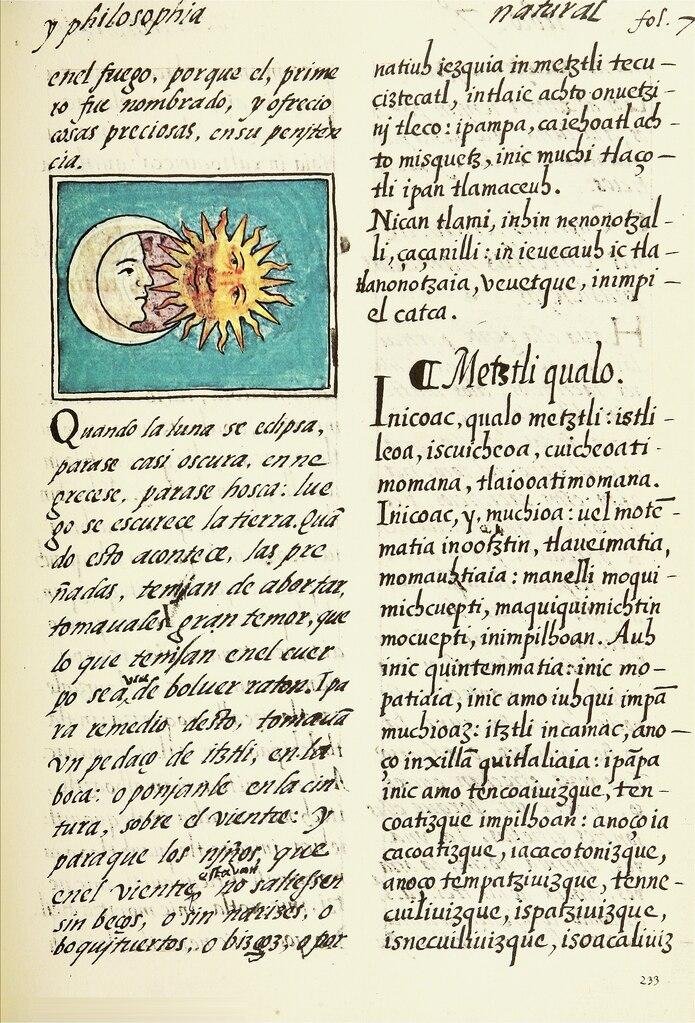
Ancient secrets of Maya blue revealed: a second method for creating the iconic pigment discovered
Maya blue used in the Florentine Codex fol. 227v. Credit: Gary Francisco Keller, artwork created under supervision of Bernardino de Sahagún between 1540 and 1585, CC BY 3.0

In his published book Maya Blue (University Press of Colorado, 2024), Arnold traces nearly a century of research on this pigment. He combines archaeological, chemical, ethnographic, and material science studies, while also weaving in personal anecdotes from his four decades of fieldwork. The book is being hailed as the most comprehensive account to date, presenting testable hypotheses about how Maya Blue was produced and how the technology spread across Mesoamerica.

Despite the advancements, the full story of Maya Blue remains untold. Arnold looks forward to further research to discover the specific plant used in the second method, extending centuries of attempts to identify the mystery behind this unusually enduring color of the ancient Maya.


Share18Tweet11Share3ShareSend

You May Also Like...

2,000-year-old human and animal footprints discovered at Lunan Bay, Scotland
Archaeology

2,000-year-old human and animal footprints discovered at Lunan Bay, Scotland

February 20, 2026
The “Princess” of Bagicz re-dated: tree rings resolve the mystery of a rare Roman-era log coffin
Anthropology

The “Princess” of Bagicz re-dated: tree rings resolve the mystery of a rare Roman-era log coffin

February 20, 2026
1.77-million-year-old Homo erectus skulls in China show early humans reached Asia sooner than believed
Anthropology

1.77-million-year-old Homo erectus skulls in China show early humans reached Asia sooner than believed

February 19, 2026
Hidden 17th-century bastion fort discovered in Świerże, eastern Poland
Archaeology

Hidden 17th-century bastion fort discovered in Świerże, eastern Poland

February 19, 2026
Seabird guano fueled the rise of Peru’s Chincha Kingdom, isotope study finds
Archaeology

Seabird guano fueled the rise of Peru’s Chincha Kingdom, isotope study finds

February 19, 2026
Historic cannon unearthed during Hull’s Queen’s Gardens restoration in the UK
Archaeology

Historic cannon unearthed during Hull’s Queen’s Gardens restoration in England

February 18, 2026

Follow us


Instagram
244K

Facebook
118K

Threads
45K

LinkedIn
14K

Twitter
6K

YouTube
1K
  • Trending
  • Comments
  • Latest
Shipwreck Salvage. Credit: rawpixel.com / Public Domain

2,000-year-old shipwreck discovered off Turkish coast with remarkably preserved stacked ceramics

July 2, 2025
Viking age DNA reveals 9,000-year-old HIV-resistant gene originating near the Black Sea

Viking age DNA reveals 9,000-year-old HIV-resistant gene originating near the Black Sea

May 18, 2025
A new study suggests the mysterious Voynich Manuscript may be a medieval cipher

A new study suggests the mysterious Voynich Manuscript may be a medieval cipher

January 3, 2026
Moses may be named in ancient Egyptian mine inscriptions, sparking debate over earliest biblical references

Moses may be named in ancient Egyptian mine inscriptions, sparking debate over earliest biblical references

July 31, 2025
Mystery of Armenia’s 6,000-year-old dragon stones solved

Mystery of Armenia’s 6,000-year-old dragon stones solved

September 23, 2025
3D analysis reveals Shroud of Turin image likely came from sculpture, not Jesus’ body

3D analysis reveals Shroud of Turin image likely came from sculpture, not Jesus’ body

Moses may be named in ancient Egyptian mine inscriptions, sparking debate over earliest biblical references

Moses may be named in ancient Egyptian mine inscriptions, sparking debate over earliest biblical references

$1 million prize offered to decipher 5,300-year-old Indus Valley script

$1 million prize offered to decipher 5,300-year-old Indus Valley script

Oldest ever genetic data from a human relative found in 2-million-year-old fossilized teeth

Oldest ever genetic data from a human relative found in 2-million-year-old fossilized teeth

Exceptionally large Roman shoes discovered at Magna fort near Hadrian’s Wall

Exceptionally large Roman shoes discovered at Magna fort near Hadrian’s Wall

2,000-year-old human and animal footprints discovered at Lunan Bay, Scotland

2,000-year-old human and animal footprints discovered at Lunan Bay, Scotland

February 20, 2026
The “Princess” of Bagicz re-dated: tree rings resolve the mystery of a rare Roman-era log coffin

The “Princess” of Bagicz re-dated: tree rings resolve the mystery of a rare Roman-era log coffin

February 20, 2026
1.77-million-year-old Homo erectus skulls in China show early humans reached Asia sooner than believed

1.77-million-year-old Homo erectus skulls in China show early humans reached Asia sooner than believed

February 19, 2026
Hidden 17th-century bastion fort discovered in Świerże, eastern Poland

Hidden 17th-century bastion fort discovered in Świerże, eastern Poland

February 19, 2026
Seabird guano fueled the rise of Peru’s Chincha Kingdom, isotope study finds

Seabird guano fueled the rise of Peru’s Chincha Kingdom, isotope study finds

February 19, 2026

Archaeology News online magazine

Archaeology News is an international online magazine that covers all aspects of archaeology.


Categories

  • Academics
    • Books
    • Conferences
    • Universities
  • Articles
  • Download
  • Game
  • News
    • Anthropology
    • Archaeology
    • Paleontology
  • Quiz
  • Tours

Subscribe to our newsletter

© 2024 - Archaeology News Online Magazine. All Rights Reserved.

  • About
  • Privacy Policy
  • Terms of Use
  • Donation
  • Contact

Manage Consent
To provide the best experiences, we use technologies like cookies to store and/or access device information. Consenting to these technologies will allow us to process data such as browsing behavior or unique IDs on this site. Not consenting or withdrawing consent, may adversely affect certain features and functions.
Functional Always active
The technical storage or access is strictly necessary for the legitimate purpose of enabling the use of a specific service explicitly requested by the subscriber or user, or for the sole purpose of carrying out the transmission of a communication over an electronic communications network.
Preferences
The technical storage or access is necessary for the legitimate purpose of storing preferences that are not requested by the subscriber or user.
Statistics
The technical storage or access that is used exclusively for statistical purposes. The technical storage or access that is used exclusively for anonymous statistical purposes. Without a subpoena, voluntary compliance on the part of your Internet Service Provider, or additional records from a third party, information stored or retrieved for this purpose alone cannot usually be used to identify you.
Marketing
The technical storage or access is required to create user profiles to send advertising, or to track the user on a website or across several websites for similar marketing purposes.
  • Manage options
  • Manage services
  • Manage {vendor_count} vendors
  • Read more about these purposes
View preferences
  • {title}
  • {title}
  • {title}
  • Home
  • News
    • Archaeology
    • Anthropology
    • Paleontology
  • Academic
    • Books
    • Conferences
    • Universities
  • Articles
  • VR Tours
  • Quiz & Game
  • Download
  • Encyclopedia
  • Forum

About  .  Contact  .  Donation

© 2024 - Archaeology News Online Magazine. All Rights Reserved