• About
  • Privacy Policy
  • Terms of Use
  • Donation
  • Contact
No Result
View All Result
Archaeology News
  • Home
  • News
    • Archaeology
    • Anthropology
    • Paleontology
  • Academic
    • Books
    • Conferences
    • Universities
  • Articles
  • VR Tours
  • Quiz & Game
  • Download
  • Encyclopedia
  • Forum
Archaeology News
No Result
View All Result
Home News Archaeology

Roman limekiln and settlement discovered in Barnwood reveal life and industry in ancient Gloucester

by Dario Radley
May 2, 2025

Archaeologists from Cotswold Archaeology revealed significant Roman artifacts at the Centre Severn development site in Barnwood, Gloucester, giving new insights into life and construction practices under Roman occupation in Britain. Excavations between September 2020 and February 2021 revealed the remains of a massive Roman settlement dating from the 2nd to 4th centuries CE, and a remarkably preserved limekiln—perhaps the first of its kind to be excavated in Gloucestershire.
Roman limekiln and settlement discovered in Barnwood reveal life and industry in ancient Gloucester
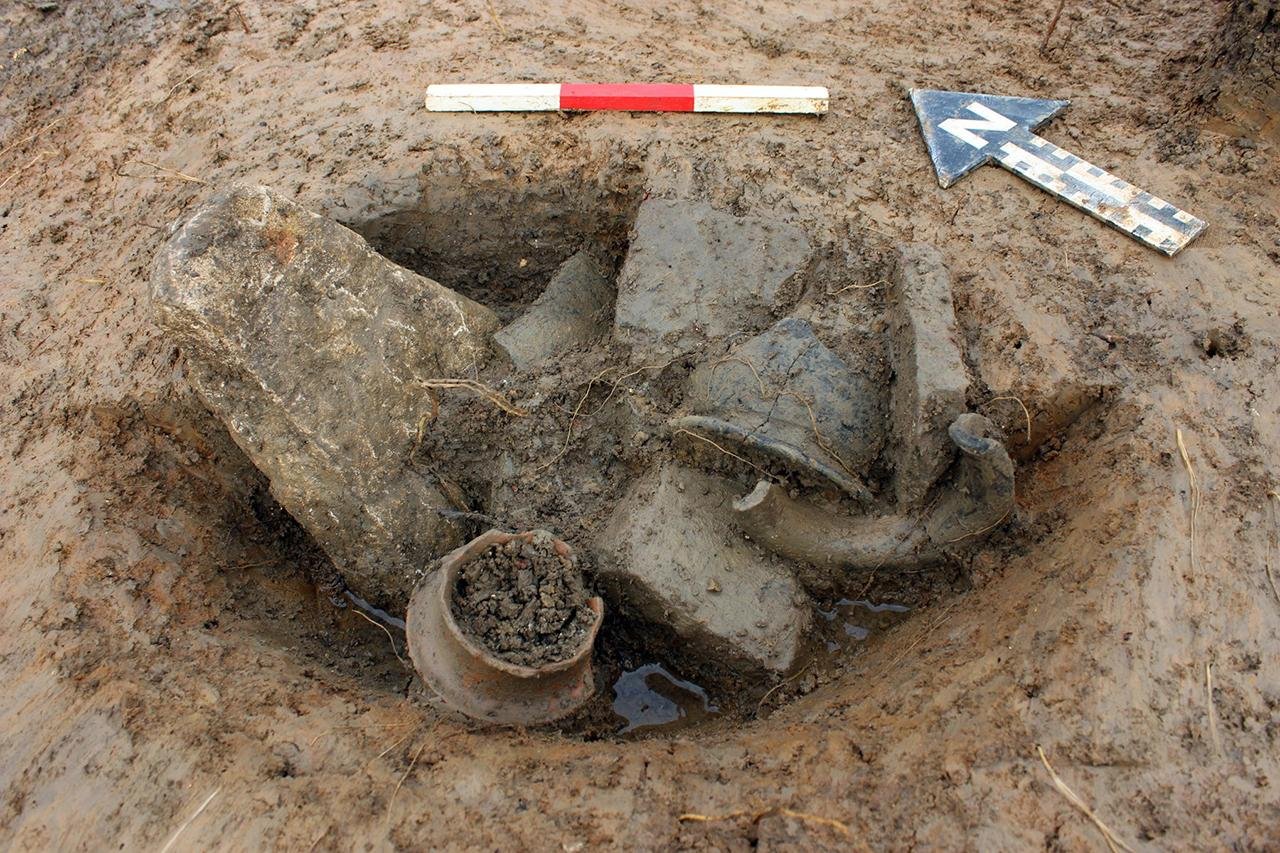
A deliberate dump of Roman pottery. Credit: Cotswold Archaeology

The site, along Horsbere Brook, a tributary of the River Severn, had long shown potential for archaeological finds. Preliminary geophysical surveys and trial trenches indicated buried features beneath the ground. Full excavation confirmed the theory, with field boundaries, enclosures, two Roman buildings, and even an adult woman’s grave, radiocarbon-dated to between CE 226 and CE 336. The grave was surprisingly sparse, containing nothing but hobnails—presumably from the footwear she was buried in.

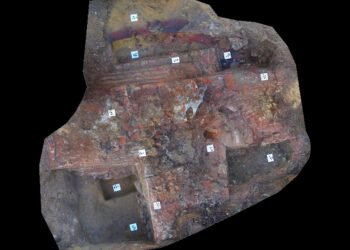
A focal point for the excavation is a huge Roman limekiln four meters in diameter and two meters tall. Made of blockstones mortared into the clay, it features a central ledge and a partition wall for improved airflow—features which were designed to improve the lime-burning process. Limekilns like this were used to produce quicklime, one of the critical ingredients in Roman construction materials like mortar, plaster, and concrete.

Roman limekiln and settlement discovered in Barnwood reveal life and industry in ancient Gloucester
Burial of a Roman woman aged 40–44 at the time of her death. Credit: Cotswold Archaeology

The kiln most likely had a brief operational period before it was abandoned in the 3rd century CE, according to Cotswold Archaeology. Later Roman use, including the cutting of a ditch through the northeast edge of the kiln, testifies to its disuse.

The close positioning of the kiln to the limestone-rich Cotswold Hills and the Forest of Dean, a known timber and coal source, highlights its importance. Experts believe that the quicklime produced here may have been used in building activities in the nearby Roman settlements, including Glevum (present-day Gloucester) and Corinium (present-day Cirencester), and perhaps even in a high-status building revealed only 20 meters from the site in the 1970s.

RelatedStories

Rare medieval seal from the UK bears 'Richard’s Secret' inscription and Roman-era gemstone

Rare medieval seal from the UK bears ‘Richard’s Secret’ inscription and Roman-era gemstone

February 1, 2026
1,900-year-old Roman unguentarium shows human feces used as medicine with thyme to mask smell

1,900-year-old Roman unguentarium shows human feces used as medicine with thyme to mask smell

January 29, 2026

Another intriguing find was a pit that contained a collection of pottery deliberately placed. According to Cotswold Archaeology, this was likely a form of “structured deposition”—a ritualistic or cultural practice of intentional object burial for religious or symbolic reasons.

Roman limekiln and settlement discovered in Barnwood reveal life and industry in ancient Gloucester
Roman limekiln during excavation. Credit: Cotswold Archaeology

Apart from its industrial significance, the excavation also reveals a rich picture of Roman life in the Severn Vale—an agricultural landscape dotted with farms and villas. The River Severn was a crucial artery of trade and travel, providing access to natural resources such as fish, birds, and thatch materials, while reclaimed lands were fertile grounds for agriculture and livestock.

The full results are detailed in a technical report and in a forthcoming article in the Transactions of the Bristol and Gloucestershire Archaeological Society, and will also soon be accessible on Cotswold Archaeology’s Reports Online website.

More information: Cotswold Archaeology

Share2Tweet1ShareShareSend

You May Also Like...

Scents of ancient Egypt: tracing embalming recipes by analyzing air around mummies
Anthropology

Scents of ancient Egypt: tracing embalming recipes by analyzing air around mummies

February 6, 2026
New study reveals advanced lead pipeline system in Petra’s ancient aqueduct
Archaeology

New study reveals advanced lead pipeline system in Petra’s ancient aqueduct

February 6, 2026
Early human innovation in southern Africa tied to mobility and social networks rather than climate alone, new study shows
Archaeology

Early human innovation in southern Africa tied to mobility and social networks rather than climate alone, new study shows

February 6, 2026
LiDAR mapping reveals over 630,000 historic charcoal kiln sites across Poland’s forests
Archaeology

LiDAR mapping reveals over 630,000 historic charcoal kiln sites across Poland’s forests

February 5, 2026
CT scans of ancient Egyptian mummies reveal lifespans, health, and daily life of priests
Anthropology

CT scans of ancient Egyptian mummies reveal lifespans, health, and daily life of priests

February 4, 2026
14,000-year-old Alaska campsite helps trace how the first people arrived in North America
Archaeology

14,000-year-old Alaska campsite helps trace how the first people arrived in North America

February 4, 2026

Follow us


Instagram
244K

Facebook
118K

Threads
45K

LinkedIn
14K

Twitter
6K

YouTube
1K
  • Trending
  • Comments
  • Latest
Shipwreck Salvage. Credit: rawpixel.com / Public Domain

2,000-year-old shipwreck discovered off Turkish coast with remarkably preserved stacked ceramics

July 2, 2025
Viking age DNA reveals 9,000-year-old HIV-resistant gene originating near the Black Sea

Viking age DNA reveals 9,000-year-old HIV-resistant gene originating near the Black Sea

May 18, 2025
A new study suggests the mysterious Voynich Manuscript may be a medieval cipher

A new study suggests the mysterious Voynich Manuscript may be a medieval cipher

January 3, 2026
Moses may be named in ancient Egyptian mine inscriptions, sparking debate over earliest biblical references

Moses may be named in ancient Egyptian mine inscriptions, sparking debate over earliest biblical references

July 31, 2025
Mystery of Armenia’s 6,000-year-old dragon stones solved

Mystery of Armenia’s 6,000-year-old dragon stones solved

September 23, 2025
3D analysis reveals Shroud of Turin image likely came from sculpture, not Jesus’ body

3D analysis reveals Shroud of Turin image likely came from sculpture, not Jesus’ body

Moses may be named in ancient Egyptian mine inscriptions, sparking debate over earliest biblical references

Moses may be named in ancient Egyptian mine inscriptions, sparking debate over earliest biblical references

$1 million prize offered to decipher 5,300-year-old Indus Valley script

$1 million prize offered to decipher 5,300-year-old Indus Valley script

Oldest ever genetic data from a human relative found in 2-million-year-old fossilized teeth

Oldest ever genetic data from a human relative found in 2-million-year-old fossilized teeth

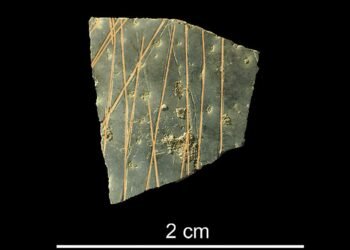
Exceptionally large Roman shoes discovered at Magna fort near Hadrian’s Wall

Exceptionally large Roman shoes discovered at Magna fort near Hadrian’s Wall

Scents of ancient Egypt: tracing embalming recipes by analyzing air around mummies

Scents of ancient Egypt: tracing embalming recipes by analyzing air around mummies

February 6, 2026
New study reveals advanced lead pipeline system in Petra’s ancient aqueduct

New study reveals advanced lead pipeline system in Petra’s ancient aqueduct

February 6, 2026
Early human innovation in southern Africa tied to mobility and social networks rather than climate alone, new study shows

Early human innovation in southern Africa tied to mobility and social networks rather than climate alone, new study shows

February 6, 2026
LiDAR mapping reveals over 630,000 historic charcoal kiln sites across Poland’s forests

LiDAR mapping reveals over 630,000 historic charcoal kiln sites across Poland’s forests

February 5, 2026
CT scans of ancient Egyptian mummies reveal lifespans, health, and daily life of priests

CT scans of ancient Egyptian mummies reveal lifespans, health, and daily life of priests

February 4, 2026

Archaeology News online magazine

Archaeology News is an international online magazine that covers all aspects of archaeology.


Categories

  • Academics
    • Books
    • Conferences
    • Universities
  • Articles
  • Download
  • Game
  • News
    • Anthropology
    • Archaeology
    • Paleontology
  • Quiz
  • Tours

Subscribe to our newsletter

© 2024 - Archaeology News Online Magazine. All Rights Reserved.

  • About
  • Privacy Policy
  • Terms of Use
  • Donation
  • Contact

Welcome Back!

Login to your account below

Forgotten Password? Sign Up

Create New Account!

Fill the forms below to register

All fields are required. Log In

Retrieve your password

Please enter your username or email address to reset your password.

Log In

Add New Playlist

Manage Consent
To provide the best experiences, we use technologies like cookies to store and/or access device information. Consenting to these technologies will allow us to process data such as browsing behavior or unique IDs on this site. Not consenting or withdrawing consent, may adversely affect certain features and functions.
Functional Always active
The technical storage or access is strictly necessary for the legitimate purpose of enabling the use of a specific service explicitly requested by the subscriber or user, or for the sole purpose of carrying out the transmission of a communication over an electronic communications network.
Preferences
The technical storage or access is necessary for the legitimate purpose of storing preferences that are not requested by the subscriber or user.
Statistics
The technical storage or access that is used exclusively for statistical purposes. The technical storage or access that is used exclusively for anonymous statistical purposes. Without a subpoena, voluntary compliance on the part of your Internet Service Provider, or additional records from a third party, information stored or retrieved for this purpose alone cannot usually be used to identify you.
Marketing
The technical storage or access is required to create user profiles to send advertising, or to track the user on a website or across several websites for similar marketing purposes.
  • Manage options
  • Manage services
  • Manage {vendor_count} vendors
  • Read more about these purposes
View preferences
  • {title}
  • {title}
  • {title}
  • Home
  • News
    • Archaeology
    • Anthropology
    • Paleontology
  • Academic
    • Books
    • Conferences
    • Universities
  • Articles
  • VR Tours
  • Quiz & Game
  • Download
  • Encyclopedia
  • Forum

About  .  Contact  .  Donation

© 2024 - Archaeology News Online Magazine. All Rights Reserved