• About
  • Privacy Policy
  • Terms of Use
  • Donation
  • Contact
No Result
View All Result
Archaeology News
  • Home
  • News
    • Archaeology
    • Anthropology
    • Paleontology
  • Academic
    • Books
    • Conferences
    • Universities
  • Articles
  • VR Tours
  • Quiz & Game
  • Download
  • Encyclopedia
  • Forum
Archaeology News
No Result
View All Result
Home News Archaeology

Eldest sons held the power in ancient Egypt, new research reveals

by Dario Radley
June 16, 2025

People used to think for a long time that family life in ancient Egypt was just very similar to a modern Western family: parents, children, and grandchildren living independently and forming new households. But recent research paints a more complex picture.
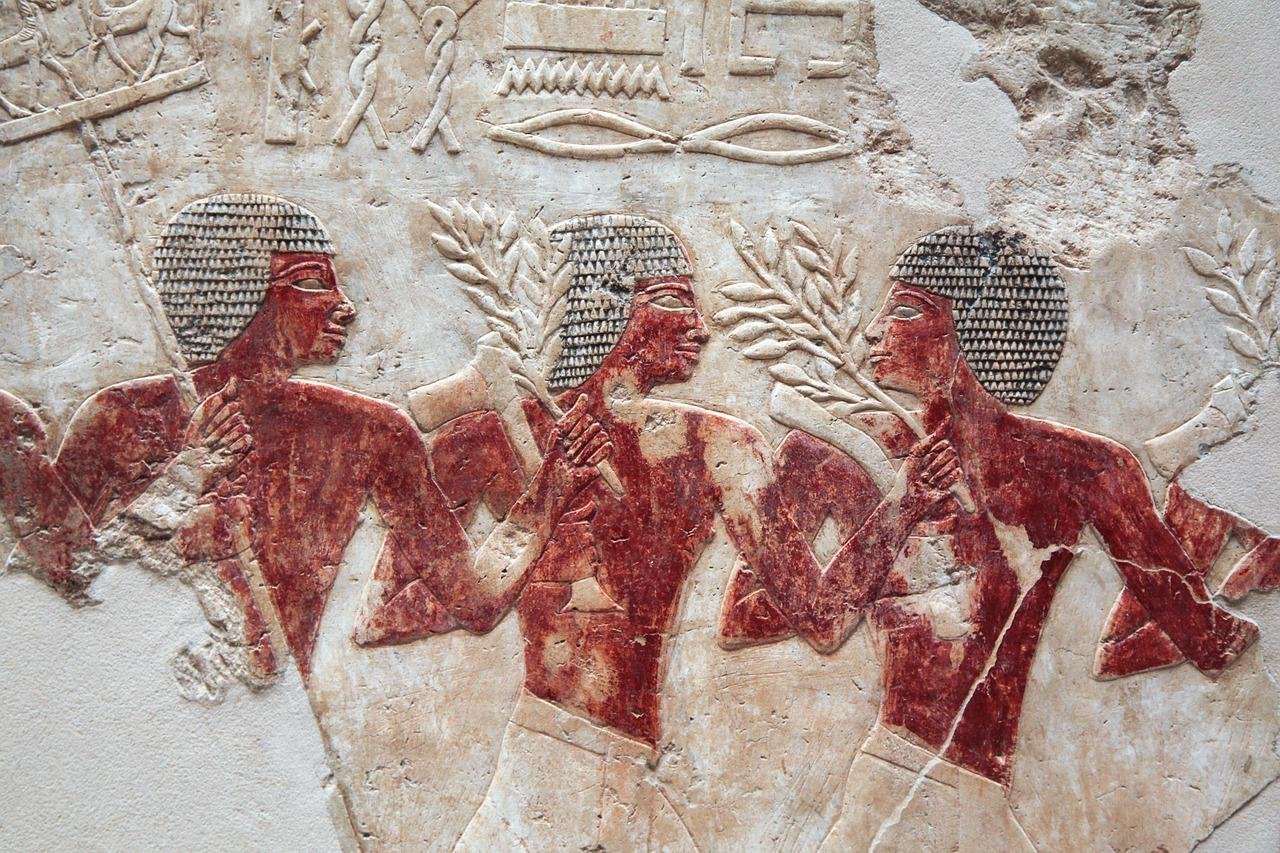
Eldest sons held the power in ancient Egypt, new research reveals
A group of men standing next to each other on a wall. Pixabay

Steffie van Gompel, a Ph.D. candidate in Egyptology, has been researching ancient Egyptian marriage contracts for years. They reveal to us far more than the financial agreements between the two partners, shedding light on how Egyptian families were structured and presenting a different picture of the status of women in that society.

It is true that ancient Egyptian women did enjoy rights that differentiated them from women in nations like ancient Greece. They could own property, and their marriages came with contracts outlining financial arrangements. Popular culture has tended to use these observations to portray ancient Egyptian women as early feminists, independent and progressive.

But van Gompel insists this is a misleading simplification. Ownership of property is just part of the story about a woman’s place. You need to look at the family system, and more specifically, inheritance patterns and household organization.
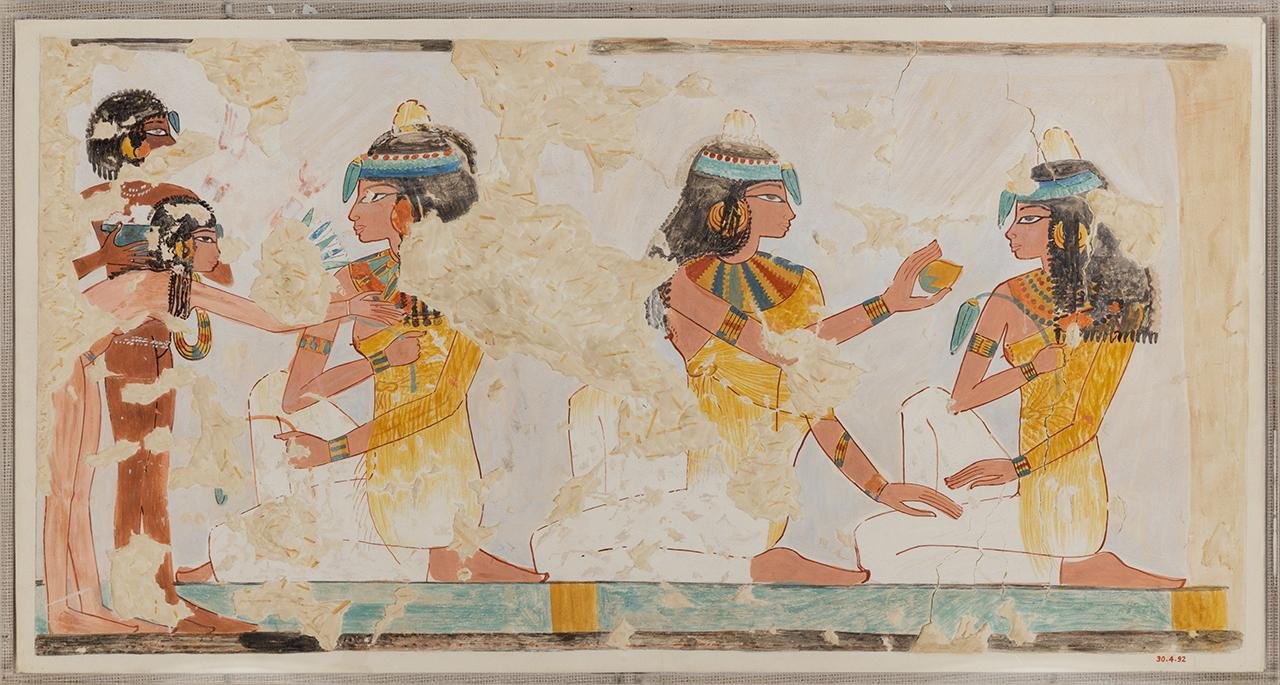
Eldest sons held the power in ancient Egypt, new research reveals
Women at a Banquet, by Nina de Garis Davies (1881–1965); original New Kingdom (ca. 1400–1390 BCE). Metropolitan Museum of Art

Her research combined classic Egyptology—the translation of ancient texts—with the tools of historical demography. By comparing Egyptian family models with non-Egyptian types from other cultures and historical periods, she uncovered something surprising: the Egyptians likely had a clan-based family structure, rather than the nuclear model we usually imagine.

RelatedStories

Old Kingdom tombs with 160 pottery vessels discovered at Qubbet el Hawa, Egypt

Old Kingdom tombs with 160 pottery vessels discovered at Qubbet el Hawa, Egypt

February 24, 2026
3D metrological analysis connects dispersed Egyptian artifacts and recovers their lost histories

3D metrological analysis connects dispersed Egyptian artifacts and recovers their lost histories

February 17, 2026

In this system, the majority of children eventually moved out, but one usually stayed behind. Ideally, it was the eldest son. He would continue the family household, often with his wife, living with his parents. Therefore, many Egyptian households included at least three generations together, at least on a temporary basis.

This concentrated power in the hands of older male family members. Fathers, and later eldest sons, tended to control not only property but also the decisions about who their children could marry. Family property remained in the hands of these male household heads, even after marriage.

It’s not difficult to see why van Gompel describes ancient Egypt as “quite literally a patriarchy.”

But this system also created internal competition—not necessarily between women, but among siblings. The firstborn son was often set against the rest of the family. Quirky as it seems, this competition had the effect of protecting daughters from being sidelined purely because of being female. Where there was no eldest son, daughters could be chosen to carry on the family legacy, sometimes even in preference to nephews.

Thus, while women in ancient Egypt were not entirely without agency, their situation was shaped more by family politics than by any form of early feminism. They could inherit property, sometimes control households, and sometimes play central family roles. But they remained within an extremely patriarchal framework.

The image of ancient Egyptian women as feminist icons doesn’t fully hold up under this new scrutiny. As van Gompel admits, “I’m afraid I’ve overturned that cherished notion.”

More information: Leiden University

Share185Tweet116Share32ShareSend

You May Also Like...

Lost medieval hillfort discovered in Poland’s Włodawa Forest reveals 244 artifacts from the 10th–13th centuries
Archaeology

Medieval hillfort discovered in Poland’s Włodawa Forest reveals 244 artifacts from the 10th–13th centuries

February 27, 2026
Male Neanderthals and female Homo sapiens shaped ancient interbreeding in the modern human genome, study finds
Anthropology

Male Neanderthals and female humans shaped modern DNA through ancient interbreeding, study finds

February 27, 2026
Medieval monastery remains discovered beneath Borken’s historic center in Germany
Archaeology

Medieval monastery remains discovered beneath Borken’s historic center in Germany

February 26, 2026
How ancient communities adapted their diets and farming strategies in prehistoric Poland
Anthropology

How ancient communities adapted their diets and farming strategies in prehistoric Poland

February 26, 2026
60,000-year-old ostrich eggshell engravings reveal humanity’s earliest geometric designs
Archaeology

60,000-year-old ostrich eggshell engravings reveal humanity’s earliest geometric designs

February 26, 2026
Mesolithic burials in Sweden show ancient fur and feather headgear uncovered by new microscopic analysis
Anthropology

Mesolithic burials in Sweden show ancient fur and feather headgear uncovered by new microscopic analysis

February 25, 2026

Comments 2

  1. Editorial Team says:
    1 second ago

    Disclaimer: This website is a science-focused magazine that welcomes both academic and non-academic audiences. Comments are written by users and may include personal opinions or unverified claims. They do not necessarily reflect the views of our editorial team or rely on scientific evidence.

    Comment Policy: We kindly ask all commenters to engage respectfully. Comments that contain offensive, insulting, degrading, discriminatory, or racist content will be automatically removed.

  2. JOSEPH MAXWELL says:
    9 months ago

    Makes a change there sticking with the original
    Painting on the wall

  3. Nakima littlejohn says:
    9 months ago

    I study things like this almost always i do understand the different contracts between different families i have yet to really find in my existence but im close me and my boyfriend think that we are to be together through a contract

Follow us


Instagram
244K

Facebook
118K

Threads
46K

LinkedIn
14K

Twitter
6K

YouTube
1K
  • Trending
  • Comments
  • Latest
Shipwreck Salvage. Credit: rawpixel.com / Public Domain

2,000-year-old shipwreck discovered off Turkish coast with remarkably preserved stacked ceramics

July 2, 2025
Viking age DNA reveals 9,000-year-old HIV-resistant gene originating near the Black Sea

Viking age DNA reveals 9,000-year-old HIV-resistant gene originating near the Black Sea

May 18, 2025
A new study suggests the mysterious Voynich Manuscript may be a medieval cipher

A new study suggests the mysterious Voynich Manuscript may be a medieval cipher

January 3, 2026
Moses may be named in ancient Egyptian mine inscriptions, sparking debate over earliest biblical references

Moses may be named in ancient Egyptian mine inscriptions, sparking debate over earliest biblical references

July 31, 2025
Mystery of Armenia’s 6,000-year-old dragon stones solved

Mystery of Armenia’s 6,000-year-old dragon stones solved

September 23, 2025
3D analysis reveals Shroud of Turin image likely came from sculpture, not Jesus’ body

3D analysis reveals Shroud of Turin image likely came from sculpture, not Jesus’ body

Moses may be named in ancient Egyptian mine inscriptions, sparking debate over earliest biblical references

Moses may be named in ancient Egyptian mine inscriptions, sparking debate over earliest biblical references

$1 million prize offered to decipher 5,300-year-old Indus Valley script

$1 million prize offered to decipher 5,300-year-old Indus Valley script

Oldest ever genetic data from a human relative found in 2-million-year-old fossilized teeth

Oldest ever genetic data from a human relative found in 2-million-year-old fossilized teeth

Exceptionally large Roman shoes discovered at Magna fort near Hadrian’s Wall

Exceptionally large Roman shoes discovered at Magna fort near Hadrian’s Wall

Lost medieval hillfort discovered in Poland’s Włodawa Forest reveals 244 artifacts from the 10th–13th centuries

Medieval hillfort discovered in Poland’s Włodawa Forest reveals 244 artifacts from the 10th–13th centuries

February 27, 2026
Male Neanderthals and female Homo sapiens shaped ancient interbreeding in the modern human genome, study finds

Male Neanderthals and female humans shaped modern DNA through ancient interbreeding, study finds

February 27, 2026
Medieval monastery remains discovered beneath Borken’s historic center in Germany

Medieval monastery remains discovered beneath Borken’s historic center in Germany

February 26, 2026
How ancient communities adapted their diets and farming strategies in prehistoric Poland

How ancient communities adapted their diets and farming strategies in prehistoric Poland

February 26, 2026
60,000-year-old ostrich eggshell engravings reveal humanity’s earliest geometric designs

60,000-year-old ostrich eggshell engravings reveal humanity’s earliest geometric designs

February 26, 2026

Archaeology News online magazine

Archaeology News is an international online magazine that covers all aspects of archaeology.


Categories

  • Academics
    • Books
    • Conferences
    • Universities
  • Articles
  • Download
  • Game
  • News
    • Anthropology
    • Archaeology
    • Paleontology
  • Quiz
  • Tours

Subscribe to our newsletter

© 2024 - Archaeology News Online Magazine. All Rights Reserved.

  • About
  • Privacy Policy
  • Terms of Use
  • Donation
  • Contact

Manage Consent
To provide the best experiences, we use technologies like cookies to store and/or access device information. Consenting to these technologies will allow us to process data such as browsing behavior or unique IDs on this site. Not consenting or withdrawing consent, may adversely affect certain features and functions.
Functional Always active
The technical storage or access is strictly necessary for the legitimate purpose of enabling the use of a specific service explicitly requested by the subscriber or user, or for the sole purpose of carrying out the transmission of a communication over an electronic communications network.
Preferences
The technical storage or access is necessary for the legitimate purpose of storing preferences that are not requested by the subscriber or user.
Statistics
The technical storage or access that is used exclusively for statistical purposes. The technical storage or access that is used exclusively for anonymous statistical purposes. Without a subpoena, voluntary compliance on the part of your Internet Service Provider, or additional records from a third party, information stored or retrieved for this purpose alone cannot usually be used to identify you.
Marketing
The technical storage or access is required to create user profiles to send advertising, or to track the user on a website or across several websites for similar marketing purposes.
  • Manage options
  • Manage services
  • Manage {vendor_count} vendors
  • Read more about these purposes
View preferences
  • {title}
  • {title}
  • {title}
  • Home
  • News
    • Archaeology
    • Anthropology
    • Paleontology
  • Academic
    • Books
    • Conferences
    • Universities
  • Articles
  • VR Tours
  • Quiz & Game
  • Download
  • Encyclopedia
  • Forum

About  .  Contact  .  Donation

© 2024 - Archaeology News Online Magazine. All Rights Reserved