
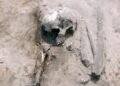
Some years ago, when a team from Eurac Research explored the warehouses of the National Archaeological Museum of La Paz, Bolivia, they discovered more than 50 mummies and over 500 pre-Columbian skulls. Even though they were stored with utmost care, these items were not only exposed to fungi and bacteria but also posed a problem that not only exists in resource-limited countries but is also present in Italy, where the large number of heritage objects makes it difficult to preserve them.

In response to such challenges, Eurac Research and collaborators created the Conservation Soft Box (CSB), an inexpensive and novel solution for conserving organic cultural heritage. The project was recently presented in the Journal of Cultural Heritage and at the 11th World Congress of Mummy Studies in Cuzco, Peru.
The CSB is a tubular-supported plastic casing that is extremely flexible, forming an airtight environment around an artifact. The environment within is carefully regulated: activated carbon filters eliminate harmful gases, and silica gel bags control humidity at ideal levels. Such features stabilize fragile materials like mummies, wood, textiles, and paper for a long time with little maintenance.
Marco Samadelli, project coordinator and Eurac Research conservation specialist, described the project: “I evaluated many materials before finding the most chemically stable ones. The result guarantees the same level of protection as the most sophisticated and expensive display cases. It has enormous potential for the conservation of mummies and other remains.”

What makes the CSB stand out is its cost. While normal airtight glass cases can cost thousands of dollars, a CSB can be built for a few hundred. “Imagine what this could mean for countries with rich cultural heritage but limited resources,” Samadelli said in a statement. By using a Conservation Soft Box, researchers have the chance to protect and study their collections safely.
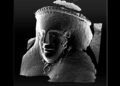
Besides preservation, the system also supports research. Since it avoids external contamination, it allows experts to study the volatile organic compounds (VOCs) emitted naturally by objects. Such studies may reveal information about embalming resins used in Egyptian mummification or identify compounds generated through microbial activity.

The study published in the Journal of Cultural Heritage confirmed the airtightness and chemical safety of the CSB. The materials used in the CSB released VOCs at very low levels, and the activated carbon inserts completely removed residual pollutants. Researchers stated that due to its versatility, it is a suitable option for transport, conservation treatments such as anoxic disinfestation, and even radiographic imaging since the box contains no metal parts.
Significantly, the CSB can be quickly assembled with easily available materials and, therefore, is suitable for fieldwork. Field stabilization of archaeological artifacts helps preserve them before deterioration occurs and ensures secure transportation for analysis.
In the future, Samadelli and his team would like to offer the system worldwide. “We are thinking of workshops for conservators around the world to teach them how to build their own Conservation Soft Boxes and contribute to improving the conservation of the most vulnerable cultural heritage,” he said.








Disclaimer: This website is a science-focused magazine that welcomes both academic and non-academic audiences. Comments are written by users and may include personal opinions or unverified claims. They do not necessarily reflect the views of our editorial team or rely on scientific evidence.
Comment Policy: We kindly ask all commenters to engage respectfully. Comments that contain offensive, insulting, degrading, discriminatory, or racist content will be automatically removed.