
A new archaeological excavation has revealed Church N1 at Marea, or Philoxenite, a richly preserved example of Late Antique ecclesiastical architecture on the southern shore of Lake Mareotis in northern Egypt.

The discovery, published in Antiquity, is the result of 2021–2024 excavations by archaeologists from the University of Warsaw’s Faculty of Archaeology and the Polish Centre of Mediterranean Archaeology. The findings provide new knowledge on pilgrimage infrastructure, construction methods, and Christian ritual spaces during the reign of Emperor Justinian I (CE 527–565).
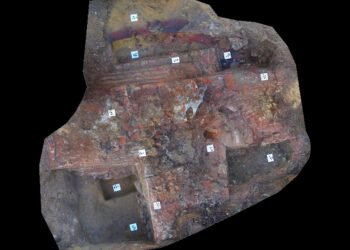
Philoxenite was a pilgrimage station along the route to the shrine of St Menas at Abu Mena, about 17 km to the south. N1 is located about 250 m from the town’s main square and, in its main phase, was an L-shaped church measuring approximately 9.6 × 27.23 m. Earlier phases of building are evident below the main plan.
The foundations consist of a series of ashlar limestone blocks with a deliberate offset in the upper courses; the walls are dressed limestone bonded by lime mortar and covered with ash plaster. Semi-circular buttresses supported the corners externally. Stone pavements predominate, and some areas contain opus sectile inlays. In one chamber, stone slabs at a ninety-degree rotation suggest a specific orientation or function. Mortar analysis shows lime, sand, and gravel with burnt organic inclusions; interior and exterior faces were plastered.

The plan includes a number of annexes, notably a baptistery (Room 4), and additional rooms added or altered during later phases. Stratigraphy indicates deliberate site preparation: thick layers of clay and broken pottery were laid down before the foundations—presumably to stabilize the ground and mitigate seasonal inundation.
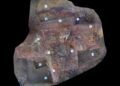
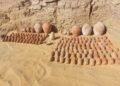
The fine masonry, careful raising of foundations, and decorated flooring attest to great investment in appearance and durability. Being a node on the pilgrimage cycle of Abu Mena, Church N1 demonstrates how smaller settlements supported pilgrims with spaces for prayer, baptism, and possibly lodgings or assembly. The number of rooms suggests liturgical and communal complexity greater than that of a single worship hall.
There are some important questions left unanswered: the precise functions of auxiliary rooms (sacristy, meeting room, pilgrims’ lodging?), the interpretation of the rotated paving, and how the church’s decorative program compares with nearby sites around Lake Mareotis and Abu Mena. More excavation, conservation, and comparative studies will be required to answer these questions.
Church N1 provides precise architectural evidence for Late Antique building practice in a provincial Egyptian context and sharpens understanding regarding how Christian ritual life and pilgrimage logistics were manifested under Justinian.


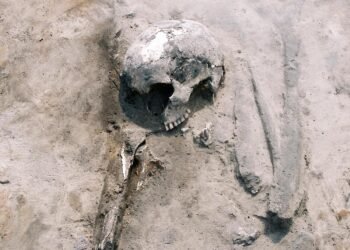












Disclaimer: This website is a science-focused magazine that welcomes both academic and non-academic audiences. Comments are written by users and may include personal opinions or unverified claims. They do not necessarily reflect the views of our editorial team or rely on scientific evidence.
Comment Policy: We kindly ask all commenters to engage respectfully. Comments that contain offensive, insulting, degrading, discriminatory, or racist content will be automatically removed.