
The Gobi Desert today is one of the driest and harshest landscapes on Earth, stretching over northern China and Mongolia. Yet, a recent study published in PLOS One reveals that thousands of years ago, the desert was dotted with wetlands and lakes that nourished fertile ground for human life. University of Wrocław archaeologists, in collaboration with international colleagues, have discovered that the Gobi was much more hospitable in the past than it is today.

Sediment analysis and luminescence dating at the Luulityn Toirom Paleolake revealed that the region held key water resources during the Late Pleistocene and Early Holocene. Evidence shows that lakes and wetlands were present as far back as 140,000 years ago, with favorable living conditions continuing into the early and middle Holocene, particularly between 8,000 and 5,000 years ago. These watery enclaves served as a source of food, fresh water, and raw materials for hunter-gatherer societies inhabiting what is now an arid desert.
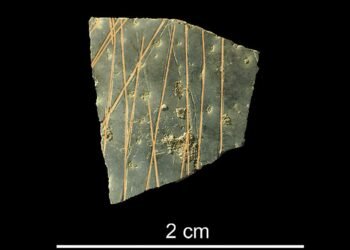
Archaeological excavations at sites such as FV92 in the so-called Flint Valley uncovered stone tools, pottery fragments, and production waste that suggest organized technological traditions. Most of the tools were made of jasper, a hard reddish stone that was imported from nearby mountain sources. Researchers recovered cores and microblades, some less than a few centimeters in length, that were likely used as arrow points and for domestic purposes. Microscopic wear analysis revealed traces of butchery and plant processing, indicating that these tools played a significant role in daily life.

The discoveries also shed light on how prehistoric populations adapted to climatic variations. Lakeshore camps appeared to be temporary settlements, in keeping with a highly mobile lifestyle. Small family groups probably moved along mountain range corridors and returned to the lakes in wetter periods. When the climate deteriorated further, many sought refuge in the Altai Mountains, where caves provided shelter. Human occupation of these highland areas dates back at least 27,000 years, including the discovery of a 25,000-year-old tooth—the oldest human fossil yet discovered in Mongolia.

The broader implications of the findings are that they challenge some of the long-held assumptions concerning the Gobi. While previous research emphasized human occupation during the mid-Holocene climatic optimum, the new evidence shows that people existed much earlier and utilized the lakes and wetlands prior to the desert’s transformation into what it is now. The technological development of the lithic industries, such as the microblade technology and pressure flaking, also shows how these communities innovated in response to environmental pressures.


Cumulatively, these results paint a rich picture of the Gobi as anything but the empty wasteland one might imagine, but rather as a formerly fertile hub of human activity. Seasonal lakes offered essential resources, and the surrounding mountains offered havens in harsher times. This active interchange between people and their environment does much to emphasize the resiliency of early hunter-gatherers, who adapted to shifting climates with ingenuity and mobility.
The research team is still surveying the Flint Valley and its surroundings, where dozens of sites remain under investigation.


















Disclaimer: This website is a science-focused magazine that welcomes both academic and non-academic audiences. Comments are written by users and may include personal opinions or unverified claims. They do not necessarily reflect the views of our editorial team or rely on scientific evidence.
Comment Policy: We kindly ask all commenters to engage respectfully. Comments that contain offensive, insulting, degrading, discriminatory, or racist content will be automatically removed.
Very interesting most welcome