
A new archaeological and genetic study has furnished the earliest direct evidence that European wildcats once roamed prehistoric Ireland. Researchers have identified wildcat remains from Glencurran Cave in the Burren, County Clare, dating to roughly 3600 BCE. The finding confirms that the species lived on the island more than 5,500 years ago, settling a long-standing uncertainty about Ireland’s early fauna.

The discovery was made through excavations led by Dr. Marion Dowd of the Atlantic Technological University. Although small numbers of cat bones have been recovered from Mesolithic and Neolithic sites over the past decades, none had ever been radiocarbon dated. This left open the possibility that earlier finds represented intrusive domestic cats rather than true prehistoric wildlife. The new study provides the first unequivocal confirmation that European wildcats were present in Ireland during the Neolithic.
A total of 39 bones from a single adult animal were excavated within Glencurran Cave. The remains did not show any signs of butchery, burning, or other evidence of human activity, and thus, the cat had died naturally. Identification by zooarchaeologist Margaret McCarthy showed that all the bones belonged to a wildcat, and radiocarbon dating carried out at Queen’s University Belfast confirmed their Neolithic age.
Ancient DNA work later conducted at the University of Rome Tor Vergata strengthened this conclusion. Genetic analysis revealed that the animal belonged to a lineage of European wildcats distinct from both domestic cats and Near Eastern wildcats. The DNA also showed that the Glencurran specimen was a male and genetically closer to wildcats from regions such as Italy and Spain than to the modern Scottish population.
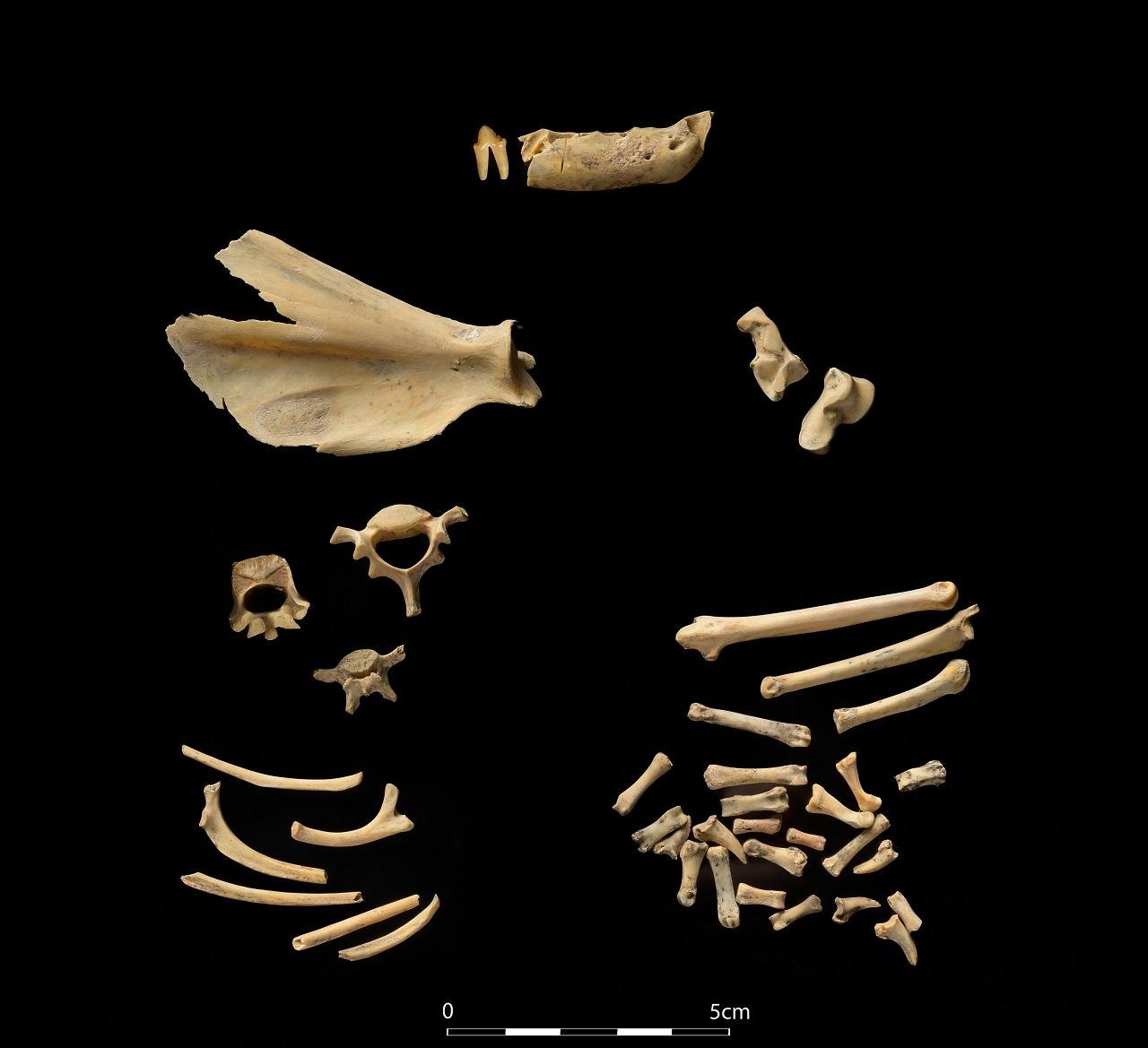
The findings help interpret an otherwise complex picture. Medieval texts do refer to wildcats in Ireland, but such descriptions might refer to feral domestic cats, and misidentifications with pine martens are known. Given the very limited number of securely dated remains, there has been much debate about whether wildcats were ever native to Ireland or were introduced by people. The new evidence shows that they were present at least by the Neolithic, but many questions still remain open: whether the first wildcats arrived during the Mesolithic, or instead with the first farming communities, is not known; neither is the overall distribution of the species nor when it eventually disappeared.
Wildcats once ranged broadly across Europe but experienced a sharp decline in recent centuries due to habitat loss, persecution, and hybridization with domestic cats. They are elusive animals and avoid human contact; they prefer woodland environments, and such characteristics might explain why prehistoric remains in Ireland are rare.

Researchers emphasize that scientific testing needs to be extended to all cat remains found within Irish archaeological contexts. It is only through the combination of radiocarbon dating with ancient DNA analysis that true prehistoric wildcats can be differentiated from later domestic cats, thus allowing researchers to trace when the species arrived, how it adapted to the Irish environment, and the circumstances of its disappearance. The Glencurran find represents a significant step toward reconstructing Ireland’s ancient ecosystems.










Disclaimer: This website is a science-focused magazine that welcomes both academic and non-academic audiences. Comments are written by users and may include personal opinions or unverified claims. They do not necessarily reflect the views of our editorial team or rely on scientific evidence.
Comment Policy: We kindly ask all commenters to engage respectfully. Comments that contain offensive, insulting, degrading, discriminatory, or racist content will be automatically removed.
Whoever took that photo, take a bow!
I found it more interesting that the guys stood in a giants fossilized eye socket.