• About
  • Privacy Policy
  • Terms of Use
  • Donation
  • Contact
No Result
View All Result
Archaeology News
  • Home
  • News
    • Archaeology
    • Anthropology
    • Paleontology
  • Academic
    • Books
    • Conferences
    • Universities
  • Articles
  • VR Tours
  • Quiz & Game
  • Download
  • Encyclopedia
  • Forum
Archaeology News
No Result
View All Result
Home News Archaeology

Denmark’s early brickwork came via Germany, not directly from Italy, new study finds

by Dario Radley
November 20, 2025

The generally held belief, advanced by historians for more than a century, is that Denmark’s first brick-building techniques came straight from Lombardy in northern Italy in the mid-1100s. But a new scientific investigation indicates the path of this technology was far less direct—and the story may need a serious rewrite.
Denmark’s early brickwork came via Germany, not directly from Italy, new study finds
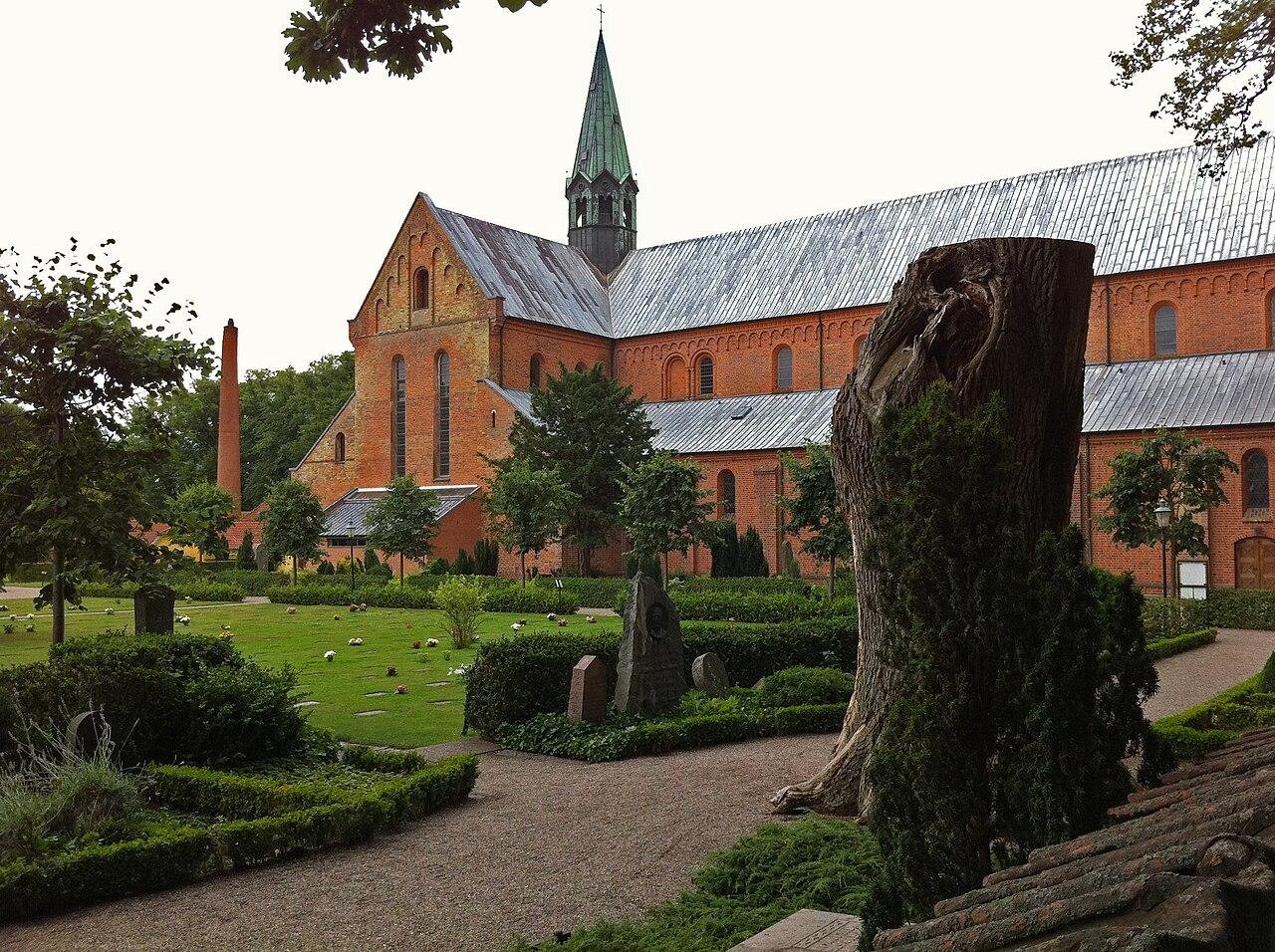
Exterior view of Sorø Abbey Church. Public domain

Researchers investigated 305 brick samples from two early Danish brick churches in Ringsted and Sorø, and two Lombard churches, Cerreto and Chiaravalle. Utilizing a broad suite of analyses such as thermoluminescence dating, X-ray diffraction, magnetic susceptibility, FTIR, XRF, LA-ICP-MS, and detailed mortar studies, the team compared the age and raw materials that went into producing these medieval structures. Their results, published in NPJ Heritage Science, collectively undermine the long-held view that Italian craftsmen or ideas directly shaped Denmark’s early brick architecture.

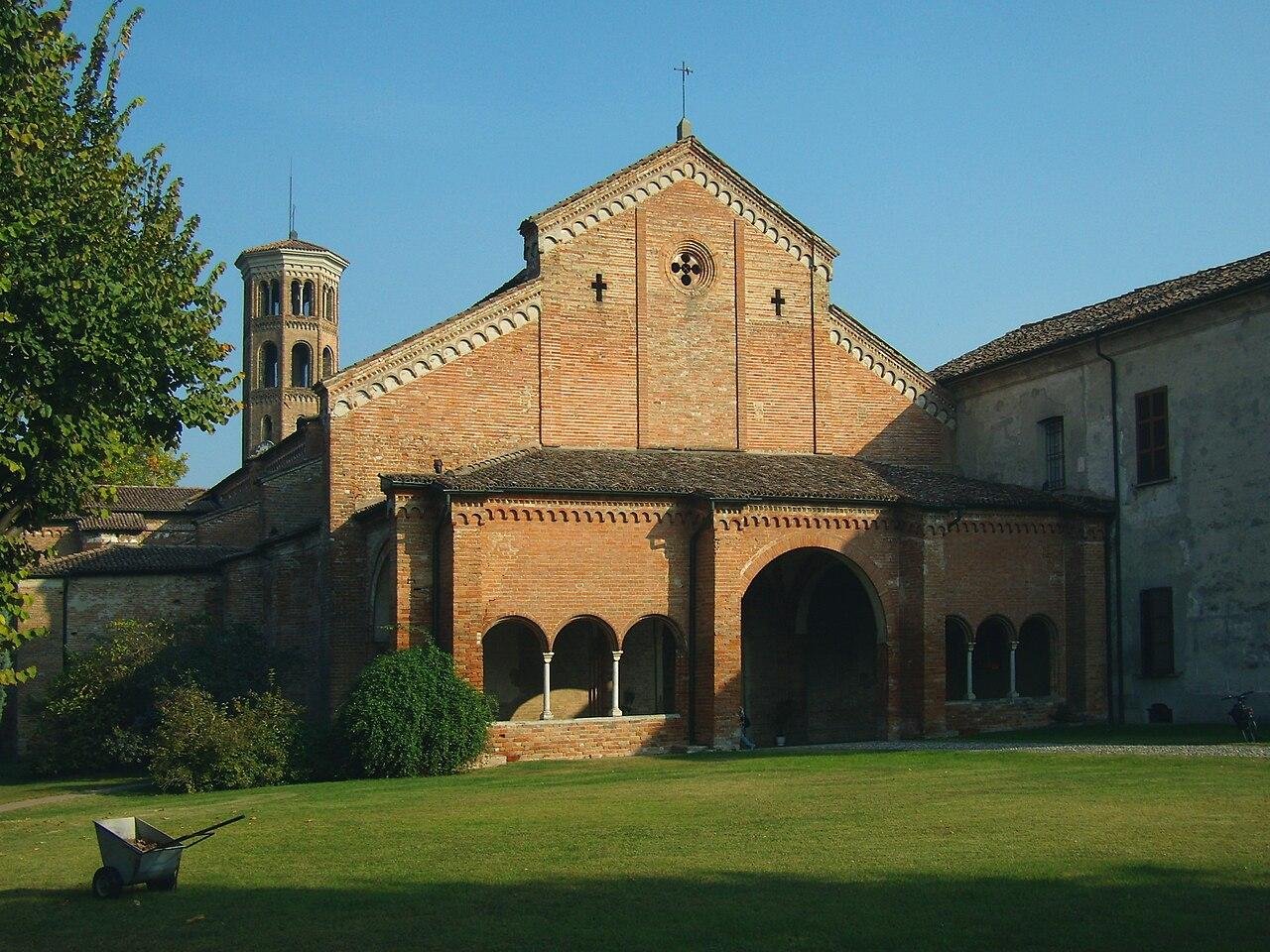
One of the clearest revelations involves timing. The Danish churches date to roughly 1181 and 1185, placing them squarely in the rapid rise of brick construction under King Valdemar the Great and Bishop Absalon. In contrast, Cerreto is far older, ca. 1105, while Chiaravalle is younger, ca. 1267. In this way, the Italian churches roughly bracket the Danish ones by several generations. The immense age differential makes it improbable that the same master builders or their immediate successors could have worked on both regions’ projects. There is also a lack of solid documentary support for the historical suggestion that Danish elites encountered Lombard brickwork firsthand.

Technical evidence adds to the picture. Though the two Italian churches of Cerreto and Chiaravalle lie close to each other and share similar clay sources, the two Danish churches stand only 15 kilometers apart and have nearly the same date, yet their clays possess quite different mineral compositions. Techniques of manufacture also differed. The brick joints in the Italian buildings are just a few millimeters thick, giving them a refined and tightly fitted appearance. In Denmark, the joints were irregular and sometimes as much as two centimeters thick, reflecting a very different building tradition. Distinct approaches to brick shaping and surface treatment also reinforce this divide.
Denmark’s early brickwork came via Germany, not directly from Italy, new study finds
Exterior view of the Lombard church of Cerreto. Public domain

It was also not possible to find meaningful links by conducting mortar analyses. Whereas some binder-aggregate ratios overlapped among the sites, others diverged, and the organic components did not show any consistent pattern that would indicate a shared technological lineage. Even the sorting of bricks by color—a practice observed in all four churches—does not appear to point to a common origin; the firing conditions and manufacturing techniques are very dissimilar.


RelatedStories

Rich medieval Christians buried ‘closer to God’ even with leprosy or tuberculosis, archaeologists find

Rich medieval Christians buried ‘closer to God’ even with leprosy or tuberculosis, archaeologists find

February 12, 2026
Viking Age mass grave with dismembered bodies and trepanned giant found near Cambridge

Viking Age mass grave with dismembered bodies and trepanned giant found near Cambridge

February 11, 2026

According to the architectural, chemical, and chronological evidence combined, the researchers conclude that the idea of a direct Lombard-to-Danish technology transfer is no longer convincing. The data instead point to a more gradual, network-driven diffusion of brick-building knowledge across medieval Europe. As a more plausible conduit, the Cistercian monastic order emerges, active across Italy and Germany and into northern Europe. Northern Germany, where brick architecture was also developing in the late 1100s, likely served as a major intermediary.

The study ultimately reframes how medieval technology traveled—not through a single, dramatic import, but rather through layered exchanges among monasteries, craftsmen, and regional building traditions.


More information: Rasmussen, K.L., Bertelsen, T., Cantisani, E. et al. (2025). Testing a hypothesis of technology transfer in the 1100’s between Italy and Denmark. npj Herit. Sci. 13, 581. doi:10.1038/s40494-025-02141-8
Share5Tweet3Share1ShareSend

You May Also Like...

2,000-year-old human and animal footprints discovered at Lunan Bay, Scotland
Archaeology

2,000-year-old human and animal footprints discovered at Lunan Bay, Scotland

February 20, 2026
The “Princess” of Bagicz re-dated: tree rings resolve the mystery of a rare Roman-era log coffin
Anthropology

The “Princess” of Bagicz re-dated: tree rings resolve the mystery of a rare Roman-era log coffin

February 20, 2026
1.77-million-year-old Homo erectus skulls in China show early humans reached Asia sooner than believed
Anthropology

1.77-million-year-old Homo erectus skulls in China show early humans reached Asia sooner than believed

February 19, 2026
Hidden 17th-century bastion fort discovered in Świerże, eastern Poland
Archaeology

Hidden 17th-century bastion fort discovered in Świerże, eastern Poland

February 19, 2026
Seabird guano fueled the rise of Peru’s Chincha Kingdom, isotope study finds
Archaeology

Seabird guano fueled the rise of Peru’s Chincha Kingdom, isotope study finds

February 19, 2026
Historic cannon unearthed during Hull’s Queen’s Gardens restoration in the UK
Archaeology

Historic cannon unearthed during Hull’s Queen’s Gardens restoration in England

February 18, 2026

Comments 0

  1. Editorial Team says:
    1 second ago

    Disclaimer: This website is a science-focused magazine that welcomes both academic and non-academic audiences. Comments are written by users and may include personal opinions or unverified claims. They do not necessarily reflect the views of our editorial team or rely on scientific evidence.

    Comment Policy: We kindly ask all commenters to engage respectfully. Comments that contain offensive, insulting, degrading, discriminatory, or racist content will be automatically removed.

    Reply

Leave a Reply Cancel reply

Your email address will not be published. Required fields are marked *

Follow us


Instagram
244K

Facebook
118K

Threads
45K

LinkedIn
14K

Twitter
6K

YouTube
1K
  • Trending
  • Comments
  • Latest
Shipwreck Salvage. Credit: rawpixel.com / Public Domain

2,000-year-old shipwreck discovered off Turkish coast with remarkably preserved stacked ceramics

July 2, 2025
Viking age DNA reveals 9,000-year-old HIV-resistant gene originating near the Black Sea

Viking age DNA reveals 9,000-year-old HIV-resistant gene originating near the Black Sea

May 18, 2025
A new study suggests the mysterious Voynich Manuscript may be a medieval cipher

A new study suggests the mysterious Voynich Manuscript may be a medieval cipher

January 3, 2026
Moses may be named in ancient Egyptian mine inscriptions, sparking debate over earliest biblical references

Moses may be named in ancient Egyptian mine inscriptions, sparking debate over earliest biblical references

July 31, 2025
Mystery of Armenia’s 6,000-year-old dragon stones solved

Mystery of Armenia’s 6,000-year-old dragon stones solved

September 23, 2025
3D analysis reveals Shroud of Turin image likely came from sculpture, not Jesus’ body

3D analysis reveals Shroud of Turin image likely came from sculpture, not Jesus’ body

Moses may be named in ancient Egyptian mine inscriptions, sparking debate over earliest biblical references

Moses may be named in ancient Egyptian mine inscriptions, sparking debate over earliest biblical references

$1 million prize offered to decipher 5,300-year-old Indus Valley script

$1 million prize offered to decipher 5,300-year-old Indus Valley script

Oldest ever genetic data from a human relative found in 2-million-year-old fossilized teeth

Oldest ever genetic data from a human relative found in 2-million-year-old fossilized teeth

Exceptionally large Roman shoes discovered at Magna fort near Hadrian’s Wall

Exceptionally large Roman shoes discovered at Magna fort near Hadrian’s Wall

2,000-year-old human and animal footprints discovered at Lunan Bay, Scotland

2,000-year-old human and animal footprints discovered at Lunan Bay, Scotland

February 20, 2026
The “Princess” of Bagicz re-dated: tree rings resolve the mystery of a rare Roman-era log coffin

The “Princess” of Bagicz re-dated: tree rings resolve the mystery of a rare Roman-era log coffin

February 20, 2026
1.77-million-year-old Homo erectus skulls in China show early humans reached Asia sooner than believed

1.77-million-year-old Homo erectus skulls in China show early humans reached Asia sooner than believed

February 19, 2026
Hidden 17th-century bastion fort discovered in Świerże, eastern Poland

Hidden 17th-century bastion fort discovered in Świerże, eastern Poland

February 19, 2026
Seabird guano fueled the rise of Peru’s Chincha Kingdom, isotope study finds

Seabird guano fueled the rise of Peru’s Chincha Kingdom, isotope study finds

February 19, 2026

Archaeology News online magazine

Archaeology News is an international online magazine that covers all aspects of archaeology.


Categories

  • Academics
    • Books
    • Conferences
    • Universities
  • Articles
  • Download
  • Game
  • News
    • Anthropology
    • Archaeology
    • Paleontology
  • Quiz
  • Tours

Subscribe to our newsletter

© 2024 - Archaeology News Online Magazine. All Rights Reserved.

  • About
  • Privacy Policy
  • Terms of Use
  • Donation
  • Contact

Manage Consent
To provide the best experiences, we use technologies like cookies to store and/or access device information. Consenting to these technologies will allow us to process data such as browsing behavior or unique IDs on this site. Not consenting or withdrawing consent, may adversely affect certain features and functions.
Functional Always active
The technical storage or access is strictly necessary for the legitimate purpose of enabling the use of a specific service explicitly requested by the subscriber or user, or for the sole purpose of carrying out the transmission of a communication over an electronic communications network.
Preferences
The technical storage or access is necessary for the legitimate purpose of storing preferences that are not requested by the subscriber or user.
Statistics
The technical storage or access that is used exclusively for statistical purposes. The technical storage or access that is used exclusively for anonymous statistical purposes. Without a subpoena, voluntary compliance on the part of your Internet Service Provider, or additional records from a third party, information stored or retrieved for this purpose alone cannot usually be used to identify you.
Marketing
The technical storage or access is required to create user profiles to send advertising, or to track the user on a website or across several websites for similar marketing purposes.
  • Manage options
  • Manage services
  • Manage {vendor_count} vendors
  • Read more about these purposes
View preferences
  • {title}
  • {title}
  • {title}
  • Home
  • News
    • Archaeology
    • Anthropology
    • Paleontology
  • Academic
    • Books
    • Conferences
    • Universities
  • Articles
  • VR Tours
  • Quiz & Game
  • Download
  • Encyclopedia
  • Forum

About  .  Contact  .  Donation

© 2024 - Archaeology News Online Magazine. All Rights Reserved