• About
  • Privacy Policy
  • Terms of Use
  • Donation
  • Contact
No Result
View All Result
Archaeology News
  • Home
  • News
    • Archaeology
    • Anthropology
    • Paleontology
  • Academic
    • Books
    • Conferences
    • Universities
  • Articles
  • VR Tours
  • Quiz & Game
  • Download
  • Encyclopedia
  • Forum
Archaeology News
No Result
View All Result
Home News Anthropology

DNA confirms identity and violent death of Béla, the assassinated duke of Macsó

by Dario Radley
November 8, 2025

Researchers have confirmed the identity of skeletal remains found over a century ago on Margaret Island in Budapest, solving a long-debated archaeological mystery and offering insight into a violent episode in medieval Hungarian history. The remains belong to Béla, Duke of Macsó, a figure connected both to the Árpád dynasty of medieval Hungary and the Rurik dynasty of Eastern Europe.

DNA confirms identity and violent death of Béla, the assassinated duke of Macsó
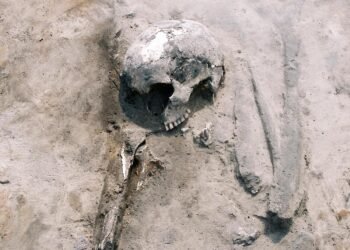
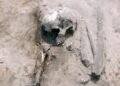
Skull of a 13th-century individual uncovered at the Dominican monastery on Margaret Island, Budapest. Credit: Eötvös Loránd University

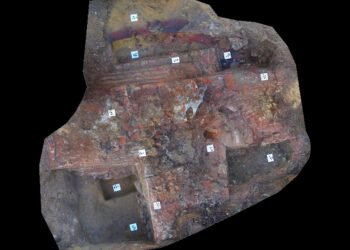
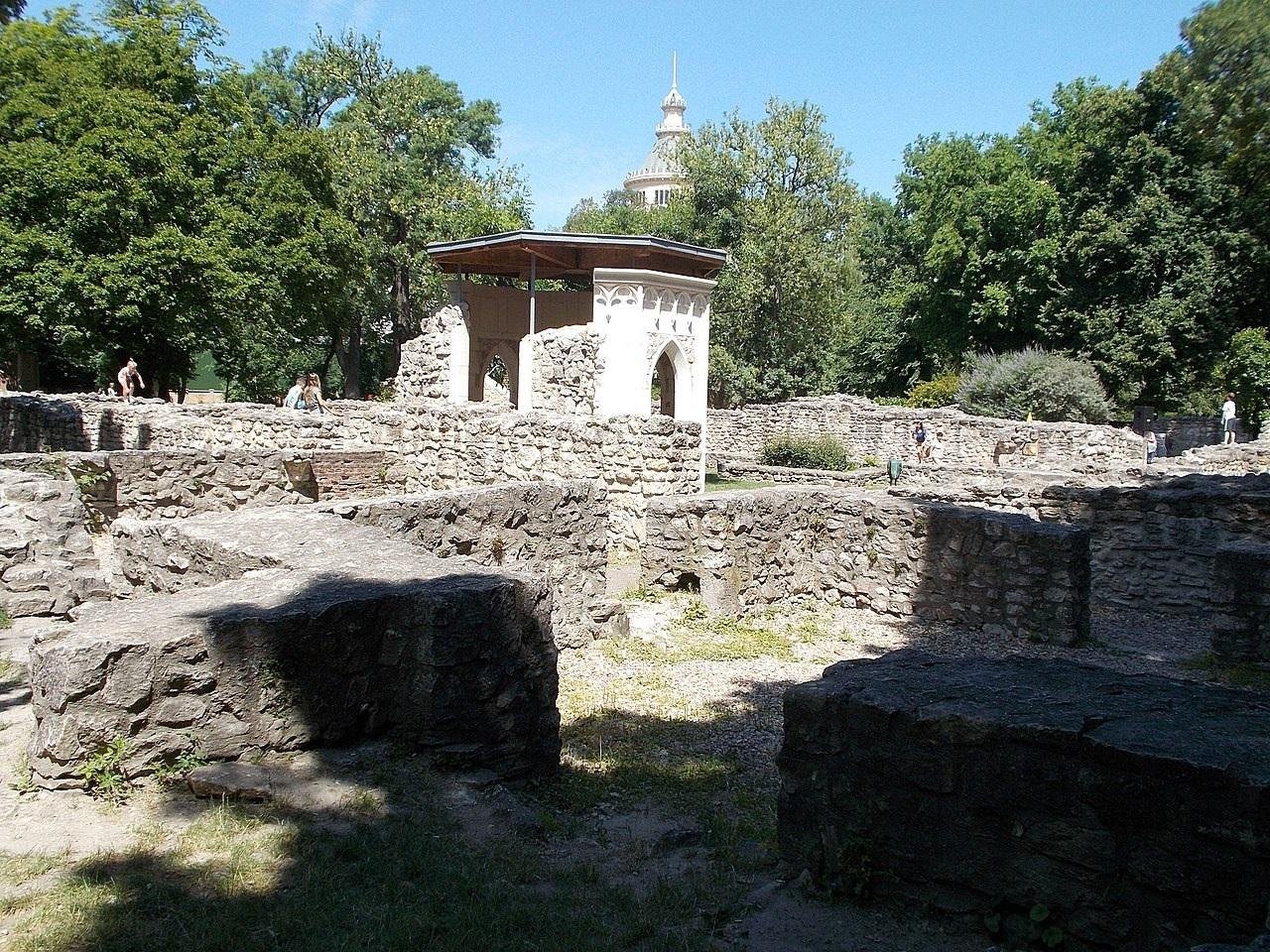
The bones were first discovered in 1915 during excavations at the ruins of a 13th-century Dominican monastery. Historical records, along with evidence of traumatic injuries, led early researchers to believe that the remains might belong to Duke Béla, who was assassinated in 1272 when he was about 25 years old. The bones were unstudied for decades, and at one point, during World War II, they were considered lost. They unexpectedly resurfaced again in 2018 in museum and university collections, prompting a new interdisciplinary investigation.

The research team brought together experts from anthropology, archaeogenetics, radiocarbon dating, stable isotope analysis, dentistry, and historical study. Their aim was twofold: to confirm who the individual was and to reconstruct major aspects of his life, including the circumstances of his death.

Initial radiocarbon dating indicated a somewhat earlier date than was expected, but further investigation showed that this discrepancy was due to the duke’s diet. The high amount of fish and other aquatic protein he consumed in his lifetime gave rise to what is called the “freshwater reservoir effect,” which alters the chemical signatures preserved in bone. Once corrected, the dating aligned with the mid-13th century.
DNA confirms identity and violent death of Béla, the assassinated duke of Macsó
Dominican monastery, Margaret Island, Budapest. Credit: Globetrotter19 / CC BY-SA 3.0

Further evidence came from analysis of dental tartar, which preserved thousands of microscopic food particles. These indicated regular consumption of barley and wheat products such as bread and semolina, consistent with elite medieval diets. Isotope data also showed that Béla spent his early childhood in the region of modern-day Serbia and Croatia, part of the Macsó Banat, and later relocated toward the Hungarian royal centers, in support of the known historical movements of his family.


RelatedStories

How ancient hunter-gatherer DNA could unlock the secrets of living to 100

How ancient hunter-gatherer DNA could unlock the secrets of living to 100

December 18, 2025
Decade-long mystery of the Beachy Head Woman resolved by DNA study

Decade-long mystery of the Beachy Head Woman resolved by DNA study

December 18, 2025

More importantly, DNA evidence confirmed both sides of his lineage: Whole-genome analysis showed a significant genetic component linked to Scandinavian ancestry, corresponding to the Rurik line of his father’s family. Further testing confirmed he was a direct descendant of King Béla III, corresponding to the lineage recorded for Duke Béla of Macsó. This makes him one of only a few medieval Hungarian nobles whose remains have been genetically identified.

The research also reconstructed the last moments of the duke. Forensic analysis revealed 26 sharp-force injuries inflicted at the time of death. The nature of the wounds showed that he had been attacked by at least three assailants at the same time, with different types of swords. The duke tried to defend himself, but after he fell, the attackers continued their assault, delivering fatal blows to his head and face. The pattern shows both planning and intense personal animosity, in line with chronicles that describe his killing as a politically motivated assassination.

The findings provide a rare glimpse into the lives and internal conflicts of medieval European ruling families, bringing new clarity to an event recorded more than 700 years ago.

More information: Eötvös Loránd University
Publication: Hajdu, T., Borbély, N., Bernert, Z., Buzár, Á., Szeniczey, T., Major, I., … Szécsényi-Nagy, A. (2025). Murder in cold blood? Forensic and bioarchaeological identification of the skeletal remains of Béla, Duke of Macsó (c. 1245-1272). Forensic Science International. Genetics, 81(103381), 103381. doi:10.1016/j.fsigen.2025.103381
Share65Tweet41Share11ShareSend

You May Also Like...

Inscription on important Roman sitella found in Cartagena reveals unknown governor and casting-lot use
Archaeology

Inscription on Roman sitella in Cartagena reveals unknown governor and casting-lot use

December 21, 2025
Should archaeology rethink its reliance on the concept of “culture”?
Archaeology

Should archaeology rethink its reliance on the concept of “culture”?

December 21, 2025
Unusual 3,000-year-old Bronze Age mass burial reveals ancient crisis in Scotland
Anthropology

Unusual 3,000-year-old Bronze Age mass burial reveals ancient crisis in Scotland

December 20, 2025
Roman soldiers at Vindolanda suffered persistent parasite infections, researchers discover
Anthropology

Roman soldiers at Vindolanda suffered persistent parasite infections, researchers discover

December 20, 2025
Christians and Zoroastrians lived side by side in 5th-century Iraq, archaeologists find
Archaeology

Christians and Zoroastrians coexisted peacefully in 5th-century Iraq, archaeologists find

December 19, 2025
New study searches for hidden chambers inside El Castillo pyramid in Chichén Itzá
Archaeology

New study searches for hidden chambers inside El Castillo pyramid in Chichén Itzá

December 19, 2025

Comments 0

  1. Editorial Team says:
    1 second ago
    Disclaimer: This website is a science-focused magazine that welcomes both academic and non-academic audiences. Comments are written by users and may include personal opinions or unverified claims. They do not necessarily reflect the views of our editorial team or rely on scientific evidence.
    Reply

Leave a Reply Cancel reply

Your email address will not be published. Required fields are marked *

Follow us


Instagram
245K

Facebook
117K

Threads
45K

LinkedIn
14K

Twitter
6K

YouTube
1K
  • Trending
  • Comments
  • Latest
Shipwreck Salvage. Credit: rawpixel.com / Public Domain

2,000-year-old shipwreck discovered off Turkish coast with remarkably preserved stacked ceramics

July 2, 2025
Viking age DNA reveals 9,000-year-old HIV-resistant gene originating near the Black Sea

Viking age DNA reveals 9,000-year-old HIV-resistant gene originating near the Black Sea

May 18, 2025
Complete copy of the Canopus Decree unearthed in Egypt after 150 years

Complete copy of the Canopus Decree unearthed in Egypt after 150 years

September 13, 2025
Mystery of Armenia’s 6,000-year-old dragon stones solved

Mystery of Armenia’s 6,000-year-old dragon stones solved

September 23, 2025
Moses may be named in ancient Egyptian mine inscriptions, sparking debate over earliest biblical references

Moses may be named in ancient Egyptian mine inscriptions, sparking debate over earliest biblical references

July 31, 2025
3D analysis reveals Shroud of Turin image likely came from sculpture, not Jesus’ body

3D analysis reveals Shroud of Turin image likely came from sculpture, not Jesus’ body

Moses may be named in ancient Egyptian mine inscriptions, sparking debate over earliest biblical references

Moses may be named in ancient Egyptian mine inscriptions, sparking debate over earliest biblical references

$1 million prize offered to decipher 5,300-year-old Indus Valley script

$1 million prize offered to decipher 5,300-year-old Indus Valley script

Oldest ever genetic data from a human relative found in 2-million-year-old fossilized teeth

Oldest ever genetic data from a human relative found in 2-million-year-old fossilized teeth

Exceptionally large Roman shoes discovered at Magna fort near Hadrian’s Wall

Exceptionally large Roman shoes discovered at Magna fort near Hadrian’s Wall

Inscription on important Roman sitella found in Cartagena reveals unknown governor and casting-lot use

Inscription on Roman sitella in Cartagena reveals unknown governor and casting-lot use

December 21, 2025
Should archaeology rethink its reliance on the concept of “culture”?

Should archaeology rethink its reliance on the concept of “culture”?

December 21, 2025
Unusual 3,000-year-old Bronze Age mass burial reveals ancient crisis in Scotland

Unusual 3,000-year-old Bronze Age mass burial reveals ancient crisis in Scotland

December 20, 2025
Roman soldiers at Vindolanda suffered persistent parasite infections, researchers discover

Roman soldiers at Vindolanda suffered persistent parasite infections, researchers discover

December 20, 2025
Christians and Zoroastrians lived side by side in 5th-century Iraq, archaeologists find

Christians and Zoroastrians coexisted peacefully in 5th-century Iraq, archaeologists find

December 19, 2025

Archaeology News online magazine

Archaeology News is an international online magazine that covers all aspects of archaeology.


Categories

  • Academics
    • Books
    • Conferences
    • Universities
  • Articles
  • Download
  • Game
  • News
    • Anthropology
    • Archaeology
    • Paleontology
  • Quiz
  • Tours

Subscribe to our newsletter

© 2024 - Archaeology News Online Magazine. All Rights Reserved.

  • About
  • Privacy Policy
  • Terms of Use
  • Donation
  • Contact

Welcome Back!

Login to your account below

Forgotten Password? Sign Up

Create New Account!

Fill the forms below to register

All fields are required. Log In

Retrieve your password

Please enter your username or email address to reset your password.

Log In

Add New Playlist

Manage Consent
To provide the best experiences, we use technologies like cookies to store and/or access device information. Consenting to these technologies will allow us to process data such as browsing behavior or unique IDs on this site. Not consenting or withdrawing consent, may adversely affect certain features and functions.
Functional Always active
The technical storage or access is strictly necessary for the legitimate purpose of enabling the use of a specific service explicitly requested by the subscriber or user, or for the sole purpose of carrying out the transmission of a communication over an electronic communications network.
Preferences
The technical storage or access is necessary for the legitimate purpose of storing preferences that are not requested by the subscriber or user.
Statistics
The technical storage or access that is used exclusively for statistical purposes. The technical storage or access that is used exclusively for anonymous statistical purposes. Without a subpoena, voluntary compliance on the part of your Internet Service Provider, or additional records from a third party, information stored or retrieved for this purpose alone cannot usually be used to identify you.
Marketing
The technical storage or access is required to create user profiles to send advertising, or to track the user on a website or across several websites for similar marketing purposes.
  • Manage options
  • Manage services
  • Manage {vendor_count} vendors
  • Read more about these purposes
View preferences
  • {title}
  • {title}
  • {title}
  • Home
  • News
    • Archaeology
    • Anthropology
    • Paleontology
  • Academic
    • Books
    • Conferences
    • Universities
  • Articles
  • VR Tours
  • Quiz & Game
  • Download
  • Encyclopedia
  • Forum

About  .  Contact  .  Donation

© 2024 - Archaeology News Online Magazine. All Rights Reserved