
Archaeological excavations in Gothenburg’s Gamlestaden district have revealed new information about Nya Lödöse, the 16th-century city that once stood on the site before modern Gothenburg was founded. The investigation was led by Arkeologerna, which focused on the southern edge of the former city, near today’s Olskroken area, and found evidence of fortifications, buildings, and cultivated plots from the late 1400s until Nya Lödöse was abandoned in 1624.
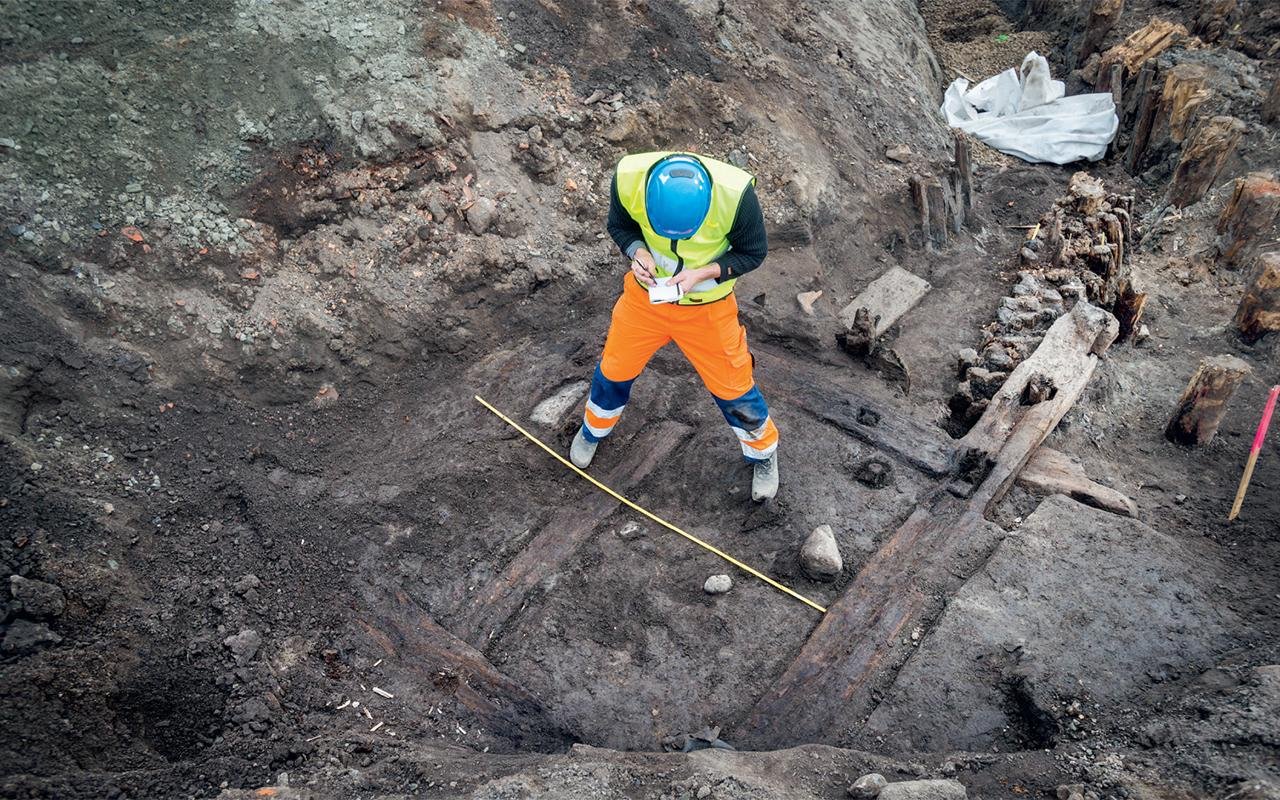
Around 1530, an earth rampart and moat were constructed along the southern boundary, delineating a new defensive perimeter for Nya Lödöse. Where the city’s main street crossed this boundary, a stone-paved gate was built — the southern gate — probably serving as an entrance and checkpoint. Excavations revealed timber foundations, palisades, and reinforcements around the gate, along with a nearby structure that may have served as a tollhouse.
Inside the rampart, archaeologists discovered modest houses and organized cultivation plots. This open, semi-rural structure contrasted with the densely built northern part of the city, reflecting the mixed nature of Nya Lödöse, which combined urban and agricultural life. Artifacts such as ceramics, coins, glass, and tools illustrate daily routines and local trade, while devotional objects offer glimpses into the community’s beliefs.
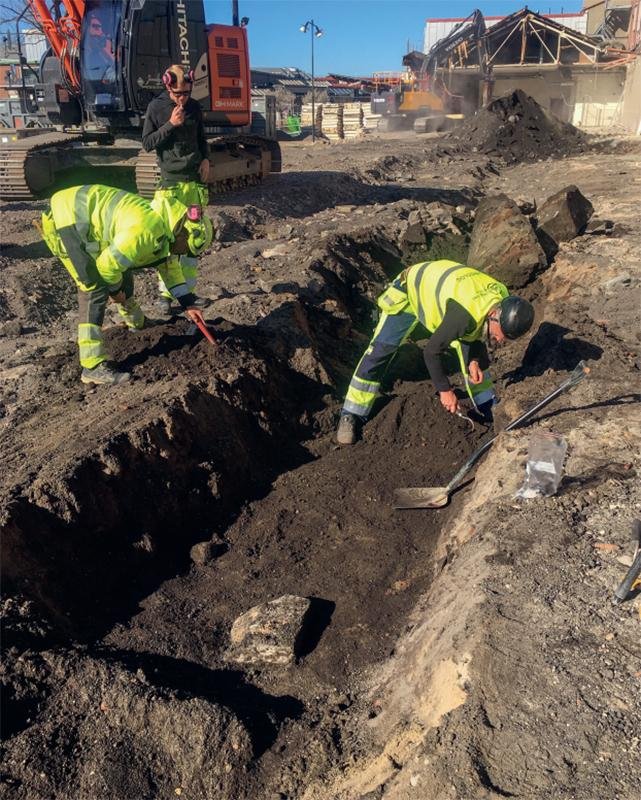
In 1547, the settlement was temporarily abandoned when residents were moved to the newly established town of Älvsborg. Two decades later, Nya Lödöse was reoccupied, its fortifications repaired, and new houses built along the restored main street. By the early 1600s, with Sweden regaining control of the region, the southern gate was rebuilt, and one last phase of renewal took place in the city. Then, in 1624, its population was again relocated, this time to the new city of Gothenburg, and Nya Lödöse’s urban life came to an end.
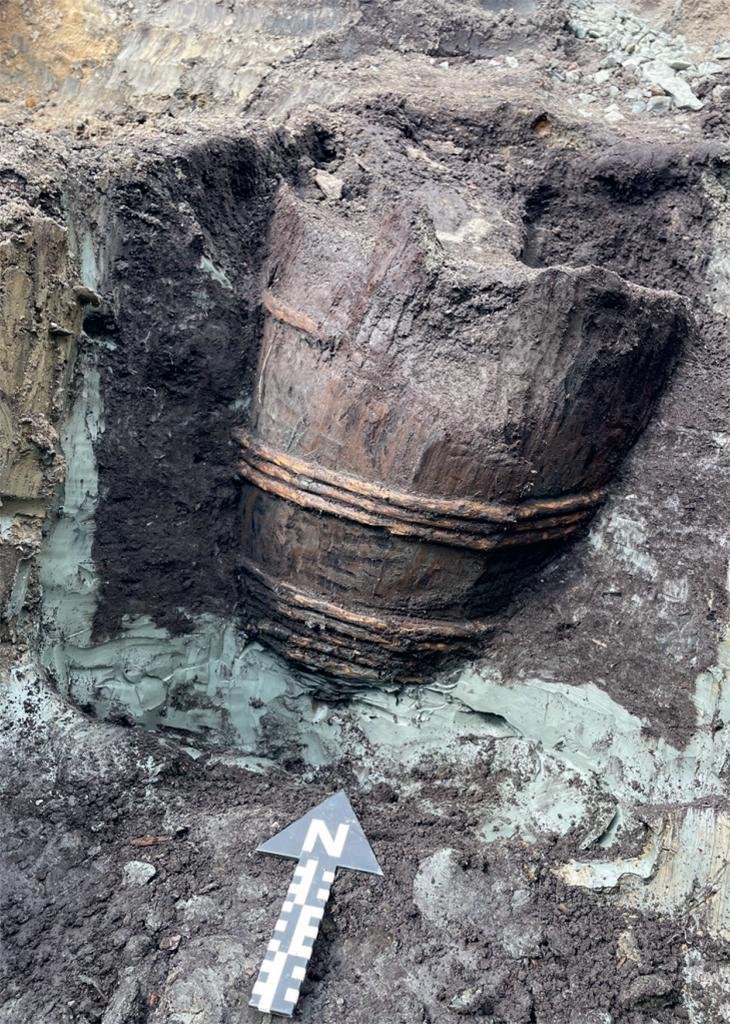
After abandonment, the area reverted to agriculture and pasture, and the ramparts and moat were filled in over time. The site later became an industrial area from the 1870s onwards, with large factories covering much of the old city. Despite heavy modern development, parts of the archaeological layers survived beneath the building foundations, and thus researchers were able to reconstruct the city’s southern landscape centuries later.


This project, carried out under the supervision of the County Administrative Board, brings together data from several excavations. Together, these findings provide valuable insight into early modern Swedish urbanism — how people lived, worked, and adapted within a fortified city on the edge of a growing nation.
More information: Arkeologerna

















Disclaimer: This website is a science-focused magazine that welcomes both academic and non-academic audiences. Comments are written by users and may include personal opinions or unverified claims. They do not necessarily reflect the views of our editorial team or rely on scientific evidence.
Comment Policy: We kindly ask all commenters to engage respectfully. Comments that contain offensive, insulting, degrading, discriminatory, or racist content will be automatically removed.