
Scientists have solved a mystery concerning an unusual 3.4 million-year-old foot fossil from Ethiopia: it indeed comes from Australopithecus deyiremeda, a close but distinct relative of Lucy and her species, Australopithecus afarensis. The discovery bolsters the evidence that several hominin species shared the same landscape in East Africa and experimented with different ways of moving and feeding long before the emergence of humans.

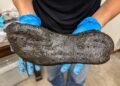
The foot, which was found in 2009 at the Woranso-Mille site in Ethiopia’s Afar Rift, had baffled scientists from the moment eight small bones were uncovered. Its shape was unmistakably hominin, but it lacked features of A. afarensis, which dominated the region between 3 and 4 million years ago. Most notably, the big toe was still opposable, a trait helpful for grasping branches, whereas Lucy’s species had already shifted to the forward-pointing big toe consistent with fully committed ground-walking.
For years, scientists were reluctant to assign the fossil to a particular species since the identification of species relies more on skulls, jaws, and teeth than on the bones of feet. Although teeth had been found nearby, their relationship to the foot was not clear. In 2015, researchers named a new species, A. deyiremeda, based on jaws and teeth from the same general locality. But without solid evidence to link those fossils to the foot itself, the classification remained tentative.
Over a decade of further excavations has revised that picture. A new suite of teeth and fragments of jaws—13 in total—was unearthed from sediment layers of the same age and location as the original Burtele foot. Careful geological work confirmed that the remains came from the same deposits, and detailed comparisons showed their anatomy fit A. deyiremeda rather than A. afarensis or older species like A. anamensis.

These new fossils reveal a hominin with a remarkable mix of primitive and advanced traits. Though able to walk on two legs, A. deyiremeda retained a grasping big toe and probably pushed off the ground with its second toe, a trait seen in neither humans nor Lucy’s species. The evidence thus confirms that early bipedality was much more variable than previously believed, with multiple experimental forms evolving in parallel.
Chemical analysis of tooth enamel provides further evidence of how these species coexisted. A. afarensis seems to have occupied more open environments and consumed a wide range of foods, including grasses and sedges. By contrast, A. deyiremeda relied heavily on resources found in woodlands, such as leaves and fruits. These dietary differences, along with the distinct locomotor capabilities, likely reduced competition and enabled the two species to coexist in the same region at the same time.
Researchers also found a juvenile A. deyiremeda jaw, complete with baby teeth and developing adult teeth. CT scans of the hidden teeth show growth patterns similar to other early australopiths, suggesting that despite their anatomical diversity, these ancient hominins shared comparable developmental rhythms.
The confirmation that two closely related species lived side by side more than three million years ago brings a new layer of complexity to the story of human evolution: Early members of our lineage were not marching along a single path toward modernity but instead explored various ecological and locomotor strategies in a changing landscape—patterns that may hold clues for understanding both our origins and evolutionary pathways.










Disclaimer: This website is a science-focused magazine that welcomes both academic and non-academic audiences. Comments are written by users and may include personal opinions or unverified claims. They do not necessarily reflect the views of our editorial team or rely on scientific evidence.
Comment Policy: We kindly ask all commenters to engage respectfully. Comments that contain offensive, insulting, degrading, discriminatory, or racist content will be automatically removed.