• About
  • Privacy Policy
  • Terms of Use
  • Donation
  • Contact
No Result
View All Result
Archaeology News
  • Home
  • News
    • Archaeology
    • Anthropology
    • Paleontology
  • Academic
    • Books
    • Conferences
    • Universities
  • Articles
  • VR Tours
  • Quiz & Game
  • Download
  • Encyclopedia
  • Forum
Archaeology News
No Result
View All Result
Home News Archaeology

Scientists redate Ukraine’s mammoth-bone structures, uncovering Ice Age survival tactics

by Dario Radley
November 29, 2025

Across the plains of what is now Ukraine, long before agriculture had revolutionized human life, groups of hunter-gatherers encountered winters so extreme that the only ways to survive required uncommon ingenuity. Large circular dwellings constructed almost entirely from mammoth bones were a striking testimony to that ingenuity at the Upper Paleolithic site of Mezhyrich in Cherkasy Oblast, which archaeologists discovered decades ago. For several decades, researchers have often debated whether these structures were residential, storage, or symbolic in purpose.
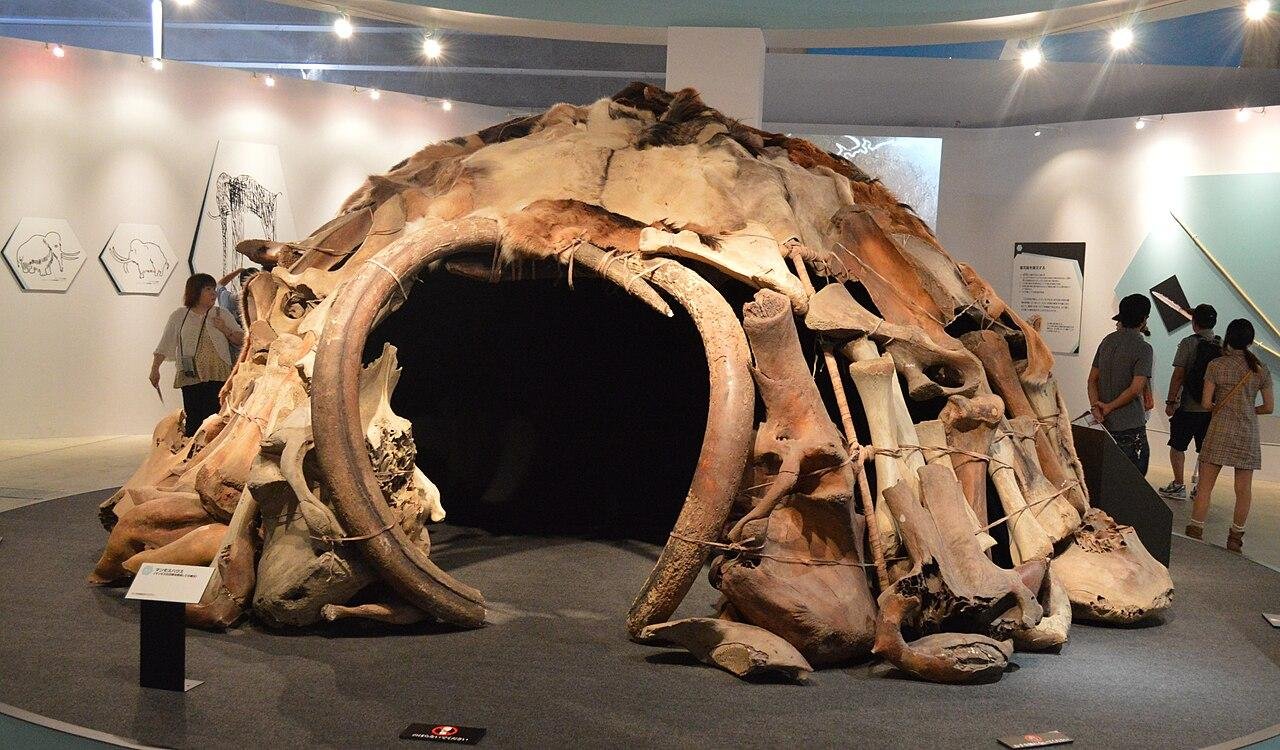
Ice Age hunters built mammoth-bone shelters in Ukraine, new study reveals precise timeline
Replica of a mammoth bone structure. Credit: Nandaro / CC BY-SA 3.0

A new study now revisits Mezhyrich with sharper analytical tools. Using advanced radiocarbon dating on remains of small mammals recovered from the same cultural layers as the bone structures, researchers have produced a more reliable timeline than earlier estimates based exclusively on mammoth bones. Their findings date the construction and use of the largest bone structure—referred to as Mammoth Bone Structure 4—between approximately 18,248 and 17,764 years ago, deep within the coldest stage of the last Ice Age.

What is remarkable about this revised chronology is its brevity. The data indicate an occupation that lasted somewhere between a single visit and several centuries. It is not impossible that there were repeated short-term arrivals, but based on the evidence, a limited presence seems more probable than a long-lived settlement. The interpretation thus suggests a practical purpose: a refuge for temporary occupation in unforgiving conditions, rather than a permanent village.

The findings give further weight to the idea that hunter-gatherers in the region were highly adaptive to these types of environments, where scarce timber and frozen landscapes were dealt with by reusing the massive bones of mammoths as construction material. The resulting shelters afforded protection and stability, revealing an ability to work with on-hand resources during one of the most challenging climatic periods in human history.
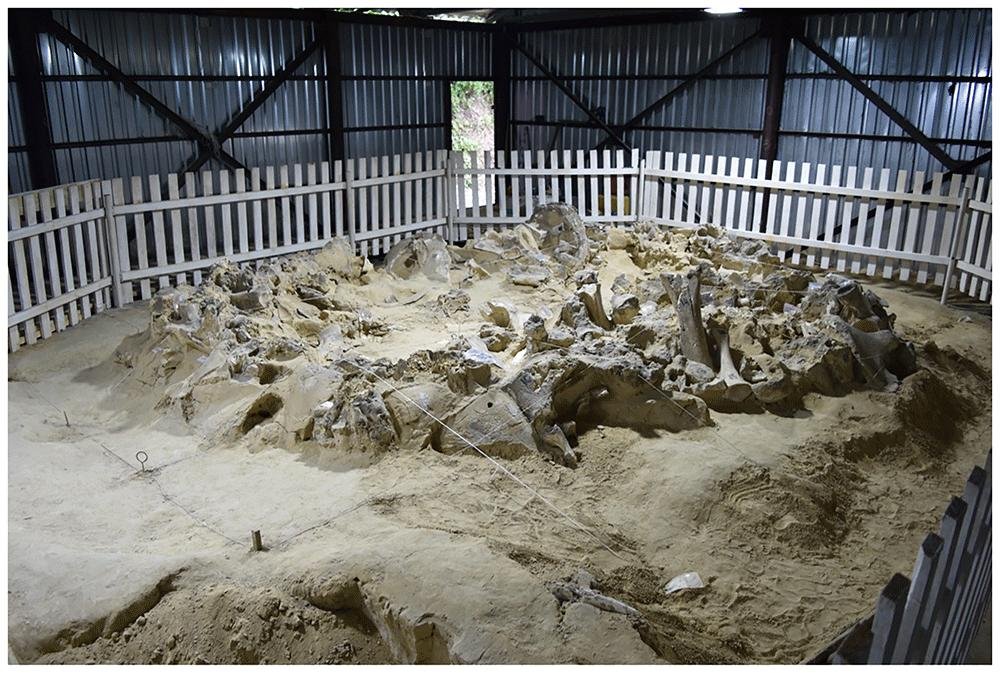
Ice Age hunters built mammoth-bone shelters in Ukraine, new study reveals precise timeline
Photograph of Dwelling 4 during excavation. Credit: W. Chu et al., Open Research Europe (2025)

This study also underlines that sampling strategy plays a very important role in archaeological research. While new radiocarbon ages now refine Mezhyrich’s chronology, they also reveal lingering uncertainties. Variations within lower layers of different features, a lack of comprehensive records of past excavations, and the inherent limitations of radiocarbon modelling make it difficult to map subtle shifts in occupation through time. The researchers stress that any detailed understanding regarding the sequence of events at the site is going to require further targeted sampling from key features, including deeper layers of Structure 4, specific pits, and areas with undisturbed stratigraphy.


RelatedStories

60,000-year-old ostrich eggshell engravings reveal humanity’s earliest geometric designs

60,000-year-old ostrich eggshell engravings reveal humanity’s earliest geometric designs

February 26, 2026
Mesolithic burials in Sweden show ancient fur and feather headgear uncovered by new microscopic analysis

Mesolithic burials in Sweden show ancient fur and feather headgear uncovered by new microscopic analysis

February 25, 2026

Future work that integrates multiple dating methods, detailed sediment analyses, and additional samples from charcoal and smaller animal bones might eventually provide a clearer sense of how often Ice Age groups returned to Mezhyrich and how the bone-built structures fit within their wider pattern of movement.


More information: Leiden University
Publication: Chu, W., Shydlovskyi, P., & Maier, A. (2025). A revised radiocarbon chronology for the mammoth bone structures and associated features at Mezhyrich, Ukraine. Open Research Europe, 5, 198. doi:10.12688/openreseurope.20112.1
Share52Tweet32Share9ShareSend

You May Also Like...

Medieval monastery remains discovered beneath Borken’s historic center in Germany
Archaeology

Medieval monastery remains discovered beneath Borken’s historic center in Germany

February 26, 2026
How ancient communities adapted their diets and farming strategies in prehistoric Poland
Anthropology

How ancient communities adapted their diets and farming strategies in prehistoric Poland

February 26, 2026
60,000-year-old ostrich eggshell engravings reveal humanity’s earliest geometric designs
Archaeology

60,000-year-old ostrich eggshell engravings reveal humanity’s earliest geometric designs

February 26, 2026
Mesolithic burials in Sweden show ancient fur and feather headgear uncovered by new microscopic analysis
Anthropology

Mesolithic burials in Sweden show ancient fur and feather headgear uncovered by new microscopic analysis

February 25, 2026
Greek inscription found in Syria’s Great Mosque of Homs may reveal lost Temple of the Sun in ancient Emesa
Archaeology

Greek inscription found in Syria’s Great Mosque of Homs may reveal lost Temple of the Sun in ancient Emesa

February 25, 2026
40,000-year-old European engravings reveal structured sign systems, study finds
Archaeology

40,000-year-old European engravings reveal structured sign systems, study finds

February 25, 2026

Comments 0

  1. Editorial Team says:
    1 second ago

    Disclaimer: This website is a science-focused magazine that welcomes both academic and non-academic audiences. Comments are written by users and may include personal opinions or unverified claims. They do not necessarily reflect the views of our editorial team or rely on scientific evidence.

    Comment Policy: We kindly ask all commenters to engage respectfully. Comments that contain offensive, insulting, degrading, discriminatory, or racist content will be automatically removed.

    Reply

Leave a Reply Cancel reply

Your email address will not be published. Required fields are marked *

Follow us


Instagram
244K

Facebook
118K

Threads
46K

LinkedIn
14K

Twitter
6K

YouTube
1K
  • Trending
  • Comments
  • Latest
Shipwreck Salvage. Credit: rawpixel.com / Public Domain

2,000-year-old shipwreck discovered off Turkish coast with remarkably preserved stacked ceramics

July 2, 2025
Viking age DNA reveals 9,000-year-old HIV-resistant gene originating near the Black Sea

Viking age DNA reveals 9,000-year-old HIV-resistant gene originating near the Black Sea

May 18, 2025
A new study suggests the mysterious Voynich Manuscript may be a medieval cipher

A new study suggests the mysterious Voynich Manuscript may be a medieval cipher

January 3, 2026
Moses may be named in ancient Egyptian mine inscriptions, sparking debate over earliest biblical references

Moses may be named in ancient Egyptian mine inscriptions, sparking debate over earliest biblical references

July 31, 2025
Mystery of Armenia’s 6,000-year-old dragon stones solved

Mystery of Armenia’s 6,000-year-old dragon stones solved

September 23, 2025
3D analysis reveals Shroud of Turin image likely came from sculpture, not Jesus’ body

3D analysis reveals Shroud of Turin image likely came from sculpture, not Jesus’ body

Moses may be named in ancient Egyptian mine inscriptions, sparking debate over earliest biblical references

Moses may be named in ancient Egyptian mine inscriptions, sparking debate over earliest biblical references

$1 million prize offered to decipher 5,300-year-old Indus Valley script

$1 million prize offered to decipher 5,300-year-old Indus Valley script

Oldest ever genetic data from a human relative found in 2-million-year-old fossilized teeth

Oldest ever genetic data from a human relative found in 2-million-year-old fossilized teeth

Exceptionally large Roman shoes discovered at Magna fort near Hadrian’s Wall

Exceptionally large Roman shoes discovered at Magna fort near Hadrian’s Wall

Medieval monastery remains discovered beneath Borken’s historic center in Germany

Medieval monastery remains discovered beneath Borken’s historic center in Germany

February 26, 2026
How ancient communities adapted their diets and farming strategies in prehistoric Poland

How ancient communities adapted their diets and farming strategies in prehistoric Poland

February 26, 2026
60,000-year-old ostrich eggshell engravings reveal humanity’s earliest geometric designs

60,000-year-old ostrich eggshell engravings reveal humanity’s earliest geometric designs

February 26, 2026
Mesolithic burials in Sweden show ancient fur and feather headgear uncovered by new microscopic analysis

Mesolithic burials in Sweden show ancient fur and feather headgear uncovered by new microscopic analysis

February 25, 2026
Greek inscription found in Syria’s Great Mosque of Homs may reveal lost Temple of the Sun in ancient Emesa

Greek inscription found in Syria’s Great Mosque of Homs may reveal lost Temple of the Sun in ancient Emesa

February 25, 2026

Archaeology News online magazine

Archaeology News is an international online magazine that covers all aspects of archaeology.


Categories

  • Academics
    • Books
    • Conferences
    • Universities
  • Articles
  • Download
  • Game
  • News
    • Anthropology
    • Archaeology
    • Paleontology
  • Quiz
  • Tours

Subscribe to our newsletter

© 2024 - Archaeology News Online Magazine. All Rights Reserved.

  • About
  • Privacy Policy
  • Terms of Use
  • Donation
  • Contact

Manage Consent
To provide the best experiences, we use technologies like cookies to store and/or access device information. Consenting to these technologies will allow us to process data such as browsing behavior or unique IDs on this site. Not consenting or withdrawing consent, may adversely affect certain features and functions.
Functional Always active
The technical storage or access is strictly necessary for the legitimate purpose of enabling the use of a specific service explicitly requested by the subscriber or user, or for the sole purpose of carrying out the transmission of a communication over an electronic communications network.
Preferences
The technical storage or access is necessary for the legitimate purpose of storing preferences that are not requested by the subscriber or user.
Statistics
The technical storage or access that is used exclusively for statistical purposes. The technical storage or access that is used exclusively for anonymous statistical purposes. Without a subpoena, voluntary compliance on the part of your Internet Service Provider, or additional records from a third party, information stored or retrieved for this purpose alone cannot usually be used to identify you.
Marketing
The technical storage or access is required to create user profiles to send advertising, or to track the user on a website or across several websites for similar marketing purposes.
  • Manage options
  • Manage services
  • Manage {vendor_count} vendors
  • Read more about these purposes
View preferences
  • {title}
  • {title}
  • {title}
  • Home
  • News
    • Archaeology
    • Anthropology
    • Paleontology
  • Academic
    • Books
    • Conferences
    • Universities
  • Articles
  • VR Tours
  • Quiz & Game
  • Download
  • Encyclopedia
  • Forum

About  .  Contact  .  Donation

© 2024 - Archaeology News Online Magazine. All Rights Reserved